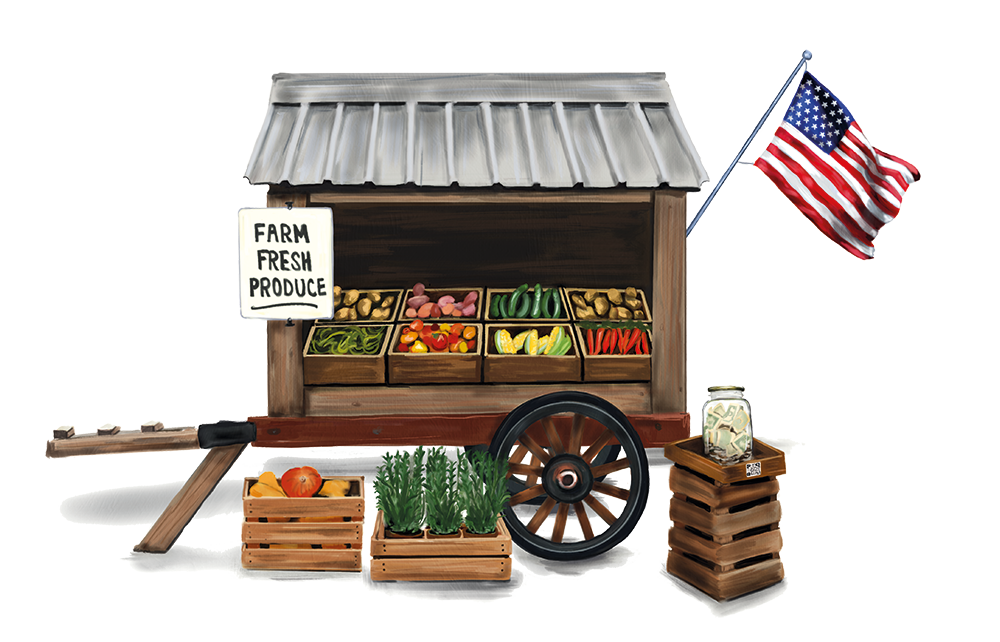
One of the more dystopian aspects of modern life is that in nearly every major American city, you cannot simply walk into a convenience store to buy something. Instead, you often have to ring a small bell and wait for a clerk to come unlock your tube of toothpaste or bottle of shampoo from behind a glass case. This is considered normal, even sensible, in a cultural moment where social trust hovers around a record low. One place this doesn’t feel normal, however, is at America’s many local farm stands.
The roadside farm stand emerged in the early 20th century as automobiles became more widespread. Traditionally, farmers would set up small tables or wagons to sell surplus produce, eggs and dairy goods to passersby. Today, farm stands often come with modern flourishes, such as Venmo QR codes and curated Instagram presences. But they remain an iconic symbol of American agritourism and local food movements, offering fresh, seasonal items and a nostalgic connection to small-scale farming. They are almost always unmanned, running entirely on the honor system.
Today, farm stands often come with a modern touch, such as QR codes and curated Instagram presence
The regulatory state, for all its emphasis on depersonalized mechanisms, inadvertently encourages this last enclave of high-trust society. While selling prepared food requires a litany of inspections and licenses, most states have a version of the Cottage Food Law, which allows the sale of farm surplus and minimally prepared foods with little to no oversight. This incentivizes local farmers to set up roadside stands, even if it does not quite pay to hire full-time staff. They just have to take a chance and trust their neighbors. Still, it is possible to make decent money from small private farms, according to “ecopreneur” Alex Fasulo, who owns and operates a farm in upstate New York. Fasulo launched her own farm stand two years ago and sells everything from squash, flowers and microgreens to fresh fertilizer from her barnyard. “You’d be surprised how much you can make from just one acre of land,” she said. While she trusts passersby to leave cash in an unlocked glass jar, which sometimes contains hundreds of dollars by the end of the day, she says she has never had a dime go missing.
On the side of the road, we discussed why that might be: why hundreds of dollars in cash can sit safely in an impoverished former manufacturing town upstate while Manhattanites cannot be trusted not to steal a soda in the richest city in the world.
To put it bluntly, the criminal stealing from CVS is not the same person taking a day trip to Rhinebeck. The city slicker from Williamsburg, for all his virtue signaling on crime and justice, likely grew up with a small-c conservative respect for his neighbors. Stealing is unthinkable for him, even if he excuses it for others.
For those less morally inclined, fear of being caught keeps them in line. “There are a lot of cleared fields, right?” Fasulo said. “That’s how you farm, that’s how you cut the hay, and that’s how you can see what everyone is up to.” The anxiety of “being perceived” is a strong deterrent to antisocial behavior. In the country, the Second Amendment helps as well. “Somewhere in the distance, someone owns a firearm and is watching you.”
But those incentives work only for out-of-towners. They are unnecessary for neighbors. “A lot of these families have been here for 200 years. It just goes without saying that you honor the cultural way of life. They are really into bartering, trading with neighbors, and looking out for each other,” Fasulo said of nearby farmers with whom she trades.
The culture includes a respect for the farming process and an awareness that you are shopping from a family that needs to feed children and chickens, not meet a corporate bottom line. This is inherited from the frontier days, a sense of rugged individualism that insists you must fend for yourself – or at least build trust with your neighbors so you know they will not kill, rob, or otherwise take advantage of you.
This localized autonomy then breeds a healthy skepticism toward government authority that increasingly dictates how their farms operate. “No one hates the government more than farmers. They are rebellious spirits, and a farm stand is a middle finger to anybody telling them what to do,” Fasulo said.
Would you rather eat processed slop from a multinational or the fresh harvest of your friendly local farmer?
Yet farmers are not oblivious to the rest of the world. They know the country does not operate with the same trust and social cohesion they have inherited. They know it is always a risk to leave produce and cash on the side of the road, and they choose to make the leap of faith anyway. That leap is key to bringing back a high-trust society.
The farm stand continues to exist because farmers will it into existence. They take the chance of being burned because their culture and identity demand it, no matter the cost. While the rest of the country are less trusting, we are also less willing to take risks. Our increasingly fragmented cultural identities are subordinated to the bottom line. But with food especially, it does not pay off. Would you rather eat processed slop from a multinational grocery chain or the healthy, fresh harvest from your friendly local farmer?





Comments