

Four years after President Putin bragged that he would “demilitarize and denazify” Ukraine, it still stands free. Talking to locals, expats, journalists and diplomats recently in Kyiv, I found a profound sense of realism and a confidence. Ukraine’s military strength is burgeoning. Its people are determined to see things through. They are cautiously optimistic.
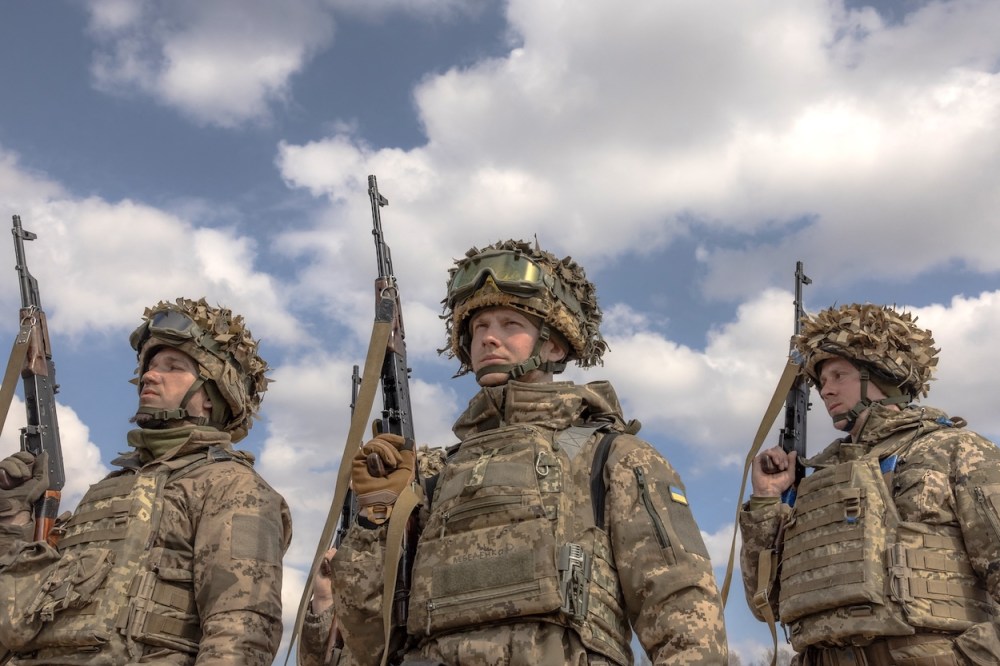
Although life is looking up after an exceptionally difficult winter, one astute insider noted that the country faces the same strategic challenges: a larger, implacable, and cunning enemy; economic fragility; $500 billion damage to infrastructure; US hostility; and steady civilian and military deaths. The faces of the fallen were everywhere.
Two days before my arrival, Russia had launched almost 1,000 drones at Ukraine over a 24-hour period. An unprecedented daytime strike on the historic center of Lviv was a Russian reminder that it could and would strike anywhere, untrammeled by the laws of war. It was sobering to experience repeated air alerts. People no longer appeared to heed alerts of incoming Russian drones, even if these remain deadly.
The warmer spring weather certainly lifted the mood. People were encouraged that the frontline has been stabilized, with big holes punched in Russian air defenses at the same time as Ukraine’s own long-range strike capabilities are ticking up. This allows Ukraine to hurt Russia, including by attacking its oil export infrastructure to reduce revenues and damage its reputation as a reliable supplier. Stabilization has for now reduced pressure to give away land for peace.
The front, however, is not stalemated. It’s still going back and forth on a daily basis as each side innovates, adapts and reacts. Although Ukraine has killed and wounded huge numbers of Russian soldiers, still they come. More green cover on the frontline may help Russia resume its infiltration tactics which proved successful if hugely costly last year.
Ukraine is also suffering from glaring manpower shortages. Two million Ukrainians are said to be evading the draft with 200,000 more absent without leave. Soldiers at the front are spread very thinly. Ukraine compensates with its formidable drone defenses with the obvious risk that these can be compromised by bad weather or when Russia targets Ukrainian drone operators. There were also persistent complaints about wasteful tactics by the General Staff in Kyiv, and about organizational, logistic, medical and weapon problems which should have been resolved years ago. The new 32-year-old Minister of Defense Mykhailo Fedorov has been tasked to sort these out.
With no sign that Putin is reconsidering his fundamental objectives, Ukraine is digging in for the long haul. It is clear that, by cutting support, ropey diplomacy, rhetorical hostility and seeming affinity with Moscow, the US has lost almost all of its leverage to force Ukraine to settle on Russian terms.
Kyrylo Budanov, formerly head of Ukrainian Military Intelligence, and now head of the Office of the President, told Britain’s Prince Harry on his unannounced visit to Ukraine this week, that although Ukraine is open to negotiation, its red lines remain the same: “We will not recognize any territorial losses, and we are not going to trade our land. Any compromise must, first and foremost, serve Ukraine’s interests.”
This position is based on increasing feeling of strength. According to its Ministry of Defense, Ukraine has gone from having fewer than 10 defense companies in 2022 to 1,500 now. Russia has been unable to sabotage this extraordinary growth. The agility, affordability, and inventiveness of Ukraine’s defense industry show up the complacency of the larger western prime contractors. By the end of the year Ukraine will be able to supply fresh strike equipment with 80 percent capability of western types but at 20 percent of the cost. This will put Russia in a dilemma.
The Ukrainian military industrial complex is rapidly becoming a valuable asset for Europe, as evinced by the growing number of countries and companies entering partnerships with Ukrainian companies. Ukraine has offered to share its battlefield data to train artificial intelligence. The contrast with analog, regressive, sclerotic Russia is stark.
Before I left, I prayed before the eleventh century mosaic of the Virgin Mary
Ukraine has concluded two deals with Germany and Norway and long-term security partnerships with Saudi Arabia, Qatar, and the United Arab Emirates. It has its own first tech unicorn. Some €60 billion of this week’s €90 billion ($105 billion) EU loan to Ukraine will go on military spending. President Zelensky said the EU funds will allow Ukraine to scale up and produce the number of weapons it is capable of producing.
Strength builds confidence. The new generation of extremely talented and committed leaders as exemplified by Budanov and Fedorov and those I met at a workshop in Kyiv are not prepared to sell themselves or their country to the Russians at the behest of Trump nor abandon their wish to remain a European country.
By resisting, Ukraine is thwarting Russian ambitions, changing the nature of European security, and buttressing democracy against the challenge of authoritarianism.
Before I left, I prayed before the eleventh century mosaic of the Virgin Mary, known as the Oranta, in Saint Sophia Cathedral. The mosaic has survived Mongol, German, and Soviet occupation. The cathedral was struck by a Russian drone last year.
Legend says that as long as the Oranta stands in Saint Sophia, Kyiv stands, too.






Comments