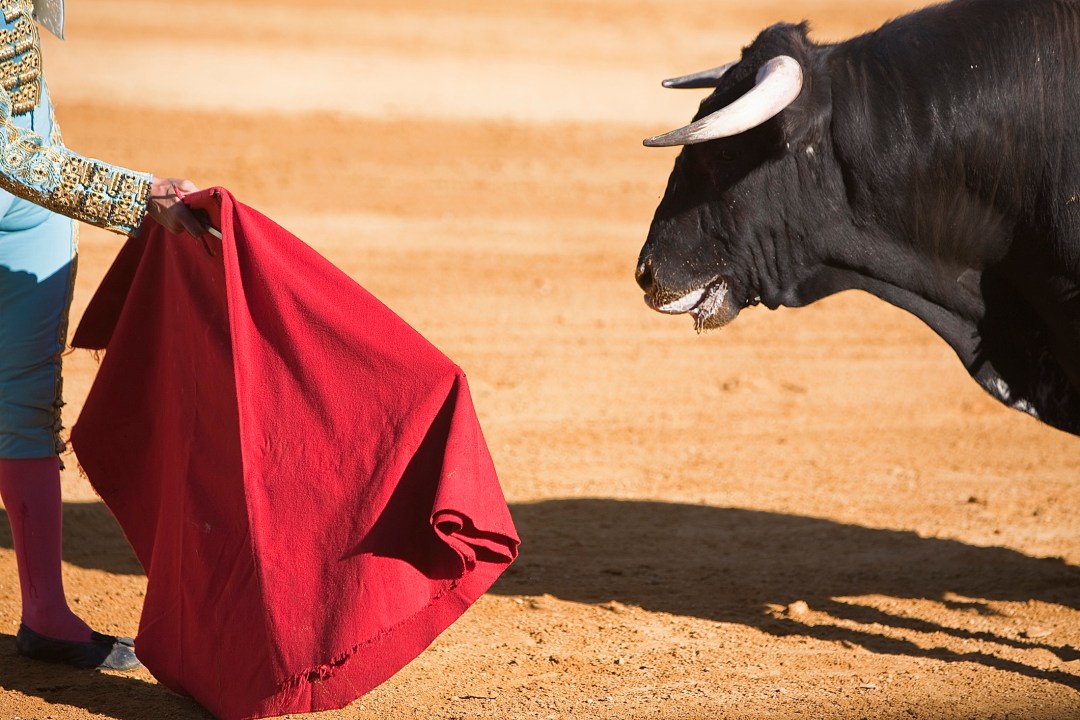
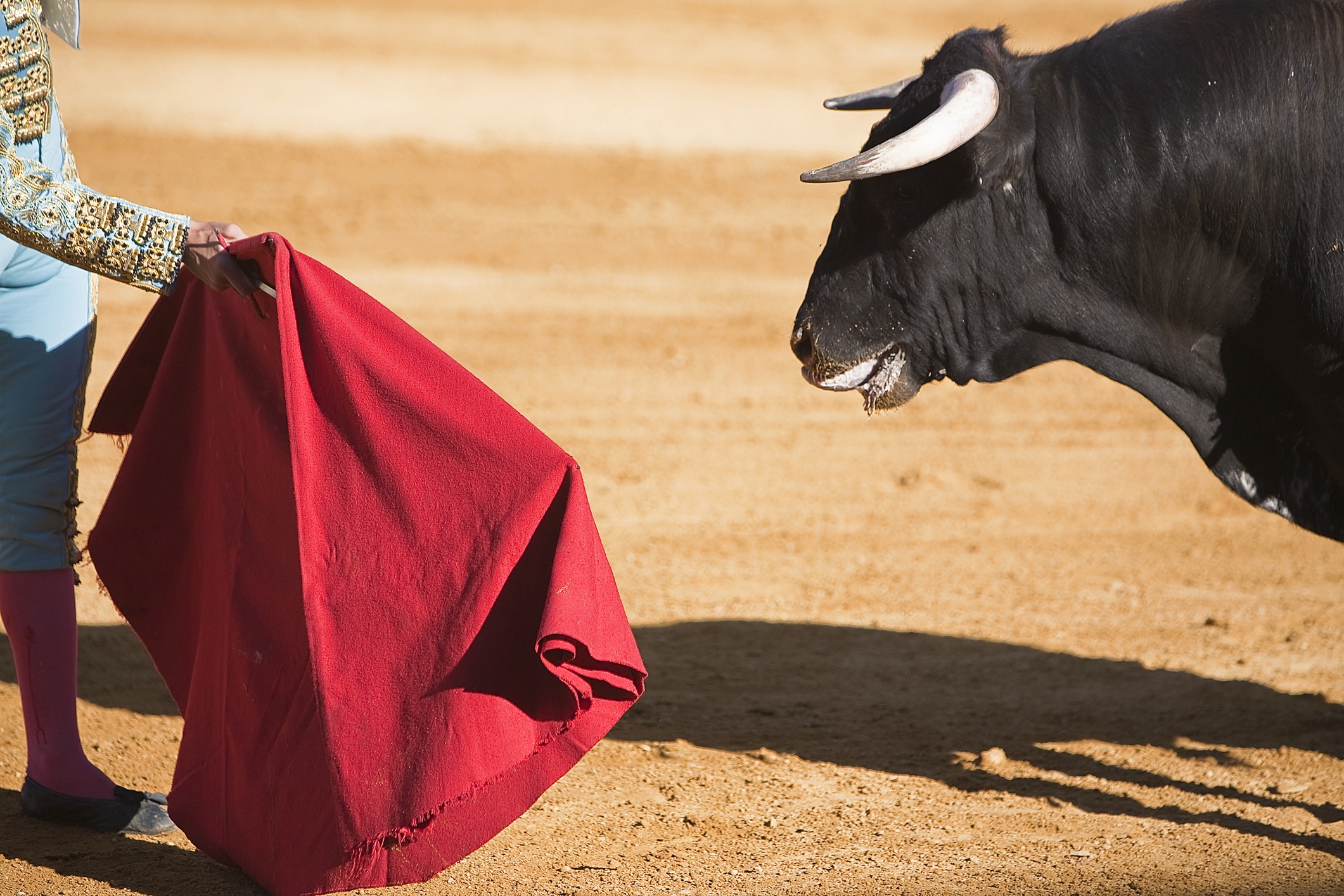
Bullfighting season in Spain began earlier this week at Seville’s huge annual fair, known as the Feria de Abril. A couple of days before the fair began, at a corrida de toros (‘running of bulls’, translated into English as ‘bullfight’) in the Andalusian capital’s beautiful 18th-century bullring, one of the country’s best-known bullfighters (toreros) was badly gored in the rectum. The reaction from anti-bullfighters, pouring out on social media and in comment threads, was entirely predictable: he deserved it.
This sort of hateful, knee-jerk reaction to bullfighting can be ignored as the ranting of morons. But I can no longer dismiss the more compelling anti-bullfight arguments – that it is cruel, outdated and at the very least in need of reform – as easily as I used to.
When I relocated from London to Andalusia 11 years ago, I wouldn’t hear a word against the corrida. The bulls were a big part of the reason I had always wanted to live in the south of Spain, where bullfighting – like flamenco, an art with which it is closely related – is much more a part of the culture than in any other region. Although, as an animal lover, I was often saddened by events in the ring, I accepted them as a part of a traditional and strangely moving spectacle. I was still in the grip of a childhood obsession, a romantic infatuation.
My dad took me to my – and his – first corrida in Le Grau-du-Roi, in the south of France, when I was about ten. My parents made friends with the owner of a bar opposite the bullring. Seeing my interest, he gave me some of the big, colourful posters on which bullfights are advertised. On one occasion he gave me a pair of bloodied banderillas (spiked sticks that are placed between the animal’s shoulders), which had been used in the previous day’s corrida. They were mounted on my bedroom wall back in the Cotswolds, crusting and flaking next to the posters – symbols of a spectacle I felt I would never tire of.
Since then, I have attended corridas all over Spain. I’ve seen them in temporary rings in small villages, where I’ve had to jump over the carcass out back to reach the bathroom, and in the great arenas of Pamplona, Madrid and Seville. I’ve run with the bulls of Pamplona six times. I’ve read widely about the bullfight, not just the mandatory Ernest Hemingway but excellent modern works such as A.L. Kennedy’s On Bullfighting and Edward Lewine’s Death and the Sun. This process has unquestionably deepened my appreciation of bullfighting; but it has also acted as a counterbalance to my youthful enthusiasm.
I’ve seen bloodbaths caused by bad kills, including one in Malaga that I wish I could forget
The main problem for me is the kill. At the end of the Spanish bullfight, the torero attempts to drive a sword in between the bull’s shoulders. The idea is that it goes straight down into the heart, killing the half-ton animal instantly. But it is difficult and dangerous, requiring the torero to go in over the horns and hit a moving target about the size of a 50p coin.
Which is why it’s so often botched. When it is, the sword usually hits the lungs instead, causing the bull to cough blood and die slowly. I’ve seen bloodbaths caused by bad kills, including one in Malaga that I wish I could forget. I’d say that, of the six bulls killed in each corrida, at least two will be dispatched messily.
The only reason sword-kills are continued is a craven deference to tradition. It would benefit the entire spectacle if the animal was taken backstage and killed by bolt or gunshot, which is how it’s done in Portugal. But as industry insiders have often told me, the world of Spanish bullfighting is ultra-conservative, emotionally averse to change.
The picadores are another element of the bullfight that I’ve come to dread. These are men on horseback, who wear the bull down by driving a lance into its upper back. They are notorious for inflicting excessive damage (sometimes at the request of a nervous torero), which renders the bull useless. When I met him in 2024, Frank Evans, one of the few Brits to have succeeded as a bullfighter, suggested that straining against the horse’s padded armour would be enough to tire the bull by itself. Perhaps reform is needed here, too.
Nowadays, I enjoy only about half of the 20 minutes that each bull spends in the ring. The first few passes, made with a large pink cape when the animal is fast and fresh, are as close to moving sculpture as anything I have seen; and a good last ‘act’, when the torero works closely with the bull, controlling its movement with a smaller, dark-red cloth, can still cause a lump in my throat. But these days I’m a lapsed or jaded aficionado, struggling with the pains of deconversion.



Comments