
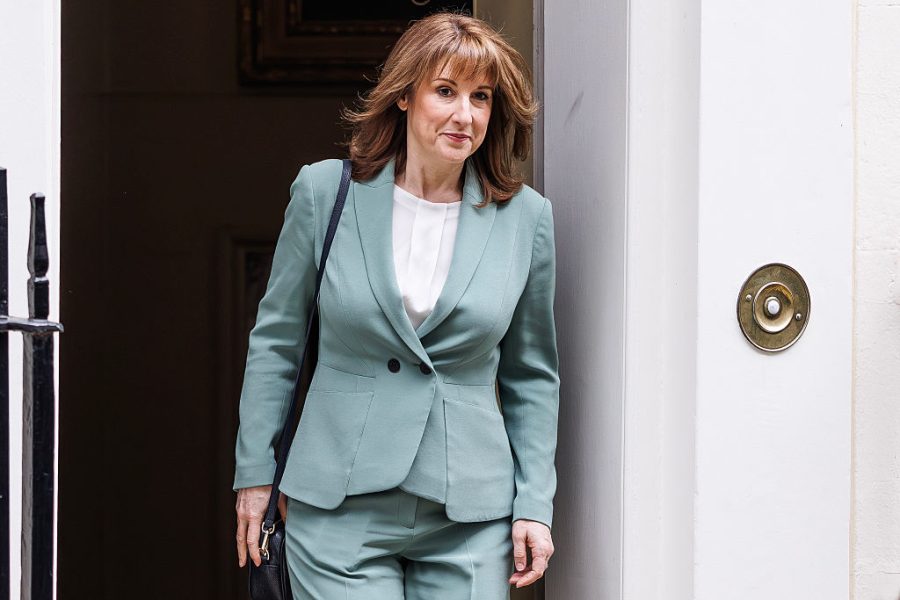
Rachel Reeves lands in Washington tonight to be greeted with bad news. The International Monetary Fund (IMF) – whose spring meeting the Chancellor is attending – has just handed Britain the largest GDP downgrade of any G7 country.
In the freshly released update to their world economic outlook, the IMF forecast growth for the UK this year of just 0.8 per cent – down from the 1.3 per cent they’d previously projected. Things don’t get much better next year either, with just 1.3 per cent growth forecast, again downgraded from 1.5 per cent.
This downgrade singles out Britain and our European neighbours. While the IMF calls the overall effect of the conflict in Iran on growth in advanced economies ‘modest’, they warn of a ‘large negative effect’ on euro area economies and Britain thanks to our reliance on imported energy.
It’s bad news on prices too, with inflation in the UK forecast to climb towards 4 per cent and not return to the Bank of England’s 2 per cent target until the end of next year. The IMF also expects unemployment to hit 5.6 per cent this year, up significantly from the 4.8 per cent rate we hit in 2025.
Elsewhere, the IMF’s report makes clear how the Iran war has pushed the global economy off course: ‘absent the war, global growth would have been revised upward’. Reeves hopes that she can leave Washington at the end of this week – following a meeting on the fringes of the IMF with G7 finance ministers – with a renewed international plan for action to avert a full-blown economic crisis.
But given Britain’s track record of repeatedly finding itself with the worst IMF downgrade and being the most exposed to crisis after crisis, it’s hard to think why anyone would listen. Indeed, Mel Stride, the shadow chancellor is urging ‘international partners to see Rachel Reeves as a cautionary tale of what happens when a politician has no clue what they’re doing and chooses to hammer business relentlessly’. Meanwhile, Reform’s Robert Jenrick said: ‘The Chancellor hiked taxes to record levels and doubled down on net zero madness, leaving us uniquely exposed.’
There are uncomfortable truths behind these harsh criticisms. The IMF’s otherwise incredibly dry report makes the point that regulated price setting last year goes part of the way to explaining why we’re likely to be among the worst-hit countries. And it is admitted even in Labour circles that tax rises early in this parliament – most notably on employer National Insurance – have bled any life out of Britain’s economy engine.
But this goes beyond the current Chancellor. Time and time again these downgrades occur, while global shocks and crises are becoming more frequent. Yet we remain, as a nation, good at only one thing: pointing out what’s wrong. It is not even five years since the last time we found ourselves so exposed to global energy markets and foreign conflicts. Why have we allowed it to happen again? When it comes to actually ‘fixing the foundation’, it seems no government is willing to even try.




Comments