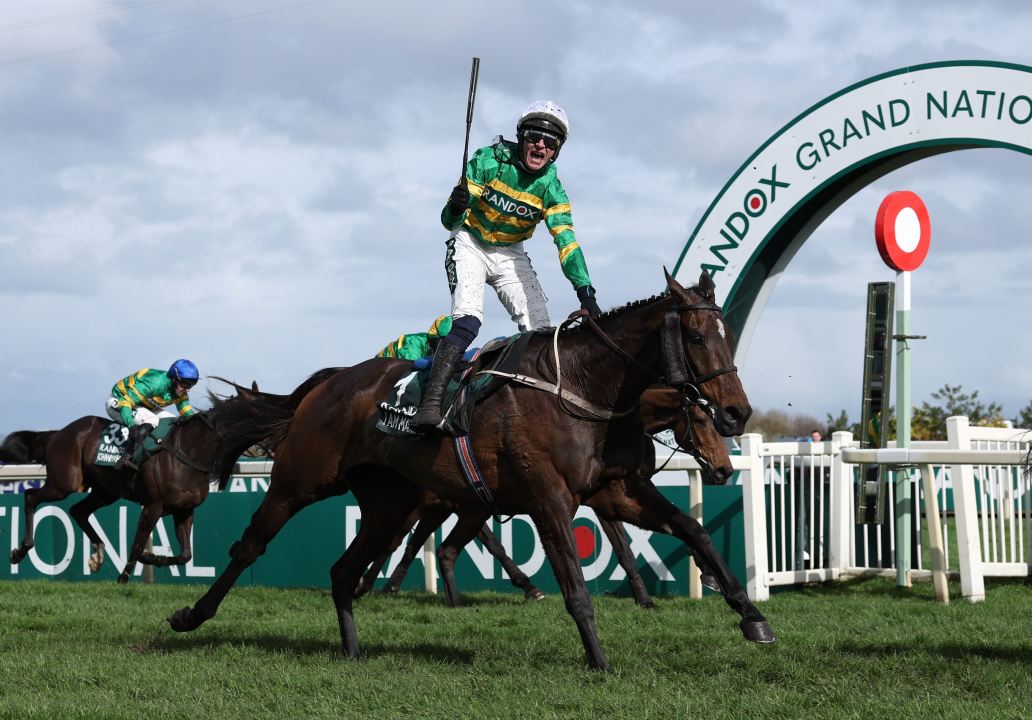
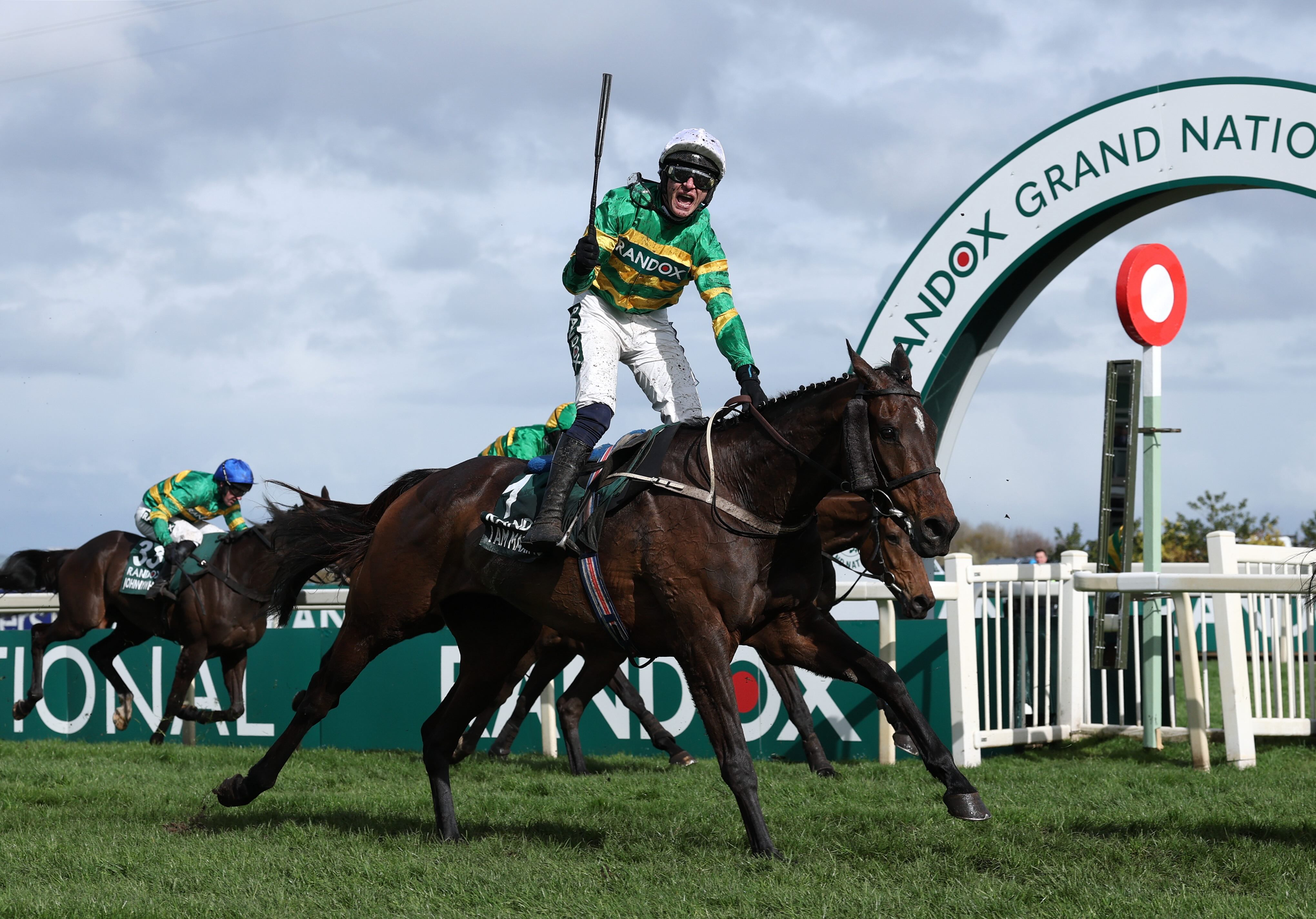
This is not the piece about the Grand National that I expected to write. I had planned to write one saying how the old magic of the race had gone, that the changes made to it in recent years had removed almost all the drama and the excitement. But let’s be honest. Yesterday’s race was a cracker. It was indeed a ‘throwback’ to the old days especially on the first circuit, when two of the leading fancies (Grangeclare West and Panic Attack) departed early on and other runners were soon separated from their riders. There were loose horses getting in the way, outsiders running huge races and one of those outsiders – the 28-1 shot Jordans – made a valiant dash for glory as the field headed for home. OK, he didn’t win, and the ending of the race was ‘predictable’ in that the well-backed, Willie Mullins-trained, Paul Townend-ridden favourite I Am Maximus won (again). But it had still been a thrilling renewal.

It reminded us – including those of us who had been quite depressed about how the National has changed – that we must fight tooth and nail to make sure we never lose it.
For all its modifications, for all the fact that it is now dominated by a few Irish owners and trainers (actually one Irish trainer and owner), the modern Grand National is still a race worth defending against the (sadly) increasing numbers who would like to ban it.
I’ve been captivated by the race since childhood. I first remember watching it with my family back in 1973, the year Red Rum caught the gallant front-running Crisp on the line. When I was eight or nine, my dad and I would choose five horses each and marks would be awarded for their finishing position. My mum would pick a couple of horses too and usually did quite well. In those days the entire, extended family took an interest – as did families up and down the land. The Grand National united the nation.
But that is not the case today. Back in the 70s and 80s, everyone was sad if a horse was killed in the National but only a small minority argued the race should be proscribed. I remember being by a fence in the 1990 race with my father and uncle and seeing a runner (Hungary Hur) break a leg. Green screens were hastily erected round it and the poor animal was shot. It was sad but no one ‘freaked out’. No one wanted to see a horse die, but no one wanted racing banned either, even if deaths sometimes occurred. People could see the bigger picture: namely that, without racing, there’d be no racehorses in the first place.
Since then though, attitudes have changed. Animal welfare has morphed into animal rights. It’s all become a lot more emotional (some would say border-line hysterical) and social media most certainly hasn’t helped. In the 70s and 80s, if you didn’t like something, you ignored it. Today, you want it banned.
Fox hunting went (some would say ‘fair enough’). But then – despite its vastly improved welfare record – greyhound racing was targeted. Now it’s horse racing – in particular the Grand National – that’s in campaigners’ cross-hairs. In 2024, to placate the ‘antis’, the racing authorities lowered the fences in the National and reduced the field from 40 to 34. But the opponents are still not satisfied and, let’s face it, are now going mainstream.
Even if the risks can never be totally eliminated, the Grand National is a life-enhancing event
‘The Grand National is a spectacle built on death – it’s time to end it’ was the title of a piece this week by Rob Williams, the features editor of the Manchester Evening News. ‘The modifications to the event haven’t stopped the deaths,’ Williams argued. ‘It’s no longer reasonable to argue that these incidents are unavoidable accidents when it appears the only way to avoid them is to stop the Grand National happening?’ But should we ban driving cars because sometimes people get killed on the roads? We don’t because the enormous societal benefits of having motorised transport outweighs the sad and regrettable deaths on the roads that sometimes occur. It’s the same with racing and the Grand National.
While concerns for equine welfare are the ‘lead-in’ for opposition to the National, it’s hard not to notice other elements at play too. There is a definite air of Cromwellian kill-joy puritanism (and snobbery) in some of the antis-discourse, as we saw on Friday with misanthropic comments about Liverpool ‘chavs’ and ‘slappers’ drinking champagne while horses were put at risk. Again, no one goes the races to see horses killed or injured. And what on earth is wrong with working-class people letting their hair down and having a good time at a racing festival? Life is grim enough at present with the world news, so why can’t people be allowed to switch off from it all for a few hours?
Even if the risk to horses and jockeys can never be totally eliminated, the Grand National is a life-enhancing event. It brings joy and happiness to millions – and has done so for the past 187 years. For ten glorious minutes yesterday we could forget our cares and woes and immerse ourselves in a poignant past-meets-present celebration of a race that our parents, grandparents and great-grandparents enjoyed too in years gone by. If Britain ever does lose the Grand National, then the country really will be finished.



Comments