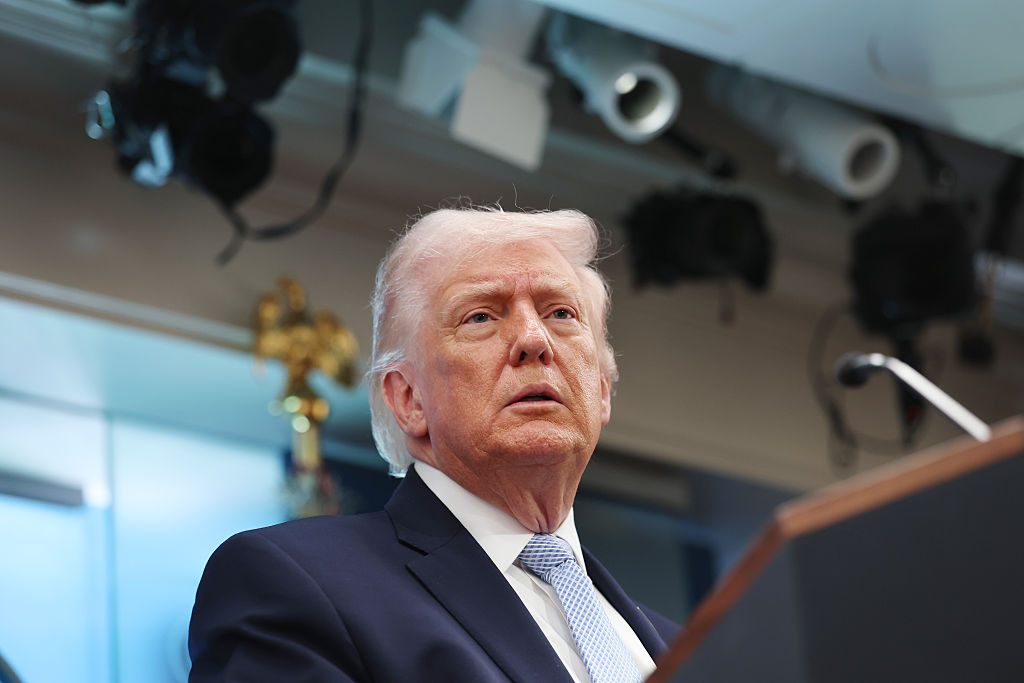
At 5 p.m. Washington time, speculation was rife that a deal between the United States and Iran was in the works. Pakistan’s Prime Minister, Shehbaz Sharif pleaded for President Trump to extend his 8 p.m. Tuesday deadline – before he destroyed every bridge and power plant in Iran – by another two weeks in order to give diplomacy more time to work. Yet the New York Times reported that Iranian officials cut off direct contact with their American counterparts. And the White House wasn’t offering definitive answers about whether Trump was leaning toward escalation or a ceasefire.
The ceasefire couldn’t have come at a better time for both sides
Finally, less than an hour and a half before the deadline, Trump made his announcement: the US would suspend bombing operations against Iran for two weeks if Tehran agreed to re-open the Strait of Hormuz. ‘We received a ten point proposal from Iran, and believe it is a workable basis on which to negotiate,’ Trump wrote. ‘Almost all of the various points of past contention have been agreed to between the United States and Iran, but a two week period will allow the Agreement to be finalized and consummated.’ The Iranians confirmed the news less than an hour later, with Iranian foreign minister Abbas Araghchi claiming that Trump agreed to the general framework of Iran’s ten-point proposal.
As one would expect, the US and Iran both claimed victory. Iran’s Supreme National Security Council boasted that Tehran forced the so-called ‘Great Satan’ to recognise Iran’s negotiating position, which included control over the Strait of Hormuz, assurances that the US and Israel wouldn’t resume the war and full sanctions relief for the Iranian economy. In the hours and days ahead, Trump and his advisers will argue that the nearly six weeks of strikes and threats of more to come finally coerced the Iranians to enter serious negotiations. Either way, the result is the same: for at least two weeks, the fighting will stop, more vessels will transit the region’s waterways and US and Iranian officials will try to come to a mutually-acceptable settlement. Israel, too, will be restrained from further action during this time period.
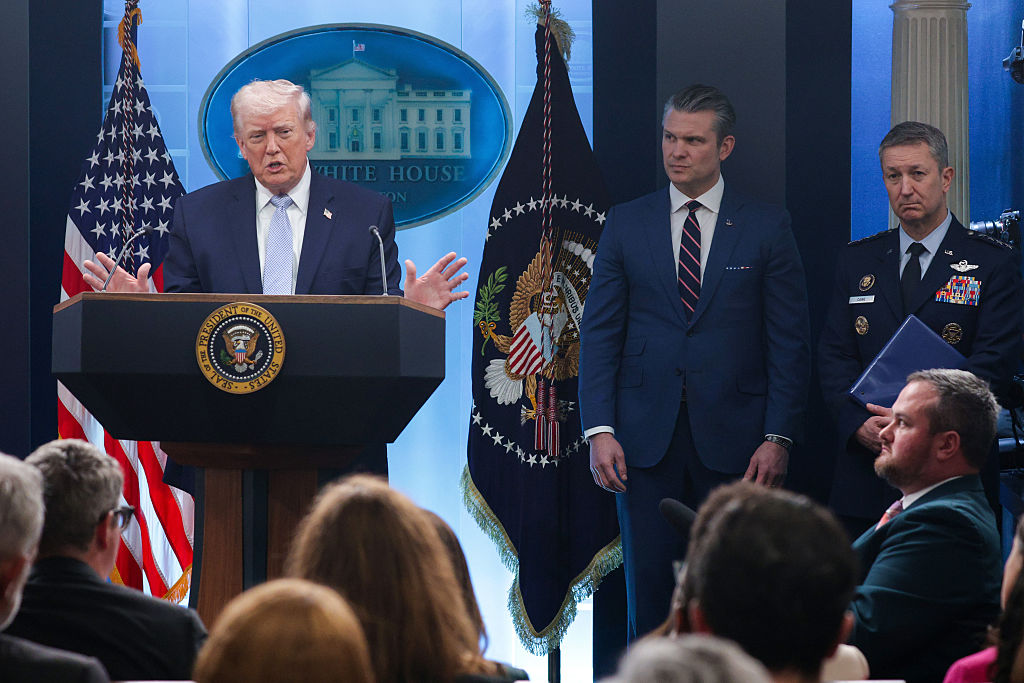
The ceasefire couldn’t have come at a better time for both sides. While the Iranians have been resolute throughout the conflict, they have nevertheless seen dozens of their senior officials and military officers killed, their navy effectively sunk, their air force grounded and a good portion of their ballistic missile stockpile destroyed. A hypothetical US bombing campaign against Iran’s bridges, nuclear power plants and energy facilities, which Trump threatened to green-light if Tehran didn’t make a deal, would have negatively impacted its ability to prosecute the war at the current pace. And despite the Iranian people’s hatred for the regime, many of them could use a break from the war, which has made their daily lives even harder.
Trump, too, needed a respite. The war is unpopular with the American people, with one poll finding 60 per cent of Americans opposing it. A March poll by the Pew Research Center was even more brutal for the president: 64 per cent of Americans surveyed were not confident about Trump’s decision-making on Iran. Americans by and large didn’t buy Trump’s rationale for why the war needed to happen in the first place, partly because the Trump administration neglected to make much of a case to the public beforehand. Congress never authorised the war either, which means that it’s not a stretch to call the entire endeavour unconstitutional.
The war is also hitting pocketbooks across America and impacting prices from Europe to Asia. In the US, gas prices are above $4 a gallon. Compared to this time last year, that’s roughly 90 cents more for a gallon of regular petrol, yet another irritant to American families dealing with higher costs across the board. In Japan, the energy situation was getting so precarious that Japanese officials were considering direct negotiations with Iran to ensure crude oil supplies destined for the East Asian nation could clear the Persian Gulf. Countries as far away as Egypt and the Philippines are instituting energy conservation measures to manage cuts to the fuel supply. In the UK, the war is exacerbating the longstanding debate over energy policy. Needless to say, none of this particularly great for a government’s approval or for economic growth.
It’s tempting to think Trump’s last-minute announcement is the beginning of the end. But that reading would be far too optimistic. What we have here is a pause to the war with the possibility of a diplomatic resolution. Getting there will require extraordinary hard work and a willingness by Washington and Tehran to meet each other half-way. This is not something Trump is particularly fond of doing—he sees concessions to the other side as weakness, not the cost of doing business. Nor is he exactly a man with unlimited patience. Iran, meanwhile, will remain sceptical of any proposal Trump puts on the table, knowing that it could be rescinded the same day. This is not without some justification; on two separate occasions, Trump has chosen to cut diplomacy short in favour of military force. Even if the next two weeks proceed without incident, we could end up watching the same movie play out later this month.



Comments