
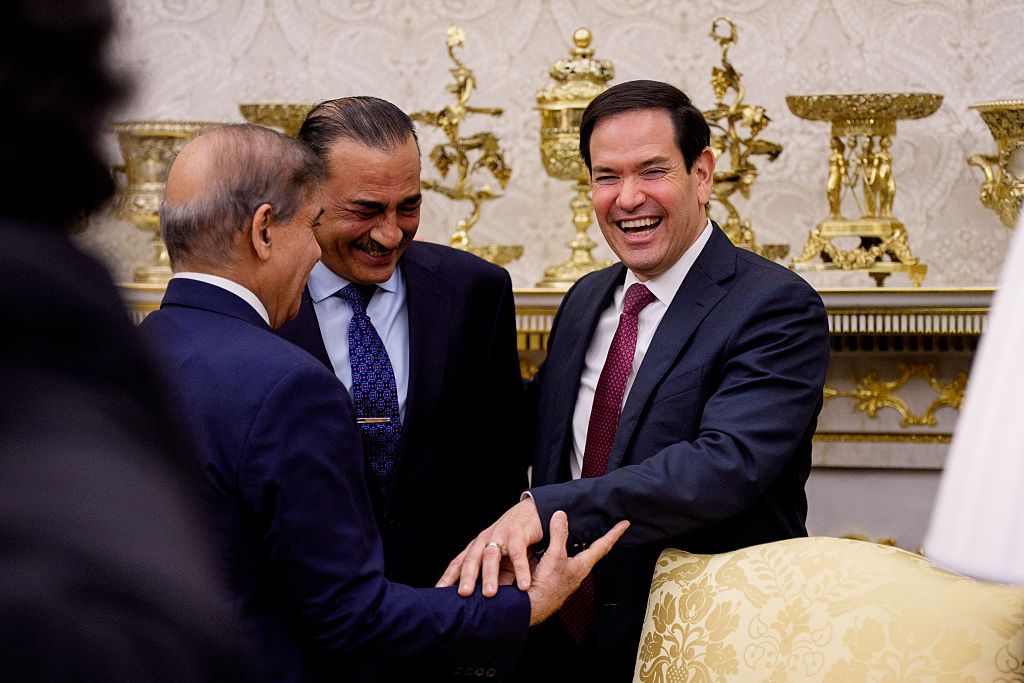
Pakistan, the world’s only Muslim nuclear power, has traditionally been an international sideshow. No longer. The country has reportedly been passing messages between Washington and Tehran in efforts to bring an end to the Iran war. It is has a five-point plan aimed at restoring “peace and stability” across the region. How have the Pakistanis pulled off this remarkable diplomatic makeover?
The answer starts with some critical decisions the Pakistanis took last year. After the four-day armed conflict between Pakistan and India in May 2025, both sides claimed “victory”. But crucially Islamabad publicly acknowledged Washington’s role in achieving a ceasefire (something India refused to do). Pakistan later nominated President Donald Trump for the Nobel Peace Prize. Both moves were part of a carefully orchestrated Pakistani charm campaign to stroke Trump’s ego.
Iran is the latest focus in Pakistan’s cold-eyed diplomatic maneuvering
Pakistan has also been wooing important figures in Trump’s orbit, including special envoy, Steve Witkoff, and the president’s son-in-law, Jared Kushner, by mixing business with geopolitics. There have been reports of discussions on investment opportunities and a crypto-deal with a Trump family-linked business as well as on security issues. Witkoff, a real estate developer, is said to have brokered an unusual deal between the American and Pakistani governments to redevelop the Roosevelt Hotel in Midtown Manhattan, which Pakistan owns. The terms of the deal have not been divulged but a White House official, speaking to the New York Times, described it as a “potentially lucrative partnership between the two governments to co-own the property”.
In a sign that Trump thinks the Pakistanis might be useful, he publicly thanked Islamabad last year for arresting the “mastermind” behind the bombing at Kabul airport in August 2021. The attack killed 13 US service members and 170 Afghan civilians during the chaotic US withdrawal from Afghanistan. It stood in a stark contrast to Trump’s first term when he accused Islamabad of giving the US “nothing but lies and deceit” and providing “safe haven to terrorists”.
The other not so secret weapon deployed by Pakistan is the country’s army chief Asim Munir (elevated to field marshal, only the second officer in Pakistan’s history to hold the rank). Munir has had several meetings with Trump, including a one-on-one lunch at the White House – the first time a sitting US President has received Pakistan’s military chief without civilian leadership present. Trump has described Munir as “my favorite field marshal” and an “exceptional human being”. High praise indeed from Trump who sees international relations mainly through the prism of strong personal relationships.
The Pakistanis haven’t just been buttering up the Americans. There have been high-level engagements with countries across Central Asia, including Kazakhstan, Kyrgyzstan and Turkmenistan. Pakistan’s military chief has held meetings with his counterparts from countries across the Middle East, including Egypt and Jordan. In September 2025, Pakistan signed a mutual defense agreement with Saudi Arabia. This states that “any aggression against either country shall be considered an aggression against both”. A commitment that has yet to be tested.
Iran is the latest focus in Pakistan’s cold-eyed diplomatic maneuvering. The two countries share a 905 km border, and a long history of cultural and religious ties. Pakistan is home to the world’s largest Shia Muslim population outside Iran itself. The Iranians were the first country to recognize Pakistan when it achieved independence. Pakistan returned the favor by being one of the first nations to recognize the Islamic Republic of Iran, created after the 1979 revolution. It helps that the US has no military bases in Pakistan. There are occasional hiccups between the Iran and its neighbor over cross-border militancy but it is not in the interests of either to let matters get out of control.
The Pakistanis have much to gain from an end to Middle East hostilities. The war is hurting Pakistan’s economy because it is heavily dependent on imported oil, much of which comes through the blocked Strait of Hormuz. The price of gas and diesel went up by around 20 percent last month and the authorities have introduced a shorter working week for government employees in an effort to save fuel. In return for playing peacemaker, the Pakistanis will also be hoping to secure future defense deals and investment from the rich Gulf monarchies.
However, Pakistan has serious problems at home. Unrest and political violence are a daily occurrence. There is an ongoing insurgency in the province of Balochistan. It is currently engaged in a bombing campaign against neighboring Afghanistan, and relations with India are tense after the military clashes last year. Pakistan is not a country of democracy or basic freedoms. Imran Khan, the former prime minister, is languishing in prison. He is just the latest in a long line of Pakistani leaders to end up behind bars after losing power.
Field Marshal Munir may have found a friend in Trump. But Islamabad’s peace efforts may well fail – or, more likely, simply be ignored. The days of being an international irrelevance are never too far away for Pakistan.





Comments