
Chas Newkey-Burden has narrated this article for you to listen to.
Like many good ideas, the London marathon was conceived over a drink in a pub. Inspired by their experience running the New York marathon in 1979, two British athletes met in the Dysart Arms, next to Richmond Park, to discuss staging a similar race in London. It became an iconic event and, such has been its success, organisers are now in talks to hold the London marathon over two days instead of one.
The first Olympic marathon was held in 1896 in Athens. Of the 17 starters, only nine completed the gruelling course. The original distance was 25 miles but, for the 1908 London Olympics, the course was extended to 26.2 miles after the Queen asked for the route to start at Windsor Castle and end in front of the royal box at the Olympic stadium. From 1924, 26.2 miles became the standard.
Marathon runners love boasting. How do you know if someone’s run a marathon? They’ll tell you. How do you know if someone’s about to run their fifth marathon? I’ll tell you. In my experience, tackling the 26.2 miles is almost as awful as you’d fear but even more wonderful than you’d hope.
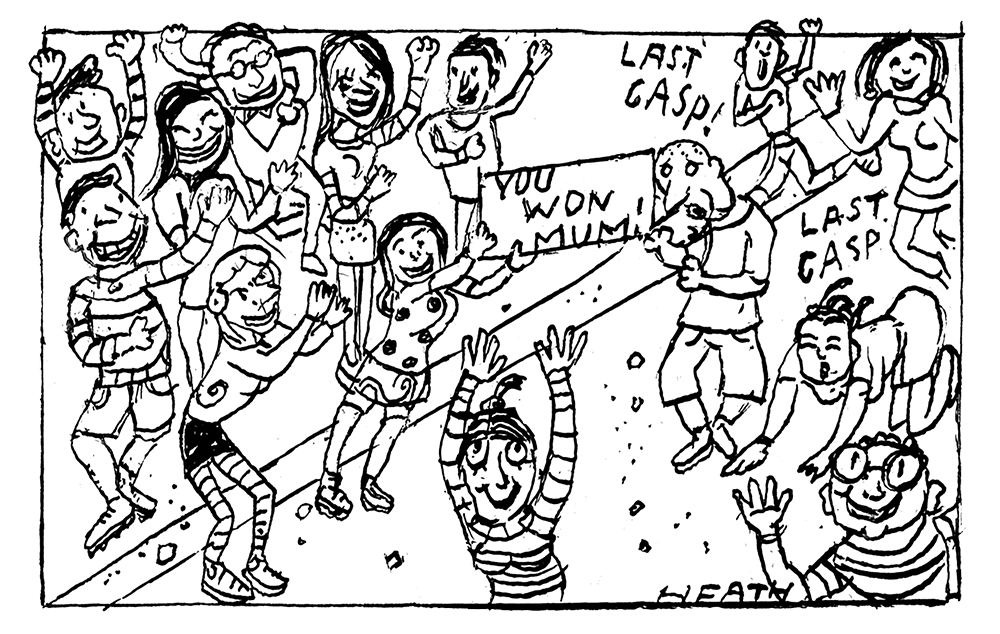
Well-wishers line the course with smiles, cheers and offers of high-fives and Jelly Babies. God bless them all, apart from those who shout ‘Well done, you’re nearly there’ as early as mile four. Some hold amusing signs, like ‘That bad Tinder date is behind you’ and ‘Don’t trust a fart after mile 20’. They raise a chuckle just when you need one.
The signs seem to get saucier each year. ‘Sure, it’s long and hard – but since when has that been a bad thing?’ read one held by a blushing maiden at last year’s Dublin marathon. A young woman at the London marathon waved a sign bearing her phone number and the memorable message: ‘Call me if you want to finish twice.’
People say the marathon is a 20-mile run and six miles of hell. Things certainly get testing in those final miles as your glycogen runs out and you risk ‘hitting the wall’. The hours of friction mean that you get blisters in awful places and men’s nipples start bleeding. Some runners lose control of their bodies and their minds. I’ve seen several participants, ahem, let themselves down.
Another embarrassment is being overtaken by runners dressed as Batman, Big Ben or giraffes, but none of this can take away from the magical moment when you pass the finishing line, feel a medal being pressed into your hand and the realisation suddenly hits you: I’ve done it. That ecstasy is multiplied when you run for charity: last year’s London marathon raised a record £87.3 million.
The health benefits of training for and running a marathon include cardiovascular rejuvenation, increased bone density and stronger joints, greater aerobic capacity and a surge in mental resilience. Experts say that the glowing high you feel after a long run is caused by substances called cannabinoids, the same stuff that’s found in cannabis.
That feeling has been enjoyed by runners of all ages, from Budhia Singh, who began running marathons in India at the age of three, to Buster Martin who completed the 2008 London marathon in just under ten hours, at the reputed age of 101. Some insisted that Martin was only 94, but his achievement was amazing either way. His first words as he staggered over the finishing line were relatable: ‘Where’s my beer?’





Comments