
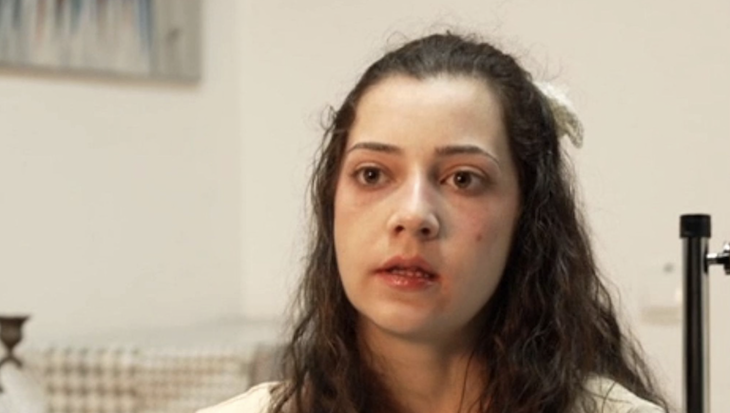
This week, in Spain, a rape victim was killed by the state. A young woman in pain and despair was offered not love or justice but death. The government’s solution to her suffering was not to wrap its arms of care around her but to give her lethal drugs so that she would die. It sounds like a scene from a dystopic novel but this is reality under the regime of euthanasia so many states have embraced.
The idea of the worthless life, a life so awful the state might help to destroy it, is the very essence of dehumanisation
Her name was Noelia Castillo. She was 25 years old. Her life was a hard one. She spent much of her childhood in care homes. She said she was twice sexually assaulted by men – first by an ex-boyfriend and then by three young men in 2022. The second attack propelled her into mental anguish. In late 2022, she tried to take her life by leaping from the fifth floor of a building. She was left paraplegic as a result of her injuries.
And now she is dead. Yesterday, in Barcelona, surrounded by bereft loved ones, she took her last breath in what can only be described as a state-sanctioned killing.
She won the “right to die” under Spain’s euthanasia law that was introduced in 2021. The state gave its deathly blessing to her mortal demise in 2024 but it was halted at the last minute following a legal challenge from her father. He said her mental ill-health impaired her ability to decide on something as grave as death. He fought hard to save his girl. But the European Court of Human Rights overruled him and insisted Spain had the right to assist in the destruction of Noelia’s life.
One struggles to imagine a more nightmarish scenario. A dad battling bureaucrats for the life of his daughter – even Kafka’s mind could not have conjured up such a horror. Everyone should feel haunted by the truly unholy vision of ECHR judges in their draping black robes dismissing a father’s plea for the life of his daughter with a wave of their hand. It feels medieval. It’s a ruling that shames Europe.
The tragic life and death of Noelia Castillo exposes the wickedness of state-assisted euthanasia. The supposed “gift” of death for those in pain or anguish is in truth a grotesque betrayal of the virtues of the civilised society. Modern Europe talks endlessly about the importance of helping those with mental ill-health, yet this young woman in anguish is granted death. Ours is the era of “MeToo”, yet to this woman who suffered sexual assault we offered not solidarity but annihilation. Under the regime of euthanasia we sacrifice our human duties at the altar of “merciful death”.
Some will say Ms Castillo’s case is an outlier in the world of assisted dying. Actually it was wholly in keeping with the logic of death that underpins the euthanasia industry. Spain’s assisted dying law is terrifyingly broad. It permits state-assisted death for those suffering from “a serious, chronic and disabling condition” that “causes constant and unbearable physical or mental suffering without the possibility of relief”.
This goes way beyond “mercy deaths” for people in the final months of life, which is how assisted dying is sold to us. A “chronic condition” that causes “mental suffering” could include everything from depression to anorexia. Supporters of Britain’s own assisted dying bill that’s making its way through Parliament will say our safeguards are superior to Spain’s. For example, only the very ill with a prognosis of six months or less will be granted death.
The trouble is, once you decree, in law itself, that some lives are not worth living, so much so that the state may assist in the poisoning of them to death, you open the door to death as a solution to human turmoil. The idea of the worthless life, a life so awful the state might help to destroy it, is the very essence of dehumanisation. It tells the ill they might be better off dead, and it incites the anguished to pursue that final exit they dream of. It demeans those who want to live and tempts those who want to die. It is inhumanity in the drag of mercy.
Here’s the thing: it is immaterial whether a nation has a lax system of euthanasia, like Spain or Canada, or a strict one, as Britain might soon have. For every regime of assisted death represents a radical transformation in the role of the state.
The state is no longer devoted to the protection of its citizens’ lives – in some cases it may help to destroy them. The health service will at times become a death service, offering poison alongside care. Judges will rule not only on guilt or innocence but also on life and death. The logic of euthanasia is to bend government away from the preservation of life towards the weighing up of a life’s worth before decreeing whether it might legitimately be destroyed.
It changes everything. Let’s put it like this: if you had seen Noelia Castillo on a bridge, threatening to end it all, what would you have done? I expect you would have done everything within your power to save her. Well, we now live under governments that see a person on a bridge and in some cases will help to push them off it. A culture of death stalks Europe.




Comments