
Could an agreement for Britain to join Europe’s defence fund ‘Security Action for Europe’ (Safe) be back on the cards? Speaking in Paris yesterday, European Council president Antonio Costa suggested as much. ‘It could take some weeks, months, but for sure, we will achieve an agreement with the UK on the Safe issue,’ he said.
Nato officials last month warned Starmer that uncertainty over Britain’s defence spending and the speed of rearmament risked undermining the country’s status in the alliance
Talks between Britain and the EU on joining the £130 billion scheme broke down last November when Brussels demanded the government hand over a £5 billion joining fee. France, reportedly, was the most hardline proponent of this ‘pay to play’ model at the time.
Since then, Keir Starmer and his government – most notably minister for EU relations Nick Thomas-Symonds – have been working hard to ‘reset’ relations with Brussels. That endeavour appears to be heading in the right direction: in his speech, Costa said, ‘the new Labour government has started the reset, and the reset is going well.’
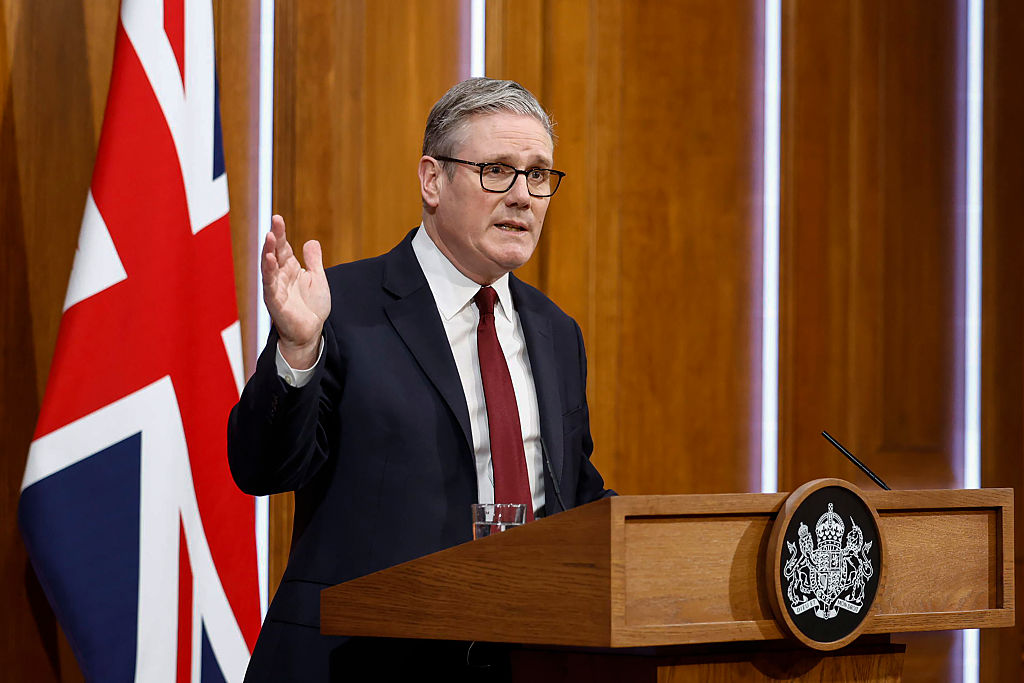
This is sure to have been music to Starmer’s ears. During his grilling at the House of Commons liaison committee session on Monday, the Prime Minister confirmed Safe would be on the agenda with EU commission chief Ursula von der Leyen when the two next meet. ‘We are having intensive discussions about how we can be involved,’ he added. The next UK-EU summit is expected in May.
Starmer’s appearance at the liaison committee came as pressure continues to mount on his government to publish its defence investment plan (DIP), setting out how the Ministry of Defence intends to spend its budget on the armed forces and finance the recommendations of last year’s strategic defence review. The DIP was originally due to be published in the autumn; one reported reason for the hold-up is a row with Chancellor Rachel Reeves over plans to slash the international aid budget to increase defence spending. Pressed again on when the DIP could be expected, Starmer replied: ‘I cannot give you a date, but I can tell you that we are finalising it.’
Defence industry representatives, meanwhile, warned MPs at a hearing of the defence select committee yesterday that manufacturers in the industry had been left in ‘paralysis’ and ‘bleeding cash’, with others are going bust waiting for the DIP to be published.
Last year, Starmer committed the UK to raising defence spending to 5 per cent of GDP by 2035 in line with other members of the Nato alliance. While countries such as Germany, France and Poland have begun to lay out roadmaps for when and how they plan to reach this new defence spending target, Britain’s has been conspicuously lacking.
Beyond a commitment to raise defence spending to 2.5 per cent of GDP by next year, there is little indication of how or if the defence budget will be raised in time by 2035. On Monday, Starmer promised he would set out how to go ‘further and faster’ on defence spending ‘in due course’ – although he refused to be drawn on what this would involve.
Successfully brokering Britain’s entry into Safe would undoubtedly be a welcome diversion for Starmer amid the growing pressure on his domestic defence spending commitments. It would also be chalked up as a win for the government’s new defence diplomacy strategy, launched by defence minister Lord Coaker at the defence tank Rusi yesterday.
While admitting that the measures set out in the defence diplomacy strategy were not ‘wholly new’, Lord Coaker described the strategy as ‘fine-tuning’ the government’s overlapping diplomatic and defence priorities. While also unable to name a date for the DIP’s publication, he stressed that ‘significant investment is going into British defence at the moment’.
It is doubtful, however, that this will be enough to assuage concerned Nato officials who last month warned Starmer that uncertainty over Britain’s defence spending and the speed of rearmament risked undermining the country’s status in the alliance. Similarly, at the beginning of the year, European members of the alliance laid out their expectation to British officials that the UK would do more of the ‘heavy lifting’ on European defence. They are also believed to have stressed the need for the country to up its defence spending quickly.
When asked by The Spectator if Europe’s anxieties over the lack of a spending roadmap for British defence were a concern for the government, Lord Coaker was unable to answer decisively. He stressed that the UK’s involvement in Nato was ‘immense’ and that the country ‘is leading in so many ways’. He also highlighted that the Nato alliance was an umbrella structure under which Britain was engaged in multiple bilateral agreements with countries such as France, Germany and Norway, as well as leading on the Joint Expeditionary Force coalition and continental nuclear deterrence.
If all discussions go smoothly over the next few months, it appears that British membership of Safe in some form seems less elusive than some in Starmer’s government may have feared. Whether the same can be said of the urgent need to raise defence spending more broadly is another question entirely.






Comments