
Situation report
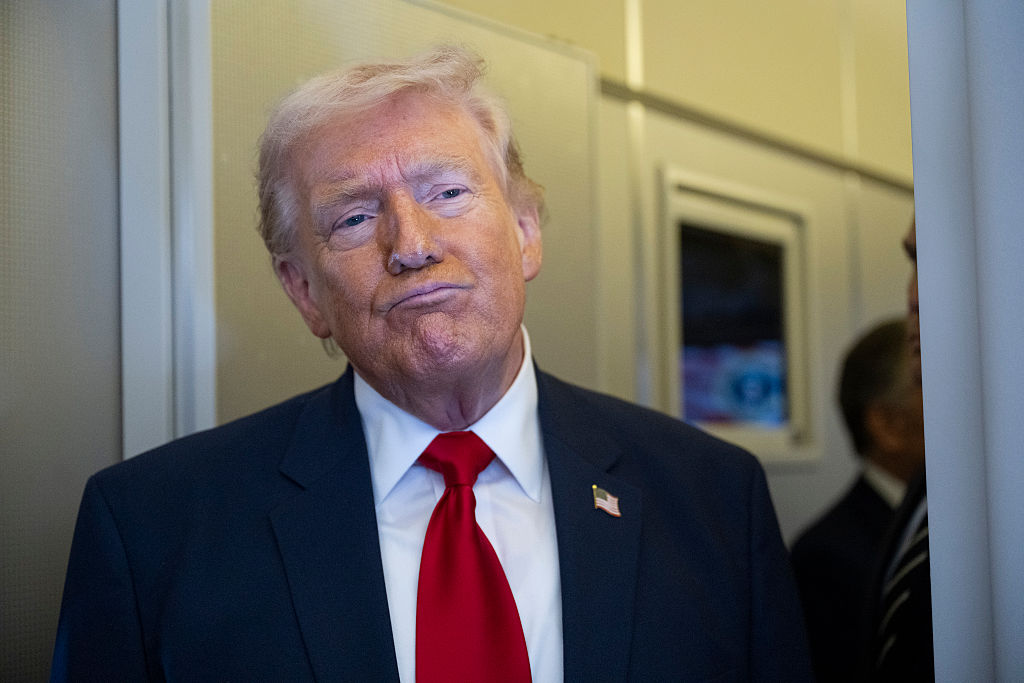
The war with Iran shows little sign of slowing. Even as Donald Trump said on Monday that the war was ‘very complete, pretty much’ and suggested it was nearing its end, fresh waves of strikes continued overnight across Iran while missiles were fired toward Israeli cities. The exchange now stretches from southern Lebanon to the Gulf, with oil prices surging and diplomatic efforts elsewhere in the region abruptly frozen.
Even as Donald Trump said that the war was ‘very complete, pretty much’ and suggested it was nearing its end, fresh waves of strikes continued overnight across Iran
Iranian missiles were launched repeatedly toward Israel during the day, setting off air-raid sirens across central districts including Tel Aviv and Jerusalem as well as communities in the north, repeatedly sending the population into shelters. Israeli authorities said defence systems continued to intercept the incoming projectiles, though officials cautioned that the country’s defensive shield ‘is not hermetic’. In Arad, a 78-year-old man was moderately injured while rushing to a shelter as the alarms sounded.
The missile fire formed part of a wider exchange that still stretches across much of the Middle East. Hezbollah claimed responsibility for launching rockets toward central Israel, including a barrage aimed at what it described as a Home Front Command base in Ramla, some 135 kilometres south of the Lebanese border. Two people were reported lightly injured in that attack. Israeli forces responded by striking the launchers within an hour, according to Israeli reports, while fighter jets continued attacking Hezbollah targets in Lebanon.
Israeli aircraft also struck branches of the Al-Qard Al-Hassan Association – the financial network used by Hezbollah to fund its operations – hitting facilities in the Dahieh district of Beirut and south of Sidon. The Israeli military said the sites were used to channel funds into weapons purchases and salaries for fighters. Earlier strikes in Beirut reportedly hit 35 high-rise buildings linked to Hezbollah infrastructure.
On the ground, Israeli troops have begun what officials described as a targeted raid in southern Lebanon aimed at dismantling militant infrastructure and establishing a forward defensive belt to protect Israeli communities near the border. The operation follows several days of escalating exchanges along the frontier and comes as Israel debates whether to expand the campaign further north.
The war’s central theatre remains Iran itself. Israeli officials said the air force completed a wave of strikes on six major Iranian military airfields, destroying aircraft belonging to the Islamic Revolutionary Guard Corps’ Quds Force and damaging runways and air-defence systems. The airfields had reportedly been used to transport weapons and funds to Iranian proxy groups across the region. Israeli commanders described the attacks as part of a campaign to deepen aerial superiority over Iranian skies.
Other targets were hit across the country. Strikes were reported in Tehran, Isfahan and Shiraz, where more than 170 bombs were dropped simultaneously on military infrastructure including a surface-to-air missile production site and Quds Force headquarters. Explosions were also reported in the cities of Isfahan and Tabriz, while an apparent strike on electrical infrastructure in Karaj caused power outages in parts of the city.
Iran has continued firing back while insisting the war’s outcome remains in its control. In a statement broadcast on Iranian state television late on Monday night, a spokesperson for the Revolutionary Guards said that ‘the end of the war is in Iran’s hands’ and accused Donald Trump of starting the conflict ‘by lying to the American people’. The Guards warned that Iranian forces were awaiting the arrival of the US naval fleet in the Strait of Hormuz and declared that until the attacks stop they would not allow ‘a single litre of oil’ to be exported from the region to what they called the enemy and its allies.
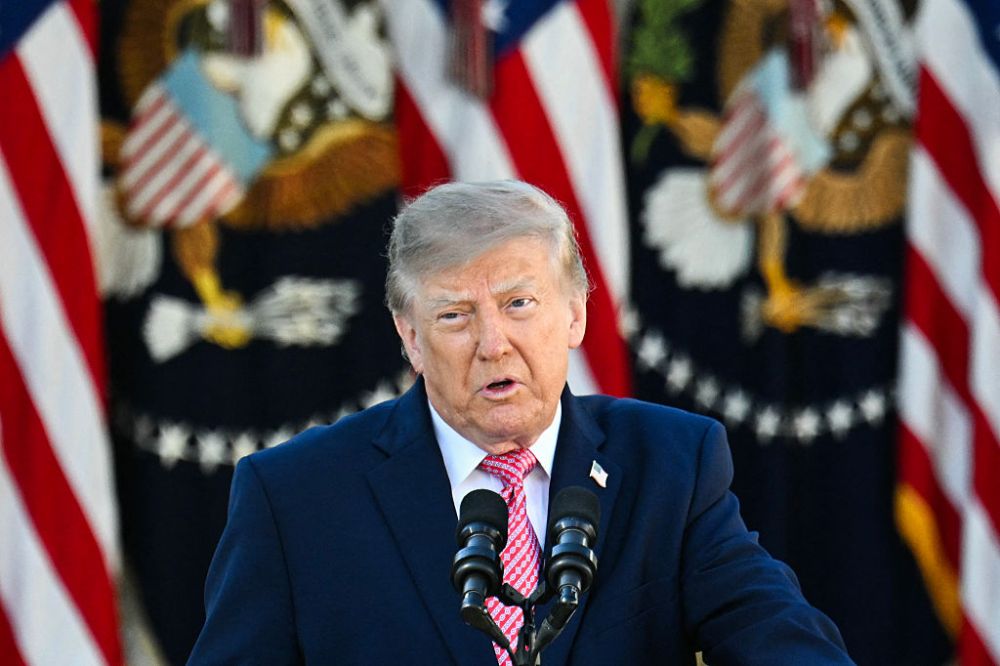
Trump hit back with rhetoric that was no less incendiary, and almost Quranic in style and hyperbole. Writing on Truth Social, he warned Tehran not to attempt to disrupt the world’s most critical oil shipping route. ‘If Iran does anything that stops the flow of Oil within the Strait of Hormuz,’ he wrote, ‘they will be hit by the United States of America TWENTY TIMES HARDER than they have been hit thus far.’ He added that the United States could strike targets that would make it ‘virtually impossible’ for Iran ever to rebuild as a nation again, promising that ‘Death, Fire, and Fury will reign upon them’. Trump framed the warning as a signal to other powers that rely on the route, calling the protection of the strait ‘a gift from the United States of America to China, and all of those Nations that heavily use the Hormuz Strait’.
In Bahrain, an Iranian drone strike on a residential building in Manama killed a 29-year-old woman and injured eight others, according to the Bahraini interior ministry. Explosions were also reported in Kuwait and the United Arab Emirates, while Turkish officials said a ballistic missile fired from Iran briefly entered Turkish airspace before being intercepted by Nato defences, with debris falling near Gaziantep.
Diplomatically, the war is beginning to freeze other negotiations across the region. Talks on advancing the second phase of Donald Trump’s Gaza plan, including the contentious issue of whether Iranian-backed Hamas would disarm in exchange for amnesty, have been paused since the fighting with Iran began, according to Reuters. The negotiations had been intended to pave the way for reconstruction in Gaza and a broader Israeli withdrawal.
Meanwhile, Hezbollah has reportedly sent out preliminary feelers about a possible ceasefire even as its rocket attacks continue. Israeli officials are said to be debating whether to pursue negotiations or to use the moment to try to sever the organisation’s financial and military connection to Iran, which has reportedly funded Hezbollah to the tune of roughly $1 billion a year.
For now, diplomacy appears far behind the pace of the military campaign. Strikes on Iranian targets continue, missiles are still being launched toward Israel, and negotiations elsewhere in the region have already been pushed aside. Far from signalling an end to the conflict, the steady tempo of attacks suggests the campaign against Iran is entering a sustained phase rather than drawing to a close.




Comments