
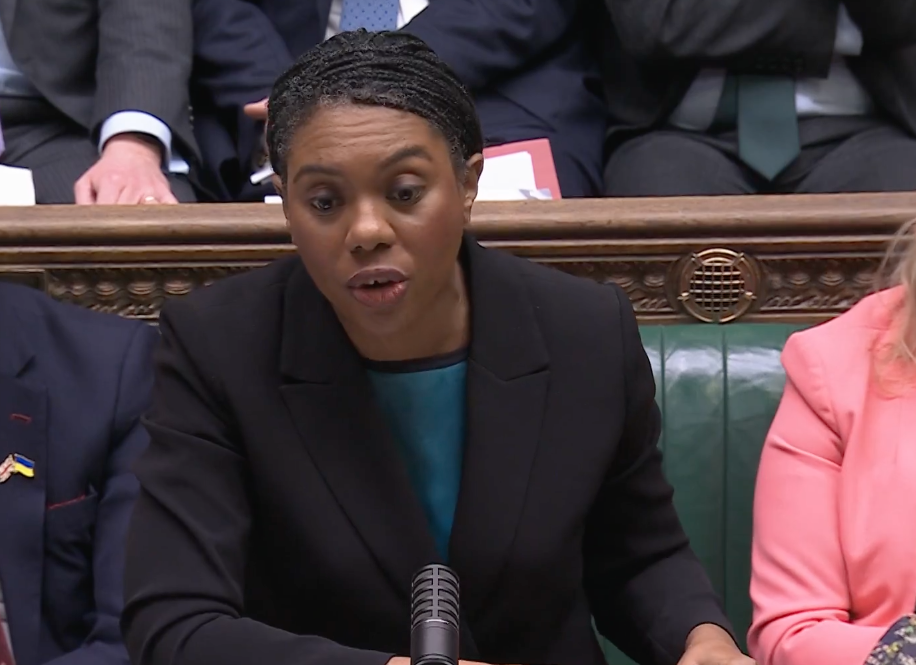
Kemi Badenoch used Prime Minister’s Questions to accuse the government of being flat-footed in its response to the war in the Middle East. The Tory leader had plenty of material to use, and she did a good job with it: running through why the UK wasn’t allowing the RAF to attack Iranian missile sites, defence spending, the spring statement and Starmer’s own weak position as Prime Minister.
Starmer dug out some of his favourite lines about Tory defence spending, and ended up offering one of his rather pompous lectures on how to be a good leader of the opposition
Starmer dug out some of his favourite lines about Tory defence spending, and ended up offering one of his rather pompous lectures on how to be a good leader of the opposition – a lecture he always produces when his back is up against the wall. Indeed, the government’s inability to operate from a position of strength was the main takeaway from those exchanges between Starmer and Badenoch, though the Prime Minister later came out with a barb about Donald Trump that suggested he is still happy to take a stronger line on the US President.
Badenoch’s language this week was much more restrained, presumably in part because the session had begun with a rebuke from the Speaker about the language used in the Chamber. This was in response to last week’s ‘paedo defender party’ line from the Tory leader, who was much less savage in her exchanges today. She opened with a question asking why, given the US had taken ‘offensive action to destroy missile launch sites to defend British territory’, the Prime Minister would not allow the RAF to do the same. Starmer replied that ‘this is obviously an extremely serious situation’, adding: ‘We need to act therefore with clarity, with purpose, and with a cool head. The protection of UK nationals is our number one priority. We are taking action to reduce the threat, with planes in the sky and in the region, intercepting incoming strikes, deploying more capability to Cyprus, and allowing US planes to use UK bases to take out Iran’s capability to strike. What I was not prepared to do on Saturday was for the UK to join a war unless I was satisfied there was a lawful basis and a viable thought-through plan. That remains my position.’
Badenoch complained that she hadn’t asked that question and said ‘our bases – in case they haven’t realised – have already been attacked. Iran is trying to kill our servicemen and women. He is catching arrows rather than stopping the archer.’ It was a good line, and one she reinforced by asking, ‘why is he asking our allies to do what we should be doing ourselves?’ Then she moved to talking to Labour MPs, telling them ‘we are in this war, whether we like it or not.’ The point of that comment was to suggest that Starmer wasn’t authorising the RAF to launch attacks because he was worried about the reaction of his own party, rather than because he had the national interest in mind.
Starmer explained that ‘for a number of weeks now, we have been pre-deploying our capabilities to the region.’ He listed some of the activities of F35s and Typhoons in the region, and told the Chamber that HMS Dragon was being deployed to the region.
Badenoch dismissed this ‘long list’ as insufficient. She then criticised Rachel Reeves for not giving more money to defence in the spring statement: ‘Instead she gave more money for welfare. Their priorities are all wrong… the fact of the matter is the war in Iran is happening now.’ Why was he leaving the job of funding the armed forces to the next government, she asked.
Starmer replied that he was not going to take lectures on defence from the Tories. He listed the ways in which Badenoch’s party had failed the armed forces, including cutting funding and numbers. Once again, he quoted former Conservative defence secretary Ben Wallace’s line about his party having ‘hollowed out’ the armed forces. He then gave an update on the evacuation of British nationals from the region, pausing in the middle to scold a chuntering opposition MP that ‘the country really does want to know this, I’m sorry.’
Badenoch responded very directly that ‘I wasn’t asking about evacuations, I was asking about defence spending. He needs to focus on the question that he’s being asked, not the statement that was prepared in the bunker’. She claimed Labour was cutting defence spending this year, and that this was why there were no Royal Navy warships in the area. Then she asked when the much-delayed defence investment plan would be published. Starmer didn’t give a date, complaining instead that he was sorry that Badenoch wasn’t interested in how people caught in the region were going to get home. He moved from this lofty lecture to listing Labour’s economic achievements as set out by Rachel Reeves in yesterday’s spring statement, and mocking Mel Stride for his ‘stand-up comedy’ in his response to that statement. This rather contradicted Starmer’s attempt to seem as though he is above petty politics.
Badenoch accused him of reading ‘statements that are pre-prepared’ and then moved the discussion onto the cost of living, something Starmer hadn’t managed to bring up himself in the session despite his desire to talk as much about affordability as possible in the run-up to the local elections in May. The Prime Minister’s response was that the government was working with allies on energy.
By the end of the exchanges, Starmer was lecturing Badenoch again, telling her that: ‘I spent the week protecting British lives and our national interest. Moments like this define a leader of the opposition They can either step up, act in the national interest and show they are fit to be prime minister, or they can expose their utter irrelevance. She has chosen the second.’ The problem is that Starmer wasn’t able to demonstrate in this session that he had the strength and power to lead as a Prime Minister should in this situation, either.
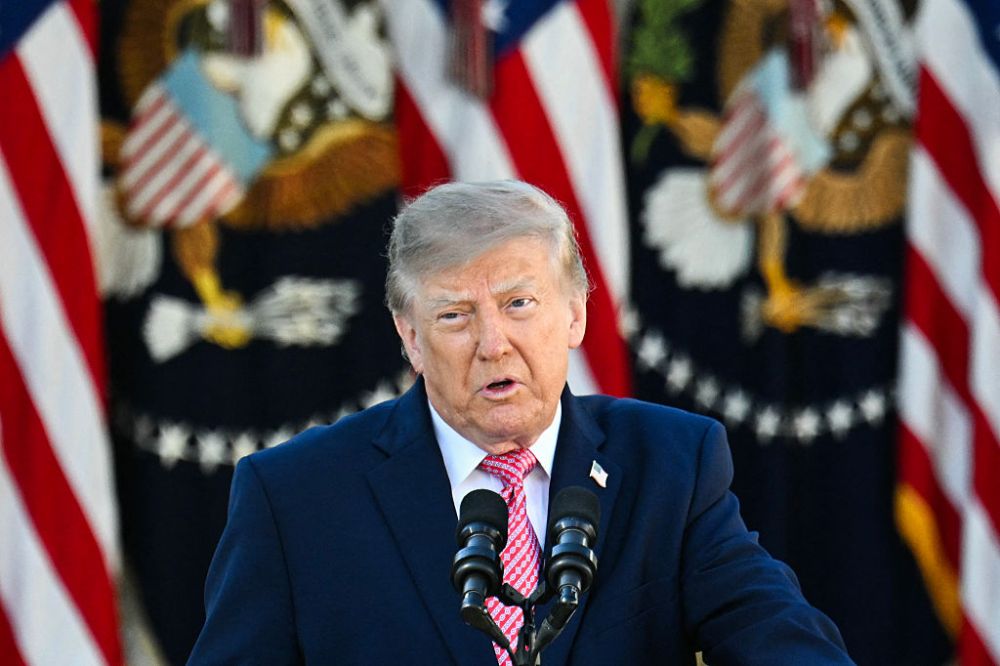
Towards the end of the session, he was asked by Tory MP Gareth Bacon whether the ‘special relationship’ was stronger or weaker this week, and replied: ‘Hanging on to President Trump’s latest words is not the special relationship in action.’ He has clearly decided that the way to operate from now on is to be rather more detached from the US president than his initial overtures to Trump suggested. His line in his first answer to Badenoch about the need for a ‘thought-through plan’ will also likely sting Trump, as it suggests Starmer was unimpressed with the strategy behind the offensive action. Or, as Badenoch was suggesting, that he wanted to reassure his own MPs that he was not just going to do as Trump told him: something that Labourites in particular get very anxious about given their party’s scars over the relationship between Tony Blair and George W Bush. In the end, it always comes back to Iraq, even when the country under discussion is a different one.




Comments