You can always judge a country by the reception you get at passport control. America is aggressive. Don’t even think of answering ‘certainly not’ when asked if you packed your own suitcase.
But when I arrived in Saudi Arabia last week, I was greeted by the most friendly, charming man, even though he was an Arsenal fan. He must have had a busy week with the Prince of Wales’s entourage arriving the day before. Which football teams do equerries and royal reporters support? Probably not Millwall.
Most popular
Steven Edginton
Why did the British government label Charlie Kirk supporters ‘extremists?’

The future of horse racing, a sport conceived in the UK, is now in the Middle East
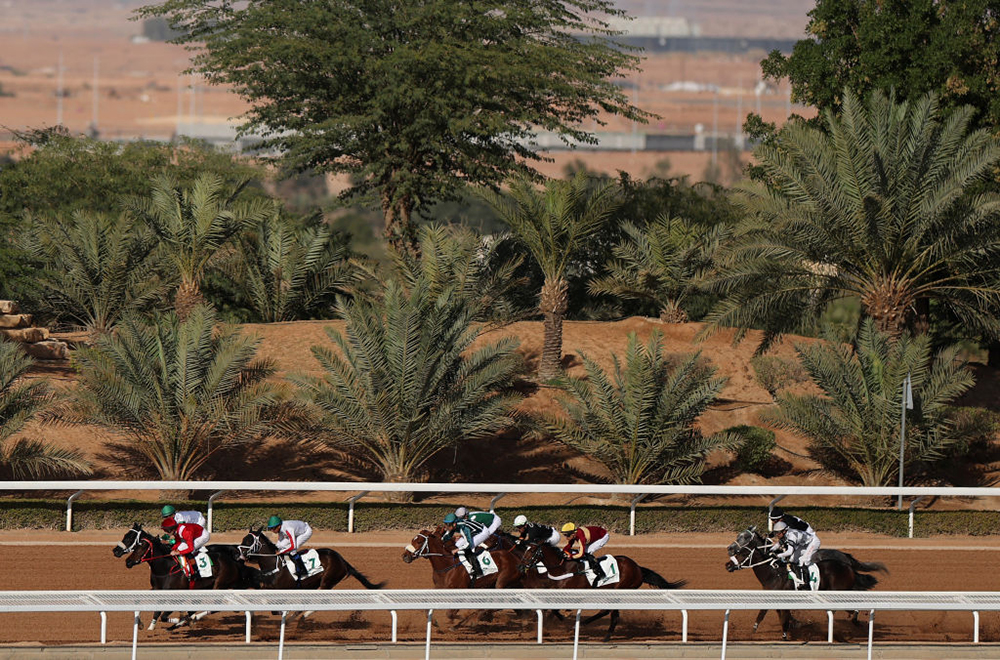
I was of course here in Riyadh for the Saudi Cup – the richest horse race in the world, with £15 million up for grabs.
And, for the next five days, the people were the friendliest I have encountered anywhere. But I was keen to experience a little culture and was advised, rightly, by taxi driver Ahmed that the old palaces of Diriyah were a must.
The statue of Turfa in the horse museum there is magnificent. Turfa was the Arabian filly presented to King George VI by the King of Saudi Arabia, Abdulaziz bin Abdul Rahman Al Saud, in 1937. Surely King George must have bred from her? But where are the offspring? What a return present that would be. One of Turfa’s descendants.
It was interesting and significant that Crown Prince Mohammed Bin Salman (MBS) chose the equine connection between our countries as one of the set pieces of Prince William’s visit. But the highlight of my ramblings was a trip to the desert for a picnic. And who should come yomping over the dunes as I was tucking into my pomegranate juice? Joseph O’Brien, his brother Donnacha and Thady Gosden: three of the brightest young trainers in the sport.
Fair-skinned Joseph hadn’t put any sun cream on. His mother is going to be really cross with him when he gets home, although the £820,000 he picked up the next day, when the six-year-old gelding Sons and Lovers won the Red Sea Turf Handicap (1m7f ) before the Saudi Cup, may have got him off the naughty step.
The picnic was spectacular and watching Joseph get stuck in did make me wonder how on earth this tall young man kept his weight down when he was riding. It’s testament to his strength of character that he controlled it for so long. As the sun went down over the sand dunes, he told me: ‘You’ve got to know when to stop.’
I suspect his enjoyment of the landscape may have been tainted by my incessant questions about training racehorses:
‘So how many times do you send the horses up your gallop?’
‘Which surface do you prefer?’
‘Do some National Hunt horses have more speed than flat horses?’
I can be a nuisance when I get going.
And then we got talking about whether Constitution Hill could still be a good flat horse at the age of nine. Joseph is probably the best dual-purpose trainer in the world (keep your hair on, Willie Mullins) so who better to ask?
‘The thing would be, does he have enough stamina for the staying races on the flat?’ said Joseph. ‘Because top-class two-mile hurdlers have a lot of speed.’ It was an interesting observation and one I’d not heard before.
Thady had to leave early. He didn’t have a runner in the Saudi Cup but was off to Doha to saddle Lion’s Pride in the Amir Trophy (no joy, sadly).
The Saudi Cup is a cultural and sporting affair, where women and the younger generations can express themselves as they wish. The whole occasion is the embodiment of how MBS has freed up his citizens and encouraged them to study hard, work hard and embrace their historical heritage. ‘He has liberated a nation and put Islam back on track,’ a young Saudi woman told me.
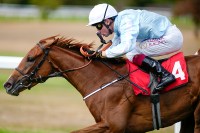
The Japanese trainer Yoshito Yahagi’s Forever Young repeated last year’s success in the Saudi Cup, taking his career prize money to £23 million. He got a dream run into the home straight to pick up the £7.5 million purse this year.
Ryusei Sakai, who rode Forever Young, will no doubt be forever grateful to his competitor Adel Alfouraidi, who allowed Banishing to drift off the fence, opening the door for Forever Young to slip through and get first run on the Bob Baffert-trained Nysos, who finished in second place.
Sometimes a racing festival feels like more than a bunch of horses racing each other. The future of the global horse-racing industry was also debated at the Asian Racing Conference in Riyadh last week.
Ambitious plans to build a new racecourse down the road at Qiddiya were unveiled. It is going to be a project that will celebrate Saudi Arabia’s equine culture and will be woven into the country’s ‘Vision 2030’ aspirations.
Parts of that master plan – such as the construction of Neom, a vast eco-city in the desert – are being pared back. That reflects intelligent adjustment rather than a bloody-minded inability to change course. And before we get too judgmental about having to reassess projects, perhaps we should reflect on HS2?
What is obvious is that the future of horse racing, a sport conceived in the UK, is now in the Middle East. As our government attacks the pillars of the sport with excessive taxes on gambling and crippling business rates on trainers, countries such as Bahrain and Saudi Arabia are happily embracing their equine roots. We should celebrate that.


Comments