
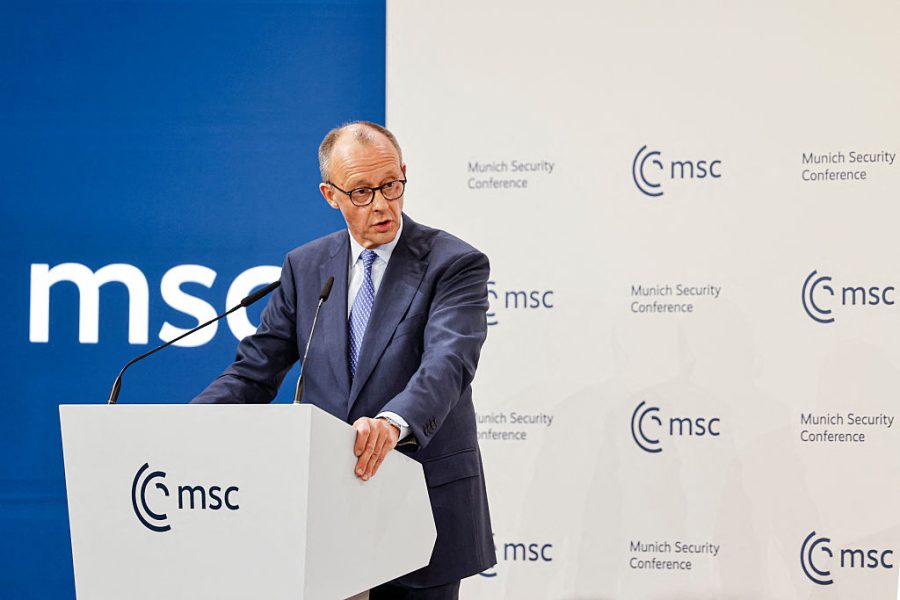
The Munich security conference started with a bang today. Breaking with tradition, German chancellor Friedrich Merz opened the conference with a punchy speech about relations between Europe and America. ‘A rift, a deep chasm, has opened up between Europe and the United States,’ he declared.
‘We need to talk,’ Merz said. ‘This is more urgent than ever.’ Proclaiming that the world had entered an era of ‘big power politics’, he painted a particularly bleak picture of global affairs. ‘The international order, as it was in its heyday, no longer exists,’ he said.
Merz called on the allies of Ukraine to do more to put pressure on Russia to end its invasion. He argued that Europe could go harder and faster: ‘Russia’s GDP is €2 trillion. That of the EU is almost ten times as high,’ he said. ‘But Europe is not ten times as strong as Russia today.’ He renewed his pledge to make Germany’s armed forces the ‘strongest conventional army in Europe as soon as we can’, hinting that he was prepared to consider conscription for the army should the country’s voluntary military service model – introduced just last month – fail to yield the number of recruits needed to expand the Bundeswehr.
Many European delegations here have a touch of America-induced PTSD
In the Q&A that followed, Merz took a swipe at Hungary when asked if Europe should engage with Russia directly to end the war in Ukraine. Led by the notoriously Russia-friendly Victor Orban, the country has become a persistent thorn in the side of the EU in its efforts to support Kyiv in the war against Moscow. Without naming him directly, Merz laid into Hungary’s president, saying he:
Travelled to Moscow on his own almost two years ago. He had no mandate, he achieved nothing and the week after we saw the heaviest attacks on civil infrastructure and private homes and hospitals we had ever seen until this time.
This followed another veiled jab at Hungary and its neighbour Slovakia during Merz’s main speech. He reminded the countries that despite their warm overtures towards Moscow in the years since Vladimir Putin invaded Ukraine, they nevertheless had obligations as members of the European Union. Through article 42 of the EU treaty, he said, we ‘commit ourselves to providing mutual assistance in the event of an attack on Europe’.
The chancellor delivered the majority of his speech in German – but if there was any doubt about who his intended audience was, it was dispelled when Merz switched into near-perfect English:
For three generations, the trust among allies, partners, and friends made Nato the strongest alliance of all times. Europe knows deeply how precious this is. In the era of great power rivalry, even the United States will not be powerful enough to go it alone. Dear friends, being a part of Nato is not only Europe’s competitive advantage, it’s also the United States competitive advantage. So let’s repair and revive transatlantic trust together. We, the Europeans, are doing our part.
Germany, and the rest of Europe, he argued, was ready to take more responsibility for its own defence. But it wasn’t just Europe, he added, that needed the US; America needed Europe just as much.
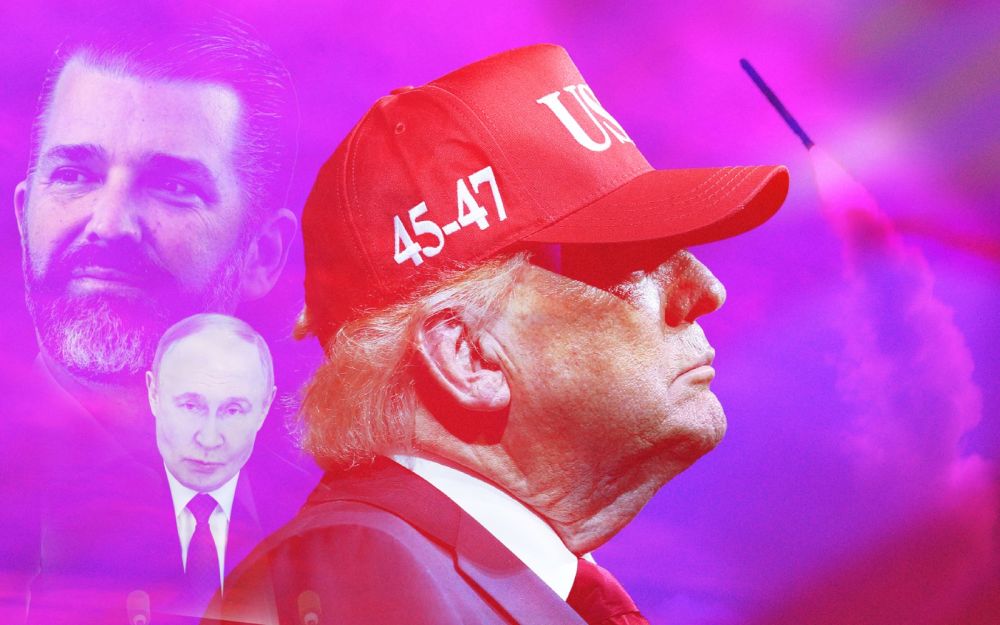
It’s safe to say that Germany is just one of the many European delegations here who have a touch of America-induced PTSD. This weekend’s conference is the first time that western leaders have met since Europe was thrown into a fresh bout of frenzy by Trump’s desire in January to acquire Greenland for America. Although that particular crisis appears to have, for the time being, receded, it was the latest in a year-long series of clashes between the US and its transatlantic allies.
It was just a year ago in Munich that US vice president J.D. Vance blindsided Europe with a speech that attacked the continent for its policies on free speech and migration. Many on the continent viewed this speech, in which he said that he worried most about the threat to Europe ‘from within’, as the moment when the transatlantic relationship began to crumble irreparably.
Breaking with another tradition, Vance is not attending the conference again this year, with Secretary of State Marco Rubio sent in his place. Rubio is due to give his speech early tomorrow morning and Europeans in Munich are twitchy about what to expect.
Merz talked tough in his opening speech. Whether this will translate into his desired ‘transatlantic reset’ – with Europe able to stand firmer on its own two feet – should be clearer by the end of this weekend.





Comments