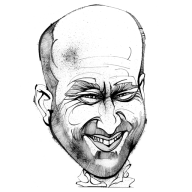
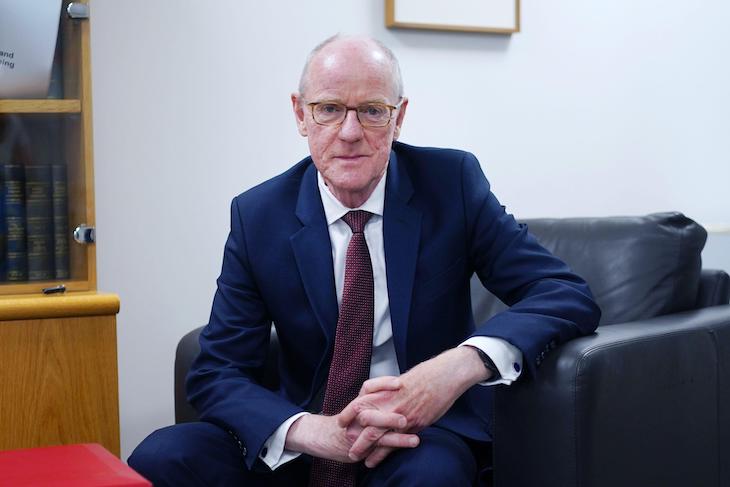
One of the most effective British politicians of recent years is a household name only in the most policy-wonkish of households. I mean Nick Gibb, the schools minister who worked alongside Michael Gove. Gibb kept a lower profile than Gove and so managed to stay in the Department for Education longer, bedding in the reforms that everyone except the odd Marxist lecturer deems highly successful.
Let’s have a few more politicians like Gibb: limelight-shunning iconoclasts who leave off grandstanding and quietly fix stuff
Gibb has co-written a book that will not do much to lift his obscurity. Reforming Lessons: Why English Schools Have Improved Since 2010 and How This was Achieved is a rather dry affair, low on Westminster gossip and high on graphs. (Maybe Toby Young is writing the juicier version.) But it’s a must-read for anyone involved in education or public policy. I should declare an interest. The book is co-written by Robert Peal, who was Gibb’s special advisor, before becoming joint headmaster at West London Free School in Hammersmith, which has done a fine job educating my three children. High academic standards are couched in a spirit of community and fun. My daughter (who’s still there) will kill me, but she really likes going to school – she even seems to like her teachers.
Gibb and Peal give some credit to Tony Blair and his policy advisor Lord Adonis, who allowed schools to opt out of local authority control and become academies. The Tory reforms not only expanded this, they brought in a new focus on standards and accountability, addressing the dumbing down of exams, and not just giving schools freedom but closely monitoring how they use it. Also, they cut a lot of unhelpful quangos and freed up teacher-training.
The book emphasises the role of ordinary teachers comparing notes, seeking change. It helped that blogs and Twitter were taking off around 2011: a network of likeminded teachers emerged, critical of orthodoxies such as the rejection of phonics in the teaching of reading, a child-centred approach to learning, a turn away from knowledge-based learning. But the reformers were careful to avoid praising a ‘traditional’ approach, which might imply all sorts of dubious things. Instead they talked about an ‘evidence-led approach.’ This drew on the work of a few American educationalists: one of them, Doug Lemov, showed how a ‘warm-strict’ approach to discipline helped students. It sounds like common-sense, really: that strictness should be rooted in friendly concern for the student’s wellbeing. But there were a lot of vested interests making such an approach difficult. The authors are wary of the term ‘the Blob’, but they make clear that it was, and still is, a reality.
At first it was difficult to make the case for change, because there were almost no exemplary schools to point to. When good new schools did emerge, they began to learn from each other, making centralisation unnecessary. Gibb and co trusted that head teachers would emulate success when they saw it.
My admiration for the free schools movement is not unalloyed. A few schools have interpreted ‘warm-strict’ with the stress on the second bit, and pursued good exam results at almost any cost. I am not a fan of the Michaela school in Wembley, run by Katharine Birbalsingh. I visited it once and found it rather inhuman: I saw students reprimanded when their gaze strayed from the teacher, and when they failed to cross their arms when standing round to watch a science experiment. If Gibb and Peal share my misgivings, they naturally keep them quiet.
The present government has not shown much support for free schools, in fact the Schools Bill going through Parliament threatens some of the hard-won freedoms. It plans to give local authorities more power over places, which could mean restricting the size of free schools. And it wants to limit the amount of branded school uniform schools can issue, which subtly chips away at a school’s spirit of independence. On the other hand, Labour is not launching a major attack on free schools; they are too successful for it to take on.
Let’s have a few more politicians like Gibb: limelight-shunning iconoclasts, people who leave off grandstanding and speechifying and quietly fix stuff.




Comments