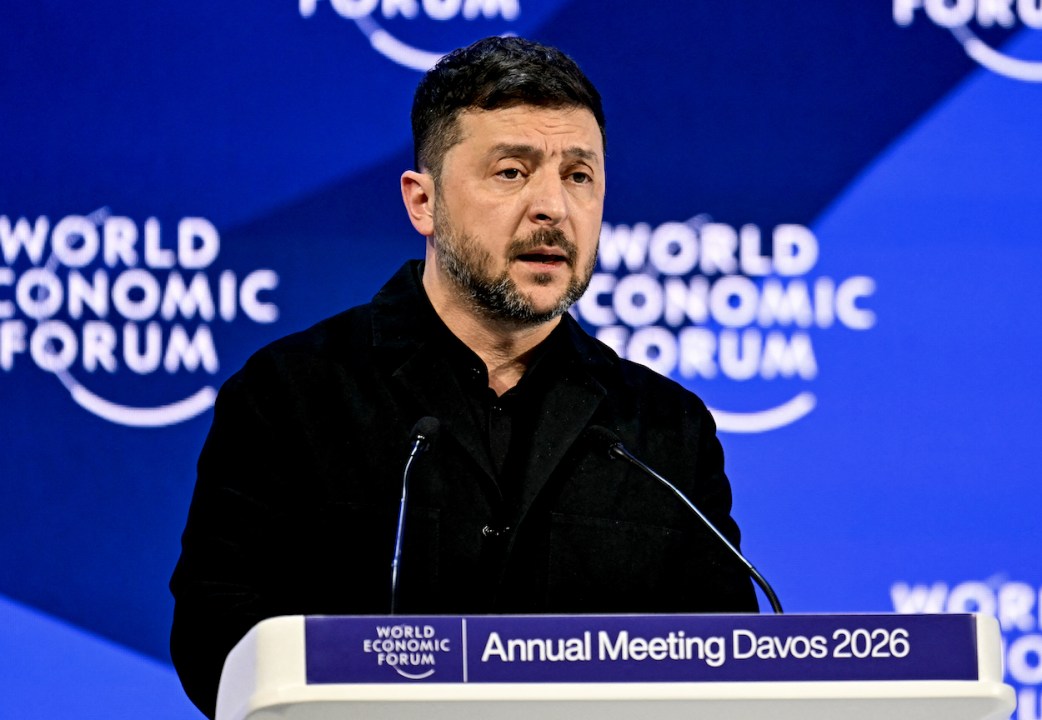
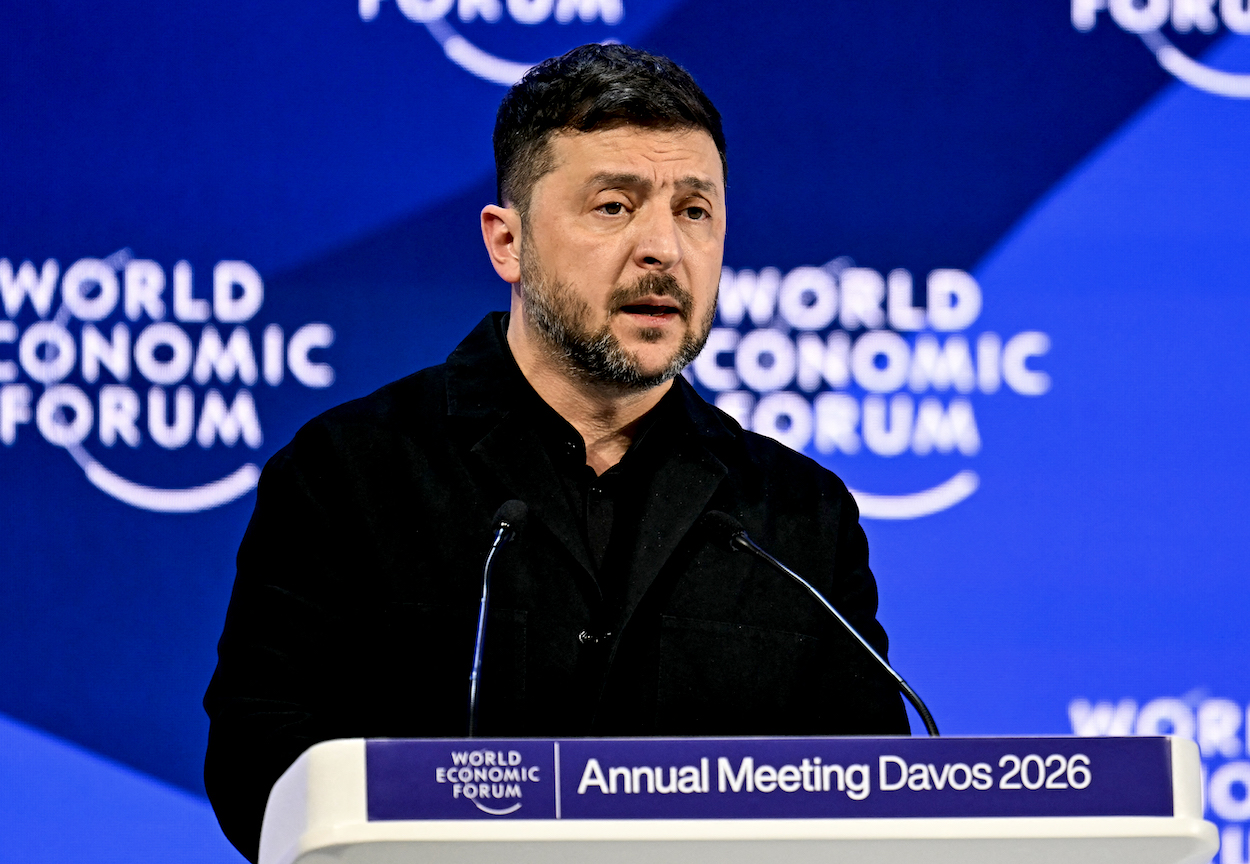
Volodymyr Zelensky didn’t want to go to Davos. Why bother showing up at the World Economic Forum to watch world leaders swarm around Donald Trump and his obsession with Danish-controlled Greenland? The Arctic spectacle has stolen the spotlight from the war in Ukraine, and Zelensky could not bear the thought of returning empty-handed while his country struggled to survive the freezing winter. ‘I choose Ukraine in this case, rather than the economic forum,’ Zelensky said on Tuesday after another Russian attack deepened the country’s energy crisis. That was until Trump announced he wanted to talk to the Ukrainian President one-on-one.
Their one-hour meeting yesterday ended with little to show for it. Zelensky said they had agreed a deal on post-war security guarantees which Trump has refused to sign until the war ends. There was no progress on the £600 billion ‘prosperity plan’ between Ukraine, the US and Europe, which had already been delayed over Greenland tensions. The US President may send Kyiv more air-defence missiles – a plea Zelensky repeated several times during their meeting, clearly afraid Trump would forget about Ukraine’s severe shortages once the discussion ended.
Most popular
Steven Edginton
Invented claims of lynchings and racist violence are irresponsible — and dangerous

The presidents then agreed to hold trilateral peace talks between US, Ukrainian and Russian officials for the first time, which began in Abu Dhabi today. The discussions appear to have been a last-minute idea from Washington and will focus on the fate of the eastern Donbas region: a crunch point for peace.
Russia’s hardline demands haven’t changed a bit. Ahead of the negotiations, US envoys Steve Witkoff and Jared Kushner met Vladimir Putin for their seventh meeting in Moscow yesterday. In typical Kremlin style, aide Yuri Ushakov said the talks were ‘substantive, constructive and very frank’. But he reiterated that ‘there is no hope of peace’ unless Ukraine surrenders the Donetsk and Luhansk regions. This morning, Kremlin spokesman Dmitry Peskov repeated that demand, calling it ‘a very important condition’. The US hopes the talks in Abu Dhabi will help to find a middle ground after a year of fruitless negotiations. And yet, as I have written previously, that middle ground is paved with peril for Ukraine.
The withdrawal of troops from the Donbas or any constitutional change to its status is highly unpopular in Ukraine. It would prove politically fatal both for Zelensky and the current parliament. The only viable way for the President to compromise without tarnishing his legacy is to put the question of the Donbas or the entire 20-point peace plan to the Ukrainian people in a referendum. If Washington can deliver iron-clad security guarantees to deter Russia from invading for a third time, along with meaningful economic incentives, then war-weary Ukrainians might accept painful concessions.
The problem is that most Ukrainians trust neither Russia nor the US. Some 74 per cent view Trump’s presidency as bad for Ukraine, according to the latest survey from the Kyiv International Institute of Sociology. The intense pressure Washington has put on Kyiv to accept Putin’s terms – even as Russian missiles continue to terrorise Ukrainian cities – is widely seen as the two working in tandem to force Ukraine’s hand. Given that Moscow lacks the manpower to conquer the rest of the Donetsk region within the next two years, many Ukrainians believe that ceding the territory will only put Putin in a stronger position to re-invade later. Trump must therefore find a way to give Zelensky greater freedom when it comes to negotiating territories and ultimately take responsibility for Ukraine’s future security. That is the only way he will persuade Ukrainians – not just Zelensky – that this peace plan has got what it takes to succeed.





Comments