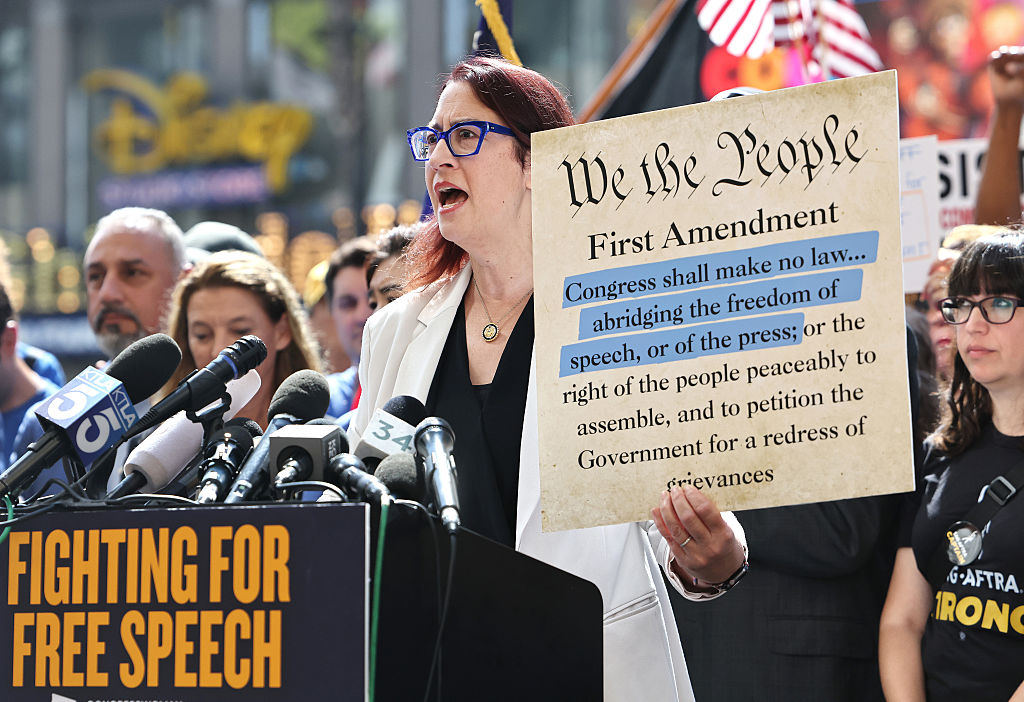
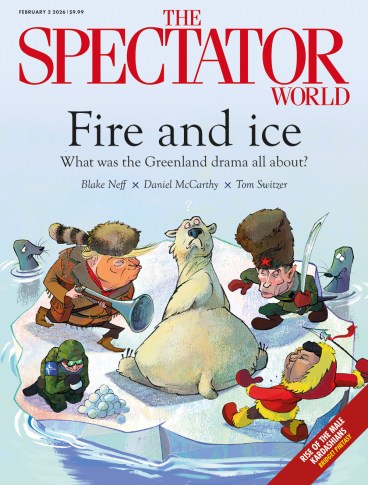
Britain’s Online Safety Act is part of an escalating censorship war between Europe and the United States. It was sold to the British public as legislation that would protect children; in practice, it is a far-reaching internet censorship statute with explicit extraterritorial reach. The OSA purports to grant the UK’s communications regulator, Ofcom, the power to do what no one on Earth has the lawful power to do: compel US websites to censor themselves and their users. This affects everyone, not just tech firms. If the UK can impose British speech rules on US companies, then the First Amendment stops being law and becomes a suggestion.
At least 29 nations, mostly America’s allies, have enacted similar laws. But the UK was first to act on these new censorship rules, sending its enforcement notices last year. Ofcom selected four US targets to test out its new powers: the mental health discussion board SaSu; an internet culture forum called Kiwi Farms; a tiny free speech-focused social network called Gab; and the infamous imageboard 4chan. Ofcom threatened these companies with fines, arrest and imprisonment for engaging in speech that is protected by the Constitution. I act as a lawyer on behalf of these companies, pro bono, and consider myself fortunate to be one of the belligerents in this war against Western censors.
If the UK can impose British speech rules on US companies, then the First Amendment stops being law
Ofcom’s strategy was simple. Their targets were the smallest, most politically radioactive websites in America, if not the world. This was no accident; these sites are disliked, even hated. They could not afford a defense. Ofcom’s intent was clear: after breaking the most isolated and indefensible platforms, they would use these precedents to ensure the rest of the American internet fell into line. As Ofcom put it, they wanted to “ensure… that the wider sector understand[s] how seriously Ofcom takes compliance with these duties.”
Our defense strategy was unorthodox: rather than participate in the UK’s process, we protested against it and went public. We published the letters, we forwarded the correspondence to Congress and made as much noise as possible. These tactics seem to have worked. The Trump administration has made multiple public statements through the US State Department objecting to the OSA. A $40 billion technology trade deal with Britain was suspended due to the administration’s objections. The Under Secretary of State for Public Diplomacy, Sarah Rogers, has condemned the OSA, referencing 4chan by name. And in December, the State Department sanctioned five individuals, including two British nationals, to register its displeasure with the OSA’s enforcement in the United States.
Meanwhile, Ofcom had sent a series of orders demanding internal documents from 4chan, the OSA’s most prominent early target. Ofcom threatened criminal sanctions for refusal to turn over the documents, all without using any established international legal mechanism or US judicial process. For months, 4chan, lawfully, refused to respond. This was a trap: we remained silent and forced Ofcom to publicly commit to seeing a fine through to the very bitter end, or else be forced to back down in the most politically damaging way possible.
In August, as expected, Ofcom publicly announced its intent to fine 4chan. In response, we sprang the trap: my co-counsel Ron Coleman and I immediately filed a suit against Ofcom in Washington, DC, seeking a declaration that Ofcom’s emailed orders were not enforceable in the United States. Ofcom was served at its offices on London’s South Bank during President Trump’s state visit to the United Kingdom in September last year.
Ofcom escalated. The agency responded with a 38-page “confirmation decision” that claimed its powers under the OSA superseded my client’s First Amendment rights. Their argument was that UK law governed my clients’ conduct on US soil, while they simultaneously attempted to invoke our Foreign Sovereign Immunities Act, or FSIA, to shield them from our courts. In effect, Ofcom’s position is that American law doesn’t protect Americans, but it absolutely protects the UK when the UK threatens Americans. Our litigation was, in part, commenced in order to hold the censors at bay long enough for a federal response to materialize. It became apparent to us that nobody had written the legislative weapon we needed, so I did it myself. Five days after Ofcom announced its fine, I published a model law, the GRANITE Act, the “Guaranteeing Rights Against Novel International Tyranny and Extortion” and would do two things. First, it would permit Americans targeted by foreign censors to bypass FSIA. Second, it would give them the power to sue those censoring states, agencies and staffers for an amount of damages at least equal to the amount of the threatened fine.
The GRANITE Act is very simple: it is a shield and a sword. The shield bars enforcement in US courts of foreign censorship edicts that conflict with the First Amendment and bars executive branch cooperation with them. The sword creates a private right of action, allowing Americans to recover substantial damages from foreign censors who threaten Americans, payable from sovereign assets held in the United States.
In early November, I was contacted by Wyoming’s Deputy Secretary of State, Colin Crossman, who provided me with a copy of a draft bill he had prepared modeled after my GRANITE proposal. We sent copies to legislators in other states as well as federal legislators. In December, Sarah Rogers confirmed a federal shield bill was in the works in the House of Representatives. On the same day that the EU tried to fine Elon Musk’s X, Senator Eric Schmitt confirmed he was also working on a federal shield bill.
The only answer to the foreign censorship problem is law reform. Congress should make it clear that foreign censors cross our border at their peril. The only way to accomplish this is to enact federal shield legislation, like GRANITE, that strips sovereign immunity for foreign censorship and makes the consequences so ruinous that such threats will never be made again. For nearly a decade, a handful of free speech lawyers have kept foreign censors at bay. We could use legislative reinforcements. But, with or without the reinforcements, we will fight the censors forever.
This article was originally published in The Spectator’s February 2, 2026 World edition.




Comments