One of the guilty pleasures of the patriotic British travel writer is encountering yet another country, city or island that we invaded, occupied, colonised or just menaced into submission with a couple of gunboats. For example, did you know we casually took out Uruguay back in the day? It’s true – we demolished the walls of Montevideo in 1807, during the Battle of the River Plate, as I discovered on my first visit there last year.
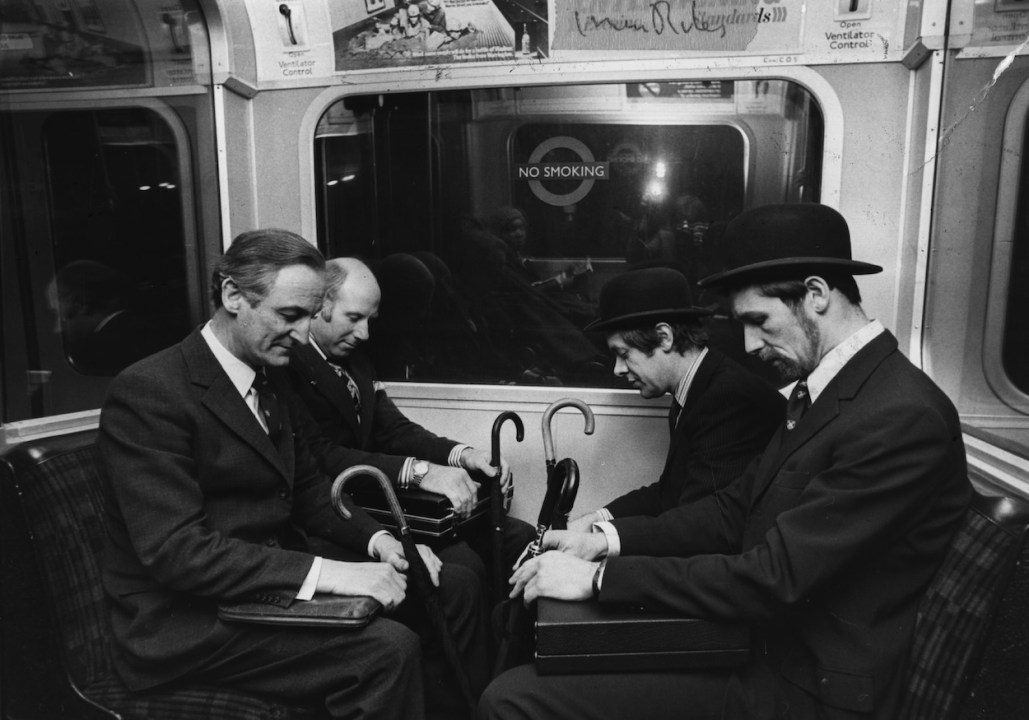
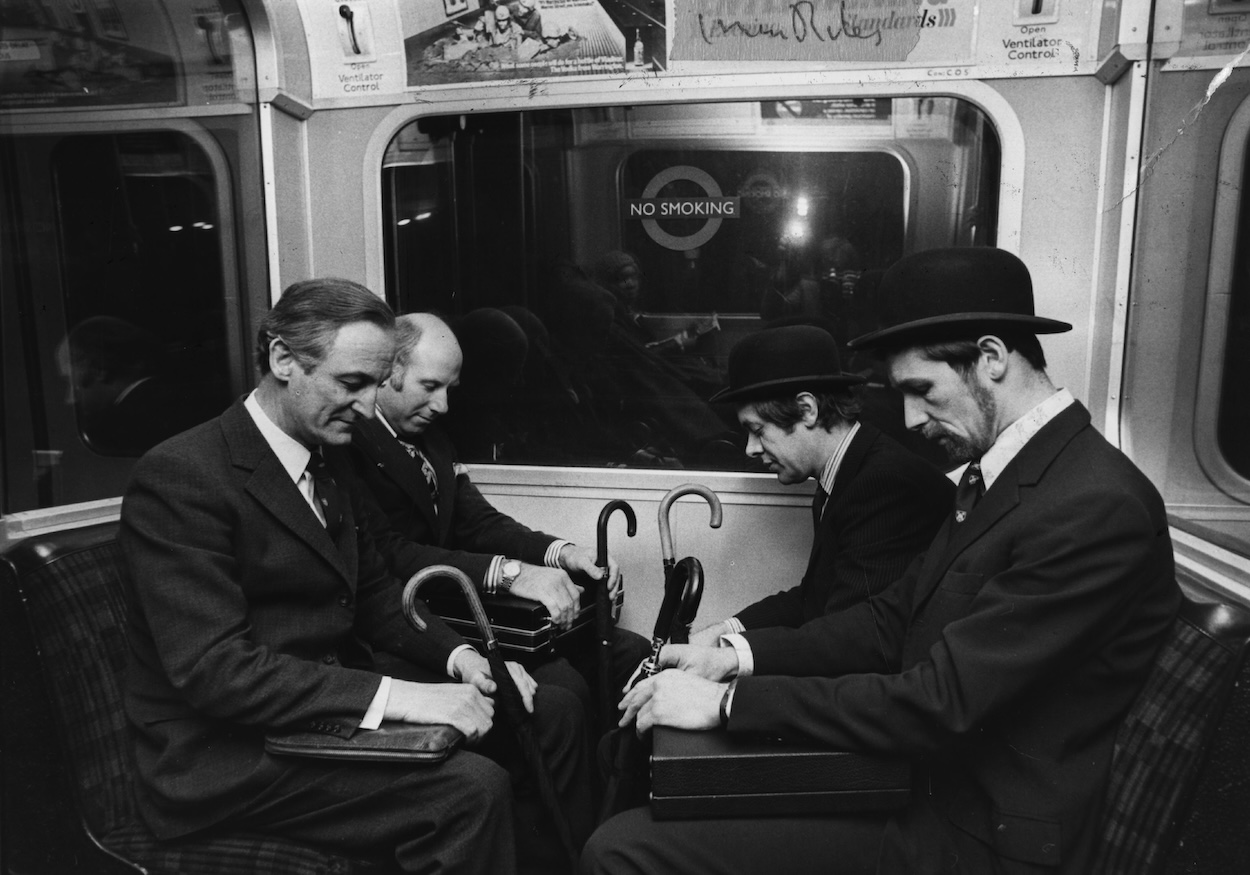
I’ve had the same experience all over. The Maldives. Kefalonia. The Colombian coast (we were so punchy and piratical half the Colombian nobility decamped 200 km inland). Also, Menorca, the Faroes, Haiti, Iceland, Bolivia (our economic colonisation is the reason women in La Paz wear bowler hats). Indeed, we British were, for centuries, so brilliantly but brutally aggressive I suspect that, if it hadn’t been for the drink holding us back, we’d have colonised the moon in 1892.
In this light, I am about to make a paradoxical observation. Just as travel has taught me that the British, in their pomp, were overwhelmingly and successfully aggressive, so I am able to look at the British from abroad and see that, in their own home island, the greatest characteristic of the British is quite the opposite of aggression: it is their amiability.
By amiability, I mean this: tolerant, politely cheerful, hard to anger, gently humorous, eager to live and let live. Indeed, as our imperial horizons have dwindled to our own pretty but drizzly island, I’d argue that these characteristics have become more obvious, in comparison to other nations, which have different virtues.
Of course, I’m not the first person to note these tendencies – politeness, humour, tolerance – in the British or English. George Orwell, writing as the Luftwaffe bombed London in 1941, declared that:
The gentleness of the English civilisation is perhaps its most marked characteristic. You notice it the instant you set foot on English soil. It is a land where the bus conductors are good-tempered and the policemen carry no revolvers.
The anthropologist Kate Fox, who spent years conducting fieldwork among her own countrymen for her book Watching the English, noted that our politeness is so overt it can become bizarre – for example, our tendency to say sorry. Fox famously tested the English ‘sorry reflex’ by deliberately bumping into people on the street. Invariably, they apologised to her. A 2015 YouGov study confirmed this: the British apologise 50 per cent more than Americans, and say sorry an average of eight times a day.
Foreign observers have commonly found this politeness baffling or amusing. The novelist R. K. Narayan noted that Indian bus conductors simply bark ‘Ticket, ticket!’ In London, by contrast, the conductor said ‘Thank you’ right from the start. ‘On receiving the fare and issuing the ticket the conductor will again say “Thank you”.’ Multiple extra thank-yous are then exchanged in a surreal spiral of gratitude.
Meanwhile, the Czech writer Karel Čapek, visiting in the 1920s, found the English ‘courteous and absolutely trustworthy’ (he also thought we were shallow, stubborn and hard as flint). A few decades earlier, Henry James, the American who became more English than the English, captured our courtesy differently: ‘An Englishman’s never so natural as when he’s holding his tongue.’ Another American, Bill Bryson, observed that ‘deference and a quiet consideration for others are such a fundamental part of British life, in fact, that few conversations could even start without them.’ He also transcribed that most quintessential expression of stoical British tolerance: ‘Mustn’t grumble’.
Then there is the queue – that sacred British institution. The Hungarian humourist George Mikes observed in 1946 that ‘an Englishman, even if he is alone, forms an orderly queue of one.’ Kate Fox witnessed something extraordinary during the 2011 London riots: looters forming an orderly queue to squeeze through a smashed shop window, deterring queue-jumpers with disapproving frowns and raised eyebrows.
The greatest characteristic of the British is quite the opposite of aggression: it is their amiability
What’s more, Britain’s gentle tolerance has often been a genuine moral achievement. It has allowed pluralism to flourish, offered refuge to the persecuted, and underwritten freedoms that many societies still struggle to sustain. In countless cases, our instinct to accommodate rather than coerce has been one of the better things about us. But I fear what was once admirable and upright is becoming foolish, and even dangerous. Because we are in an era of vast, unprecedented immigration, and native Britons are colliding with millions of newcomers, often from markedly different cultures.
Yes, we are tolerant, but that’s not helpful when dealing with a much less tolerant, incoming culture such as conservative Islam, which is self-confident, resistant to integration, and informed by an openly martial moral code. In that collision, it is the British who will always yield. Politely. Like trusting dodos on their own little island.
Similarly, we politely dislike making a fuss, and we cheerfully and stoically endure adverse weather, but what happens if you really do need to make a bit of fuss? If, say, thousands of underage girls are being raped in your towns and cities, and this is being covered up by corrupt police and politicians, avoiding a scene and saying ‘mustn’t grumble’ really doesn’t cut it, does it?
For me, this tragic mismatch is captured most obviously in the small-boats farce. It is now painfully obvious that thousands of young men are illegally invading our island in search of economic betterment. A normal country would repel them, or at least treat them with humane and sensible harshness, so they stop. Instead, these men know that our gently cheerful, quietly stoical good nature means we not only tolerate this, we actually house them in lovely hotels and treat them better than the locals who pay for those hotels. It is the British tendency to say sorry to the very person who knocked them over, turned into a ludicrous national policy, that will bankrupt us all.
Is there a solution? Yes, and it’s simple. We need to rediscover that other, long-hidden side of our national character. We need to remember we are the country that knocked down the walls of Montevideo in 1807. We need to remember we are from Mars, as well as Venus.





Comments