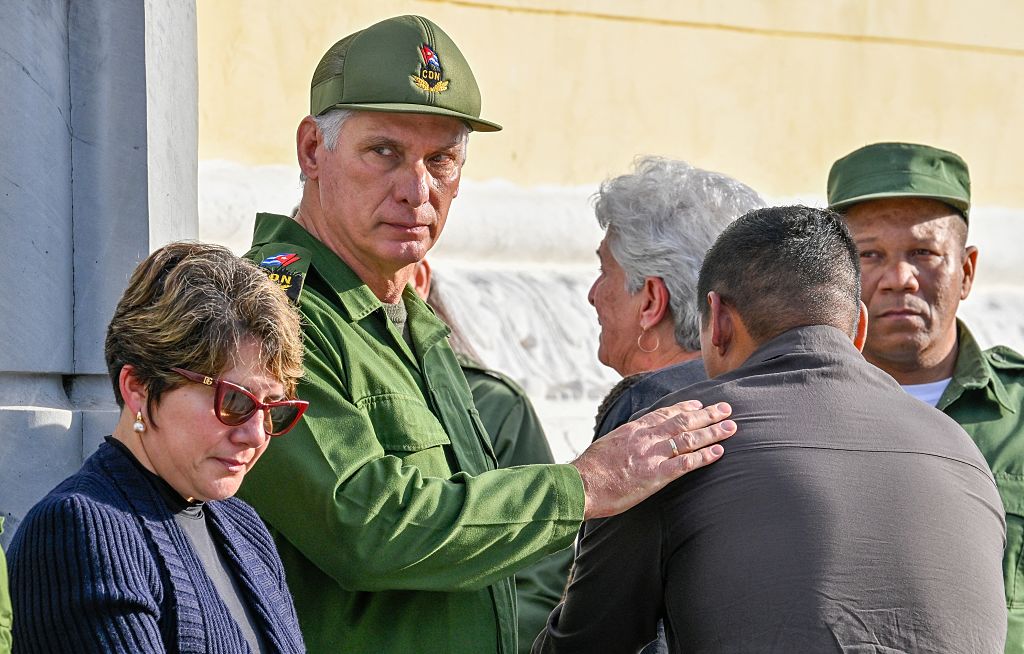
The US capture of Nicholas Maduro sent a shockwave of fear through the regime in Havana. Heeding the words of Marco Rubio – “If I lived in Havana and I was in the government, I’d be concerned at least a little bit” – the communist government put the military on high alert.
“The regime carried out military mobilizations,” Camila Acosta, a Cuban journalist detained multiple times for her reporting on the regime, told The Spectator. “They are conducting military exercises at their units, keeping the troops confined to their barracks.”
But while the regime looks fearfully to the skies for US commandos, ordinary Cubans look to the skies for salvation – they pray that Donald Trump will send Black Hawks to save them. After decades of repression and with more than 1,000 political prisoners behind bars, few believe they have the capacity to dislodge the system on their own.
“We have taken to the streets to protest against the regime and they have tortured us and imprisoned us,” Acosta said. “We have nothing left to do. The only solution we have is to ask the world for help, and we hope that President Trump and Marco Rubio will also hear these pleas and help.”
The US blockade of Venezuelan oil, much of which is bound for Cuba, is having a profound impact on Cuba’s economy and daily life. Acosta says the lines at gas stations are growing longer, blackouts can last two days, medicine is in short supply, inflation is sky-high and there is a shortage of food. Extreme poverty now affects 89 percent of the population.
“People are afraid, but there is also a lot of social tension. The regime knows that it doesn’t have popular support,” Acosta explains. “You can’t sustain yourself with repression alone, maybe for a while, but not indefinitely.”
And Mexico, which has in recent years overtaken Venezuela in supplying Cuba, is unlikely to come to Cuba’s rescue. Under the president Andres Manuel Lopez Obrador and continuing under the current government, Mexico emerged as a critical source of crude and diesel for Havana, quietly sending shipments as a sign of solidarity. “I highly doubt Mexico will step in as a lifeline,” Acosta says. “The Mexican president is facing American pressure.” Russia has stepped in but on a much smaller scale.
However, the regime’s chaos might also be its saving grace. It’s unclear who actually runs the island – who the US would target for capture or assassination. After the death of Fidel Castro in 2016, his brother Raúl took charge and handed formal power to Miguel Díaz-Canel in 2018, but may still be calling shots. Very ill and in his nineties Raul Castro is approaching his end. A power struggle is expected to ensue when he dies.
President Trump has argued that Cuba will collapse under its own economic weight. History suggests otherwise. Sixty-seven years of dictatorship have shown that deprivation alone does not bring down the regime. No amount of suffering – no shortage of toilet paper, rice, sugar or electricity – has dislodged the regime.
“The war of attrition doesn’t work with Cuba,” says Enrique Del Risco, a Cuban writer living in exile in the United States, who believes that the only way to end the regime is for America to take military action. “Cubans are used to living in extreme poverty, and the regime is cultivating allies in the region and all around the world: Mexico, Russia, China, Vietnam, North Korea, Iran.”
The collapse of the Venezuelan regime now carries echoes of the Soviet Union’s fall in 1991, which plunged Cuba into an economic free fall and wiped out roughly 35 percent of its GDP. That era became known as the “Special Period.” Havana may now be heading into another one. Even the country’s celebrated health sector, the benchmark any Western leftist would cite in defending the revolution, is collapsing. “There are no doctors, no medicine, and no salubrity. They send 20,000 doctors around the world basically as slaves. The doctors received only 10 percent of what the government gets for them,” Del Risco says.
Under Hugo Chavez, Venezuela sent Cuba up to 90,000 barrels of subsidized oil daily in exchange for Cuban doctors and advisors. After Chavez survived a 2002 coup attempt, Havana sent experts to reorganize Venezuelan intelligence. The relationship between the two leaders was built on personal affinity. When Chávez died in Cuba in 2013, the Cuban government considered Maduro as the safest pair of hands over the rivals – he was educated in Cuba and received ideological training there.
But the Cuban-organized security apparatus around Maduro proved useless when American forces closed in on him. Reports say that 32 Cuban elite troops guarding Maduro were killed during the US operation, destroying a myth of invincibility the regime tried to cultivate throughout the Cold War.
“The Cuban regime promoted the idea that it had the world’s best warriors,” Del Risco said. “It shattered the invincibility of the Cuban army. It has a huge impact on the imagination of every Cuban.”
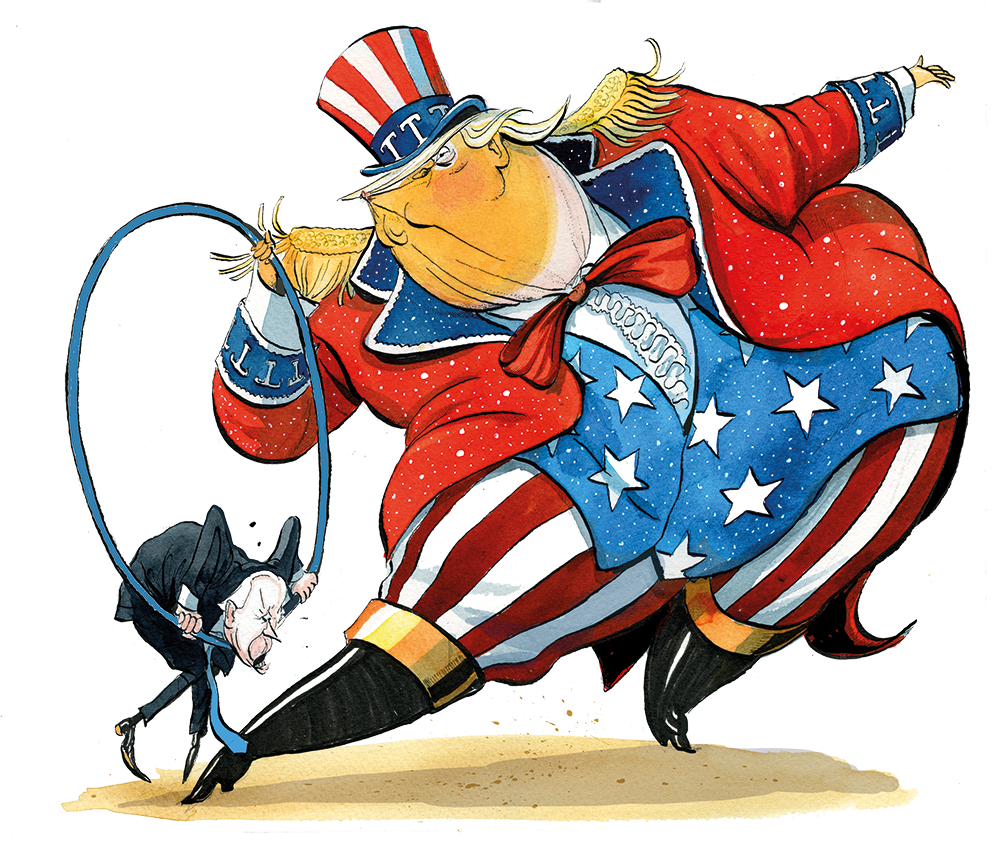
Cuba has survived by learning how to bend not break. When Chávez passed away and Venezuela’s economy deteriorated, oil shipments declined, Havana turned outward – courting tourists and foreign investors while loosening the command economy at home. Small private businesses were permitted to operate, and remittances from the diaspora became the economy’s bloodstream.
But this time, Havana’s search for fuel, financing and friends to patch the cracks of its socialist system may be more difficult. Its ideological comrades, Beijing and Moscow, stood aside when Maduro was captured. China, a major oil consumer itself, has no means to underwrite Cuba’s energy needs, while Russia remains constrained by its war in Ukraine and has no money to spend in the Caribbean.
Cuba has weathered the Bay of Pigs, the missile crisis and the collapse of the Soviet Union. Can it also endure Trump – or will Havana fall under Marco Rubio’s ever-expanding fiefdom?


Comments