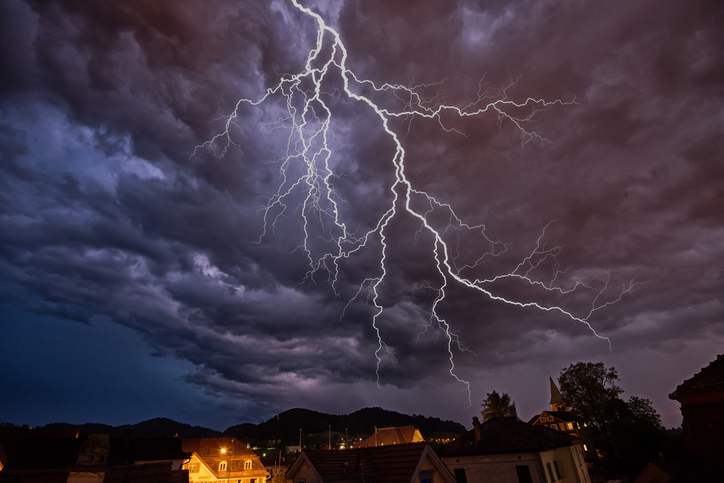
In Britain, lightning causes an average of two deaths a year; in South Africa, it can be well over 200. Near Pretoria over the Christmas break, more than 150 people were injured by what some call in Zulu ‘ukufa ngomlilo’: lethal fire. Yet little is being done to keep the public safe in a country with one of the highest lightning death tolls in the world.
Thunderstorms are more common in South Africa – and the millions of people who commute on foot are at particular risk of being struck. Although many visitors to South Africa enjoy the Mediterranean climate of the Cape of Good Hope, with its dry summers, this milder weather isn’t representative. Other parts of South Africa experience hot, rainy summers, accompanied by some of the world’s most violent storms.
This threat from the weather that pre-dates life on earth is all but ignored
Unless you have experienced one of these storms yourself, the sheer terror is hard to describe. Thunder as loud as dynamite vibrates windows, even walls, as lightning rockets across a sky turned gun-metal grey. Roads are awash and rivers flood so quickly that those fishing along the bank can be swept away. It’s marvellous to watch from indoors, but millions of people here live in shacks or thatched huts; youngsters herd cattle and goats to shelter under trees, putting themselves and their livestock at risk.
At any moment, about 2,000 thunderstorms are happening worldwide. By some estimates, lightning – hotter than the surface of the sun – can claim 24,000 lives a year, while ten times that number survive the horror of being struck. Often they are left scarred for life.
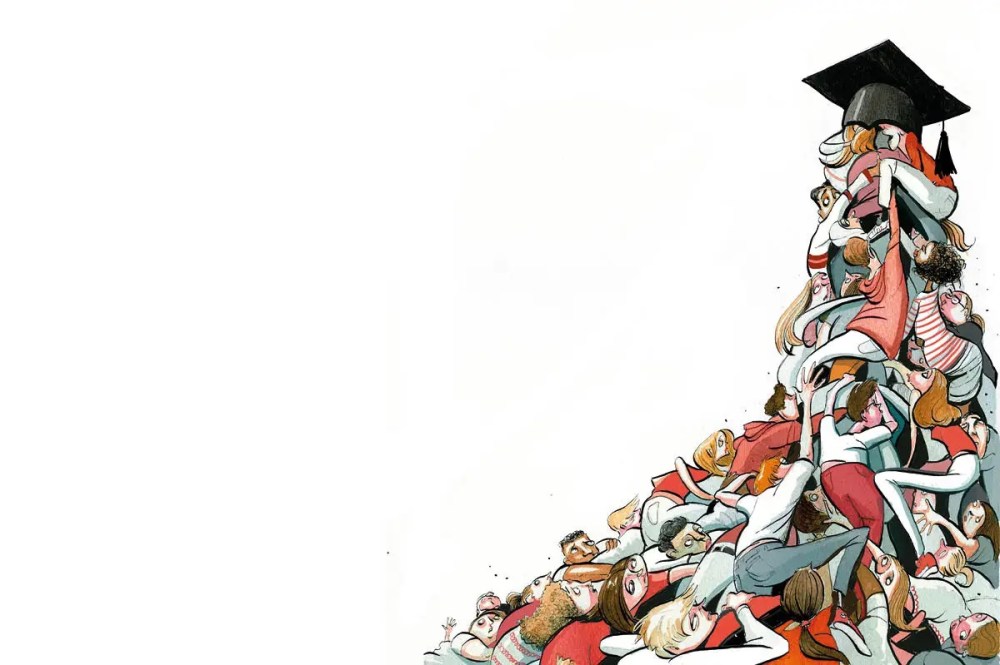
A branch of medicine has developed – keraunopathology, from the Ancient Greek keraunós: a thunderbolt – to study lightning-induced injuries and deaths. Less than five per cent of victims suffer a direct hit; half are killed either by current passing through a metal object they’re touching – a cooker, deckchair or TV set – or because a strike hits the earth with so much energy, it electrifies the ground across a wide area, burning and even killing those nearby. The catch-line in South Africa is: ‘When thunder roars, go indoors.’
Dr. Mary Ann Cooper, a professor at the University of Illinois in Chicago, has analysed the data on lightning-related deaths, with a surprising conclusion: few victims succumbed to their burns. Most common was a heart attack brought on by electric shock. Survivors can be left with permanent brain damage, kidney problems and even a change in personality.
Dr. Cooper is one of the powers behind America’s annual ‘Lightning Awareness Week’, held at the end of June. The United States is another country where lightning strikes are common: about 25 million cloud-to-ground strikes occur there every year, and over the last 30 years the US has averaged 51 annual lightning deaths. Lightning advice varies across the US with its many climates, but a few points – which could save lives in South Africa too if followed by locals – stand out.
Firstly, for buildings with thatched roofs, it is important to have a lightning conductor – but it must not be attached to the house. People are advised to keep away from electrical appliances and fit a surge protector to TVs, computers or anything expensive. Better still, if a storm is near, they should unplug the lot. Landline phones must be avoided, although mobile phones are safe. Baths are allowed, but showers are riskier. If someone is caught outside, they should avoid hilltops and lone trees. They should also stay away from water, including pools, and avoid being in boats or canoes. Lastly, the advice is to get inside a building as quickly as possible.
‘If thunder happens 30 seconds or less after the lightning, you’re in danger’
At the University of Pretoria, Ryan Blumenthal, a professor at the Department of Forensic Medicine, is an authority on the effect of lightning on the human body. ‘In South Africa around 80 per cent of deaths happen in rural areas,’ he says, ‘often far from a hospital. We need to talk more about this in both the media and across the community. People don’t understand just how vulnerable they are.’
And the old wives’ tale about counting between the flash and the bang? ‘If thunder happens 30 seconds or less after the lightning, you’re in danger,’ says Blumenthal. ‘Sound travels at just over 750 mph, which is six miles in half a minute. And the next one may be closer. Counting the seconds can save your life.’
As with anything, there are records. The longest flash of lightning lasted close to eight seconds during a storm in France. And in April 2020, a single bolt ran 477 miles across the sky above Texas, almost equivalent to the distance from London to Zurich. ‘Out of the blue’ was a term used when lightning struck on a clear day. It sounds impossible but, from clouds many miles away, energy can travel at altitude and then crash to earth under a blue sky. The ancients viewed lightning as the anger of the gods; they thought it meant that some catastrophe was at hand. And a catastrophe it was at Spring Canyon, Utah, when, in 1939, a single bolt killed 835 sheep.
Today, governments spend millions warning about climate change, yet this threat from the weather that pre-dates life on earth is all but ignored. Blumenthal believes there should be a lightning awareness week in South Africa: ‘We tried it in 2022,’ he said, ‘but there wasn’t much interest. A committee would need to involve the embassies in Pretoria along with doctors, vets and farming groups. Even the neighbourhood watch in cities like Jo’burg and Cape Town (should get involved). For us, the danger begins in October so I’d aim for that (as the month to run a campaign).’
Blumenthal also says the UK – where people delight in talking about the weather – could play a part. ‘I hope, if South Africa reached out, Brits might help,’ he says. ‘Maybe they could work with groups here to fund a campaign, telling people how to stay safe when the clouds roll in.’
Whatever form a safety campaign takes, it’s about time that South Africa wakes up to the threat from the skies. Too many innocent lives are being lost to lightning strikes.






Comments