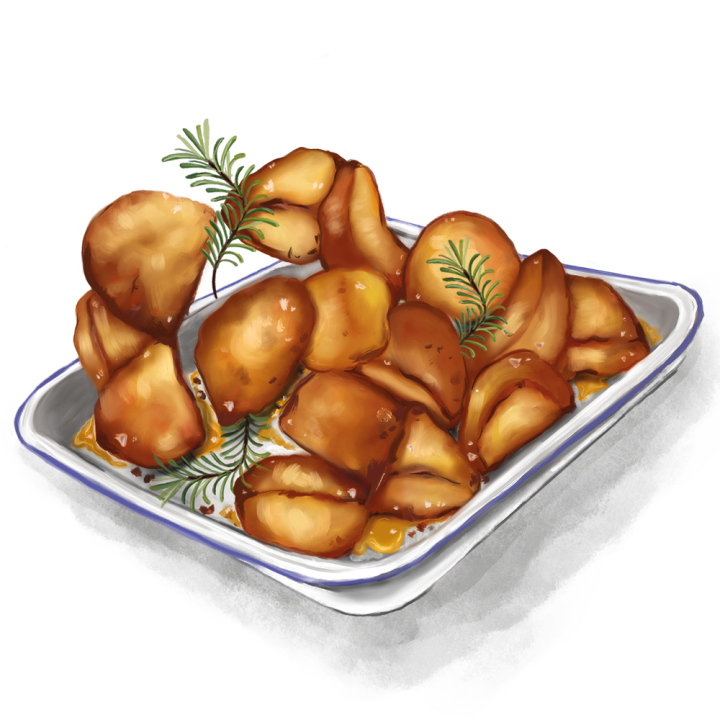

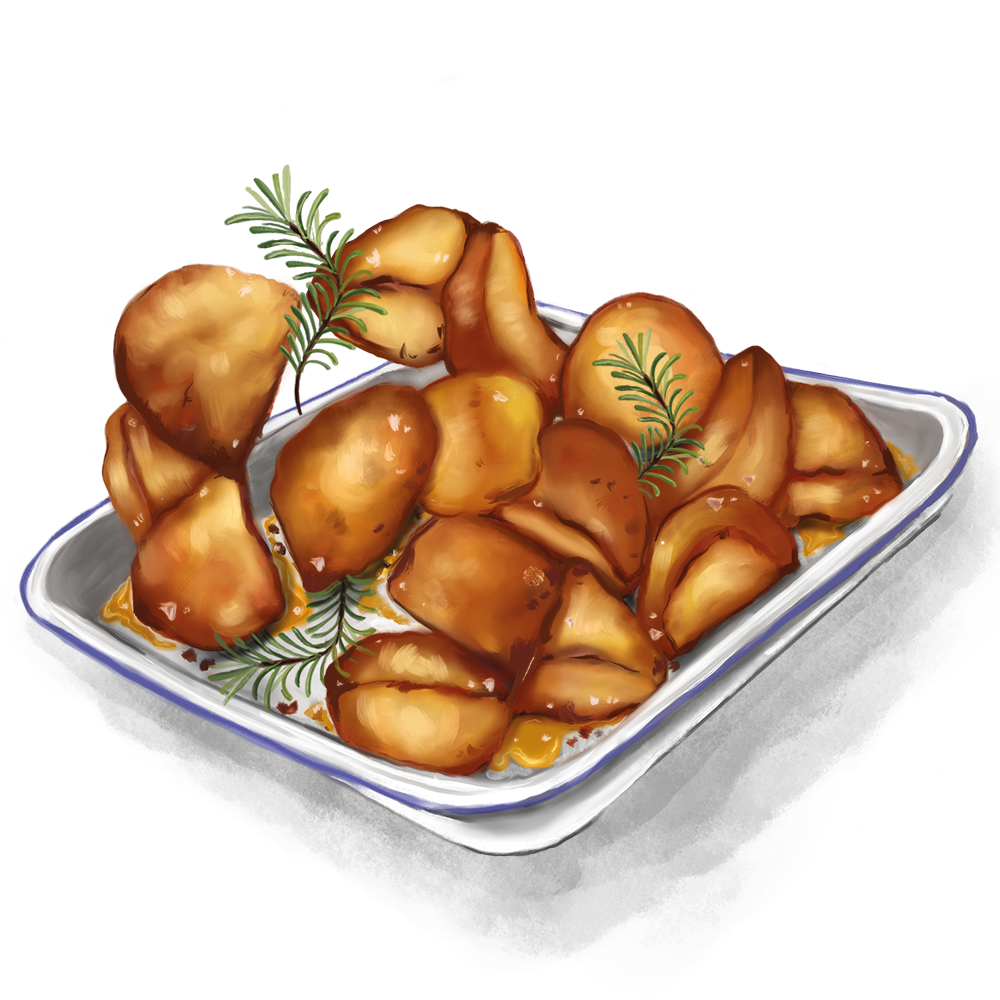
Roast potatoes shouldn’t be complicated. We’re talking two ingredients, plus some salt and maybe herbs if you’re feeling fancy. It’s just shoving some parboiled potatoes in a hot oven, right? Yet I can count on one hand the number of times that I’ve had a decent roast potato in a pub or restaurant.
Bad ones are to be found all over the place. I don’t just mean school dinners, mass-catering, hospital-canteen potatoes here. The most carefully prepared Sunday roasts at charming establishments feature beautiful melting meat and thoughtfully cooked veg, all sitting alongside miserable roasties. Clammy. Dark brown. Soft (but not in a good way). A waste of a good potato.

No one doesn’t like a roast potato; they’re practically our national dish. Done right, they’re transcendental. Glassy. Golden. Crunchy. Yielding. Full of flavour. The ultimate contrast of textures. They’re the potato equivalent of a crisp winter’s morning, the first cold lager of the summer. Near-sensory overload at first bite, shocking and exciting and invigorating, then after just a moment, absolute bliss. So why do we keep getting them wrong?
Firstly, it’s near impossible to have a good roast potato from frozen and it’s tricky to cook them in advance, hold them at the right temperature and maintain the delicious contrast that we’re seeking, which makes it hard to cook them at scale. Secondly, we over-complicate it. Living in an age with unfettered internet access and a rabbit warren of recipes leads us to chase perfection, which can actually just mean culinary angst and indecision. Which potato to choose? How long to parboil it for? Is goose fat better than duck fat? Should you coat in polenta? (No!) Should you coat in flour? (No!) But decent potatoes, lots of good fat and a long roasting time are all you need for the perfect spuds.
Done right, they’re transcendental. Glassy. Golden. Crunchy.
Yielding. Full of flavour
A floury potato is the starting point (although enough fat and a long enough roast will do most of the work for you): Maris Piper, King Edward or Désirée. You’ll find most, if not all, of these in pretty much any supermarket.
When it comes to the fat, there are two rules to follow: firstly, if you eat meat, solid animal fat is the best choice. Lard, beef fat, goose fat, duck fat: it doesn’t hugely matter which one. Each will impart a different flavour, but all have a high smoking point, work well
and taste fantastic. Secondly, more is more. You do need to be generous with whichever fat you choose. You can skimp here, but it’s a false economy, and your potatoes will be the victims.
Honourable mention, however, must go to the latest vegetarian roast potatoes I’ve tried. A new discovery for me. Food writer Madeleine Wilmshurst spent the three months before Christmas working her way through every conceivable cooking fat for roast potatoes in order to discover the best for the big day. It was her clotted cream roast potatoes that took off like a rocket. The natural lactic sugars in the clotted cream will caramelise (just like when you brown butter) and coat the potato. What you may lose – only slightly – in crunchiness, you make up for in fantastic, caramelised flavour. These are now my go-to for the veggies in my life, dividing off a portion of the potatoes once boiled into a clotted cream bath, while the rest are destined for beef or goose fat.
Whichever fat you plump for, the final ingredient is time. Roasties naturally go hand in hand with roast dinners, and that means you’re trying to bring together lots of different components – all of which require different cooking methods, temperatures and times. It’s no mean feat, and loading up the oven with lots of different items only makes it harder to sustain temperature. I can’t count the number of times my meat has been beautifully rested, my gravy is piping hot, and the veg is ready to go, only to find that my spuds are still wan and soft, crying out for another 20 minutes to get them to their golden podium position. Give those potatoes (and yourself) more time than you think they’ll need: the last minutes are the transformative ones.
You can throw in herbs: go for something woody and hardy, like rosemary sprigs or thyme, so they’ll survive the high heat and long cook. But they don’t need it. All that gorgeous potato, bathed in beautiful animal fat, a handful of salt? You’re golden.
Serves: 4
Hands-on time: 15 minutes
Cooking time: 1 hour 15 minutes
- 1kg Maris Piper potatoes
- 4 tbsp lard, beef fat, duck fat or goose fat
- Coarse salt, for seasoning
- Peel the potatoes, slice longways and then chop into smaller chunks depending on potato size. Place in a large pan of cold water.
- Bring the water and potatoes to the boil, then simmer for 15 minutes, until they slide off the point of a knife. Drain, cover with a tea towel and set to one side while you heat the oil.
- Preheat the oven as hot as it will go. Spoon the fat into a large, deep roasting tray, and heat in the oven for 15 minutes.
- Carefully transfer the potatoes to the hot fat using tongs or a spoon, turning them in the fat as you go. Keep the potatoes in a single layer.
- Roast for 45 minutes to an hour, turning and shuffling the potatoes at 20 minutes, and every ten minutes thereafter. Once golden and audibly crisp when tapped on the outside, remove from the oven, scatter generously with coarse salt and serve.




Comments