Facebook

My lesson in misery from an anti-AI march

From our UK edition

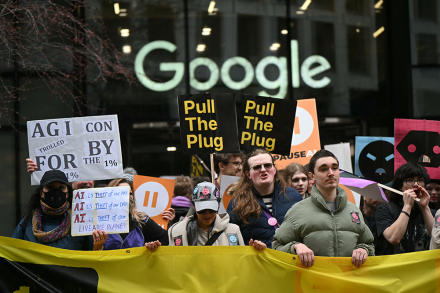
Automation is about to take over the world, apparently. But the fightback has begun. On a cold, blowy day a few weeks ago, I joined a stop-the-bots demonstration that marched through the Knowledge Quarter of King’s Cross where Facebook and Google have their headquarters. A group of 100 activists gathered on Pentonville Road for a warm-up rally addressed by a charismatic young woman in a leather skirt. ‘Can we trust the tech bros with our data?’ she cried into the mic. ‘No! Do we need regulation now? Yes we do!’ She congratulated us for ‘making history by joining the largest anti-robot march ever’. And she promised us a hot meal afterwards. ‘Who doesn’t like free food? No one. Am I right?’ The crowd didn’t reply.

Why is it impossible to make good coffee at home?

From our UK edition

It was when I was staying recently with the Frums in D.C. that, for a dizzying moment, I thought my life-long quest had ended. Nasa can fly us a quarter of a million miles to circumnavigate the moon but nobody has yet, to my knowledge, fixed the perennial problem of making an even half-decent cup of coffee at home. Back to the Frum residence in Georgetown, known inside the beltway as ‘the best hotel in Washington’. It is 8.30 a.m. There is no sign of Danielle, my hostess, but David is at large on the landing, perhaps as he had heard his house guest stir.  ‘Coffee?’ he asked. To my amazement, he flung open some doors outside his master bedroom suite to reveal an entire separate walk-in closet complete with serried rows of glass mugs and a space-age espresso machine.

Petty, malicious and tremendous fun – the Facebook office drama

From our UK edition

Careless People, Sarah Wynn-Williams’s account of her time at Facebook, has landed top of the New York Times’s bestseller charts and fourth in the UK’s Sunday Times equivalent. It owes its success in large part to a ferocious campaign that Meta – Facebook’s parent company – waged against it on publication. When Meta faces a barrage of public criticism, which it often does, it typically stays quiet and gets on with things. And that approach works – its share price has continued to soar despite scandal after scandal. So when the company not only published a series of furious denials but also had staffers post about the book on their personal social media feeds, and even launched a legal action to prevent Wynn-Williams promoting it, people started to take notice.

Who trusts their savings with the government?

From our UK edition

Working out the Kinks American singer and vegan activist Moby called the Kinks’ song ‘Lola’ ‘transphobic’ and ‘unevolved’. According to the band, the song was based on a real incident when their manager, Robert Wace, spent the night dancing with a cross-dressing man in a bar in Paris, was alerted to the stubble on his dancing partner’s chin but replied that he was ‘too drunk to care’. The band admitted they did attract such attention because of their name, which was supposedly inspired by their dress sense. As for the name Lola, it had different connotations at the time, as the name of a racing car marque which featured in motor races during the 1960s.

The meme election comes to a close

For most of American history, elections took a long time. Many of the gaps that still exist today between when counts begin, when certification happens, when electors meet and when the next winner is sworn in exist as a vestige of a past where lengthy travel and slow word of mouth meant people just did not know what had happened for quite some time. Election results happened at a distance. This created its own set of problems in the application of authority, but now we are dealing with something of a different nature: a demand for immediacy that throws patience aside and views every delay as suspicious. It’s one reason that we used to speak to each other in paragraphs, then in lines and phrases — now we can only manage memes.

meme election

Trump and Kamala are competing over who’s more online

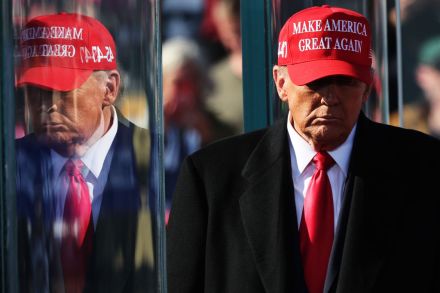
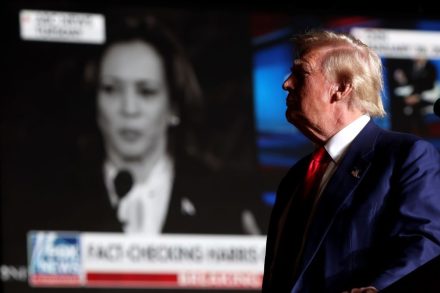
The messaging in the 2024 election has devolved into a contest to determine which campaign is more online, to their detriment. In 2019 (she never made it to 2020), the first Kamala Harris presidential campaign infamously imploded because, among other reasons, her staff and communications strategy were "way too online" — obsessed with the constant progressive social media flashpoints above and beyond the issues fundamental to the primary electorate. Instead of talking to voters about their priorities, Harris’s campaign was too focused on trending topics, memes and crafting the best clips of their candidate for the online audience.

online

RNC ends on a high note

The Republican National Committee’s memorable four-day convention came to an end in Milwaukee last night. With an unusual performance from Kid Rock, a shirt-ripping Hulk Hogan and dozens of Trump-humanizing speeches, the RNC managed to throw a party that drew some attention, some laughs and certainly some tears — from worried Democratic strategists and enamored Trump-fans alike.It was, as The Spectator’s James Heale put it, “the first convention in twenty years where polls suggest the Republicans are on course to win the White House, producing an air of expectation and excitement.

The Supreme Court on not standing for standing

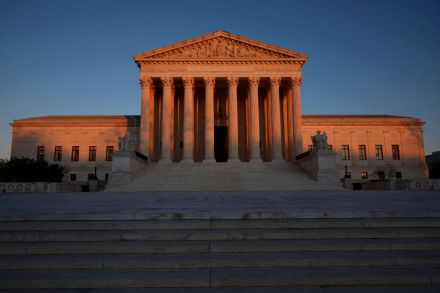
Human beings are animals that often operate by proxy. Here’s a familiar example from the world of — well, I was going to say “the law,” but what I have in mind is not the law but its perversion, so let’s say “the legal bureaucracy.” Everyone has heard the phrase “the process is the punishment.” It covers a multitude of sins. In its core signification, the phrase describes an increasingly common situation in which the machinery of the law is deployed to harass, enervate, stymie and otherwise hobble someone the regime does not like but whom, for the time being anyway, it chooses not to incarcerate. Sometimes it is easier to bankrupt and demoralize an opponent into submission.

standing

Have we all become slaves to algorithms?

From our UK edition

Here I am, a human, recommending Kyle Chayka’s book about the negative impact of algorithms on our culture. Hopefully that will calm him down a bit, because he worries a lot, possibly far too much, at least as it seems to someone who is less online. Chayka is a staff writer at the New Yorker and he is concerned about the effect of the Filterworld, his word for the ‘network of algorithms that influence our lives today, which has had a particularly dramatic impact on culture and the ways it is distributed and consumed’. He is referring to the songs Spotify cues up, the films Netflix suggests, the stories Facebook feeds its users, the broken flush of TikTok videos.

The promise and peril of Facebook Marketplace

Items currently available for sale on Facebook Marketplace within eleven miles of my kitchen table (a partial list): Two antique candlesticks, $20 One 1994 Lane cedar chest, $110 One Birkin philodendron, $20 Drunk Elephant Bronze Drops, $30 I became a Facebook Marketplace power user when my husband and I moved from a one-bedroom in San Antonio to a lovelorn Victorian in Pennsylvania. We had 3,000 square feet to furnish, and a budget depleted by closing costs and moving expenses. Marketplace is a classified-ad section of Facebook that was introduced as a less-seedy alternative to Craigslist, a place your grandma could browse for an antique footstool without stumbling across a solicitation for feet pics.

marketplace

We’re fighting the Covid censors

On July 4, our Independence Day, Judge Terry Doughty issued a preliminary injunction ordering the federal government to immediately cease contact with social media companies, which it had been urging to censor protected free speech. Evidence unearthed in the Missouri v. Biden case, in which we are co-plaintiffs, has revealed a vast federal enterprise dictating to social media companies who and what to censor. The Centers for Disease Control and Prevention (CDC), the Surgeon General’s office, the National Institutes of Health, the FBI, the State Department, the Department of Homeland Security and the White House itself were all closely involved.

censorship

Is the Musk-Zuckerberg cage match off?

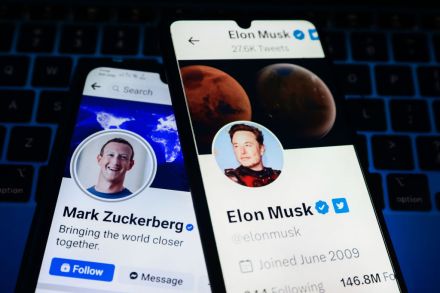
It may not come as a great surprise to readers that Elon Musk and Mark Zuckerberg will not, in fact, be having a cage fight with one another. Ever since Musk had posted on Twitter (now known as X) in June that he was interested in battling the Meta tycoon, only for Zuckerberg to reply “send me locations,” the saga has turned from a typically absurd piece of Muskian humor to a story that has oscillated between what has seemed like a serious piece of corporate warfare and utter silliness. There was never any serious doubt that Musk would have come off a poor second to Zuckerberg had the fight taken place.

musk zuckerberg

Is your therapist trying to brainwash you?

Mental health therapists are supposed to be deliberate in making sure that their personal politics don’t get in the way of treating their patients. I was taught during graduate school that separating my “stuff” from my patients’ therapy was essential. After all, their therapy was all about them.   But that has changed in this country — everywhere from college-level classes and professional organizations, to therapy practices both public and private.   Earlier this summer, in a private group of mental health professionals that I administrate, I witnessed how the critical theory ideologues are destroying mental healthcare.

therapy sessions therapist

RIP Twitter. Meet Threads

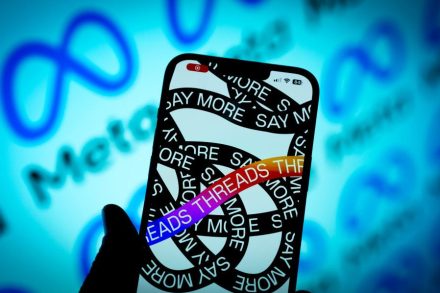
Elon Musk and Mark Zuckerberg formally challenged each other to a cage fight on June 21. Out with free-market capitalism, in with post-liberal tech feudalism, and accompanying duels! However entertaining, this whole debacle was spectacularly stupid, for two core reasons. The first is that the jiu-jitsu trained Zuck would clearly obliterate the rather portly, older Musk. The second is that this came as a response to a Twitter post on their real fight, with $44 billion on the line, between Musk’s Twitter and Zuckerberg’s clone competitor of it, Threads, which launched last night. It had 2 million users within two hours; 10 million with seven hours; and this is without any mainland Europeans, as the EU continues to be led by the moronic.

threads

The people deserve a Mark Zuckerberg-Elon Musk cage fight in Vegas

Just when you thought toxic masculinity was dead: Emmanuel Macron chugs a beer and Elon Musk and Mark Zuckerberg agree to a cage fight.  Elon Musk tweeted Wednesday that he was "up for a cage fight" with Meta CEO Mark Zuckerberg — to which Zuck replied on his Instagram Story, "send me location.” Musk came back with: "Vegas Octagon,” the fenced-in area used for Ultimate Fighting Championship bouts in Las Vegas, Nevada. Musk also tweeted "I'm gonna use a move called 'The Walrus', where I just lie on you, and you can't get away” and "I almost never work out, except for picking up my kids & throwing them in the air." https://twitter.

elon musk mark zuckerberg cage fight

Good riddance to the metaverse

So pack it all in then. Away with the wisecracking butterfly that sits on your shoulder during work meetings. Out with the Gamorrean Guards who play Texas Hold’em with you around a floating table. The metaverse, Mark Zuckerberg’s fever dream of a virtual-reality infused world, is dead. That’s assuming it was ever alive and kicking in the first place. To assess just how “real” the metaverse ever was, we need to go back to its inception in the fall of 2021. That was when Zuckerberg released a video of himself in suspiciously Steve Jobs-esque garb — black shirt and pants, sneakers — tooling around what he called a “home space” that brimmed with holographic bric-a-brac.

metaverse

How taxpayer money was used to silence speech

Here's a simple question: how much American taxpayer money is being spent to silence, censor, and blacklist opinions? Legacy media reporting on the House Oversight Committee's initial look into the actions of Twitter during the 2020 elections focused mostly on questions surrounding Hunter Biden's laptop. The committee's investigative reports, however, ought to hone in on the most disturbing aspect of this story: social media giants were routinely directed and coerced into censoring and silencing American citizens by entities funded by those same taxpayers.

tax dollars free speech censorship disinformation

Can I now free the nipple on Instagram and Facebook?

It’s a funny old world. Cockburn noticed today that Facebook and Instagram have been told to overhaul their longstanding ban on exposed female nipples, as the policy impedes the right to expression for, wait for it, trans and nonbinary people. Isn’t it funny that more than a decade after breastfeeding mothers first held a “nurse-in” at Facebook’s headquarters to protest, Meta’s oversight board has called for an overhaul to the boob ban to satisfy the rights of people that insist they are now men. What a victory! “Lactivists,” otherwise known as women, spent an entire decade in the 2000s attempting to reverse the ban by explaining that images of breasts were not inherently sexual. This resulted in the campaign to #FreetheNipple, which went mainstream in 2013.

meta nipple

Madison Cawthorn is right about metrosexuals on social media

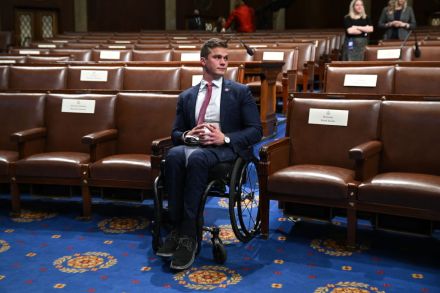
Madison Cawthorn, the one-hit-wonder congressman from North Carolina who was defeated in his primary earlier this year, used his final address on the House floor yesterday to condemn “soft metrosexuals.” In the spirit of not kicking a guy when he’s down (Cawthorn will be gone by January), let’s cut him some slack and acknowledge that, melodramatic language aside, his speech made a valid point. Social media is to blame, at least in part, for weakening American culture. “America is weak,” Cawthorn declared. “Her sons are sickly, and her daughters are decrepit. Our country now faces the consequences of enabling a participation trophy society. We’re no longer the United States. We’ve become the nanny state.

In defense of Twitter

Twitter probably isn’t going anywhere. Major platforms don’t just vanish, after all. If we’re not still posting in 2023, then I’ll buy you all a drink — a bet you poor saps won’t be able to hold me to because you won’t be able to find me on Twitter. Still, if Musk’s “decimate and innovate” plans don’t work then Twitter will decline. It might get slower and buggier and more prone to crashing. Platforms don’t have sudden deaths, but they do have slow and painful ones. Even Myspace still exists. Will Twitter follow it into online obscurity? Not soon, perhaps, but it will in the end. Nothing lasts forever. So our thoughts turn meditative. Writers sometimes comment on Twitter as if it has trapped them in a toxic relationship.

taliban twitter