Beijing

Chinese puzzle or matryoshka doll – the complexity of Sino-Russia relations

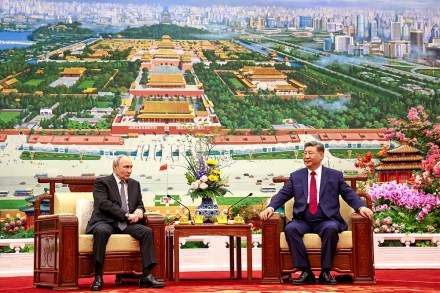
China and Russia are twins. Both are great Asian land empires; both are continental, multi-ethnic powers that expanded by pushing forward their borders rather than by crossing oceans; both have a deep tradition of autocracy that survives to this day; and both (more plausibly in China’s case) believe that their social contract, ideology and system of government is a universal one superior to all others. In Entangled Empires, the German historians Sören Urbansky and Martin Wagner explore the convoluted story of Russo-Chinese relations from the moment in the mid-17th century that roving Cossack bands bumped up against Siberian tribes who owed fealty to Beijing up to the latest performative amity between Vladimir Putin and Xi Jinping.
Can China keep North Korea in check?

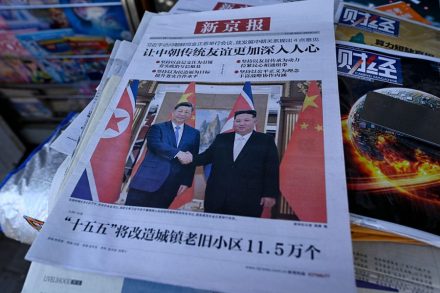
When Xi Jinping visited North Korea in June 2019 for his first state visit, he would not have expected nearly seven years later that the hermit kingdom would be in an alliance with Russia. As Xi concluded his second visit to the country yesterday, the Chinese president’s pledges to "strengthen strategic coordination" and "uphold regional peace and development" with his North Korean counterpart emphasized how Beijing wants to ensure that its northeastern neighbor does not cross any red lines. With Beijing having been Pyongyang’s largest economic partner for nearly two decades, Xi’s visit serves as a clear reminder to North Korea that China wants to maintain close ties and, crucially, ensure stability on the Korean Peninsula.

north korea

China has quietly taken over America’s food supply

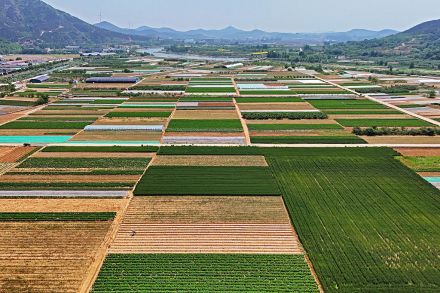
For all the talk about artificial intelligence and quantum supremacy, the fate of civilizations still depends on breakfast. ChatGPT can’t grow corn. Empires rise on stomachs as much as on silicon. And America’s food system – long dismissed as safe and self-sufficient – has quietly become a front line in the US-China rivalry. We act as if lunch is inevitable, but Beijing knows that food is power. A new report from the America First Policy Institute should wake us up. Washington long treated agriculture as a post-political space where globalization could do no harm, and was therefore happy to let much of the nation ship its growth to China. As Ambassador Kip Tom and Royce Hood argue, China has thus taken over critical pieces of the US agricultural system and food supply.

china america food supply

What’s next for Taiwan?

From our UK edition

When Portuguese traders sailed past a verdant, mountainous land on the fringe of the Chinese empire in the mid-16th century, they named it Ihla Formosa – ‘beautiful island’. But Kangxi, the third emperor of the Manchu Qing Dynasty, was less impressed when his naval forces captured it in 1683, scoffing: ‘Taiwan is no bigger than a ball of mud. We gain nothing by possessing it, and it would be no loss if we did not acquire it.’ Beautiful or not, Taiwan was a pirates’ lair, inhabited by tattooed head-hunters and best left alone. Yet the Qing clung on to Taiwan for two centuries, with Chinese settlers gradually displacing the indigenous Austronesian population.

Deals, deals, deals vs China, China, China

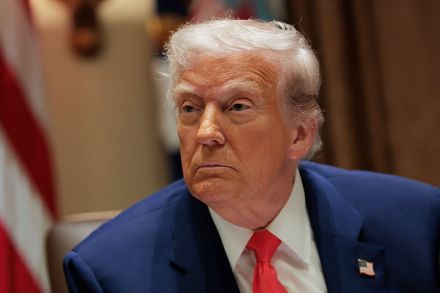
How was your Liberation Month? It’s been almost 30 days since Donald Trump stood in the Rose Garden of the White House and announced a shocking set of massive tariffs on the world. The event caused huge convulsions in the economic universe: trillions were wiped off the stock market and, under huge pressure, Trump did agree to a 90-day pause on reciprocal tariffs. After that he exempted electrical goods, though his standard 10 percent remains, and the heads of most financial analysts are still spinning trying to figure out what it all means. Yet for all the angst and the apoplexy, yesterday the S&P 500 index closed just 1 percent down from where it was at the beginning of the month.

china ccp

The China influence puzzle

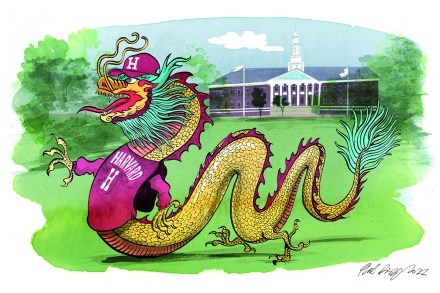
A “Chinese puzzle” in its classic version is a game where you must fit a variety of ill-assorted boxes inside other boxes. The term came to mean any intricate problem, especially one in which what looks like the way forward leads only to new obstacles.   These days, in which we are warned not to use ethnonyms for fear of giving offense, it might be safer to say something like “brainteaser.” But the efforts of the Chinese Communist Party (CCP) to manipulate American society genuinely deserve the old term. The news this past week adds a few curious details to those efforts. Details first; explanations to follow.

The case for moving SOUTHCOM back to Panama

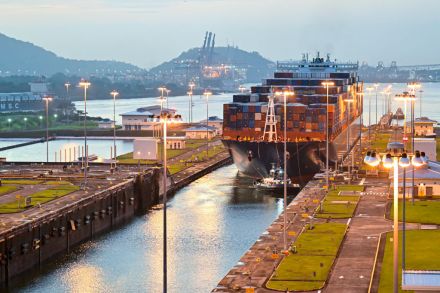
The recent American interest in the Panama Canal is grounded and rational — contrary to media characterizations of the renewed focus as a byproduct of the president’s impulsive fixations. The Canal, as President Trump has correctly noted, was an American development in a nation that existed mostly as a consequence of American intervention. Panama provided the setting for the Canal — and America provided the Canal itself, having taken on, in 1903, the project France failed to complete in 1890. In the 1960s, when the United States began preparing its handover — not its return — to the Panamanian state, the concession was understood as the price of peace with an ascendant Third World.

Red-letter days for Gilbert & George

From our UK edition

James Birch is a somewhat mysterious art dealer and curator, whose first great triumph was mounting a Francis Bacon exhibition in Moscow in 1988. He wrote a gripping book about that adventure, Bacon in Moscow, and has now written an even more gripping follow-up, about taking Gilbert and George to Moscow, Beijing and Shanghai. Mounting the Moscow exhibition meant getting drunk every night, but Birch carried it off with aplomb Birch was born ‘circa 1956’, according to Wikipedia, and grew up in Primrose Hill, London. Both his parents were artists and also communists, which he claims was not unusual in the 1960s (though I’d say it was, quite).

The freedom fighters who dared to take on a communist superpower

From our UK edition

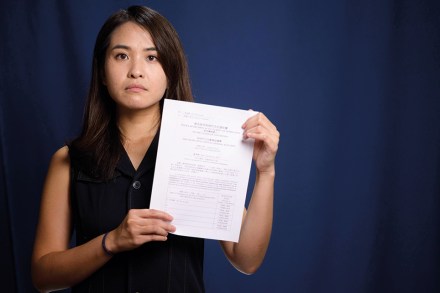
In May 2020, as the planet grappled with the pandemic, China’s state media declared that there were ‘obvious deficiencies’ in Hong Kong law enforcement needing to be addressed. Any delusions this might have referred to intensifying police brutality in response to massive pro-democracy protests, let alone the unleashing of Triad thugs to attack participants, were dashed rapidly. Details emerged days later of a draconian new security law that criminalised any form of dissent, whether at home or abroad, with threat of life imprisonment. ‘When the world is not watching, they are killing Hong Kong,’ said Dennis Kwok, a lawyer and pro-democracy legislator. He was right.

World events are not going America’s way

Contrary to the conventional wisdom, the world situation is grim for America. And it could actually get far worse. Why, then, are many of our national leaders acting as if things are going well? We need not doubling down but fundamental change. That starts with understanding that we are in serious trouble. The war in Ukraine, which is manifestly the Biden administration’s priority, is sadly likely to be protracted. While the Ukrainian counteroffensive is still ongoing, the best analysis indicates that the war has become a struggle of attrition. Russia is substantially mobilizing its economy and society for a long-haul war effort — and its armed forces appear to have at least partially adapted from their earlier failures.

world

The high odds of a Chinese black swan

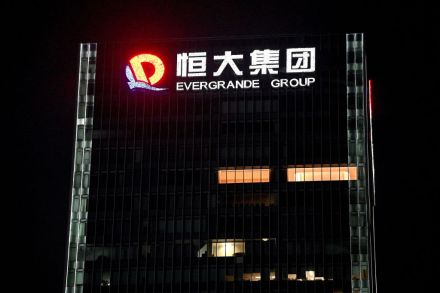
I have a memory picture of an urban highway in Shenzen, southern China. Recently built, with abundant flowering shrubs planted along its central reservation, it was lined as far as the eye could see by uncountable apartment towers, many of them unfinished. This was 2009 and it was my first glimpse of the debt-fueled property bonanza that had begun to grip the Chinese economy — alongside the export-led manufacturing boom that was also plainly visible, thanks to satellite maps of the vast agglomeration of factories surrounding the new-rich residential areas. It’s easy to be a permanent bear in any market, because history tells us they all come crashing down in the end.

Evergrande

Sticky, slithery, squelchy, smacky: the authentic Chinese food experience

From our UK edition

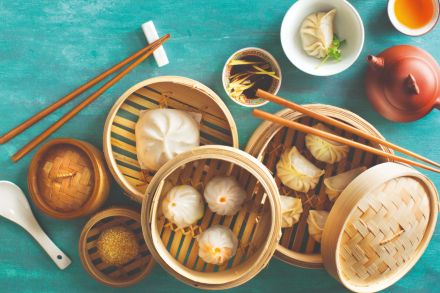
During the early days of the pandemic, a video clip of a Chinese celebrity slurping bat soup went viral – no matter that it was taken from a travel show filmed in 2016 on Palau, a Pacific island some 2,000 miles from the Huanan wet market in Wuhan, and regardless of the fact that the Chinese don’t like munching on bats in any case. Wuhan was Covid ground zero, and filthy Chinese eating habits were to blame. In Invitation to a Banquet, Fuchsia Dunlop sets out to skewer misconceptions about what she calls ‘the world’s most sophisticated gastronomic culture’. This contention may surprise foreigners brought up on sweet-and-sour pork balls doused in Day-Glo red syrup, but it is a convincing one. I have yet to meet anyone who has spent more than a year or two in China who disagrees.

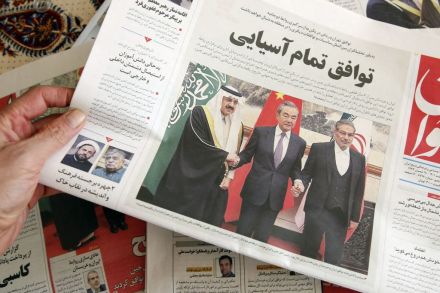
After decades of waiting, China goes on the diplomatic offensive

China has been an epicenter of diplomacy over the last month and American officials can’t help but take notice of the shift. Statesmen flying to China, hat in hand, to sign business deals with Chinese firms or enlist Chinese diplomats to assist in solving international disputes gives the foreign policy graybeards ulcers. The general rule seems to be: what’s good for China is bad for the United States. There’s no question that China’s Xi Jinping has had a good few weeks. After being occupied with a nationwide Covid-19 disaster that lasted for three years, Xi, a man whose entire legacy depends on China transforming into a superpower on par with or perhaps even surpassing the US, isn’t wasting any time before injecting his country back into the diplomatic arena.

syria peace

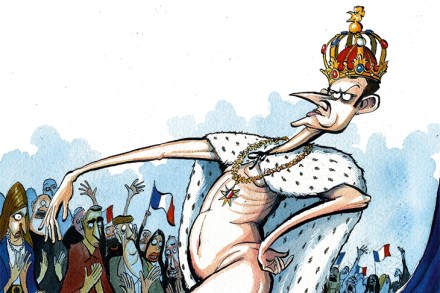
Macron tries to be the Xi whisperer

God bless Emmanuel Macron for his perseverance and self-confidence. The French president seeks to lead Europe and turn the continent into a strong, independent player in its own right. And he is eager to take on the hard, thankless diplomatic work that few of his peers are willing to do. Whether it was his ploy in 2019 to connect then-US president Donald Trump and then-Iranian president Hassan Rouhani on the phone or his months-long, intensive personal dialogue with Russian President Vladimir Putin before the war in Ukraine, Macron invests a lot of time and capital into these gambits. Unfortunately for him, many of them fail to accomplish anything of substance. Macron wasn’t able to convince Rouhani to speak with Trump (although Trump reportedly agreed to the call).

napoleon macron tantrum diplomacy

The truth comes out about Beijing’s balloon

Well, well, well. The world seems amazed at the news that the Chinese spy balloon that meandered over the entire continental United States this winter was, you know, spying. That’s what spy balloons do: they spy. They collect intelligence — in this case, information from some of America’s most sensitive sites (I was going to say “secure sites,” but that would clearly be inaccurate). What do they do then? Like bees collecting pollen, they transmit what they collected back to the hive, which, mirabile dictu, just happens to be located in Beijing.  Anyone who was paying attention knew this. Did secretary of state Antony Blinken? Did puppet-in-chief Joe “Chocolate-Chip” Biden? Probably.

spy balloon

It’s time for a reckoning with Chinese big tech

From our UK edition

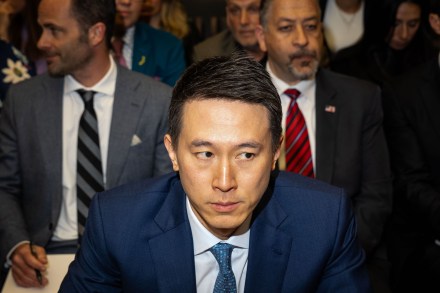
It has been a bumpy week for China’s beleaguered technology giants. They are under increasing scrutiny overseas, and the communist party continues to tighten the screws on them at home. In many ways they are also their own worst enemies. The UK has become the latest government to ban the Chinese-owned TikTok from government devices over security concerns. Parliament has also banned the app from its network. This follows similar bans from the European Union and 11 countries, including France, New Zealand, Denmark and the US. Western lawmakers are unconvinced by TikTok’s often cack-handed attempts to distance itself from its Chinese parent, ByteDance, and that company’s obligations to the Chinese communist party.

The Paraguay predicament over Taiwan

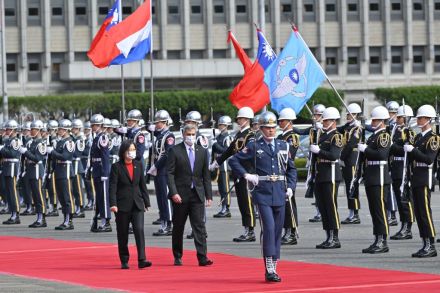
On April 30, Paraguayans will go to the polls to select a new president. Though elections in the landlocked South American nation do not typically make headlines around the world, this vote carries outsized geopolitical importance: it could mean Taiwan loses yet another country to China. Opposition candidate Efraín Alegre of the Authentic Radical Liberal Party, or PLRA, has said that, should he win, he will retract Paraguay’s recognition of Taiwan as a country. At present, Paraguay is the largest of just fourteen countries to have formal diplomatic relations with Taiwan and the only one in South America. Paraguay first recognized Taipei in 1957 while under the dictatorship of Alfredo Stroessner.

paraguay

Germany’s Faustian entanglement with China

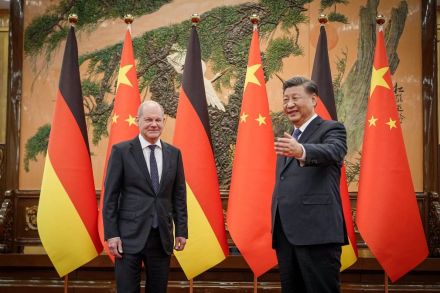
Back in November, German Chancellor Olaf Scholz met with Chinese Communist Party (CCP) chairman Xi Jinping. His visit to China was the first by a G7 leader in three years. Facing heated domestic and international pushback, Scholz framed his visit as an effort to “further develop” economic cooperation between Berlin and Beijing. In this context, such “further development” means further cementing Germany’s Faustian bargain with China, one in which European-based players, like Airbus and Volkswagen, claim immediate revenue — but at their long-term expense and at great strategic cost.

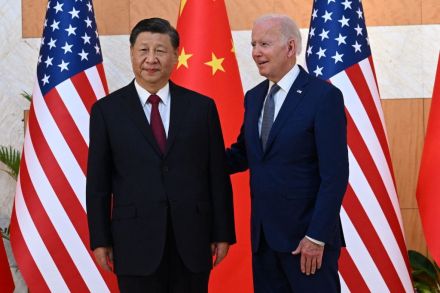
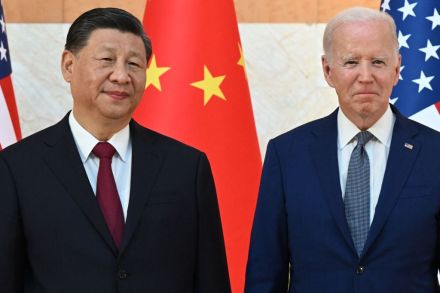
The Biden-Xi meeting was long overdue

The bilateral relationship between the United States and China is arguably the most important in the world today. The two countries make up approximately 42 percent of the world’s economic output and more than half of global military expenditure (at $801 billion, the US share of that total dwarfs China’s). The Biden administration’s recently released National Security Strategy names China as "the only competitor with both the intent to reshape the international order and, increasingly, the economic, diplomatic, military, and technological power to do it." The central objective from Washington’s standpoint is to compete vigorously with Beijing, prevent China from attaining hegemonic status in the Asia-Pacific, and ensure this competition doesn’t slide into conflict.

China delayed its 2008 financial crisis until 2022

The year 2008 was consequential by many measures. The collapse of the US investment bank Lehman Brothers sparked a worldwide financial crisis. Yet China appeared to emerge out of it relatively unscratched after Beijing introduced a massive stimulus package in the world, about three times the size of the United States government's rescue program. Thanks to this expansionary fiscal policy and the easy credit that came with it, the Chinese economy quickly returned to its robust growth by growing 8.7 percent in 2009 and 10.4 percent in 2010. After 2008, the Chinese Communist Party leaders concluded that China "escaped" the financial crisis because of its outstanding leadership and the superiority of the Chinese political system over deeply flawed western democracies.