Yiannis Baboulias

Yiannis Baboulias is a Balkan Investigative Reporting Network fellow

How did an ex-banker end up leading Greece’s Syriza party?

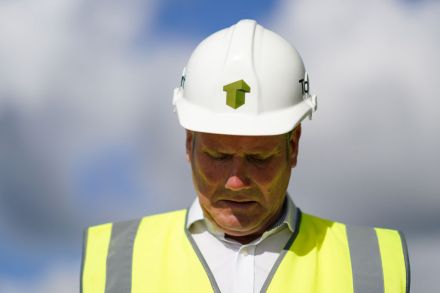
The past decade has not exactly been short of surprises in Greek politics. But even to seasoned observers, the election of Stefanos Kasselakis as the new leader of Syriza, Greece's main opposition party, stands out as one of the strangest developments yet. A former banker now leads a party founded on an anti-banker platform A 35-year-old former Goldman Sachs trader with no prior political experience, Kasselakis has shattered conventional expectations by defeating his rival, Effie Achtsioglou – a party insider favoured by many senior officials – with a 56.69 per cent majority. His victory comes as Syriza wrestles with internal divisions and existential questions.
New Democracy’s election success is a turning point for Greece

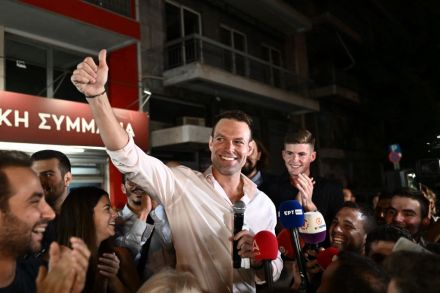
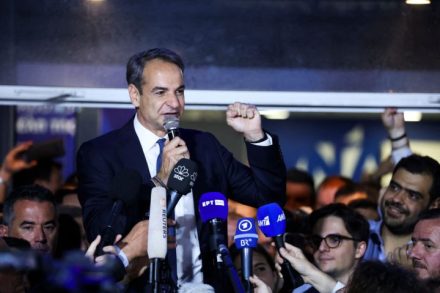
With early results showing a resounding victory for the centre-right New Democracy (ND) in the first round of elections in Greece, its beaming leader Kyriakos Mitsotakis addressed a cheering crowd outside the party’s headquarters with the words 'All of Greece has turned blue! Thank you!'. He has every reason to be satisfied. ND not only managed to hold on to its share of the vote from 2019 but to expand it by around 150,000 votes, bringing them to a comfortable 41 per cent. They won every district across the country but one. While just shy of a majority, due to the changes in electoral law introduced by Syriza while in government, they are poised to win comfortably in the second round which will follow in late June or early July.

Greece is erupting in anger after its train disaster

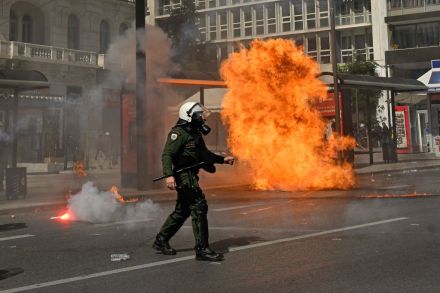
‘Message me when you get there.’ This phrase became a rallying cry when hundreds of thousands of people took to the streets across Greece this week, in protests sparked by the country’s deadliest train disaster which killed 57 people earlier this month. Anger against the government was palpable, with protesters shouting ‘murderers’ outside the parliament building in Athens, forcing PM Kyriakos Mitsotakis to postpone his plans to announce the date of the next elections.   To understand why this particular incident threatens to upend the ruling party’s certainties, we must unpack the phrase used by the protestors. It’s hard to understate the emotional resonance of that simple line for Greek people.

Turkey’s president Erdogan faces his greatest crisis yet

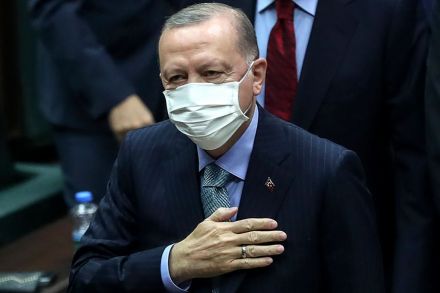
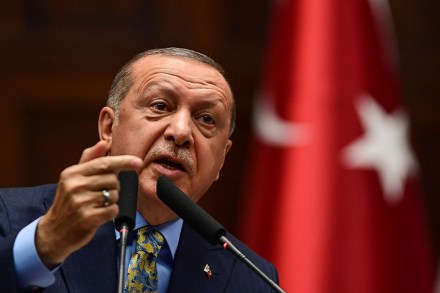
President Erdogan's aggressive foreign policy is what usually captures the attention of the international media, but it is at home where his biggest troubles now lie. Turkey's currency, the lira, has tanked, hitting a record low of just over 13 lira to the dollar. Thousands of protesters will hit the streets in the coming days over the country’s turbulent economic situation. Erdogan finds himself embattled. For now, Erdogan remains defiant. But the figures are brutal: since the beginning of the year, the Turkish lira has lost almost 40 per cent of its value. The minimum wage in Turkey, which was worth $556 (£417) at its highest, is now down to just $255 (£191).

Is Bosnia heading for war?

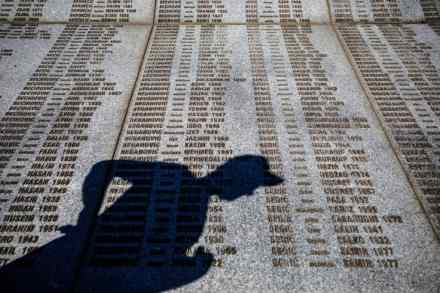
Is Bosnia and Herzegovina on the brink of war? Christian Schmidt, the UN’s high representative, has warned that the country is in imminent danger of breaking apart. The return of armed conflict is a 'very real' prospect, he has said. Schmidt has good reason to be alarmed. His warnings follow an announcement last month by Milorad Dodik — leader of the Bosnian Serbs and member of Bosnia and Herzegovina’s tripartite presidency — that he plans to undertake steps amounting to secession, even if that’s not the word he is using, for now. And with any plan for secession, the very real threat of conflict and ethnic cleansing should be at the forefront of our concerns.

How Turkey is fuelling the Belarus-Poland migrant crisis

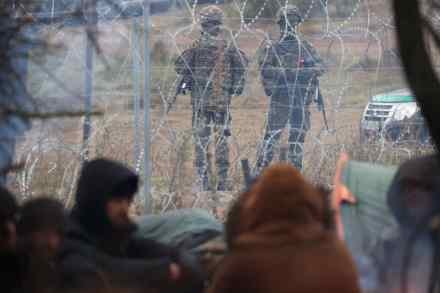
In the cold, damp forest lining the border between Poland and Belarus, thousands of refugees flown over from the Middle East have waiting to cross into the EU for days. Belarusian riot police are shoving them away from their gates and towards Poland, where only more forces await. The Belarusian dictator Alexander Lukashenko has recently been in conflict with the EU, which has imposed sanctions on his regime after last year’s contested elections which many believe to have been rigged. Lukashenko is pushing refugees towards Poland to be pawns in a fight, with the backing of Putin. The refugees find themselves between a rock and a hard place: in front of them, a Polish government who looks good appearing tough against migration and Lukashenko.

The Greek wildfires and the failings of the state

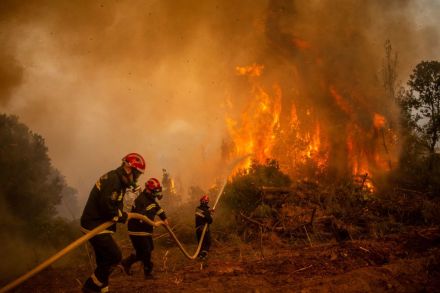
The wildfires raging across Greece for what is by now more than a week, show no sign of abating. High temperatures continue in what is the country’s worst heatwave in almost four decades. While no region of the country has been spared, the images coming from the northern part of Evia island are particularly striking. One, showing an elderly woman in despair – the grim atmosphere behind her painted dark red by fire and smoke, like a still from a post-apocalyptic film – became the prime example of what the new reality of extreme temperatures will look like. It was from Greece, but it could as easily have been taken in Turkey, Italy, Spain and other places around the Mediterranean sea that are fighting the same battle.

In defence of Novak Djokovic

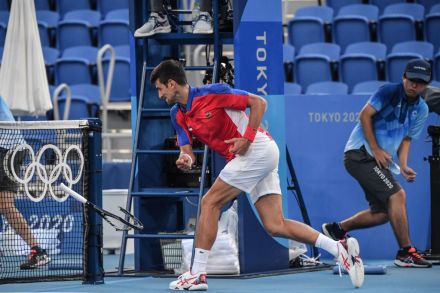
Why does no one like Novak Djokovic? If Roger Federer is the player that even non-tennis fans can't help but fawn over, Djokovic has few admirers. The world number one smashed two racquets during his defeat to Pablo Carreno Busta in the semi-finals of the Tokyo Olympics yesterday. The game marked the end of Djokovic's dream of achieving the Golden Slam by winning four grand slams and Olympic gold in the same year.  While Djokovic still had a phenomenal year, even champions have bad days. But despite his many achievements, there is a palpable sense that a lot of fans were happy to see him lose – both the game itself and his temper. It’s fair to say that Djokovic is a polarising figure, so criticism is not unusual for the 33-year-old Serbian.

Keir Starmer and the ‘Pasokification’ of Labour

As the Greek debt crisis took hold in the wake of the financial crash, there was one big political casualty. The main centre-left party PASOK — which had dominated Greek politics since the early eighties — collapsed, going from a comfortable 43.9 per cent of the vote to 13.2 per cent in 2012. A decade on, the party has failed to recover – and the grim news for Keir Starmer's Labour party is that it faces its own version of Pasokification, one where the fall is slow rather than spectacular, and in which the left could find itself trapped. It might be hard to imagine British politics without the Labour party, but then again take a look at what has unfolded across Europe in recent years: the story of PASOK's implosion has replicated itself across the continent.

Erdogan’s Covid crisis

Turkish president Recep Tayyip Erdogan has announced that the country will be heading into its first full lockdown. An early success story, this time last year Turkey was being hailed as a model for its swift actions that ensured the country saw a relatively small death-toll, relative to its size (39,000 people in Turkey have died so far in the course of the pandemic). Now infections are surging: Turkey recorded a total of 61,028 daily cases of Covid-19 and 346 deaths last Tuesday, the highest since the pandemic began. And Erdogan is panicking. There was some hubris in Erdogan’s early declarations of victory against the virus last year.

What the St George’s Day bores get wrong

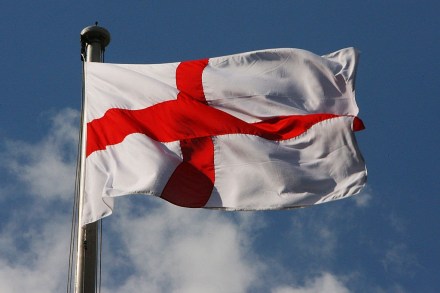
It's St George’s day – a chance to celebrate England's patron saint, and, for some sanctimonious characters, it's also an opportunity to berate people by reminding them who St George really was. But there's a problem with those determined to lecture others: they're getting their facts wrong. In recent years, a peculiar narrative has taken hold among seemingly well educated people, who have suddenly discovered that St George was a 'Turkish soldier', an 'Arab' whose mother was Palestinian, or – perhaps the most absurd claim – 'a migrant worker from the Middle East' who would be 'banned' from the UK. The problem with these claims is that none of them are true. And those peddling these stories should know better.

The free speech row tearing apart the tech community

Donald Trump’s Twitter suspension after the riot at the US Capitol made headlines around the world. What was less reported, however, was that as the then-President was suspended, so too were tens of thousands of right-wing accounts. Their social media refuge was Parler, another micro-blogging platform. Parler markets itself as a ‘free speech-focused and unbiased alternative to mainstream social networks’. Whatever its intentions, in recent years the platform has become a cesspit of extremist content. So extreme, in fact, that Amazon banned Parler from its hosting services earlier this month. The case is now going through the courts, after Parler launched a lawsuit.

The fall of Golden Dawn

Next week, the biggest Nazi-related trial since Nuremberg will come to a close. Following the murder of Greek musician Pavlos Fyssas by a member of the neo-Nazi party Golden Dawn seven years ago, the entire leadership and dozens of members were charged under counter-terrorism legislation with running an organised crime syndicate. The case file, which runs at more than 3,000 pages, includes charges of murder, arson, possession of guns and explosives, and even trafficking. A combination of the famously sclerotic Greek justice system and circumstance held up the trial for years. The pandemic and the lockdown that followed it pushed the verdict back even further. But now, at last, it’s nearly over. The party’s troubles extend beyond the courts.

Med alert: Greece and Turkey are in a battle for hegemony

No one should fool themselves about the nature of Recep Tayyip Erdogan’s vision for Turkey. It’s an imperialist project that would see Turkey’s hegemony stretch from the Mediterranean Sea and Libya all the way to Iran. Erdogan’s plans for his country’s expansion are evident in the current stand-off in the eastern Mediterranean between Turkey and Greece. Turkish frigates are accompanying a research vessel, the Oruc Reis, as it enters disputed waters to carry out a seismic survey in search of natural gas. In its path lies a joint force of Greek and French warships, attempting to prevent the Turkish from venturing further. The two sides have almost come to blows — two frigates accidentally collided this month.

Will the Hagia Sophia be a wake-up call to the west?

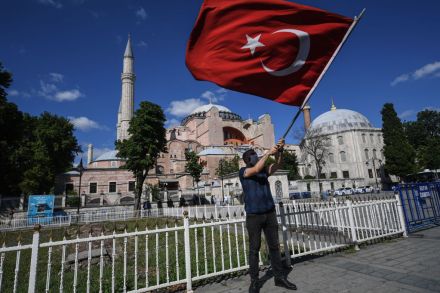
Turkey’s strongman president Recep Tayyip Erdogan has announced that the Byzantine church of Hagia Sophia will become a mosque again, after 85 years as a museum and a designated Unesco World Heritage site. It will be the fifth church of the same name — all once symbols of the Eastern Roman Empire and priceless cultural treasures — to face the same fate in recent years. Erdogan is facing political threats, from old allies like former prime minister Ahmet Davutoğlu, and from Turkey’s poor economy. He will be hoping that this radical move consolidates his support. It is not certain that it will work.

The burden of a glorious past

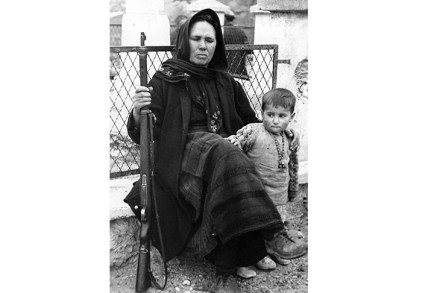
It often proves difficult to talk about modern Greece. Not just because of the relentless stream of news coming at us this past decade in relation to the crisis; but also because Greece, both its ancestry and its more recent passions, can mean quite different things to different people. It’s a history universally revered in its ancient glory, commonly ignored in its millennium-spanning Byzantine imperial expression and often maligned in its modern incarnation as a nation state. Small in both geographical and financial terms, the Hellenic Republic has attracted more attention than is perhaps justified, often for all the wrong reasons. But do we truly understand Greece beyond the headlines? And let’s be honest, does it matter if we do or not?

Approaching mild panic

For a brief moment in 2011, standing among thousands of people occupying Syntagma, the central square in Athens, it looked as though social media would change the world. A row of laptops set up next to the subway entrance became the beating heart of an anti-austerity movement that promised to go well beyond simple protest politics, up to perhaps reshaping the political culture of a stale Greek parliament. From Occupy Wall Street to the Arab Spring and the streets of Europe, a demand for such new politics and more democracy made itself known to the wider world through tweets and Facebook posts. Truly it appeared that if you gave people the tools to connect and actually meet each other in the digital commons, a demand for progress and change would arise almost naturally.