William Nattrass

William Nattrass

William Nattrass is a British journalist and Visegrád Four current affairs commentator based in Prague.

Why Poland’s EU climbdown may help Law and Justice

From our UK edition

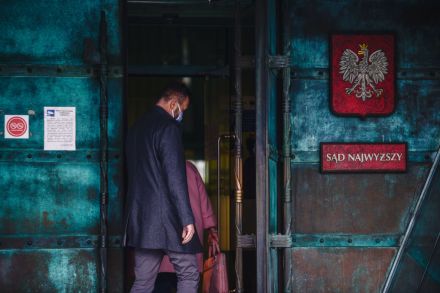
Dare Poland stand up to the EU? The leader of Poland’s ruling Law and Justice (PiS) party Jaroslaw Kaczynski announced on Saturday that the country’s controversial disciplinary chamber for judges, the subject of a long-running dispute with the bloc over the ‘rule of law’, will be disbanded. The climbdown seems at first glance to be a humiliating defeat for the Polish government in the face of pressure from Brussels. The European Court of Justice gave Poland until 16 August to disband the disciplinary chamber. Politicians in Warsaw say the chamber is a means to root out corruption but the ECJ believes it undermines the independence of the Polish judiciary.
Belarusians in exile aren’t safe from the iron grip of Lukashenko

From our UK edition

This week has laid bare the terrifying situation faced by Belarusians in their home country and abroad. From Tokyo’s Olympic village to the streets of Kiev and the courts of Minsk, the iron grip of president Alexander Lukashenko only seems to be tightening. With athletes joining political opponents and exiled activists in being targeted by the regime, many are now asking the question: where can Belarusians be safe? Certainly not at home. On Wednesday, a behind-closed-doors trial began in Minsk for two opposition figures involved in organising the huge protests which swept Belarus last year following elections widely held to have been fraudulent. Maria Kolesnikova and Maxim Znak have been charged with incitement to undermine national security.

The EU is failing to stand up for eastern Europe

From our UK edition

Will the EU stand up for eastern Europe? This question is now being asked by Ukraine following the announcement of a deal between Germany and the USA which paves the way for the completion of the controversial Nord Stream 2 gas pipeline between Russia and western Europe. The deal reached by Merkel and Biden may have placated critics in Washington, but it has failed to allay eastern European concerns over the security implications of the project. The state most affected by Nord Stream 2, Ukraine, has now requested urgent consultations with the European Commission and the German government, adding an air of legal weight to its complaints by invoking provisions of its ‘Association Agreement’ with the EU.

Why the Pegasus spying scandal probably won’t harm Viktor Orban

From our UK edition

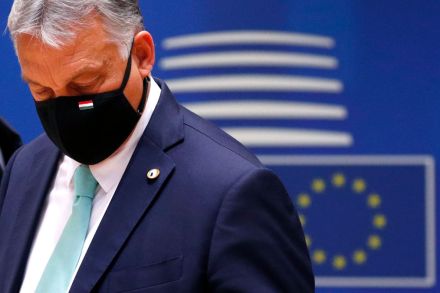
‘The EU has a dictatorship growing inside of it,’ proclaimed Guy Verhofstadt on Monday afternoon, while calling for an EU inquiry into the ‘Pegasus’ scandal, which has exposed the potential Hungarian misuse of state surveillance on anti-government journalists, media owners and businesspeople. The ‘Pegasus Project’, a multinational investigation led by the French non-profit organisation Forbidden Stories, suggests that investigative journalists critical of Hungarian Prime Minister Viktor Orbán’s regime (along with independent media owners and government-critical businesspeople) were the subject of phone hacking in recent years.

The EU is stoking the culture war between East and West

From our UK edition

Other EU countries ‘should not interfere in the affairs of Hungary,’ Czech president Miloš Zeman said on Sunday in support of Viktor Orbán’s controversial new anti-LGBT reforms. As international condemnation of the country's new LGBT law mounts, Zeman threw his weight behind the Hungarian prime minister, saying he ‘can see no reason to disagree with him’ in his stance on LGBT rights. The Czech president’s words came as the latest blow in the EU’s increasingly bitter culture war between west and east, with blame for the confrontational environment being placed by Brussels on rebel nations such as Hungary and its Visegrád Four ally Poland.

Viktor Orbán goes to war on the European parliament

From our UK edition

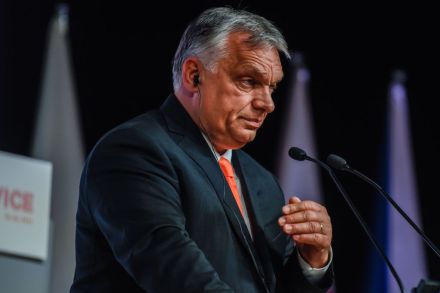
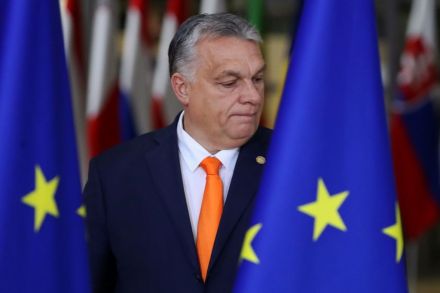
‘Times have changed, and whereas thirty years ago we believed Europe was our future, today we understand that we are Europe’s future’. Hungarian prime minister Viktor Orbán has never been one to shy away from controversy when it comes to the European Union. But on Hungarian Independence Day on Monday, he went a step further by presenting an alternative vision for the bloc.  Orbán's plan involves a major restructuring of the European parliament, which he described as a ‘dead-end’ for democracy. He wants to fix the EU’s democratic deficit by building a ‘democracy of democracies based on European nations’.

How a Polish coal mine risks derailing the EU’s climate strategy

From our UK edition

Cracks are appearing in the EU’s climate strategy. An international dispute over the court-ordered closure of a coal mine on the Poland-Czech Republic border has thrown divisions over how to phase out fossil fuels into sharp relief, leading to the first ever environment-related lawsuit between two EU member states. The Czech Republic has taken Poland to the European Court of Justice to oppose the extension of a licence for the Turów coal mine on Poland’s south-western border with the Czech Republic and Germany. The Czech government said that continued operations at the mine constitute a risk to the health of Czechs living nearby due to air pollution and reduced groundwater supplies.

Israel, Palestine and the EU’s humiliating attempt at diplomacy

From our UK edition

This week, Hungary defied Brussels and refusing to back a joint EU declaration on the Israeli-Palestine conflict. The bland EU statement calling for an end to the violence was underwhelming in itself – but with Hungary rejecting the bloc's ‘one-sided’ approach, Brussels has been left embarrassed by its inability to coordinate a unanimous response to the fighting.

Two spies, an explosion, and the new Czech rift with Russia

‘Putin is a murderer,’ read the signs carried by protestors outside the Russian Embassy in Prague on Sunday. On Saturday night, Prime Minister Andrej Babiš stunned the Czech Republic by stating that evidence now links Russian GRU secret agents to a massive explosion which killed two people at an arms depot near the Moravian village of Vrbětice in 2014. Czech Minister of the Interior and acting Foreign Minister Jan Hamáček gave 18 diplomats known to be linked to Russian foreign intelligence 48 hours to leave the country, and compared the situation to the Salisbury poisoning in 2018.

Orban and Salvini’s plan to ‘make Europe great again’

From our UK edition

Change is coming in the European Parliament. Hungarian Prime Minister Viktor Orbán, Polish leader Mateusz Morawiecki, and Italian Lega party leader Matteo Salvini held a meeting in Budapest this month to discuss the establishment of a new, conservative European Parliamentary alliance. Forged after the withdrawal of the Hungarian Fidesz party from the centre-right European People’s Party, Salvini claimed the new coalition is intended to 'make Europe great again'. The trio have agreed to meet for further discussions in Warsaw in May. The aping of Donald Trump’s slogan suggests an attempt to replicate his brand of conservatism in Europe.

Russia’s Sputnik vaccine is causing political chaos in Central Europe

From our UK edition

A joke is doing the rounds in the Czech Republic that the world’s highest Covid mortality rate can, in actual fact, be found in the Czech Ministry of Health. Yesterday, the Czech health minister Jan Blatný was dismissed, the nation’s third ‘Covid Health Minister’ since the pandemic began. Both his predecessors were sacked by Prime Minister Andrej Babiš in the autumn of 2020. Rumours of Blatný’s departure had been in the wind for weeks. But his fall from favour seems to have little to do with the Czech Republic’s inability to contain the spread of Covid-19, and far more to do with the ongoing controversy over whether the country will join regional allies Slovakia and Hungary in buying the Russian Sputnik V vaccine.

How the Sputnik vaccine brought down Slovakia’s Prime Minister

From our UK edition

March was a dark month for Slovakia. Covid cases and deaths in the country were among the highest in Europe, while political tensions reached breaking point this week with the resignation of Prime Minister Igor Matovič, after the country controversially purchased Sputnik V vaccine doses. Following disputes within the ruling coalition over the decision to depart from the EU’s vaccine strategy, Matovič agreed to trade places with the Minister of Finance, making him the first European leader to fall victim to ‘vaccine diplomacy’ amid concerns about a shift eastward in Slovak foreign policy. Matovič’s fall is particularly painful given the wave of optimism which swept him to power in last year’s elections.

The growing alliance between Central Europe and Israel

From our UK edition

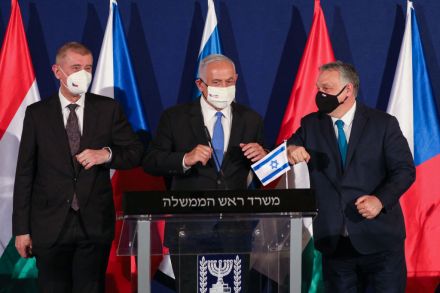
In 2018, the Czech President Miloš Zeman promised in a speech on the 70th anniversary of the founding of Israel to do everything in his power to move the Czech embassy to Jerusalem. Last week, Czech Prime Minister Andrej Babiš finally opened an official diplomatic office in the Holy City. With Israeli leader Benjamin Netanyahu claiming that Israel has ‘no greater friend in the Eastern hemisphere’ than the Czech Republic, the move has underlined Central Europe’s divergence from the EU when it comes to the Israeli-Palestinian conflict. The official Czech Embassy still remains in Tel Aviv – but the nation has gone against EU policy by becoming the bloc’s second member to open an official diplomatic branch in Jerusalem.

Vaccines are testing Central Europe’s loyalties to the EU

From our UK edition

In a fresh embarrassment for the EU in its vaccine rollout, breakaway member Hungary is now at the top of the bloc’s vaccine league table. The Czech Republic, Hungary’s Visegrád Four ally, languishes near the bottom of the list, having so far stuck with the EU’s centralised procurement programme. Meanwhile neighbouring Slovakia has now opted for the Hungarian approach, having taken delivery of its first shipment of Sputnik V vaccines last week. Problems are certainly piling up for Brussels – and in Central and Eastern Europe, a region with a long history of EU rebellion, the idea of ‘going it alone’ is heightening tensions between pro- and anti-EU factions.

Covid is tearing the Czech Republic apart

From our UK edition

The Covid-19 situation is rapidly deteriorating in the Czech Republic, with new efforts to stop the spread of the virus descending into bitter rows and a climate of cynicism and fear. In a government press conference held late on Friday night, harsher measures were announced to tackle the alarming spread of the ‘British variant’ of coronavirus in the Czech Republic. These restrictions included the closure of more shops and services, the closing of primary schools and nurseries, the reintroduction of mandatory face mask wearing outside, and a ban on movement between municipalities. Cases and deaths have risen to new heights in recent weeks, leaving Czech hospitals on the verge of collapse.

The remarkable rise of the Czech Pirate party

From our UK edition

A new party is riding high in the Czech Republic, with the wind of change in its sails. Polls now suggest that the Czech Pirate Party, in coalition with a collection of mayors and independents, could win the largest share of the vote in the Czech Republic’s October elections. It’s a remarkable turnaround for a party that at first sounds like the Czech answer to the monster raving loony party. But the Pirate Party has become a force to be reckoned with in Czech politics. Formed in 2009 as one of many Pirate Parties around the world who came to international prominence following a police raid on the download site The Pirate Bay, the Czech Pirate Party was for a long time seen as a fringe movement.

Why Eastern Europe is looking to Russia and China for vaccines

From our UK edition

With Central and Eastern European countries still gripped by Covid-19, the EU’s slow vaccine rollout has offered little solace in the region. The light at the end of the tunnel seems far away, leading many to wonder whether the answer to vaccine shortages lies not in Brussels, but to the East. Interest in Russian and Chinese vaccines is certainly fast becoming a diplomatic issue for the region. Czech Prime Minister Andrej Babiš recently caused a stir with two international visits. The first was to his Visegrád Four ally Hungary, the second to non-EU Serbia, far and away mainland Europe’s vaccine leader: Babiš suggested both trips were made with the intention of working out what these countries’ vaccine programmes got right.

Central Europe’s vaccine scepticism problem

From our UK edition

Countries around the world are in a race against time to vaccinate their populations against Covid-19. But there is one particular region which appears to have a growing problem with vaccine scepticism: Central and Eastern Europe. As a British expat living in the Czech Republic, I have noticed the lack of eagerness with which many Czechs discuss the vaccine rollout. This may in part be due to the country’s floundering and much-criticised vaccination programme. But it is noticeable that anti-vaccine sentiment is more common – and gets much more attention – here than in the UK. Ex-President Václav Klaus recently told a large anti-lockdown rally in Prague that vaccines are not the solution to the virus.

The Visegrád bloc are threatening to tear apart the EU

From our UK edition

The bad boys of Europe are at it again. The EU has been attempting to tie budget funds to members states’ adherence to the rule of law. This has been rejected by Poland and Hungary, leading to the latest in a long line of conflicts between Brussels and the conservative Central European countries. But looking at the issue in a wider regional context, it becomes clear that this is not just another diplomatic spat, but part of a wider trend. The liberalism of the EU is now facing a serious ideological opposition from the entire ‘Visegrád Four’ bloc of Hungary, Poland, the Czech Republic, and Slovakia. The latest dispute over the rule of law mechanism could have been seen coming.

Covid’s second wave is hitting the Czech Republic hard

From our UK edition

When the pandemic first hit, other countries turned to the Czech Republic for lessons in how to deal with Covid-19. But while the country coped relatively well back then, the second wave has been rather more brutal.  The Czech Republic now has the highest rate of Covid-19 infection in Europe and one of the highest in the world. A new daily record of 9,544 cases was set yesterday; just a few weeks ago, 500 new cases a day was cause for concern. The death toll has now risen above 1,000, over 2,500 people are in hospital with Covid-19, and almost a quarter of all tests performed come back positive. During the 'first wave' in the spring, the number of patients in a serious condition peaked at 100; now it is almost 500.