William Nattrass

William Nattrass

William Nattrass is a British journalist and Visegrád Four current affairs commentator based in Prague.

The EU is pushing Hungary and Poland to the brink

From our UK edition

Storm clouds looming over the EU’s ‘rule of law’ dispute turned a shade darker on Wednesday. The European Court of Justice rejected challenges from Hungary and Poland against a controversial budget mechanism linking adherence to democracy and EU funding.  In an indication of the significance of the ruling for the bloc’s future, the verdict was the first ever to be broadcast live from the court. The European Commission will now come under intense pressure to apply the rule of law mechanism and withhold long-term budget funds for Hungary and Poland, along with the pandemic recovery funds it has already refused to hand over to those states.
Could Viktor Orbán be a peacemaker in Ukraine?

From our UK edition

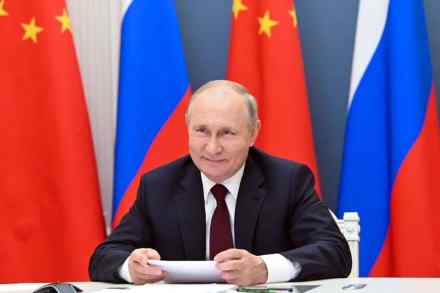
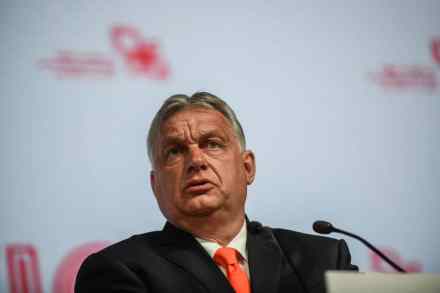
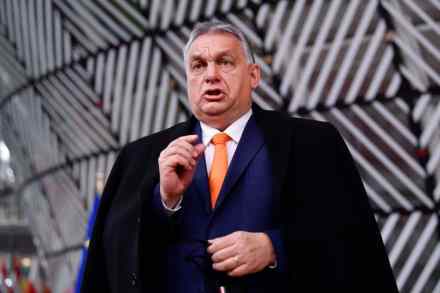
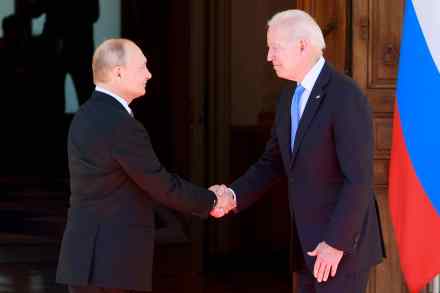
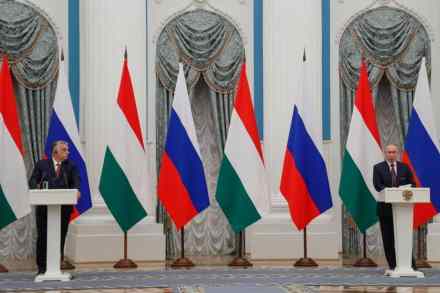
For a politician whose calling card is the struggle for Hungarian national sovereignty, Viktor Orbán and Vladimir Putin’s press conference on Tuesday didn’t look good for the Hungarian leader. Putin abruptly walked off the stage, brusquely beckoning Orbán to follow. The Hungarian strongman dutifully picked up his papers and traipsed across the large, socially distanced podium all alone, apparently flummoxed by whether or not to button up his suit jacket. The unfortunate clip makes Orbán look every inch Putin’s puppet – quite the turnaround for a politician who made his name campaigning against Hungary’s lack of independence as a Soviet satellite state in the dying days of the Cold War.

Can the Czech Republic challenge Europe’s vaccine orthodoxy?

From our UK edition

The Omicron wave has left European counties standing at a crossroads this year. Despite the relative mildness of Omicron compared to previous variants, several countries have stormed ahead with harsher measures to protect their populations from the virus. In Austria, for example, a vaccine mandate will come into effect on Tuesday, and until last week the unvaccinated had been confined to their homes for over two months. Germany is considering following Austria’s lead and introducing a vaccine mandate too. But other countries are starting to see this less deadly wave as an opportunity to restore normality to society, and are now backing away from some of their more extreme Covid measures.

Eastern Europe’s toxic relationship with Russia has left the EU divided

From our UK edition

Joe Biden’s fatalistic statement this week that suggested a ‘minor incursion’ by Russia into Ukraine might be tolerated by the United States was only the latest indictment of the West’s failings when it comes to holding off Vladimir Putin. Less remarked on was Emmanuel Macron’s futile call in the European Parliament the same day for Europeans to ‘collectively make our own demands and put ourselves in a position to enforce them.’ The French President’s vision for the EU as a ‘power of the future’ hinges on member states holding a common position when it comes to international threats.

The attempt to oust Viktor Orbán is falling apart

From our UK edition

This week it was confirmed that a Hungarian general election – framed as a referendum on Viktor Orbán’s leadership – will take place on April 3. As the campaigning descends into acrimony and with cracks appearing in the previously smooth facade of the country’s United Opposition, Orbán – the Fidesz leader and scourge of Brussels bureaucrats – is gaining ground. When a group of six opposition parties banded together to elect the conservative small-town mayor Péter Márki-Zay as their joint prime ministerial candidate in October to take on Orbán, the race was neck-and-neck.

Eastern Europe is paying for the EU’s climate revolution

From our UK edition

Europe’s energy crisis shows little sign of abating. After Germany this week withheld approval for the Nord Stream 2 gas pipeline over fears that it could be used as a political weapon by Russia, benchmark gas prices spiked by 10 per cent across Europe, coming close to all-time highs set earlier this autumn. Some energy traders had hoped that the first supplies arriving through the controversial pipeline would help alleviate pressures this winter, but on Thursday the president of Germany’s energy regulator played this down, warning that approval for Nord Stream 2 cannot be expected in the first half of next year.

Poland’s abortion culture war is a battle for the country’s soul

From our UK edition

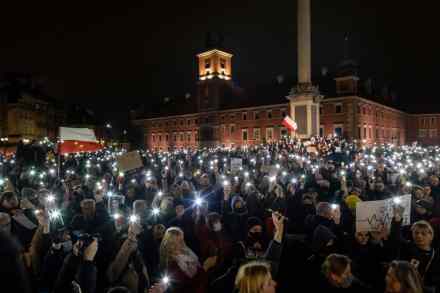
This week it emerged that a hospital in the city of Białystok in Poland refused to grant an abortion to a pregnant woman, even though her baby had no chance of survival. The abortion was requested because of the woman’s psychological state after learning about the foetus’s prospects. Although two psychiatrists confirmed she had severe depression, the hospital said this did not meet the level of risk required for an abortion under Polish law, after a ruling by the Polish Constitutional Tribunal last year made it illegal for doctors to carry out abortions unless a woman’s life is at risk or if the pregnancy is the result rape or incest.

Why Viktor Orbán is fighting a war against ‘LGBT ideology’

From our UK edition

‘Do you support the unrestricted presentation of sexual media content that influences the development of underage children?’ In a national referendum likely to be held in the spring, Hungarians will be asked this question and others about the ‘promotion of gender reassignment’ to children, the holding of sexual orientation classes without parental consent, and whether or not they ‘support the display of gender-sensitive media content’ to kids. Parliament approved the referendum on Tuesday; opposition MPs chose not to vote on what they see as an egregious waste of public money.

Lockdown resentment is growing in Europe

From our UK edition

'Traitors to the nation,' read placards carried by protestors in Prague this week, depicting government figures who have imposed new lockdown restrictions on the unvaccinated. Anger has been bubbling under the surface in eastern and central Europe. But as new lockdowns are imposed and governments consider making vaccines compulsory, this resentment is now threatening to burst out into the open. Czech protests have been mild compared to the unrest seen in other European countries. Dutch prime minister Mark Rutte described recent riots in Rotterdam as 'pure violence,' with police firing warning shots at protestors and inflicting multiple injuries. In Brussels, tear gas and water cannons were used to contain a 35,000-strong protest which turned violent.

How lockdowns for the unvaccinated swept across central Europe

From our UK edition

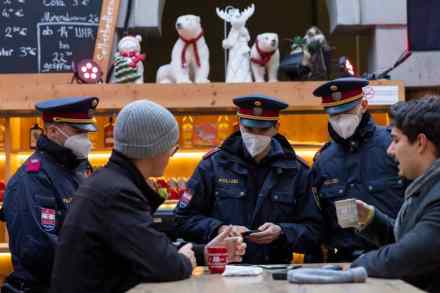
What began in Austria has spread to Germany, then the Czech Republic and now Slovakia. Lockdowns for the unvaccinated are sweeping across central Europe, with Austria now declaring that vaccinations will be made compulsory in the country. Why did these extreme lockdowns become so popular in central Europe? Part of the reason is that the region is at the epicentre of the global pandemic. But in trying to protect their healthcare systems, these countries are essentially creating two-tier societies – which are likely to become the perfect breeding ground for bitterness and resentment. When Austria imposed Europe’s first lockdown for the unvaccinated at the start of this week, few in the Czech Republic foresaw similar measures arriving so soon in their own country.

Meet Tomio Okamura, the Czech Republic’s answer to Nigel Farage

From our UK edition

For a brief period during last month’s Czech election campaign it seemed like the country was heading toward a Czexit referendum. Prime Minister Andrej Babis was desperately looking for a coalition partner and the Eurosceptic Freedom and Direct Democracy (SPD) party had insisted on a referendum as part of any deal. In the end, the Czech PM couldn’t scrape together a majority, meaning a pro-EU coalition will take over this month. But it was still nothing short of remarkable for the country to come so close to holding a referendum on its EU membership. The leader of the SPD, Tomio Okamura, was the key figure behind this push for an EU referendum.

Poland’s Belarusian border conflict is becoming violent

From our UK edition

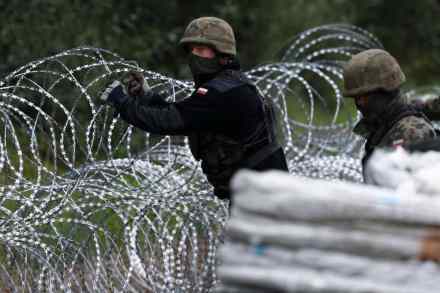
The EU’s conflict with Belarus is heating up. The simmering migrant crisis on the Polish border with Belarus exploded into a new level of intensity on Monday, as large groups of migrants marched through Belarus towards Poland before attempting to storm barbed wire fences and force their way into the Schengen zone. https://www.youtube.com/watch?v=Azz6sbIM5lA The Polish government responded to the violation of its border with military force. Twelve thousand troops are now being deployed along the border. When migrants managed to break a section of the fence near Kuznica on Monday, a rank of Polish soldiers filled the gap as a military helicopter flew low overhead in an attempt to deter the febrile group, which was chanting ‘Germany!

The missing president and the Czech Republic’s sordid power struggle

From our UK edition

Czech President Miloš Zeman has never been one to do things by halves. His mastery in the art of consuming inordinate quantities of alcohol is the stuff of legend, while his formidable smoking once led another senior politician to complain that he felt like a piece of smoked meat in the president’s presence. Two years ago, at the age of 75, Zeman took the prudent step of cutting down to only two packets of cigarettes a day – leading some to hope that his health might improve. Yet it’s now feared the colourful president’s lifestyle may finally be catching up with him. Zeman was rushed to a central Prague hospital on October 10, the day after a nail-biting Czech election was won by an opposition pro-EU coalition.

The problem with the EU’s messianic treatment of Poland

From our UK edition

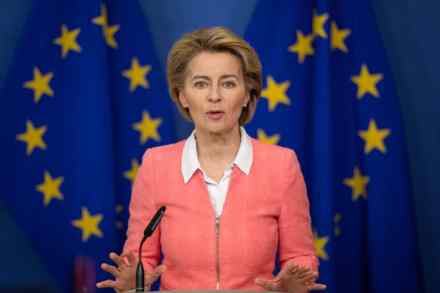
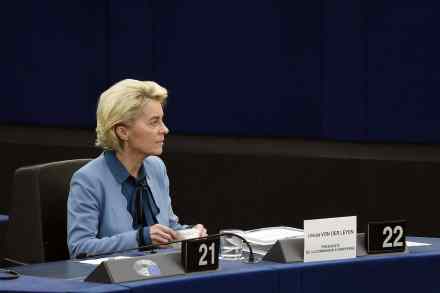
Mateusz Morawiecki insists his government does not want to take Poland out of the EU. ‘Eighty-eight per cent of Poles are in favour of EU membership and half of these are our (Law and Justice party) voters,’ the Polish Prime Minister told the European Parliament in Strasbourg this week. But Morawiecki didn’t exactly seem committed to the EU on Tuesday when he locked horns in a fiery debate with the European Commission President Ursula von der Leyen over Poland’s challenge to the bloc’s legal order. With Morawiecki refusing to back down and von der Leyen assuring MEPs that Brussels would move against controversial Polish legal reforms, it seemed, more than ever, that Polexit really could be on the table.

Is the European centre collapsing?

From our UK edition

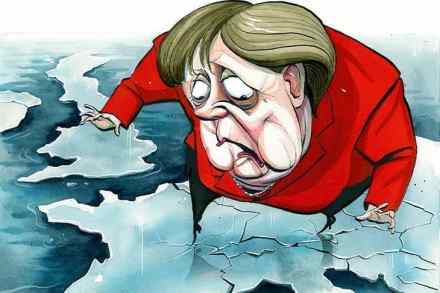
There's a growing tension in the European bloc between those unhappy with Brussels’s increasing interventionism and by those who feel the EU does not intervene enough. The biggest casualty in this escalating conflict could well be the centre-right which, until now, has largely held the fractured bloc together. It’s been a tough few weeks for the European People’s Party, the biggest political group in the European parliament. The group is now preparing for the departure of its long-time talisman Angela Merkel from frontline politics.

The EU was the big winner in the Czech election

From our UK edition

Eurosceptics in central Europe suffered a blow this weekend, as pro-EU coalitions won a slender majority in the Czech parliament. With the nation’s president hospitalised a day after the vote, it is unclear when exactly the new government will assume power. But when they do, Brussels will breathe a deep sigh of relief. SPOLU, a coalition of three parties united by their antipathy towards Czech prime minister Andrej Babiš, won a narrow victory. Together with another coalition comprising the Czech Pirate party – and an alliance of mayors and independents (Pirates+STAN) – groups with a pro-EU bent can now command a slender majority in the Czech parliament. They have already signed a joint statement of intent to form a new government.

Czexit could be closer than we think

From our UK edition

Is Czexit closer than we think? Ahead of the Czech general elections in October, the rise of an anti-EU party as a potential kingmaker is making a referendum on EU membership a distinct possibility. ‘No to EU dictates,’ ‘Freedom to think, speak and breathe,‘ ‘Lockdown is not a solution,’ read election posters plastered around Prague by the Czech Freedom and Direct Democracy (SPD) party. This hard-line anti-EU, anti-immigration, anti-lockdown and vaccine-sceptic movement – which is currently polling at around 12 per cent – may hold the key to power for the ruling ANO party after a hotly contested election campaign. The Czech electoral landscape has turned on its head since the spring.

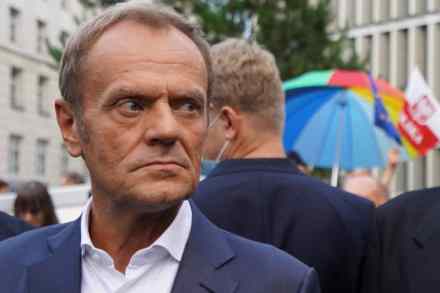
Donald Tusk is playing a dangerous game in dismissing Polexit

From our UK edition

'The British showed that the dictatorship of the Brussels bureaucracy did not suit them and turned around and left.' That's the verdict of the parliamentary head of Poland’s ruling Law and Justice (PiS) party, Ryszard Terlecki, who has once again brought discussions of 'Polexit' to the foreground of Polish politics. Donald Tusk, Poland’s new leader of the opposition, has responded by suggesting this is party politics at work. But he is making a dangerous mistake to dismiss the prospect of a Polish exit from the EU. 'If things go the way they are likely to go, we will have to search for drastic solutions,' said Terlecki on Friday, citing Brexit as an example of a country breaking the mould of EU authority.

The battle for Eastern Europe’s energy sector

From our UK edition

The fight to power eastern Europe is heating up. As Ukrainian president Volodymyr Zelensky prepares to meet Joe Biden at the White House, competition for Ukraine’s energy market is increasingly being framed as a battle between East and West. And as western investments into renewables vie with fossil fuel imports from Russia, the struggle for the nation’s energy supply is assuming a moral dimension reminiscent of the Cold War. Tens of thousands of panels at Ukraine’s huge Nikopol solar farm harvest the sun’s energy for nobody.

Fortress Europe is dreading the Afghan migrant crisis

From our UK edition

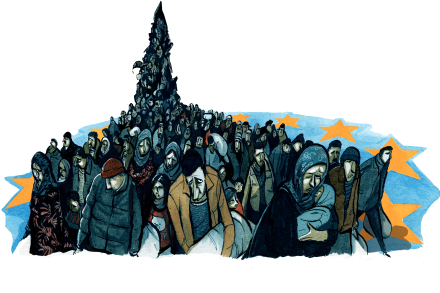
Fortress Europe is pulling up the drawbridge. The takeover of Afghanistan by the Taliban is likely to being about a new wave of refugees heading west, and so walls and fences are being hastily built around the borders of the Schengen Area. As scars inflicted by the last migrant crisis re-open, the possibility of a new influx of refugees is causing deep apprehension throughout the EU. At Usnarz Gorny, on Poland’s border with Belarus, the migrant crisis is already beginning. Twenty four Afghan migrants currently sit stranded in no man’s land between Polish and Belarusian border guards. Left without food or clean drinking water for weeks on end, their situation has become a no-win moral dilemma for the Polish government.