William Moore

William Moore

William Moore is features editor of The Spectator

America abandoned this fight before the Afghans did

39 min listen

On this week’s podcast:In the latest issue of The Spectator, we cover the Afghanistan issue extensively, looking at everything from why the West was doomed from the start, to how events in Afghanistan have transformed central Asian politics. On the podcast, journalist Paul Wood and our own deputy editor Freddy Gray, both of whom feature in this week’s issue, join Lara to talk Biden, Boris and the new 'progressive' Taliban. (00:37)'This is not your father's Taliban' - Paul WoodNext up, thousands of women whose menstrual cycles have been affected by the Covid vaccine have now come forward to make their symptoms known, including our host Lara Prendergast, who writes about her experience in this week's Spectator.

The curious mythology of the Gosforth Cross

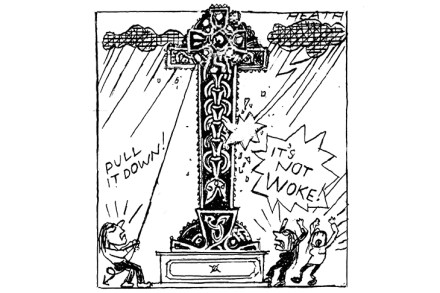
In the small Cumbrian village of Gosforth, in the graveyard of St Mary’s Church, there is a sandstone cross which has stood there since the 10th century. It’s tall, nearly 15 feet, which immediately distinguishes it from any other sculpted stone cross you might find in churchyards across Britain. Up close, it’s even more unusual. The imagery is weird: men wrestle with giant monsters that snake up the cross’s shaft. The depictions weren’t identified until 1883 when William Slater Calverley, a vicar and amateur antiquarian, realised that the cross doesn’t show Christian subjects at all. It shows scenes from Ragnarök, the end of the world in Viking mythology.

Staged: a handful of VIP events is no substitute for normality

37 min listen

19 July is approaching but what will life after ‘freedom day’ will look like? (01:19) Also on the podcast: what will Angela Merkel's departure mean for the EU? (14:12) And as many people fled the cities to the countryside during the pandemic, can a case still be made for urban life? (27:26)With The Spectator’s sketch writer and theatre critic Lloyd Evens; playwright James Graham; director of Eurointelligence Wolfgang Munchau; Independent columnist Mary Dejevsky; writer Ysenda Graham and Rory Sutherland, The Spectator’s Wiki Man columnist.Presented by William Moore.Produced by Sam Holmes, Natasha Feroze and Max Jeffery.

The new leviathan: the big state is back

48 min listen

It seems we are in a new President/Prime Minister alliance of big government spending, should we be excited or concerned? (00:44) Also on the podcast: Are the UK tabloids going woke? (15:00)? And in the wake of the pandemic are we ready to have a grown up conversation about death?(31:11)With Spectator Political Editor James Forsyth, Spectator Economics Editor Kate Andrews, former Editor of the Sun Kelvin MacKenzie, former Editor of the Observer Roger Alton, writer A.N. Wilson, science journalist Laura Spinney and Palliative Care Physician Kathryn Mannix and author of a With The End In Mind. Presented by William Moore.Produced by Cindy Yu, Natasha Feroze and Sam Russell.

Whodunnit? The lab leak theory is looking increasingly plausible

38 min listen

We’re still none the wiser about the origins of coronavirus, but has the lab leak theory just got more credible (00:55) Also on the podcast: are English tourists welcome in Scotland (15:25)? And is being rude the secret to success?With author Matt Ridley, virologist Dr Dennis Carroll, deputy political editor Katy Balls, hotelier Gordon Campbell Gray, journalists Harry Mount and Rebecca Reid.Presented by William Moore.Produced by Cindy Yu, Max Jeffery and Sam Russell.

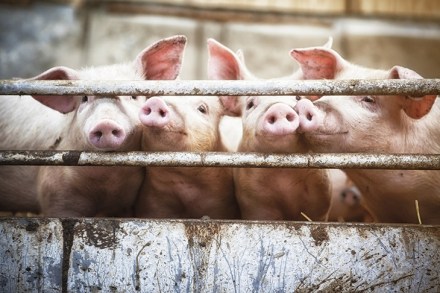
What kind of oyster-eater are you?

The latest fight between the EU and the UK isn’t over vaccines, but molluscs. Brussels won’t grant Britain a special export health licence for the trade of ‘live bivalve molluscs’ unless they are purified first. The problem is, once they’ve been purified they have to be eaten within 48 hours, which gives them too short a shelf life to be practical for export. This affects the trade of cockles, clams and mussels, but if the beleaguered British shellfish industry were to collapse, I think I’d be saddest about the oysters. Ours are some of the finest in the world. It’s no coincidence that three of London’s most famous restaurants — J. Sheekey, Rules and Wheeler’s — all began as oyster bars.

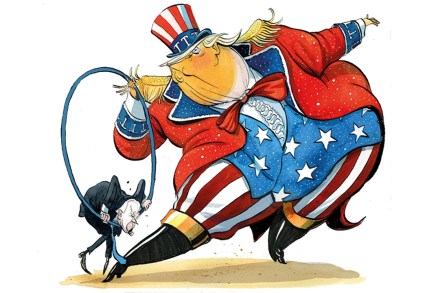
The Trump Show: he could just win again

35 min listen

With protests in American cities continuing and the Democrat and Republican conventions drawing to a close - are there signs that Donald Trump could win again? (00:45) Plus, could planning reforms be the next Tory battle? (13:05) And finally, can daily commutes really be enjoyable? (25:45)With editor of the Spectator's US edition Freddy Gray; the Spectator's economics correspondent Kate Andrews; the Spectator's political editor James Forsyth; economist and author Liam Halligan; the Spectator's features editor; and author Sara Yirrell.Presented by Cindy Yu. Produced by Cindy Yu and Max Jeffery.

The joy of commuting

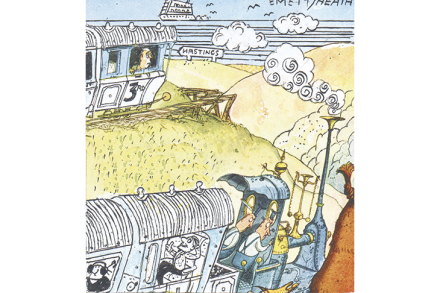
I was on a train from Sussex to London, my first since lockdown, when I realised I like my commute. The thought worried me a little. What kind of weirdo have I become? A commute is a psychological hurdle, something to be endured, not enjoyed. What’s next? The giddy thrill of waiting in a queue? A root-canal fan club? There are some aspects to commuting I don’t enjoy — the expense of a season ticket, of course, and frustrating delays — but overall, yes, I do like it. And during lockdown I actually missed it. What makes my enjoyment even weirder is that I have no interest in trains.

How political is your bread board?

It’s not known which inspired Victorian first had the idea to take a chopping block and carve it into a circular ‘bread-platter’, as they were called, with a raised centre and decorated rim; but William Gibbs Rogers was the one to turn it into a craze. In the mid-19th century Rogers was considered one of Britain’s most accomplished wood-carvers. An 1847 issue of The Spectator said he had single-handedly ‘restored to carving the same interest and execution which it possessed in the best days of Grinling Gibbons’. His long list of wealthy patrons included Queen Victoria, who commissioned a wooden cradle for the infant Princess Louise.