William Kay

The risks of being a modern landlord

The spate of terrorist attacks in London and Manchester has made many landlords and their insurers nervous about the risks of letting strangers rent houses, flats or even rooms without even closer checks. This is not about getting money upfront, though that can act as a deterrent. No, it is the still thankfully tiny but nevertheless horrific danger that your property will be used as part of a terrorist cell, exposing it to potentially huge damage if an explosive experiment goes wrong, along with the possibility that it will be out of bounds during a police investigation and the neighbourhood’s reputation blackened for years.

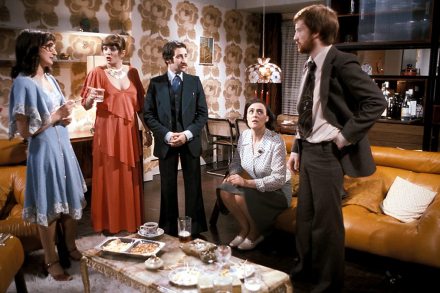
Penny-pinching, the 21st century way: are we taking it too far?

A growing number of Brits would rather throw a party than turn on the central heating a few days early, according to a survey out today from TopCashback.co.uk, the cashback and comparison website. To cut heating bills, seven in 10 are taking the obvious step of wearing extra layers of clothing and, slightly less obviously, moping around the house in hats, scarves and gloves. Pubs are increasingly being shunned in favour of drinking at home with friends and family. One in ten are taking the chance of holding homemade cocktail nights and, in a touch evoking echoes of Abigail’s Party, the classic Mike Leigh study in embarrassment, to save on heating groups of friends are taking turns to host get-togethers. It sounds like a recipe for excruciating social awkwardness.

Why a retro approach to financial advice is back in fashion

The wheel has turned full circle. Financial advice from an agent tied to a provider is making a comeback, after years in which conventional thinking dictated that the only way forward was independent financial advice. As first revealed last week in the trade magazine Money Marketing, Aviva, one of Britain’s biggest insurers, is to restore face-to-face advice for people who are retiring who are currently without help. This follows similar moves by Standard Life and Old Mutual, all of which have been predictably labelled as the return of the Man from the Pru - the thousands of Prudential agents who cycled door to door in the last century, collecting as little as a penny and staying for a cup of tea and an often useful chat.

Paying for financial advice: whose job is it?

Buried in the Queen’s Speech this week was an unassuming little sentence that could transform our collective ability to deal with the ruthless financial services industry - but don’t hold your breath. The Government signalled that it is bracing itself to take on the challenge that has defied all of its predecessors - to produce a widely accessible, State-backed source of financial advice. The Queen said: 'A new money guidance body would replace the Money Advice Service and be charged with identifying gaps in the financial guidance market to make sure consumers can access high-quality debt and money guidance.' Details so far are sketchy, suggesting that the new scheme has not yet been fully fashioned.

LISA: is George Osborne’s new savings initiative worth flirting with?

Chancellors of the Exchequer love to play God. But the hardest lesson they have to learn is that the most imaginative financial innovations usually have the most surprising unintended consequences. In his latest Budget, George Osborne, torn over whether to peck at the UK pensions regime or completely overhaul it, has tried to have it both ways: he has left pensions alone but created the Lifetime ISA - immediately nicknamed LISA - that might have replaced them entirely. As Spectator Money adroitly pointed out last week, pensions had become a farce worthy of Alan Ayckbourn, in which the desire to tinker was hard to resist. And, like Oscar Wilde, Osborne has discovered that he can resist everything - except temptation.