William Cook

Why Brexit Britain should root for a Merkel landslide

From our UK edition

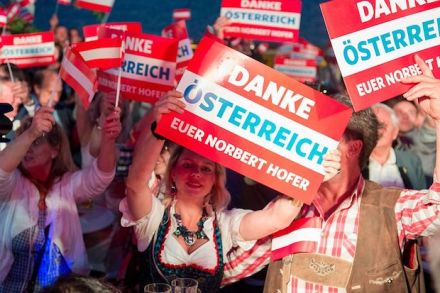
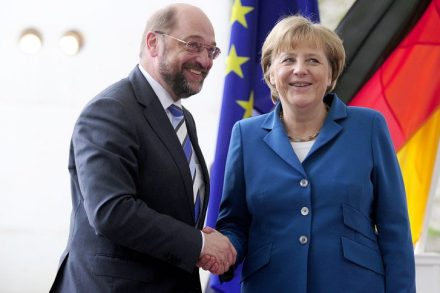
Never mind Eurovision. For Germany, the state election in North Rhine Westphalia on Sunday was the big one – the best indication of how Germans will vote in their national election in four months time. The result was a ‘political earthquake’ according to German media – a humiliation for Martin Schulz’s Social Democrats, and a spectacular victory for Angela Merkel’s conservative CDU. For Merkel, a dead woman walking a year ago, September’s national election now looks like hers to lose. How did she manage this remarkable comeback? And what are the implications for Britain, and the EU? Yesterday’s result may have taken German pundits by surprise, but Merkel’s support has been growing steadily for some time.

Thatcher’s Britain with her knickers down

From our UK edition

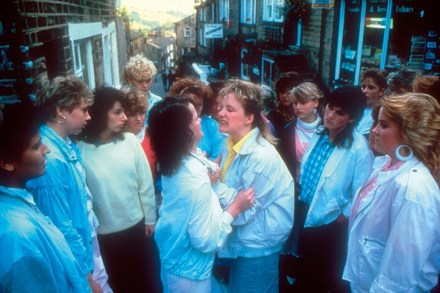
Two 16-year-old schoolgirls from a sink estate in Bradford find fun and happiness by shacking up with a middle-aged married man — if you’ve never seen it, it sounds like the worst movie ever made. Yet Rita, Sue and Bob Too was a delight, one of the best British films of the 1980s, and this month it’s being rereleased in a new restoration by the BFI. I saw it when it first came out, in 1987, and fell head over heels in love with it. At last, here was a film about working-class life that wasn’t glum. Watching it again, 30 years on, it still feels just as fresh and funny, but the landscape it describes has changed.

Islamism isn’t the only terror threat Germany is facing

From our UK edition

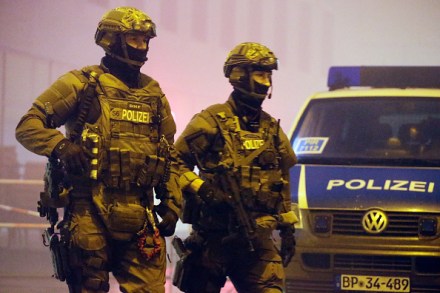
Since December, when Islamic terrorist Anis Amri drove a truck into a Berlin Christmas market, Germans have been waiting fearfully for the next Islamist attack. However right-wing terrorism is also a growing concern in Germany, and the latest case to come to light shows how this extremist movement may be evolving. Germany's Military Intelligence is currently investigating 275 cases of right-wing extremism, but surely none of them is quite so disconcerting as the peculiar case of Franco A. The investigation began in January, when a maintenance worker at Vienna Airport opened a toilet ventilation duct and found a pistol hidden inside it. The police attached an alarm to the air duct, in February a man set off the alarm, and was duly arrested.

Ruislip Lido

From our UK edition

Most mornings, if I’m not too hung-over, I go for a run around Ruislip Lido — a mile there, through Ruislip Woods, about two miles round the lido and a mile back again. It generally takes me about half an hour. On my way, I see woodpeckers, egrets, sparrowhawks, and the occasional Muntjac deer. It’s hard to believe you’re in London, at the arse end of the Metropolitan line, surrounded by bland suburbia — John Betjeman’s Metroland. Ruislip Woods is the largest slice of natural woodland in Greater London: 726 acres of oak, beech and hornbeam, and the lido is its pearl. People have gathered timber from this scruffy forest since god knows when.

Europe’s best hope

From our UK edition

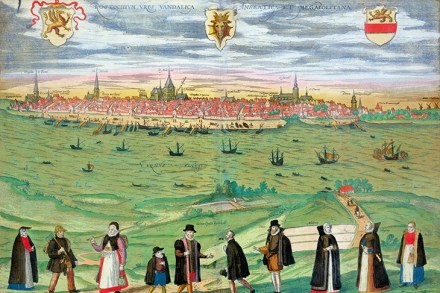
Go into any high street bookshop and find the European history section. There’s usually a shelf or two on France and about the same on Germany, but the difference between these two categories is apparent straight away. The French stuff spans several centuries, whereas German history is confined to just 12 years. Yes, a lifetime since the death of You-Know-Who, Britons are still obsessed with the Third Reich, and who can blame us? It remains the most bizarre and awful epoch in European history and we’re still reeling from its consequences. What’s less forgivable is our wilful ignorance about anything that came before (my son learnt all about the Nazis for his history GCSE, but it wasn’t until he did A level that he got onto Bismarck).

Taking Ivanka Trump seriously is a masterstroke by Angela Merkel

From our UK edition

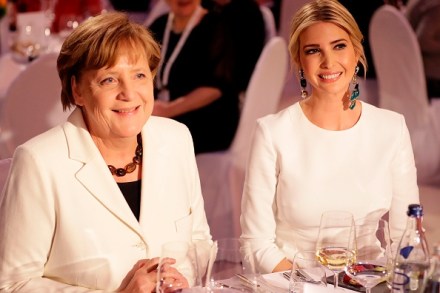
Is Ivanka Trump’s visit to Berlin a triumph for Angela Merkel, or a diplomatic disaster? As always, that depends on which newspapers you read. Germany’s Suddeutsche Zeitung called it a ‘a veritable coup for the chancellor,’ but the headlines in the British press have focused on the boos that greeted Ivanka at yesterday’s W20 Summit, when the President’s daughter described her father as a defender of women’s rights. Sat alongside Ivanka on the conference platform, Merkel looked distinctly awkward - but Ms Trump’s appearance wasn’t entirely met with groans and jeers.

This election will be won or lost on the suburban battleground

From our UK edition

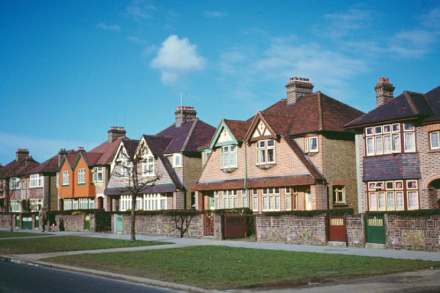
In Westminster, all the general election chatter is about Brexit. Will Tory Remainers turn Lib Dem? Will Labour leavers desert Jeremy Corbyn? As polling day draws near, however, the Europe obsession must recede. Politicians may not be able to look past last year’s referendum, but voters will have moved on. MPs will find that, as before, the great issue of our time will be just one of many on the doorsteps. This summer’s battleground won’t be Brussels. It will be suburbia. Domestic matters will decide whether Theresa May returns to Downing Street with a fat majority, and no one is more domesticated than the average suburbanite. We are intensely local. We want good local schools and good local hospitals — we don’t like grand projects like HS2.

Was the Borussia Dortmund bus bombing motivated by greed?

From our UK edition

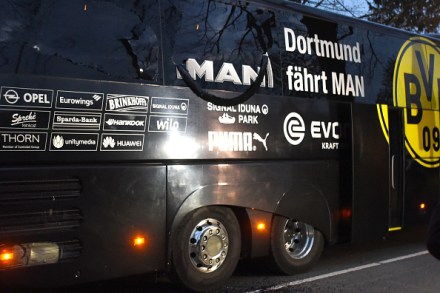
It seems the rush to blame the Borussia Dortmund bus bombing on Islamist extremists was wrong. German police have now arrested a 28 year-old man in connection with the incident; and despite initial assumptions that this assault was the work of Islamic terrorists, it appears this latest suspect has no connection with Islamic State. A week ago, it all seemed fairly straightforward: a letter had been found at the crime scene, claiming the attack had been carried out on behalf of Islamic State, and an Iraqi living in Germany had been detained by the police.

The suburban battleground

From our UK edition

In Westminster, all the general election chatter is about Brexit. Will Tory Remainers turn Lib Dem? Will Labour leavers desert Jeremy Corbyn? As polling day draws near, however, the Europe obsession must recede. Politicians may not be able to look past last year’s referendum, but voters will have moved on. MPs will find that, as before, the great issue of our time will be just one of many on the doorsteps. This summer’s battleground won’t be Brussels. It will be suburbia. Domestic matters will decide whether Theresa May returns to Downing Street with a fat majority, and no one is more domesticated than the average suburbanite. We are intensely local. We want good local schools and good local hospitals — we don’t like grand projects like HS2.

German football keeps calm and carries on

From our UK edition

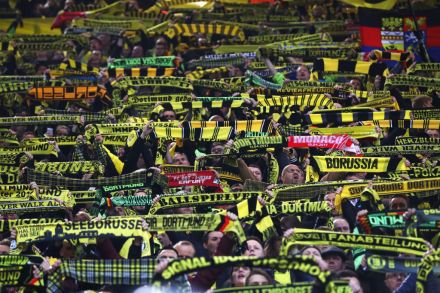
Germany lost a football match but won a moral victory last night, when Borussia Dortmund were defeated 3-2 at home by Monaco, in the first leg of the quarter finals of the Champions League. To restage a major fixture just 24 hours after a terrorist attack was a remarkable achievement. To restage it when the Dortmund team bus had come under direct attack, landing one of its players in hospital, was nothing short of incredible. Dortmund fans gave bed and board to stranded Monaco supporters, Monaco fans sang Dortmund songs in the stadium, and both teams gave it their all (every Dortmund player was given the option not to play, but all played regardless). A thrilling game was the best response, and the result was incidental. This was European sport at its finest.

The reports of Angela Merkel’s political demise have been greatly exaggerated

From our UK edition

Once again, the pollsters got it wrong. Yesterday’s election in Saarland was supposed to be the beginning of the end for Angela Merkel, and the start of the SPD revival under their new leader Martin Schulz. And yet, against the odds, Merkel’s conservative CDU has beaten the left-leaning SPD by more than ten per cent, a result which bodes well for her election campaign this autumn, and her bid to win a record-breaking fourth term as Chancellor. Last week, the signs for Merkel’s CDU seemed pretty bleak. Saarland’s CDU leader, so-called ‘Mini Merkel’ Annegret Kramp-Karrenbauer, went into this election with just one more seat than the resurgent SPD.

Tintin is an EU hero – but is Captain Haddock on Britain’s side?

From our UK edition

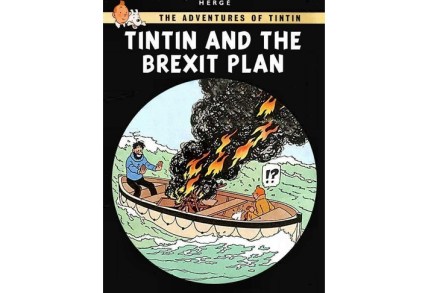
Blistering barnacles! Thundering typhoons! What dastardly double-dealing! To bolster their puny team of pen-pushing, quota-quoting civil servants, those fiendish Brussels bureaucrats have recruited Europe’s greatest investigative reporter. With Tintin on the EU’s side in the forthcoming Brexit negotiations, do our valiant Brexiteers stand any chance at all? No idea what I’m on about? Then let me explain. As the Daily Telegraph has revealed, the European Council’s Brexit task force has enlisted Tintin as their cheerleader, by hanging a poster of the intrepid journalist in their Brussels war room. This poster is a mock-up of a new Tintin book called Tintin and the Brexit Plan.

How will Mummy Merkel deal with Toddler Trump?

From our UK edition

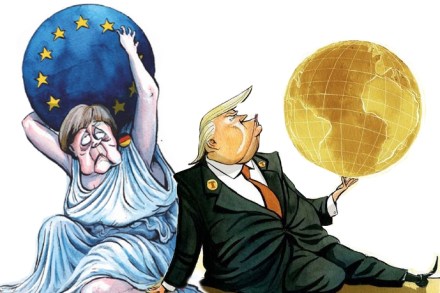
The irresistible force meets the immovable object in Washington tomorrow, as Donald Trump finally comes face to face with Angela Merkel. It seems highly unlikely that they’ll emerge from this meeting holding hands. Not only do these two world leaders disagree about (almost) everything, their personalities could hardly be less compatible. Mrs May may simper that ‘opposites attract’ but Merkel, not May, is Trump’s polar opposite. There’s little prospect of any personal chemistry at the White House this time around. But does this antipathy matter? Of course not. If anything, it’s a plus.

Paris wants to fight terror with culture. Will it work?

From our UK edition

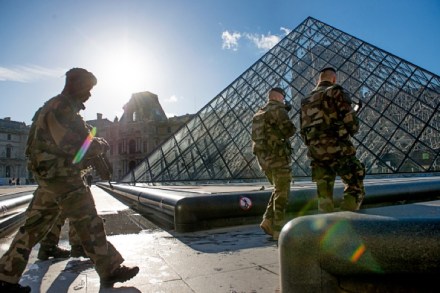
The news about the machete man in the Louvre broke just as my Eurostar was approaching Paris. Was this just a one-off, or were there more terrorist attacks to come? In the Gare du Nord that lunchtime, the atmosphere was humdrum. Armed policemen passed by like ghosts, unseen and unnoticed. For Parisians, these incidents have become a normal part of daily life. I figured the Louvre would still be cordoned off, so I headed for the Musée d'Orsay. If the Louvre attack was part of a co-ordinated assault on the cultural institutions of the French capital, the Musée d'Orsay would be another prime target. Would the museum be closed, as a precaution? Would the visitors stay away? Neither. People were queueing to get in, tourists and locals. The mood in the queue was laid back.

Trump has given Merkel a new lease of life

From our UK edition

Donald Trump’s Times interview has been a big story in Britain, but the President Elect’s parallel interview with Bild Zeitung (Europe’s largest circulation newspaper) has made an even bigger splash in Germany. Why so? Because Trump’s comments about Germany were a lot more pointed – and specific - than the pro-Brexit platitudes he tossed to Michael Gove. Trump’s remarks about Merkel’s ‘catastrophic mistake’ of ‘letting all these illegals [sic] into the country’ hardly came as a surprise. After all, when Merkel won Time Magazine’s Person of the Year, Trump tweeted that ‘they picked the person who is ruining Germany.

Haus of ill repute

From our UK edition

Here in Munich, in the gallery that Hitler built, this year’s big hit show is a spectacular display of modern art. Postwar: Art Between the Pacific and the Atlantic, 1945–1965 is a massive survey of international modernism, curated with typical Germanic can-do. Talk about ruthless efficiency — even the catalogue weighs several kilograms. All the stars of German modern art are here, from Joseph Beuys to Gerhard Richter, but the most interesting exhibit isn’t in this huge central hall, where Hitler staged his Great German Art shows, it’s in a quiet corner of the gallery, at the end of a deserted corridor, up an empty flight of stairs.

Lin Cook, who died before Christmas, personified that odd breed: the celebrity widow

From our UK edition

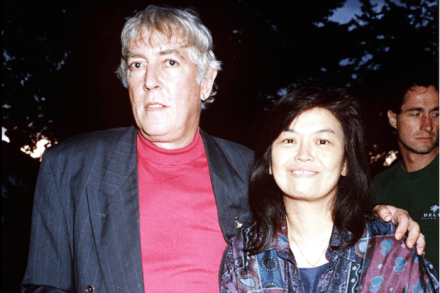
Amid the flurry of famous deaths during 2016, one particular passing has been more or less forgotten. Peter Cook’s third and final wife, Lin Cook, died on the eve of Advent, at the age of 71, shortly after the BBC broadcast Victor Lewis-Smith’s new documentary about Peter, for which Lin gave a rare interview. I got to know Lin in the Noughties, while compiling two biographical collections of her late husband’s work. It was an intriguing insight into the world of that strange showbiz phenomenon, the celebrity widow. Celebrity widows are a paradox – ostensibly public people, they’re actually intensely private. Lin personified this odd breed. Although I was in touch with her for over 15 years, when she died I realised I barely knew her at all.

Germany won’t break the rules for Britain’s sake

From our UK edition

Back in the summer of 2015, a year before the Brexit vote, I was summoned to the German Embassy in London for a special briefing by a senior member of Germany’s Social Democrats. The man from the SPD didn’t mince his words: David Cameron might secure a few small concessions in his forthcoming renegotiation with the EU, but it was inconceivable that he could obtain any significant changes in Britain’s relationship with Europe. For Germany, free movement of people within the European Union was sacrosanct - and even if Deutschland had been willing to change the rules for Britain’s sake, any major alteration would need to be ratified by all the other member states. That process would take years, not months. There simply wasn’t time.

Morocco: A match made in heaven

From our UK edition

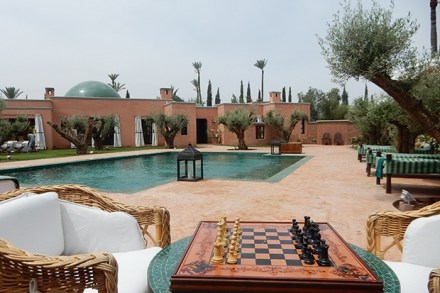
I’m sitting by the pool in a lush Moroccan garden playing chess with Nigel Short, and I feel like an amateur boxer who’s stepped into the ring with Mike Tyson. This is the man who took on World Chess Champion Gary Kasparov. He could destroy me in an instant. Actually, there’s no need. In a few moves I’ve destroyed myself. After this chess weekend at Ezzahra, a chic retreat in Marrakech, I’d hoped to show Britain’s greatest grandmaster how much I’ve learnt. Instead, I end up playing like a complete idiot. Thankfully Nigel is a perfect gent, accepting my abject resignation with good grace, and my humiliation is soon forgotten over a delicious dinner on the poolside terrace.

Germany remains a prisoner of its past

From our UK edition

In 1942, a man called Manfred Alexander turned up, unannounced, on my grandfather’s doorstep in Berlin. My grandfather knew him only slightly. He hadn’t seen him for several years. Like countless Jews, Manfred had been herded onto an eastbound train the year before, bound for God knows where. He’d ended up in a Concentration Camp in Minsk, run by the Ukrainian SS. There, after a terrible winter, a German guard whom he hardly knew hid him beneath the coal in the tender of a steam train which was carrying wounded German soldiers back to Berlin. Back in Berlin, cold and hungry, Manfred headed straight for my grandfather’s apartment on Grolmanstrasse. It was opposite the police station but it was the only address he knew. My German grandfather was no saint.