William Cook

Why artists should stay off Question Time

From our UK edition

Do you have to be a boring lefty to enjoy the films of Ken Loach? The reason I ask is, the British Film Institute have just rereleased three of Loach’s finest films on DVD, and though I loved them when they first came out, when I sat down to watch them again, after twenty years, my heart sank. Why? Because nowadays, when people mention Ken Loach, I don’t think of his masterpieces like Kes (one of the greatest British movies ever made) so much as his dreary appearances on political discussion programmes like Question Time. Ken Loach is a socialist filmmaker – whatever that means. If you’re a socialist, maybe that makes his movies even more enjoyable. Who knows? But what if you’re not a socialist, or even particularly left wing?

Germany’s shy AfD voters hand the Bundesrepublik a seismic shock

From our UK edition

The German Embassy in London threw an election party yesterday, but as the guests gathered round the big screens to watch the exit poll the mood became subdued. Of course diplomats are supposed to be neutral and even German journalists strive to be objective, but off the record everyone here in Belgrave Square was saying the same thing: ‘Anyone but AfD.’ [caption id="attachment_9940622" align="aligncenter" width="620"] The exit poll from Germany's election[/caption] Alternative für Deutschland, Germany’s anti-immigration party, has been a thorn in Angela Merkel’s side ever since it was founded four years ago. In Germany’s last election, in 2013, it polled 4.

Britain may have lost faith – but Germany still believes in the EU

From our UK edition

Theresa May’s Florence speech may have been welcomed with cautious optimism by Michel Barnier, but the reaction in Germany has been decidedly more downbeat. ‘In substance, May is bringing no more clarity,’ tweeted German MEP Manfred Weber. ‘I am even more concerned now.’ Weber is Chairman of the centre-right European Peoples Party, the biggest grouping in the European Parliament, and a rising star in Angela Merkel’s Christian Democratic Union. So does he speak for Merkel? Well, that would be pushing it, but while ‘Mutti’ maintains her deafening silence about all matters Brexit, it’s probably the closest we’re going to get.

Angela Merkel’s foreign policy proposals should worry Brexiteers

From our UK edition

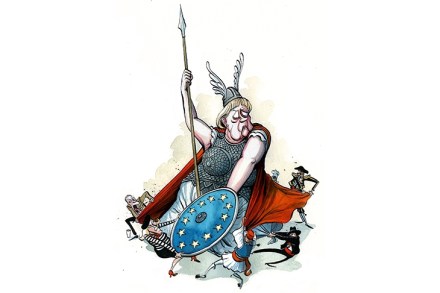
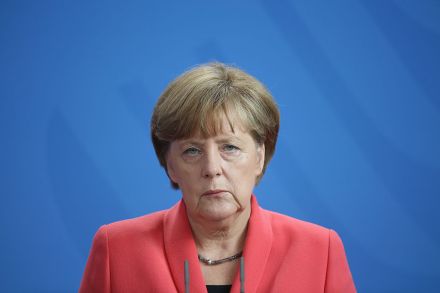
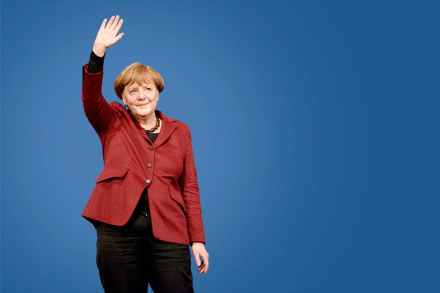
With the German election a fortnight away, and Angela Merkel’s Christian Democratic Union enjoying a commanding lead, you might suppose the German Chancellor would be tempted to play safe and keep her head down. However as Theresa May has shown, that’s a risky strategy for an incumbent. Far better to come out fighting, take the battle to your opponents – and choose the ground upon which you wish to fight. Merkel’s favourite battleground has always been foreign policy, and with her conservative CDU on course for a resounding victory, yesterday’s interview with the Frankfurter Allgemeine Zeitung gives the clearest outline so far of what her priorities will be when she returns for a fourth term as Chancellor in two weeks’ time.

The Merkel supremacy

From our UK edition

 Berlin Under the PR system we gave them, it's inevitable that Merkel will have to govern in some sort of coalition ‘Capitalism is armed robbery,’ reads the graffiti on the subway wall, but here in Berlin, German capitalists are doing what capitalism does best — creating new jobs and new industries. Berlin used to be regarded as ‘poor but sexy’(as Berlin’s former mayor Klaus Wowereit put it), but last year the German capital boasted the highest growth in the country — 2.7 per cent, 0.7 per cent above the national average. A city of squats and bombsites has become a city of high-tech start-ups, and now tech giants such as Google and Microsoft are moving in. Cheap rents and a lively nightlife attract smart millennials from across the globe.

A sorry state of play

From our UK edition

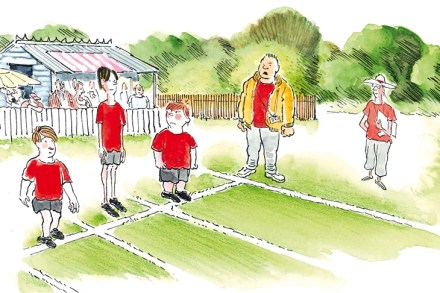
The link between a healthy mind and a healthy body was understood by Juvenal — but he didn’t have to raise two kids in our brave new world of social media and fast food. We’ve all seen the stats, so there’s no need to repeat them. But as snacks replace square meals and the virtual world replaces the real one, our children are becoming increasingly sedentary and unhealthy. For parents of school-age children, sport has never been more important. But making sure kids get a good sporting education is no easy matter — and I should know. In my experience as a parent (and briefly as a teacher), sport in the state sector is usually pretty patchy.

Theresa May could learn a lesson from Angela Merkel’s debate performance

From our UK edition

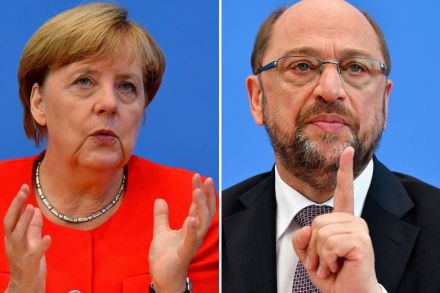
Last night’s TV debate between Angela Merkel and Martin Schulz poses a nagging question for British conservatives. No, nothing to do with Brexit – the subject wasn’t even mentioned. Rather, why was Theresa May so afraid of going toe to toe with Jeremy Corbyn before the General Election? If only she’d done a Merkel and faced off her main rival on television, she might have won a decent majority - just as Merkel looks set to do in three weeks’ time. Like May, Merkel is widely (and quite rightly) regarded as an uninspiring public speaker. Like Corbyn, Schulz is an assured performer, with a polished ‘man of the people’ shtick.

A grand inquisitor

From our UK edition

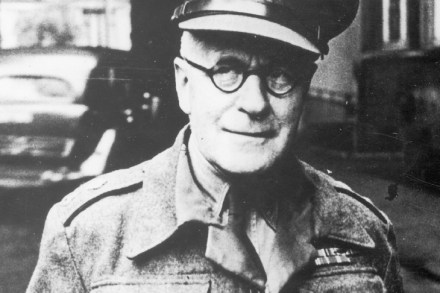
Hidden behind Kensington Palace, in one of London’s smartest streets, there is a grand old house which played a leading role in Britain’s victory over Nazi Germany. Today it’s owned by Roman Abramovich, apparently — it seems he paid £90 million for it. But during the second world war, and for a few years thereafter, 8 Kensington Palace Gardens was a secret interrogation centre known as the London Cage. This is where suspected spies (and, later, suspected war criminals) were broken down. Between 1940 and 1948, thousands of German servicemen passed through here, on their way to POW camps (if they were deemed innocent) or prison (if they were guilty).

Germany’s booming economy paves the way for another Merkel victory

From our UK edition

With the German elections now barely a month away, the Bundesrepublik remains beset by worries about terrorism and immigration. Yet, just like the river in the song, the German economic juggernaut just keeps rolling along. The latest GDP figures are even better than expected – 0.6 per cent growth in the second quarter – the best year on year rate since 2014, and the twelfth consecutive quarter in which the German economy has grown. Other Eurozone countries have reported healthy figures, too. France grew by 0.5 per cent, and Spain reported a rise of 0.9 per cent - its strongest result for three years (the British economy grew by 0.3 per cent in the same period).

How Brexit will change Germany

From our UK edition

In the summer of 1990, the editor of The Spectator, Dominic Lawson, went to interview Nicholas Ridley, Margaret Thatcher’s Secretary of State for Industry, and asked him about the drive towards European Monetary Union. ‘This is all a German racket designed to take over the whole of Europe,’ said Ridley. ‘I’m not against giving up sovereignty in principle, but not to this lot. You might as well give it up to Adolf Hitler, frankly.’ The consequences of these comments were seismic. Thatcher demanded Ridley’s resignation, she resigned herself a few months later, and for a quarter of a century thereafter successive Prime Ministers did their utmost to distance themselves from Ridley’s remarks.

Ivory towers

From our UK edition

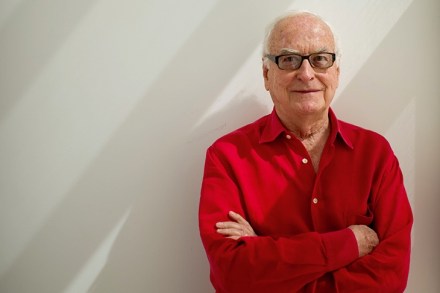
Great novels rarely make great movies, but for half a century one director has been showing all the others how it’s done. James Ivory has worked his magic on all sorts of authors, from Kazuo Ishiguro to Henry James, and this week the finest of all his adaptations returns to the big screen. ‘A film that’s almost two and a half hours long, non-stop talking, set in the Edwardian era — who would have thought that would be such a huge success?’ says Ivory, on the phone from his home in upstate New York. Yet somehow, this taciturn director turned a wordy novel by E.M. Forster into a gripping drama. How did he do it? By creating the ideal setting, meticulous in every detail, then stepping back and giving his creative colleagues room to breathe.

Ivanka Trump is Angela Merkel’s secret weapon to improving US German relations

From our UK edition

Was it really worth it? Rioting on the streets, hundreds of people injured and administrative costs of €100 million – all to host an inconsequential waffle fest, resulting in a vague set of resolutions, most of which we knew about already. We all knew nineteen of the G20 leaders are in favour of free trade. We all knew nineteen of the G20 leaders are keen to limit climate change. We all knew Donald Trump would be the odd man out. Why didn’t the Germans save their money and spare Hamburg several days of chaos? The Spectator said last week that holding the G20 summit in Hamburg was bound to be a risky business. The city centre location made it difficult to police, and Hamburg’s anarchist subculture guaranteed a large pool of local troublemakers.

Trump, Putin and Erdogan. The G20 should be quite something

From our UK edition

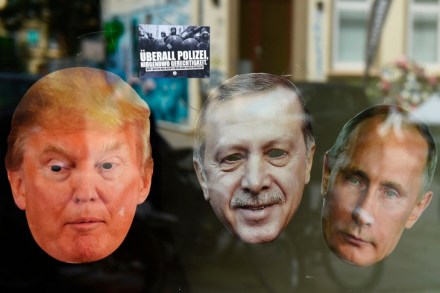
G20 summits are usually dreadfully dull affairs, but this week’s global chinwag in Hamburg should be refreshingly feisty. No conference with Donald Trump, Vladimir Putin and Recep Tayyip Erdogan in attendance could ever be described as boring, and although President Trump’s first meeting with Putin will provide the main photo opportunities, there are plenty of other potential flashpoints – not least the toe-curling relationship between Trump and his host, Angela Merkel. Merkel will discuss trade and climate change with Trump – two subjects about which these two leaders seem destined to disagree. No US President has been so dismissive of climate change; no US President has been so hostile to German trade.

Liberals should not be surprised Angela Merkel voted against gay marriage

From our UK edition

Liberal Brits got a welcome wake-up call yesterday, when the woman they’ve been calling the leader of the free world voted against Gay Marriage. ‘For me, marriage in law should be between a man and a woman, and that’s why I didn’t vote in favour of this bill,’ said Angela Merkel, after the German parliament voted to legalise same-sex unions by 393 votes to 226. All the usual suspects have been on Twitter, voicing their right-on indignation, but for anyone who knows anything about Merkel, the wonder is that anybody should be in the slightest bit surprised.

Why we should care about the German elections

From our UK edition

German parliamentarians used to pride themselves on being boring, but the past two years have turned Teutonic politics upside down. After a decade of dreary stasis under Angela Merkel, a system designed to run on tramlines has become a rollercoaster ride. So why has the political scene in Germany suddenly become so volatile? And what are the implications of this change of pace for Britain, and the EU? The drama began when Merkel welcomed a million migrants into Germany, a decision which almost destroyed her political career. ‘Wir schaffen das!’ she told Germany. ‘We can do this!’ Unfortunately for her, a lot of Germans disagreed. Her ratings slumped, while those for Germany’s anti-immigration party, Alternative für Deutschland, soared.

For all his faults, Helmut Kohl was a political colossus

From our UK edition

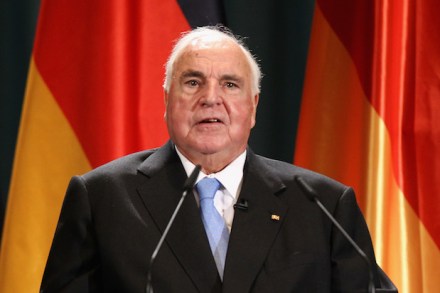
The British public never really warmed to Helmut Kohl. In Britain, he was always seen as too bossy, too bumptious, too… well, too Teutonic. Margaret Thatcher thought so too. ‘My God, that man is SO German,’ she told Charles Powell, after Kohl’s attempt to woo her with his favourite dish, stuffed pig’s stomach, fell horribly flat. Even the Germans were often ambivalent about their longest serving Chancellor since Bismarck. East Germans ended up disillusioned when Kohl’s lavish promises of ‘blooming landscapes’ failed to materialise. West Germans ended up disillusioned when they had to foot the bill. Yet history will judge him kindly, in Germany and Britain.

Theresa May has much to learn from Enda Kenny

From our UK edition

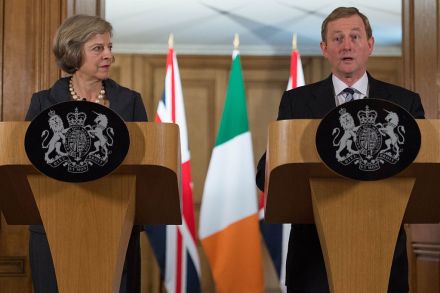
Enda Kenny stepped down as Ireland’s Taoiseach yesterday, and his farewell speech, at the National Gallery of Ireland, was an object lesson for British Conservative politicians. Amid the splendour of this palatial building, he delivered a speech which was warm and affable, enlivened with personal revelations and underpinned by heartfelt sincerity. If only our Prime Minister had a smidgeon of his public speaking skills. Kenny was here to re-open Dublin’s newly renovated National Gallery, which has been under wraps these last six years - the entire duration of his time as Taoiseach. Naturally, it was an easy gig. Yet Kenny didn’t get polite applause. He brought the house down, and he did so by articulating what the people in this room were feeling.

West Middlewick Farm

From our UK edition

In springtime in our family, we always have the same old argument: where should we go on our summer holiday (I know, I know — we should have booked it months ago). Every year I make the same suggestion, and every year I’m shouted down. ‘Let’s go back to West Middlewick Farm,’ I say, more in hope than expectation. ‘No! There’s nothing to do there!’ reply my wife and teenage children. ‘But that’s exactly why I like it,’ I protest, before we go and book an overpriced villa in Spain or Italy. This year, however, I’m feeling a bit more optimistic.

Merkel is right about Trump – so where does that leave Britain?

From our UK edition

Angela Merkel has never been a showboating politician. Public speaking isn’t her forte – she prefers to work behind the scenes. That’s why her latest speech has made such big waves, on both sides of the Atlantic. The Washington Post said it marked the beginning of a ‘new chapter in US-European relations.’ The New York Times called it a ‘potentially seismic shift.’ Seasoned US diplomat Richard Haas described it as ‘a watershed’ in America’s relationship with Europe. So what did Merkel say? What did she mean by it? And what are the implications for Germany, and for Britain?

Populism is making a comeback in Europe, and Austria is leading the way

From our UK edition

Last year's Austrian presidential election looked like a turning point for the European Union. Alexander Van der Bellen, a soft left Eurofederalist (narrowly) defeated Eurosceptic Norbert Hofer, of the hard right Austrian Freedom Party, and Continental Europhiles went into 2017 with fresh hope that they might halt the tidal wave of Brexit, before it engulfed the EU. Sure enough, this year France and Holland have both returned Europhile candidates, and Germany looks set to follow suit. The tide had turned, the pundits said. 2016 had been the high water mark of Populism. 2017 would be the year the EU fought back.