William Cook

Could the German left join forces to oust Angela Merkel?

From our UK edition

German party politics has been overshadowed by yesterday’s atrocity in Berlin. But in light of this tragic event, which Angela Merkel has said was probably a terrorist attack, party politics actually matters more than ever. Increasingly, it seems next year’s Bundestag elections will be the defining event of 2017, not just for Germany but for Europe - and last week’s change of government in Berlin was a sign of things to come. On the face of it, ‘Social Democrats take control of Berlin’s city council’ looks like an inconsequential story. Berlin has always been an SPD stronghold after all. However, there’s more to this story than meets the eye.

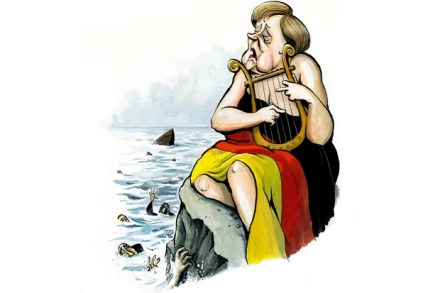
How Angela Merkel divided Germany

From our UK edition

Crisis? What crisis? Here in prosperous Munich, it’s hard to believe the EU has taken such a battering this year - but then again, the Bavarian capital has always been a place apart. It has the strongest economy and the lowest unemployment of any German city. It is the headquarters of world beating companies such as Allianz, Siemens and BMW. Its cultural scene (and its football team) is among the best in Europe. During Advent, its city centre is especially handsome - a boozy maze of Christmas markets. People are earning and spending, having fun and getting tipsy. I mean to say, what’s not to like? Superficially, Munich’s residents seem to have little to complain about.

Thanks to Brexit and Trump, Austria lost its appetite for political upheaval

From our UK edition

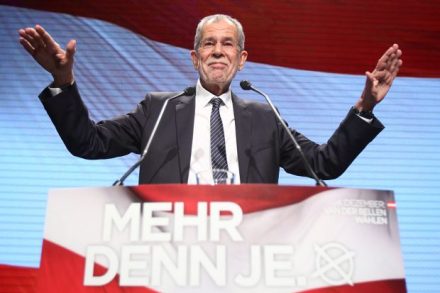
Austria’s presidential election has been overshadowed by Matteo Renzi’s dramatic defeat in the Italian referendum, but Alexander Van der Bellen’s victory is significant nonetheless. It confirms there are now two Europes, north and south. Southern members like Italy are becoming increasingly hostile towards the EU, while northern members like Austria will do (almost) anything to keep the EU on track. So why did Austria buck the American trend, and chose a Euro-friendly head of state? Churchill said Russia was a riddle wrapped in a mystery, inside an enigma. He might have been talking about Austria today. The Austrian capital, ‘Red’ Vienna, has always been socially liberal and politically leftist.

Martin Schulz’s return to German politics will make Brexit more bitter

From our UK edition

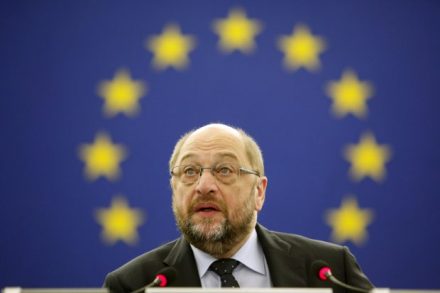
Shock news! Hold the (virtual) front page! Martin Schulz, arch bogeyman of every British Brexiteer - and even a few Remainers - is leaving the EU. No, Schulz hasn’t renounced his support for ‘ever closer’ European Union. Rather, he’s stepping down as President of the European Parliament to stand as an MP for the SPD, Germany’s Social Democrats. Why should British voters care? Because Schulz has been widely tipped as a potential leader of the SPD, the only party with a real chance of beating Angela Merkel’s CDU in next year’s Bundestag elections. And the winner of that election will steer EU policy throughout the Brexit process, and beyond. Second only to Jean-Claude Juncker, Schulz is the Eurocrat Eurosceptics love to loathe.

Zurich’s wild side

From our UK edition

On the green edge of Zurich, where this neat and tidy city melts into neat and tidy countryside, an icon of Zurich’s hedonistic heyday has been reborn. The Atlantis Hotel reopened last December, restoring an old landmark to the city and reconnecting prim and proper Zurich with its rebellious past. If you’ve only ever been to Zurich on business, you may find it hard to think of this staid city as rebellious, but bear with me: Zurich really does have a wild side, and in the 1970s and 1980s the Atlantis was where it could be found. From Eric Clapton to Elton John, from Freddie Mercury to Frank Zappa, the hotel’s guest list reads like a Who’s Who of the golden age of rock. The Atlantis opened in 1970, and it made a big splash from the start.

Angela Merkel wants to be liberal Europe’s answer to Donald Trump

From our UK edition

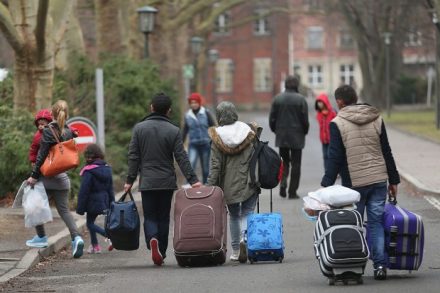
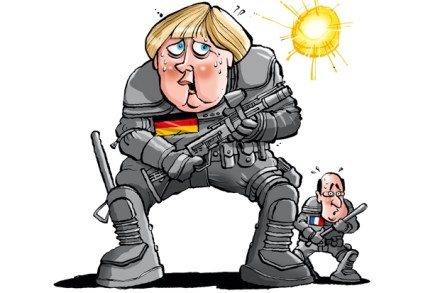
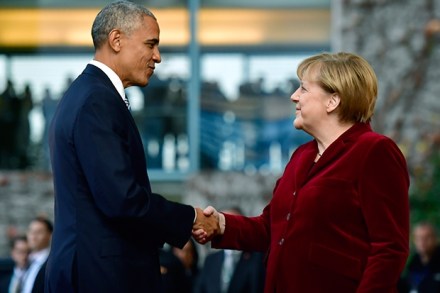
So, Angela Merkel has ignored the Spectator’s advice and has decided to run for a fourth term as German Chancellor in next year’s federal elections. If she wins and serves a full term, she’ll overtake Helmut Kohl as the longest serving German Chancellor since Bismarck. What does Merkel’s bid for four more years mean for Germany - and Britain? And after this year’s dreadful regional election results, how on earth has she survived to fight another day? Last month Merkel looked like a busted flush, an electoral liability. Her decision to open Germany’s borders to over a million fleeing refugees led to a surge in support for Alternative fur Deutschland, Germany’s fledgling anti-immigration party.

Secrets of the universe

From our UK edition

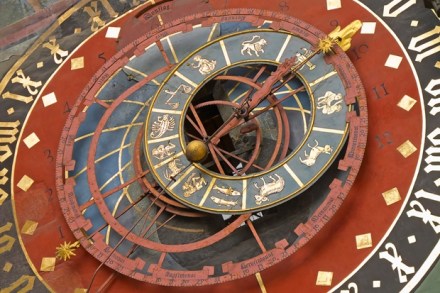
A few years ago, in Berne, I visited the apartment where Einstein wrote his theory of special relativity, which changed our understanding of the world forever. It’s a small apartment, plain and nondescript. The best thing about it is the view. From the window you can see Berne’s huge medieval clock, the Zytglogge. It was this clock which inspired Einstein’s great breakthrough. At the end of every humdrum day, in his dead- end job at Berne’s patent office, he took the tram home, past the Zytglogge, back to this apartment. As he gazed at that clock through the tram window, he wondered: what if his tram could travel at the speed of light? Logically, the light from the Zytglogge should never overtake him.

Berlin: The return of German pride?

From our UK edition

On a windswept square beside the river Spree, across the road from Berlin’s Museum Island, there is a brand new building which epitomises Germany’s shifting attitude to its imperial past. For 500 years this was the site of the Berliner Schloss, seat of Prussia’s royal family. After the second world war it was demolished, and now it’s being rebuilt from scratch. The Berliner Schloss has always been a barometer of German history. It was the residence of Frederick the Great, that daft enlightened despot who put Prussia on the map. In 1914, Kaiser Bill addressed his loyal subjects from its balcony. In 1918, Karl Liebknecht stood on this balcony to proclaim his ‘Free Socialist-Republic’. That balcony has been preserved, cemented into an adjacent building.

Who comes after Merkel?

From our UK edition

A year from now, 60 million Germans go to the polls in the most important general election in mainland Europe for a generation. The result will define German — and European — politics for the next four years. There are huge questions to be resolved, from the refugee crisis to the financial crisis, but right now the question in Germany is: will Mutti run again? Angela Merkel’s nickname, Mutti (Mummy) is a memento of happier times. A year ago, her position as matriarch of the Bundesrepublik seemed unassailable. And then, last September, she opened Germany’s borders to hundreds of thousands of fleeing Syrians. Over a million refugees arrived last year. The reaction of native Germans could be measured at the polling booths.

From bored to boarding

From our UK edition

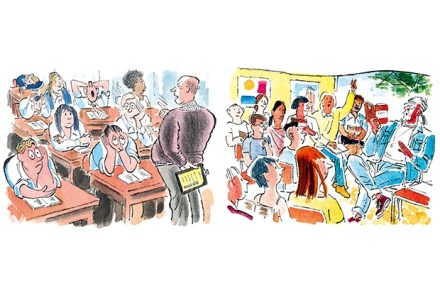
Thirty-five years ago, shortly after my 16th birthday, my parents finally got fed up with me and packed me off to boarding school. Now, half a lifetime later, my 16-year-old son is about to follow in my footsteps. The two scenarios aren’t quite the same (back then, it was my parents’ idea — this time, it’s my son who can’t wait to get away), but as I pack his trunk and think how much I’ll miss my one true pal, I can’t help wondering — am I doing the right thing? Naturally, I have no idea — like most of life’s big decisions, it’s a roll of the dice.

How Alternative für Deutschland forced German politics to the right

From our UK edition

‘When the world ends, I’ll go to Mecklenburg,’ quipped Bismarck, ‘because there, everything happens a hundred years later.’ Mecklenburg-Vorpommern has always been seen as somewhere behind the times, but has this sleepy backwater now become a portent of momentous things to come? In last weekend’s regional elections, Germany’s fledgling anti-immigration party, Alternative für Deutschland, came second, pushing Angela Merkel’s CDU into third place – in her own constituency. So was AfD’s Leif-Erik Holm right to say that this could be the beginning of the end for Merkel? And does this shock result mark the end of the beginning for AfD?

Of microbes and men

From our UK edition

Which disease are you most scared of catching: Ebola or influenza? Before I read this medical memoir, I would have said Ebola. Now, I’d say flu. As Dr Ali S. Khan points out, Ebola is fairly hard to catch; flu is fairly easy. And unlike wimpy man flu, proper flu can be a killer. You’ve heard of the Spanish flu, which killed 675,000 Americans a century ago. But did you know that influenza still kills up to 50,000 Americans every year? Most pandemics are more like flu than Ebola: they don’t sound that spooky until they get out of hand. Yet instead, we worry about killer bugs which we stand much less chance of catching. When I was a teenager, I was terrified of contracting HIV, though the risk I faced was minuscule.

Inside of a dog

From our UK edition

Before I read this book, I thought I knew what a dog was. It barks, it wags its tail, it fetches sticks, it craps on the carpet. However, now that I’ve finished this learned tome, I realise there’s a bit more to it than I thought. As well as the domestic dog (Canis familiaris), the genus Canis also includes wolves, jackals, dingoes and coyotes. They all seem very different, yet domestic dogs can breed with all of them. According to Darwin, this makes them all members of the same species. Now can you see why I’m confused? Raymond and Lorna Coppinger don’t want you to make a snap decision about what a dog is — or what it isn’t. They want to make you think about how zoologists classify things: why we decide to call an animal one thing and not another.

Confessions of a Saga lout

From our UK edition

It’s chucking-out time at my local pub, and the high street is full of idiots. They’ve all had a lot to drink, but they’re in no hurry to go home. They’re looking for a party, somewhere loud and lairy to go on to. They’d settle for more booze, but some speed or skunk would be even better. It’s a scene I’ve seen a thousand times, but lately something’s changed: these tearaways aren’t teenagers — they’re in their fifties and sixties. Meet the Saga louts, those feckless folk who refuse to grow up even as they approach old age. Saga louts are a pain, and I should know because I’m one of them. I turned 50 last year, making me one of the youngest members of the tribe.

Putting the sun in the shade

From our UK edition

About a century ago, scientists started meddling with an unfamiliar force of nature and the rest of us were terrified. That force was called electricity and nowadays we’re all fine with it. What Timothy Jorgensen wants to know is: why don’t we feel equally relaxed about radiation? After all, electricity is just as dangerous, but only if you’re very unlucky or very stupid. As his sparky book explains, radiation is really much the same. So why are we so scared of it, even when we’ve (usually) no need to be? Cards on the table: I know nothing about science. But that’s OK, because this book is meant for Luddites like me.

Lessons from Utopia

From our UK edition

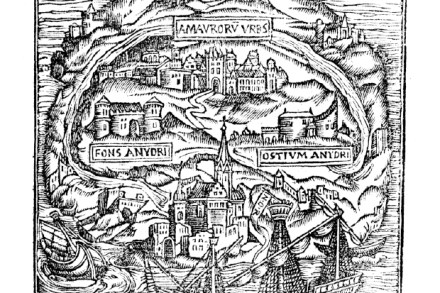
As anniversaries go, the timing could hardly be more apt. As Europe braces itself for the next Islamist attack, the next assault on our civilisation, a season of events marks the 500th birthday of a book that outlined an enlightened vision of the ideal society. Utopia 2016 is a year-long celebration of Thomas More’s Utopia at London’s Somerset House, where the Royal Society and the Royal Academy used to meet. Somerset House is a building that encapsulates the free-thinking values of the Enlightenment, and More’s Utopia is a book that encapsulates the Renaissance sensibilities that built it. We all know what sort of society Isis wants (the clue’s in the name), but what sort of society do we want? What rights are we defending?

I used to hate Christmas – until I spent it in hospital with my sick son

From our UK edition

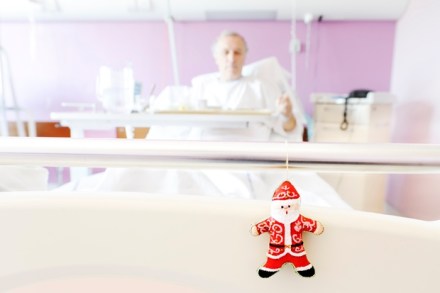
Ever since my teens I’ve hated Christmas, but last year something happened which made me change my mind. On 20th December, my teenage son was struck down by bacterial meningitis. No rash, no stiff neck. He’d been off school the day before but we all thought it was just a nasty cold. By the evening he seemed to be on the mend. He wolfed down a huge supper and sat up on the sofa, watching TV, tormenting his little sister. In the small hours he started throwing up. He became incoherent, then unresponsive. By the time the ambulance arrived he was like a statue. By the morning he was in intensive care, unconscious, wired up to all sorts of weird machines. Mercifully, he came round, quite suddenly, 24 hours later. I was by his bedside. I’d been awake for three days.

My surreal Christmas in hospital with a dangerously ill child

From our UK edition

Ever since my teens I’ve hated Christmas, but last year something happened which made me change my mind. On 20th December, my teenage son was struck down by bacterial meningitis. No rash, no stiff neck. He’d been off school the day before but we all thought it was just a nasty cold. By the evening he seemed to be on the mend. He wolfed down a huge supper and sat up on the sofa, watching TV, tormenting his little sister. In the small hours he started throwing up. He became incoherent, then unresponsive. By the time the ambulance arrived he was like a statue. By the morning he was in intensive care, unconscious, wired up to all sorts of weird machines. Mercifully, he came round, quite suddenly, 24 hours later. I was by his bedside. I’d been awake for three days.

The Heckler: those who doubt the brilliance of Phil Collins are snobs

From our UK edition

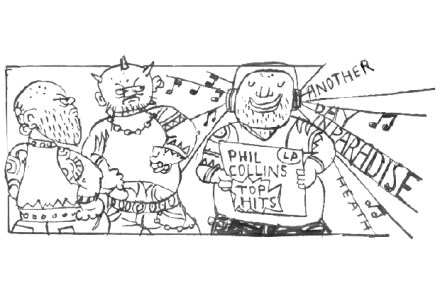
Three boos for those rotten spoilsports who started an online petition against Phil Collins coming out of retirement (there’s already enough suffering in the world, they said). Fools. Don’t they realise pop music is supposed to be naff? It’s the soundtrack to our tawdry lives. How could it be anything but schmaltzy? Don’t they know there’s nothing quite so uncool as a bloke with really cool taste in music? Like a large penis, a large record collection is something that only impresses other men. Phil Collins fulfils all the basic job requirements of a middle-aged, middle-of-the-road rock star. He writes undemanding songs about falling in and out of love. He can carry a tune. He can bash out a few chords on the piano.

Lost in space | 19 November 2015

From our UK edition

In a converted barn in Dorset, not far from the rural studio where she made many of her greatest sculptures, Elisabeth Frink’s son Lin is showing me his incredible collection of his mother’s work. More than 20 years since his mother died, he’s kept the vast bulk of it together. ‘I owe it to mum,’ he tells me. ‘I’ve been very close to her.’ We’re surrounded by maquettes and plaster casts — shelves and shelves of them. Enormous figures loom over us, like Easter Island statues. Drawings and paintings (many never before seen in public) are stacked against the walls.