William Cook

Why most Brexiteers actually love the Germans

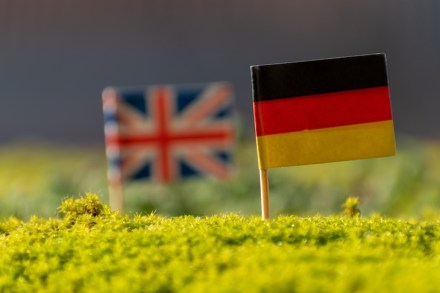
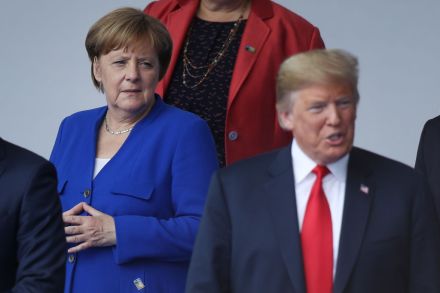
‘We didn’t win two world wars to be pushed around by a Kraut.’ Do you find this statement: a) Funny, and rather pertinent b) Unfunny, and a bit embarrassing c) Conclusive proof that Brexiteers are reactionary xenophobes, whose desire to leave the EU is driven by hatred of Germany If you answered c) you may well be one of the many people who took to Twitter to denounce this Leave.EU tweet, which was accompanied by a photo of Angela Merkel with one arm held aloft: Leave.EU's Arron Banks subsequently issued a tepid apology, but the damage was already done. At a time when reasonable Britons on both sides are searching for some common ground, this tweet (and the angry reaction to it) made the Brexit chasm even wider.

Too cool for school: beware ‘trendy’ teachers

I didn’t know Chris Todd had died until I saw his photo in the newspaper. I hadn’t seen his face for nearly 40 years but he still looked much the same. It was a kind face, decent and dutiful — everything you want from a teacher. I wish I’d known as a schoolboy what I know now — that the Chris Todds of this world are the teachers we recall with real affection, while the teachers we thought were so much cooler we merely remember with contempt. Chris Todd was my form master for several years at my state grammar school. He wasn’t all that strict but he had no trouble keeping order. We all liked him but none of us revered him. We thought he was rather square. He taught chemistry (a subject I hated) and hockey (a sport I loathed).

A bridge to the past: Tintagel’s complex history

Halfway across the brand new bridge that links the two halves of Tintagel Castle, there’s a gap where you can look down at the waves crashing on the rocks below. Don’t worry; it’s only a few inches wide so there’s no danger of falling through it. But it’s a thrilling reminder that you’re suspended between an island and the mainland; between the present and the past. Like a lot of places in Cornwall, Tintagel has a complicated history. It was a big settlement during the Dark Ages, bigger than London at the time, and very well connected with the lands around the Med. More Mediterranean pottery has been found here than anywhere else in Britain. Why was Tintagel so important? No one seems sure.

Alexander Waugh is the Brexit party’s most illustrious candidate

At the next General Election, the lucky constituents of Bridgwater and West Somerset will find an illustrious name on their ballot papers. The Brexit party have unveiled their latest prospective parliamentary candidates, and the candidate they’ve chosen to contest this seat is Alexander Waugh. Alexander Waugh is a first-rate writer – a shrewd critic, an astute biographer and an occasional contributor to The Spectator. He’s also the grandson of one of England’s greatest novelists, Evelyn Waugh, and the son of one of England’s finest journalists – the late, great Spectator columnist Auberon Waugh. Alexander’s writing invites comparison with his father’s writing, and his grandfather’s.

Windermere

‘A love of boats and sailing is the surest of all passports to a happy life,’ wrote Arthur Ransome. Standing on Windermere Jetty on a crisp clear morning, gazing out across the cool grey water, you can see what he meant. Sailing around England’s largest lake is a great way to spend a lazy day, and the new Windermere Jetty Museum is the best place to embark. There’s been a boating museum in Bowness since the 1970s, but it used to be more modest — a collection of old steamboats saved from the scrapyard by a local builder called George Pattinson. Now his old fleet has a much smarter home: a wooden building with stunning views of the lake.

Newmarket

Standing on Warren Hill in the morning mist, watching Britain’s finest thoroughbreds thunder past, you realise what makes Newmarket so special. Racehorses are all around you — there are yards all over town. Every morning, there are hundreds of horses out training. And these aren’t any old horses. They’re some of the fastest racehorses in the world. Horses have cantered across this windswept heath ever since James I came here to hunt, and 400 years later racing remains Newmarket’s lifeblood. The town grew up around racing and its layout reflects its sporting origins — Tattersalls, the world’s oldest bloodstock auctioneers, is just behind the high street. The surrounding fields are crisscrossed by 50 miles of gallops.

Opting for God

‘It’s the same old story — pay or pray,’ said my oldest friend, sardonically, when I told him I was sending my children to a Church of England school. I could hardly blame him for being cynical. He’d known me since we were teenagers, when we were both devout and pious atheists. Yet now I was educating my kids for free, while he was forking out a small fortune to go private. No wonder he felt a bit put out. Since I started going to church again, our friendship has not been quite the same. For cash-strapped parents, the C of E system is a have-your-cake-and-eat-it solution to an age-old dilemma. Can’t afford school fees? Don’t fancy the look of your local state school?

The world at his feet

How much is Jadon Sancho worth? Fifty million? A hundred million? As the speculation mounts, the numbers keep growing. Jadon is the star player for Borussia Dortmund, one of Germany’s leading football teams. He’s already won his first England cap — and he’s still only 18. If you know anything about football, you already know about Jadon. If you don’t know anything about football, you’ll know about him soon enough. He’s the kind of player who comes along only once in a decade — a Glenn Hoddle, a Paul Gascoigne, a Ryan Giggs, a Gareth Bale. He’s the most gifted British footballer of his generation. And from when he was eight until he was 14, I used to watch him virtually every week.

Dedham Vale

Constable painted only three religious paintings, and when you see the one in St Mary’s Church in Dedham you realise why. The Ascension is a tricky topic, even for a master painter like John Constable, and his Jesus Christ looks distinctly awkward as he ascends into heaven — like a bloke at a toga party trying to dance to the house band. Never mind. Here in Dedham you can wander through the subtle East Anglian scenery he painted, and marvel at a nirvana that remains virtually unchanged. The tower of St Mary’s is a familiar motif in Constable’s paintings, and it’s a thrill to walk along the River Stour and see it as he saw it. It’s a few miles along the river to Flatford, where his dad worked as a miller, and where he painted ‘The Hay Wain’.

Another blessed Waugh memorial

Auberon Waugh was happy to admit that most journalism is merely tomorrow’s chip paper but, of all the journalists of his generation, his penny-a-line hackery seems most likely to endure. What made him so special? Like all great writers, it was a combination of style and substance. He had a lovely way with words — he could write a shopping list and make you want to read it — and his libertarian diatribes were wonderfully unorthodox, lambasting pompous humbugs on the left and on the right. Yes, he could be outrageous (and often gloriously rude), but even his most outlandish opinions contained a grain of truth. Above all, he was funny.

The capital of nowhere

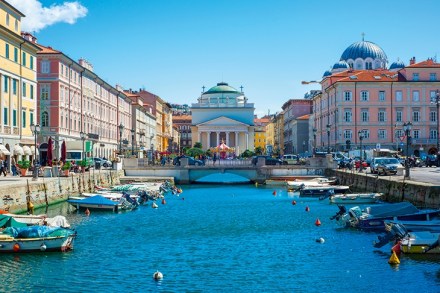
‘Welcome to the free territory of Trieste,’ reads the sign in the shop window. ‘US and UK come back!’ For me, this is the sort of thing that makes Trieste such a beguiling place. Sixty-four years since those British and American troops departed and handed this disputed seaport back to Italy, it still feels like a no-man’s-land, stranded between the Slav and Latin worlds. Jan Morris, the queen of travel writers, called Trieste the capital of nowhere, and I needed to read only the first few pages of her bewitching book Trieste and the Meaning of Nowhere to know I’d love it here. ‘The last breath of civilisation expires on this coast where barbarism starts,’ wrote Chateaubriand, in 1806.

A brief glimpse of utopia

Today Munich is a prosperous and peaceful place — Germany’s most affluent, attractive city. Wandering its leafy avenues, lined with handsome apartments and shiny new BMWs, it’s hard to picture anything remotely revolutionary happening here. However, exactly 100 years ago this cosy bastion of conservatism was overrun by one of Europe’s most unlikely revolutions, led by an idealistic theatre critic called Kurt Eisner. For a British equivalent, imagine a socialist insurgency led by Kenneth Tynan. Of course, like all well-intentioned revolutions, it was doomed to fail.

Bright spot in the Baltic

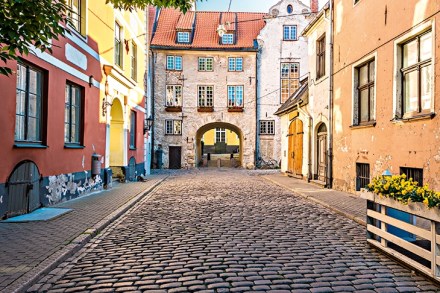
In the historic heart of Riga, Latvia’s lively capital, stands a monument which sums up this country’s stormy past. The Freedom Monument was built in 1935 to commemorate the war of independence in which patriotic Latvians fought off the Germans and the Russians to finally establish Latvia as a sovereign state. That first bout of independence lasted barely 20 years. In 1940 the Soviets marched in, then in 1941 the Nazis marched in and kicked them out, and in 1944 the Soviets marched back in again and stayed until 1991. Yet despite being earmarked for demolition, the Freedom Monument survived. In the 1980s it became the focus for protests against Soviet persecution of Latvian dissidents.

Hebden Bridge

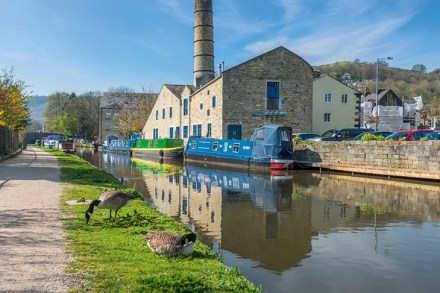
Bernard Ingham once told a story about a reporter from the Financial Times who went to cover an election in Ingham’s hometown of Hebden Bridge. The reporter went into a café and ordered a cappuccino. ‘Nay lad,’ said the waitress. ‘You’ll have to go to Leeds for that.’ Ingham told that story to illustrate the no-nonsense attitudes of the rugged town he grew up in — attitudes that shaped the man who became Margaret Thatcher’s muscular press secretary. So it’s wonderfully ironic that Hebden Bridge is now full of fair trade craft shops and vegan cafés. Nowadays you’ll have no trouble ordering a cappuccino — so long as you like it made from ethically sourced coffee beans.

The league of gentlemen

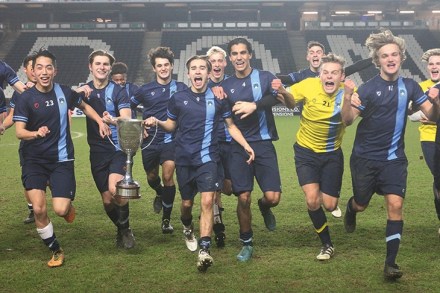
Football is a game for gentlemen played by ruffians, and rugby is just the opposite. That’s what I was taught at grammar school, and for 40 years I believed it. Soccer is for oiks, our teachers told us. Posh boys are no good at football. And so football-playing oiks like me were forced to play rugby, in an attempt to turn us into proper gentlemen. Of course this was utter nonsense — a lot of Britain’s top public schools play football, and always have done. Yet this inverted snobbery prevails, which is ironic, because football in independent schools has never been in better shape. Having long been seen as the poor relations, many independent schools are now a match for the best football schools in the state sector. What has happened?

Hastings

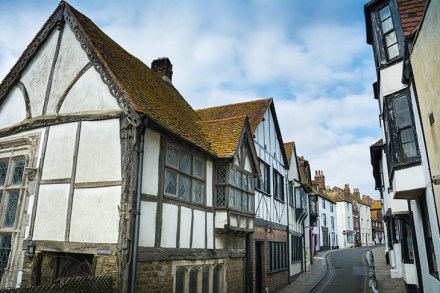
Kevin Boorman loves Hastings, and his enthusiasm is infectious. He was born here, he’s lived here all his life and his family have lived here for generations. He shows me a photo of his great-grandfather, who manned the local lifeboat. His parents met on Hastings Pier. Kevin works for the local council, and today he’s taken some time out to show me round. I can’t remember the last time I met anyone with such a fierce affection for their hometown. Of course it’s Kevin’s job to spread the good news about Hastings, but I wouldn’t be here to meet him if I didn’t have a soft spot for this place myself. I used to love coming here when I was a kid, when nothing was more thrilling than a trip to the English seaside.

Donald Trump is wrong about Germany being a ‘captive’ of Russia

"What good is Nato if Germany is paying Russia billions of dollars for gas and energy?" tweeted Donald Trump on 11 July. Trump was surely referring to Nord Stream 2, the controversial deal between Russia and Germany, whereby Russia will pump natural gas direct to Germany through a new pipeline across the Baltic Sea. Trump reckons such arrangements make Germany a 'captive' of Russia. Is he right? America isn't the only country that's getting hot and bothered about Nord Stream 2. Denmark and the Baltic States have also voiced concerns. The most vociferous opponent of the scheme is Ukraine.

Why Sebastian Kurz is Europe’s most important politician

Austria assumes the Presidency of the Council of the European Union this Sunday, and normally the response among rightminded Britons would be a resounding ‘Who Cares?’ Even before we voted Leave, this rotating six month stint was generally regarded with indifference. Now we’re on our way out, why should we be bothered whose turn it is in the EU chair? Well, the big difference this time around is that Austrian Chancellor Sebastian Kurz is rapidly emerging as Europe’s most influential politician. And for the EU, his spell in the hot seat could hardly have come at a more crucial time. Like Trump’s America and Brexit Britain, Europe is divided.

Poetry in the back garden

When I read about the author on the flyleaf of this book, I must admit my heart sank: ‘Tristan has led expeditions in five continents and is the only living person to have both flown solo and sailed singlehanded across the Atlantic.’ Oh no, I thought, not another gung-ho memoir by some posh explorer, chronicling his adventures crossing the Andes on a pogo stick or paddling up the Amazon in a bathtub. Thankfully, Wild Signs and Star Paths is nothing of the sort. It’s a thoughtful, lyrical book about the hidden connections between flora and fauna, the landscape and the weather, and most of its wise and wondrous observations are gleaned from the author’s rambles around the English countryside — mainly amid the woods and meadows of his beloved South Downs.

New Jersey

When my American friends invited us to stay with them in New Jersey, my 13-year-old daughter was thrilled. She’d never been to the States before, and she couldn’t wait to see Manhattan. I had to break the news to her that there were no skyscrapers where we’d be staying. Plainfield, New Jersey, is an easy commute from New York City, but it feels like a world away. Clapboard houses with star spangled banners: this is the real America. You’d never know Penn Station was just an hour away by train. I took my daughter into NYC, and we did all the touristy things proper travel writers look down on: we went up the Empire State Building; we went for a walk in Central Park. My daughter had a great time and so did I, but our best memories were back in New Jersey.