William Cook

Germany’s ‘grand coalition’ looks set to return

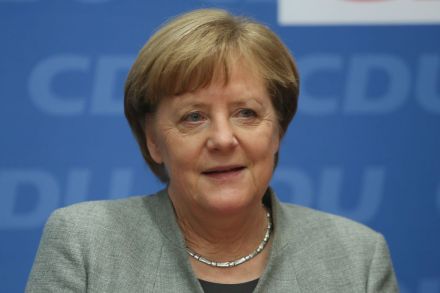
Oh dear. More than three months since Germans went to the polls, and gave the CDU-SPD government a bloody nose, its politicians have finally emerged from the latest coalition talks - and the result is yet another cosy alliance between the CDU and the SPD. You’ve got to feel for German voters. In the Fatherland it seems no matter who you vote for, the so-called ‘grand coalition’ of Christian Democrats and Social Democrats almost always wins. It wasn’t meant to be this way. In September’s election the CDU and SPD both recorded their worst result since the Second World War – 33 percent for the CDU (down nearly 9 percent) and 20.5 percent for the SPD (down by more than 5 percent).

The call of the wild | 4 January 2018

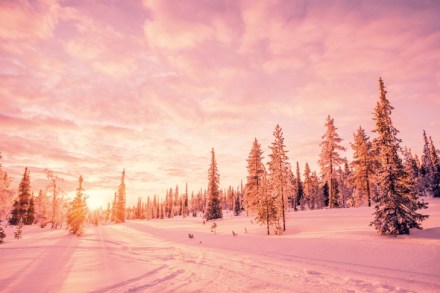
As Sini harnessed up the huskies they were all yelping with excitement, but once we set off and the forest closed in around us they fell silent. Now the only sound was the soft patter of their paws as they raced ahead, dragging our wooden sledge through the snow. It felt good to be back in Lapland, the last wilderness in Europe, where temperatures can drop to –40C, where the population density is barely one person per square kilometre and where the natural world still reigns supreme. I’d been to Lapland once before, husky sledging, but that was across the border in Sweden, 300 miles away.

Russian fake news is causing trouble in Latvia

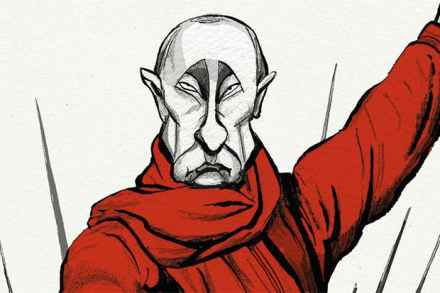
In the historic heart of Riga, Latvia’s bustling capital, there’s a boulevard that doubles as a timeline of this proud country’s turbulent past. When Latvia was part of Tsarist Russia, it was called Alexander Street. In 1918, when Latvia won its independence, it was renamed Freedom Street. In 1940, when the Red Army invaded, its name was changed to Lenin Street. In 1941, when the Wehrmacht marched in, it became Adolf Hitler Street. When Latvia was swallowed up by the Soviet Union, it became Lenin Street once more, and in 1991, when Latvia regained its independence, it became Freedom Street again. 2018 marks the hundredth anniversary of Latvian independence. There are celebratory events all over Latvia throughout the year.

Austria’s Sebastian Kurz should be praised for refusing to ignore the populists

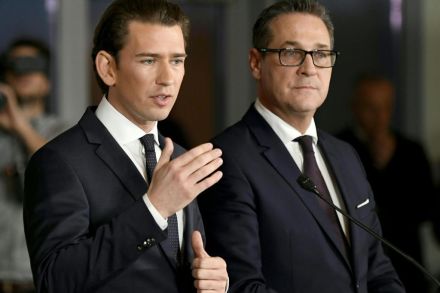
Today the world’s youngest leader takes his place at the top table of European politics, as Sebastian Kurz becomes Chancellor of Austria at the age of just 31. However the toasts in Brussels (and Berlin) will be distinctly muted, for Kurz and his centre-right People’s Party have formed a controversial coalition with Austria’s hard-right Freedom Party – a party shunned by centrist parties throughout the EU. It’s a sign that populism is alive and well in Central Europe. So is this new government merely an Austrian anomaly? Or does it mark the advent of a Pan-European trend? The specifics of this coalition may be peculiarly Austrian, but the generalities reveal a great deal about European politics as a whole.

Comfort and joy

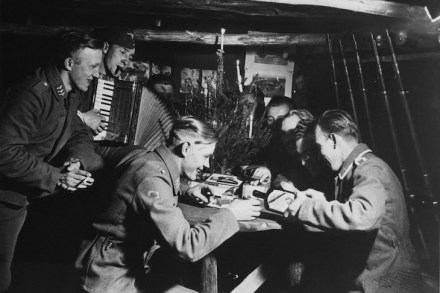
John Julius Norwich loves Christmas dearly. ‘I just wish it didn’t come round about every three months,’ he says. I know how he feels. Christmas does seem to arrive sooner every year — not just because time seems to speed up as you get older, but because our avaricious shopkeepers can’t wait to start cashing in earlier each autumn. We all harbour fond memories of childhood Christmases, and do our best to recreate them for our children. We just wish the whole thing were confined to a few weeks rather than dragging on for half the year. It’s hard to feel full of Yuletide cheer when shopping centres put up their Christmas decorations before Bonfire Night.

Martin Schulz has dared EU members: converge or quit

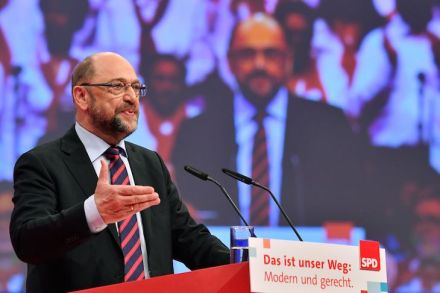
Now Theresa May has made it through the first round of Brexit negotiations, a bigger question becomes more pressing: what sort of Europe will Britain be dealing with in next year’s trade talks – and beyond? The answer to this question came from Martin Schulz, leader of Germany’s Social Democrats, at this week’s SPD party conference, when he called for a United States of Europe by 2025. ‘The Europe we want does not exist right now – we need to create it,’ he declared. ‘Economic, cultural, social and political integration is the best protection against fascism, war and anti-democracy.’ That Schulz should be in favour of a federal Europe is no surprise.

British Europhiles should welcome Brexit. Here’s why

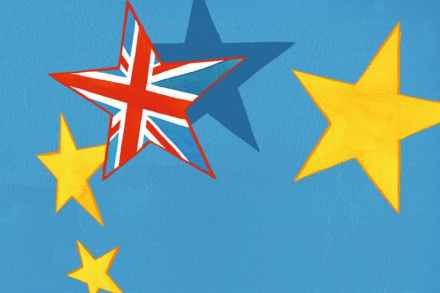
In the historic heart of Luxembourg, around the corner from the Grand Ducal Palace, there is a site which demonstrates why Britons will never be good Europeans. The Maison de l’Union Européenne houses the information centre for the various European institutions here in Luxembourg, and even British Remainers will find its attitudes entirely different from their own. The vision it presents is pan European, an entire continent without borders. These are the ‘citizens of nowhere’ that Mrs May warned us about. Since the referendum, British attitudes towards the EU have polarised.

Germany’s political system is starting to unravel

A spectre is haunting Europe – the spectre of populism. Last week in Berlin, Christian Lindner, leader of the Free Democrats, walked out of Germany’s coalition talks, plunging the Bundesrepublik into an unprecedented crisis. Meanwhile in Trier, the ancient Rhineland city where Marx was born and raised, locals were busy preparing for next year’s Karl Marx bicentenary. What on earth would Marx have made of Germany – and Europe - today? Sure enough, the proletariat are rising up against the bourgeoisie, but not in the manner he predicted. Marx assumed that nationalism, like the state itself, would wither away. Instead, those pesky proles are embracing nationalism like never before, and the results are shaking Europe to the core.

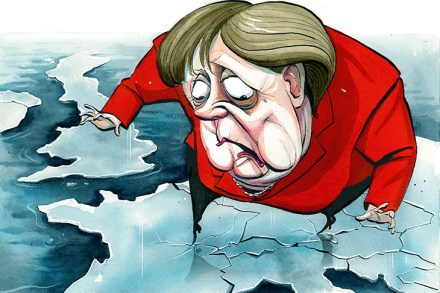
Merkel’s thin ice

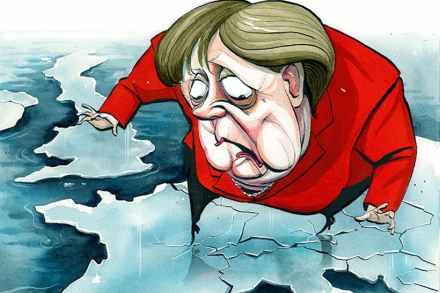
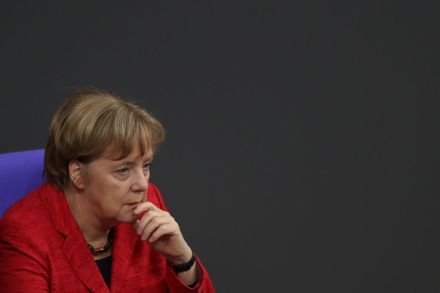
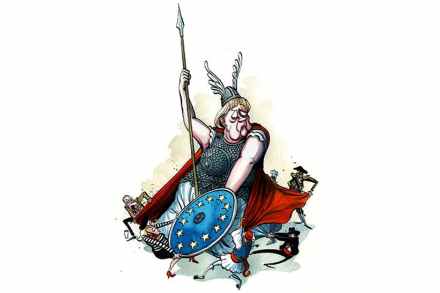
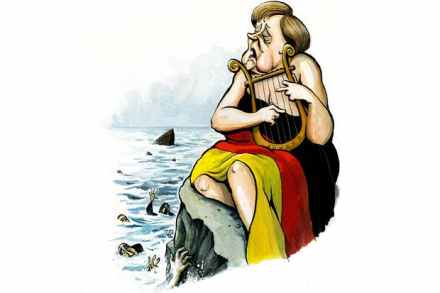
 Trier, Rhineland Was it really just a few months ago that Angela Merkel was being hailed as the leader of the western world? A few months since she was lauded as the only politician who could stand up to Trump? How quickly her power has ebbed away. Today she looks defeated, as if she knows her days are numbered. Whenever she goes, however she goes, this is surely the beginning of the end. One German commentator has likened it to Götterdämmerung — the twilight of the gods. Six months ago, here in the Rhineland, Merkel staged an amazing comeback, beating Martin Schulz’s Social Democrats in his own backyard. Going into that regional election, in North Rhine Westphalia, her Christian Democrats were trailing Schulz’s SPD by 13 per cent.

Germany’s political crisis puts Merkel’s future in doubt

When I had lunch with a senior CDU politician in Düsseldorf on Saturday, there was no sign that Germany’s coalition talks were about to break down so abruptly, plunging the Bundesrepublik into a political crisis with no solution in sight. Sure, negotiations had dragged on for weeks, said the man from Merkel’s party, but that wasn’t unusual here in Germany. They’d probably drag on until January, but the participants would eventually work something out. The next day his comfortable prediction was confounded, as Christian Lindner’s Free Democratic Party walked out of the coalition talks. ‘It became clear that the parties weren’t able to develop a common idea of how to modernise Germany,’ said Lindner.

Germany remains a nation divided between East and West

On the left bank of the Rhine, on the leafy outskirts of Bonn, there’s a building that encapsulates the Bundesrepublik’s best and worst of times. For 44 years, the Villa Hammerschmidt was the official residence of the German President, Germany’s equivalent of the White House. No longer. Now, the German President resides in the Bellevue Palace in Berlin, 300 miles away. Architecture reveals a great deal about the shifting psyche of a nation, and these two contrasting buildings sum up the difference between the Bonn government of the Cold War and today’s government in Berlin. The Villa Hammerschmidt here in Bonn is ornate yet modest – the Bellevue Palace is bigger, grander, more bombastic.

Lewes

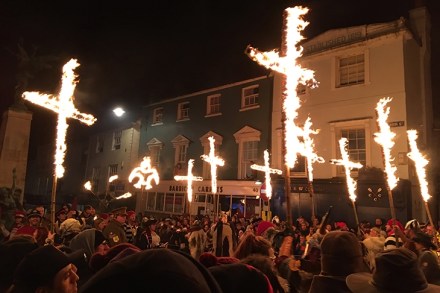
Autumn is upon us, and the streets are full of families in fancy dress. People of all ages are dressing up, everything from smugglers to suffragettes. In Lewes it can only mean one thing — it’s bonfire time again. Elsewhere in Britain, Bonfire Night has been overwhelmed by Halloween, but here in the historic county town of Sussex (forget about this newfangled East Sussex nonsense), Guy Fawkes is still going strong. This is no tame firework display, organised and sanctioned by the council. It’s a celebration of local kinship — half a dozen bonfires, one in each part of town, each with its own loyalties and rituals.

The paradox at the heart of Catalan separatism

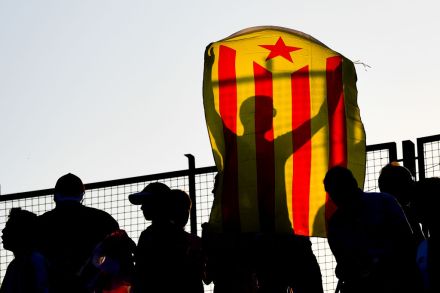
Driving out of Barcelona, into the rural hinterland of Catalonia, you soon lose count of all the Catalan flags flying from lamp posts along the highway. This isn’t the state-sanctioned Catalan flag, La Senyera, but the banned rebel flag, L’Estelada – red and yellow stripes, like the official flag, but with a rebel star upon it, like the flags of Cuba and Puerto Rica (two other nations that threw off the Spanish yoke, with variable results). Yet when you arrive in Lleida, Catalonia’s only landlocked province, and get talking to a few locals, it soon becomes clear that the Catalan independence story is actually a lot more nuanced.

How Sean Hughes (1965-2017) transformed comedy

Not many people can say they’ve transformed an entire art form, but Sean Hughes, who died yesterday, aged 51, did just that. His one man show, A One Night Stand With Sean Hughes, changed our preconceptions of what stand-up comedy should be – not by being strident or political, but by rejecting trite one-liners and letting his imagination run riot. I was lucky enough to see this ground-breaking show on its first run at the Edinburgh Festival in 1990. I’ve never seen anything quite like it, before or since. In the summer of 1990, so-called alternative comedy was all the rage – but though the style of stand-up had shifted, the format had hardly altered. Traditional stand-up consisted of working class men in tuxedoes cracking lame jokes about the mother-in-law.

Sebastian Kurz’s shift to the right pays off

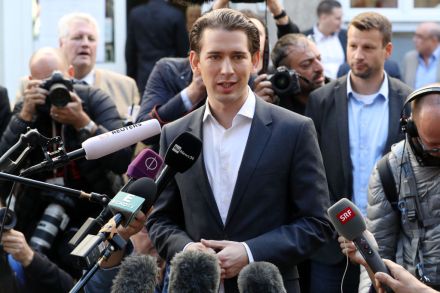
Eat your heart out, Kim Jong-un. As of today, the tubby North Korean tyrant is no longer the most youthful leader on the planet. Sebastian Kurz, fresh-faced champion of the Austrian People’s Party, has won 31 per cent of votes in yesterday’s national election, making him the leader of Austria’s largest party, and the country’s next chancellor. So how did this wunderkind become the youngest national leader in Europe – and the world? On the face of it, for the Austrian People’s Party to win an election is no surprise.

Writers’ blocks

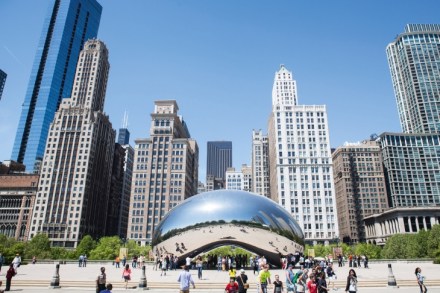
 Chicago ‘Write drunk, edit sober,’ Ernest Hemingway reportedly said, and Oak Park, on the leafy outskirts of Chicago, is the place where he became a writer (the drink came later). Here is the clapboard house where he was born, and learned to read and write, and a few blocks away is the home where his father blew his brains out in 1928, just as his son would do 33 years later. Violence is ever present in Chicago, even in affluent Oak Park, but despite its reputation (or maybe, in a way, because of it) this is an intensely literary city, and a fitting location for the new American Writers Museum.

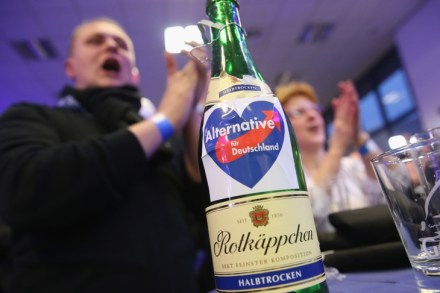
Is there an alternative to the AfD?

The German Embassy threw a lavish party in London’s Belgrave Square last night to toast the Bundesrepublik’s Day of German Unity, but although the Bier and Sekt flowed freely, and the Ambassador’s Residence was awash with chatter, disunity rather than unity was the main topic of the day. Germany’s Tag der Deutschen Einheit marks the Reunification of Germany in 1990, one of those rare events in German history of which all Germans can feel proud. The Embassy’s annual jamboree is always jolly, yet there’s a ghost at every feast. Last year’s Banquo was Brexit. This year, it’s AfD.

Will banks really leave Britain after Brexit?

In the run-up to last year’s referendum, some grave-faced pundits predicted that Brexit would prompt a mass exodus of bankers from London to Frankfurt. Nonsense, said the Leavers. Everything will be fine. As with almost every aspect of the campaign, there was virtually no common ground. Depending on which side you listened to, either the Square Mile would become a wasteland or Brexit would make no difference whatsoever. So, fifteen months later, who should we believe? I’ve been talking to German bankers and it’s no surprise to find that the word on Threadneedle Street is a lot more nuanced. Project Fear wasn’t entirely fanciful, they tell me, but the timescale was all wrong.

Sadness and dismay: how Spain views the Catalan independence vote

In Barcelona civilians have been giving red carnations to policemen (a symbolic echo of the 1974 revolution in Portugal) but here in Extremadura today's Catalan Independence vote has been greeted with a mixture of sadness and dismay. In the historic city of Caceres, balconies are festooned with Spanish flags – part of a nationwide demonstration of national unity (local newspapers are reporting that more Spanish flags have been sold here in the last few days than when Spain won the World Cup). In stark contrast to prosperous Catalonia, Extremadura has always been one of the poorest parts of Spain.

Alternative für Deutschland’s success tells the tale of Germany’s forgotten East

Back in the early 1990s, a few years after the Berlin Wall came down, I went back to the house in Dresden where my father was born. The house was on the outskirts so my father and grandmother survived the bombing – they got the last train out of Dresden before the Red Army arrived. The family I found there had been there since 1945. They’d been expelled from Silesia when Stalin handed the region over to Poland, and had ended up in Dresden along with so many other displaced Germans. They’d been living there for half a century, three generations under the same roof. They didn’t own this house – like almost everything in East Germany, it had been owned by ‘the people’ (i.e. the government).