William Cook

On Germany, Trump is right about the big picture, wrong about the detail

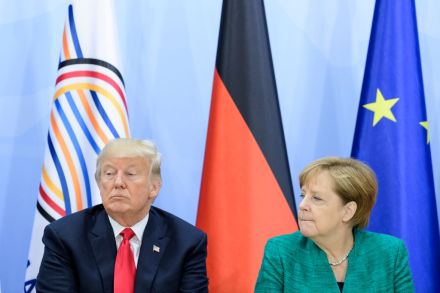
Time was, a US President wouldn’t dream of criticising the government of one of its Nato allies in public – but that was a long, long time ago, before the Age of Trump. ‘The people of Germany are turning against their leadership as migration is rocking the already tenuous Berlin coalition,’ tweeted President Trump yesterday. ‘Crime in Germany is way up. Big mistake made all over Europe in allowing millions of people in who have so strongly and violently changed their culture. We don’t want what is happening with immigration in Europe to happen to us.’ Of course Trump is being terribly undiplomatic. No surprise there. That’s his thing – that’s what he does. But is he right?

Becoming German

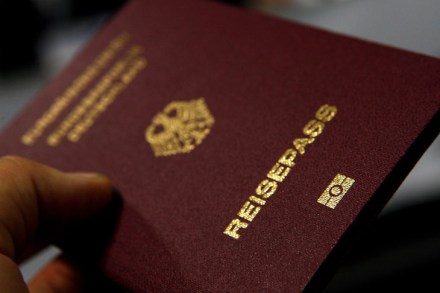
In the end, after all the waiting, the document didn’t look like much — a sheet of A4 paper adorned with a German eagle, and one of those tongue-twisting Germanic compound nouns beneath it: Staatsangehörigkeitsausweis. At last, my Certificate of German Citizenship had arrived. How did I feel? Elated, tearful, overjoyed. It was at this moment that I finally understood how so many Brexiteers must have felt when Britain decided to leave the EU. When Britain voted Leave I was distraught, but I wasn’t at all surprised. For anyone with eyes and ears, it was clear that a great many Britons were passionate about leaving, and that a lot of Remainers were merely lukewarm.

How Nato is fighting back against Russian fake news

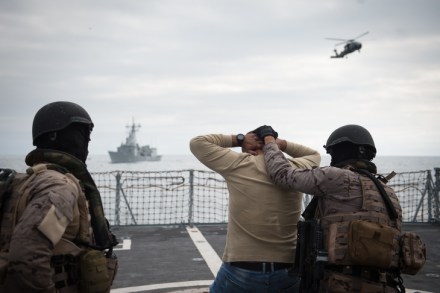
At first, the Spanish marines are just a distant dot on the horizon. A few minutes later their speedboat is on our starboard side. The marines clamber aboard, disarm the irregulars who’ve seized this Romanian frigate, and secure the helicopter landing pad on the windswept stern. Watching from a safe distance, you’d never know this was just a wargame. As a Romanian sailor told me, as I struggled to control my seasick stomach, the way you fight in a real war depends upon the way you train. Welcome to Sea Shield, a naval warfare exercise involving 21 ships and 12 aircraft from seven Nato allies: Bulgaria, Greece, Romania, Spain, Turkey, the US and the UK. And welcome to the Black Sea, the front line in the new Cold War.

It’s political centrists who are most hostile to democracy

The New York Times has taken a drubbing in the British press (not least here on Coffee House) for its downbeat assessment of Brexit Britain. However the full page opinion piece it ran last Thursday, by political researcher David Adler, will be music to the ears of many Brexiteers, both left and right. ‘Centrists are the most hostile to democracy,’ declares the New York Times, in the headline and standfirst for Adler’s article. ‘Research shows that it’s not the far right or the far left that is the least supportive of democracy and the most supportive of authoritarianism. It’s the centre.

Denying the Catalans a vote may well do more harm than good

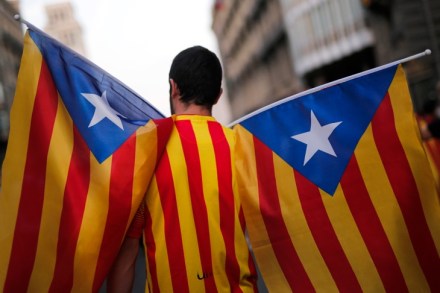
Barcelona’s Barri Gotic is ablaze with banners. Virtually every balcony in the gothic quarter seems to be adorned with some sort of flag. Some people fly La Senyera, the state-sanctioned flag of Catalonia, but far more fly L’Estelada, the rebel flag of independence. Eight months since Catalans voted for secession from Spain in an unofficial referendum which wasn’t endorsed by the Spanish government, Madrid and Barcelona have never been further apart. Wandering the narrow alleys of Barcelona’s labyrinthine city centre, it’s easy to be swayed by the populist, separatist mood. As David Cameron discovered during the Scottish referendum, independence campaigners have all the best tunes. ‘Free all political prisoners!

The dilemma of Germany’s Turkish footballers

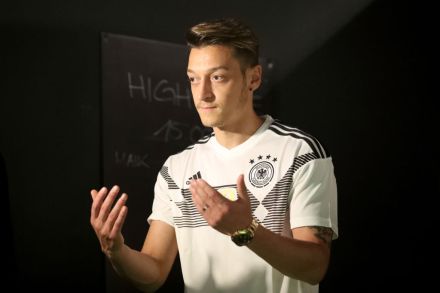
What’s the German for ‘The best laid schemes of mice and men gang aft agley’? Mezut Özil (Arsenal) and İlkay Gündoğan (Manchester City) are two of the finest footballers in England’s Premier League. They’re both of Turkish descent, so when Turkey’s president Erdoğan came to London on a state visit, a friendly meeting and a photo opportunity must have seemed like a good idea. However Özil and Gündoğan were both born in Germany, and both play for the German national team. The Deutscher Fussball Bund (and some German politicians and journalists) weren’t best pleased. Özil gave Erdoğan a football shirt, which was bad enough, but Gündoğan went one stage further.

Are Macron and Merkel playing good cop, bad cop with Trump?

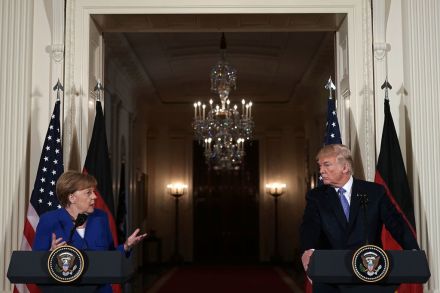
For France and Germany, the contrast could scarcely be starker. For three days Emmanuel Macron was wooed and fêted by Donald Trump, treated to marching bands and banquets. Today, Angela Merkel made a brief two-and-a-half hour stop-off at the White House, then flew away again. So does this mean President Macron is Trump’s New Best Friend and Chancellor Merkel is just his sideman (or should that be sidewoman?)? As always, in international diplomacy, this is a question to which the answer is: well, yes and no. Sure, the dramatic difference between these tête-à-têtes was no coincidence. Yes, Macron’s was a full state visit, Merkel’s was merely a working meeting, but the disparity is deeply symbolic, and the timing makes it even more so.

Austria is back on the political map – and Austrians are nervous about it

Summer has arrived early in Vienna and the city of Strauss and Schubert has never looked lovelier. The parks are full of students, basking in the sunshine. The elegant cafes along the Ringstrasse are full of debonair businessmen and businesswomen, making contacts, doing deals. You could almost be back in the Habsburg Empire a hundred years ago, when Vienna ruled over a Reich that stretched from Trieste to Transylvania. However despite its prosperous appearance, all is not well here in the Austrian capital. The bad news for the Viennese is that Austria has become important again. Throughout the Cold War, surrounded on three sides by the Iron Curtain, Austria looked west, not east. However this was always a historical anomaly.

Leiden: The eccentric city that’s worth leaving Amsterdam for

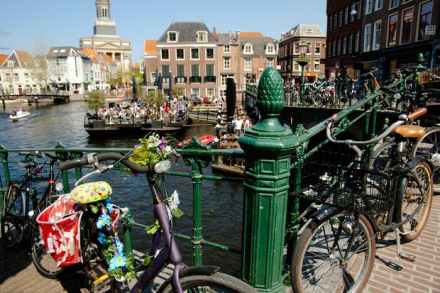
I’m on a narrowboat in Leiden, nursing a filthy hangover, watching this antique city floating past, when I’m awoken from my daydream by a strange whirring noise above me. The glass roof of the canal boat is rapidly descending, and the jolly Dutchman at the tiller is telling me to mind my head. I end up flat on my back, with the roof a few feet above. ‘We have some low bridges here in Leiden,’ says the tillerman, by way of explanation, as if this weird contraption was the most natural thing in the world. For me, this canal boat with its collapsing roof encapsulates the quirky appeal of Leiden, and why I was so keen to come back here.

What Brexit Britain can learn from German Reunification

Obscured by the hubbub of rolling news and the cacophony of Twitter, an important anniversary has passed by virtually unnoticed. The Berlin Wall has now been down for longer than it was up. Berlin’s ‘Anti-Fascist Protection Barrier’ (as the Communists used to call it) stood for 28 years and three months, from August 1961 to November 1989. It’s now been down for 28 years and four months. Its fall reunited the two Germanies, and changed the course of history. So, 28 years on, what can Brits learn from German Reunification? What lessons does the Wiedervereinigung hold for us today? I filed my first report from Berlin in the first year of Reunification. Since then, I’ve returned to eastern Germany more times than I can count.

Southend-on-Sea

Standing at the end of Britain’s longest pier, on a cold and misty morning, looking out across the Thames Estuary, I wondered, for the umpteenth time: why do people take the piss out of Southend? It’s got no airs and graces. It doesn’t take itself too seriously. Yet out here, surrounded by still grey sky and still grey water, with only a few seagulls for company, I’m struck by its barren windswept beauty. You’d never guess London was only an hour away. Southend-on-Sea has been a running joke for as long as I can remember. Even the train to London was known as the Misery Line, on account of its endless delays. Yet lately, something’s changed.

Is Sebastian Kurz Germany’s most important politician?

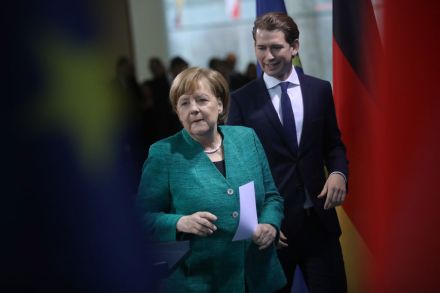
Who is the most important politician in Germany? Angela Merkel? No, it’s the Austrian Chancellor, Sebastian Kurz. Merkel remains a colossus on the world stage, but domestically her power is much diminished. Meanwhile German eyes are on Kurz, the world’s youngest national leader, as he strives to bridge the gulf between centrists and populists – and between east and west. Despite their vastly differing ages (Merkel is 63; Kurz is just 31), the German and Austrian Chancellors actually have quite a lot in common. They’re both leaders of centre right parties in prosperous Central European nations, where immigration is a growing concern, and the far right is on the rise.

Young, dynamic – and a pragmatist: meet Sebastian Kurz

He always flies economy, even to New York to address the UN. With his boyish grin, he looks like any other upwardly mobile millennial. But there’s nothing ordinary about Sebastian Kurz, Austria’s new Chancellor, the youngest national leader in the world. Kurz is only 31, and could pass for ten years younger. But his baby-faced appearance is the least extraordinary thing about him. What’s far more exceptional is the way he has transformed Austrian, and European, politics by bridging the divide between centrist and populist right. When Kurz became leader of the Austrian People’s Party ten months ago, Austrian politics was gridlocked.

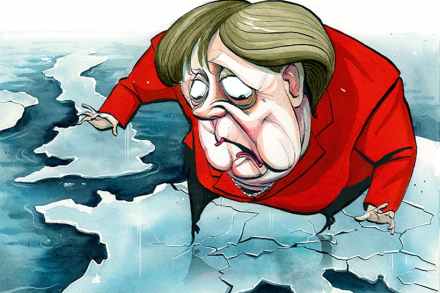
Angela Merkel is back in office but not back in power

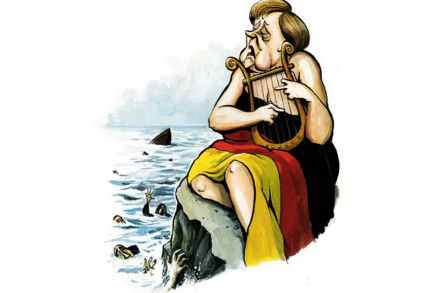
How did she do it? How has Angela Merkel hung on for a fourth term as German Chancellor after being written off so many times? When she's sworn in as Bundeskanzlerin today it'll be nearly thirteen years since she became leader of the Bundesrepublik. She's been read the last rites so often, yet after almost six months of backroom talks she's back in office. But is she really back in power? Merkel has promised Germany 'a grand coalition for the little people.' It's a catchy catchphrase but can she deliver? Yet another cosy alliance between her centre right CDU and the soft left SPD hardly feels like a new beginning for the millions of voters who deserted the two big parties at last September's election.

The new German grand coalition will be dull and dreary

There’s no success like failure, as Bob Dylan once observed. Nearly six months after Germans went to the polls and gave the country’s coalition government a bloody nose, the same two parties are back in government in another ‘grand coalition’ – yet another unholy alliance of Christian Democrats and Social Democrats, with Angela Merkel at the helm again. Haven’t we been here several times before? Well, yes and no. Merkel’s centre-right CDU agreed a coalition deal with the soft-left SPD last month, but SPD protocol demanded they put this deal to their 464,000 members, and after an all-night count the result of that postal vote was announced this morning.

Germany’s diesel ban is a victory for the Green party

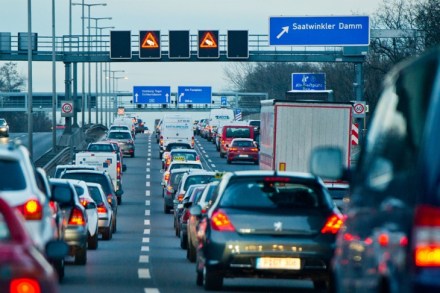
So much for Germany’s mighty automobile lobby. Today Germany’s Federal Administrative Court ruled that Stuttgart, home of Mercedes-Benz and Porsche, has the right to ban diesel vehicles from its city centre. This sets an important precedent. If Germany’s motor city can outlaw diesel, other cities will surely follow their example (indeed, the ruling also applies to Düsseldorf, which brought a similar case). Naturally the German car industry opposes this ban, and so do the German government, but their chances of overturning this ruling seem slender. The Federal Administrative Court (or Bundesverwaltungsgericht, if you want to brush up on your knowledge of tongue-twisting German compound nouns) is the highest court in the land.

Marx in Trier

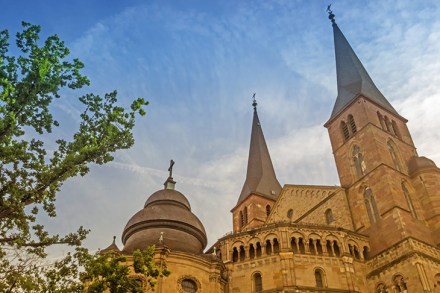
‘Trier hates you,’ reads the graffiti outside the Karl-Marx-Wohnhaus in Trier. Actually, that’s a bit unfair. Trier doesn’t hate Marx, but it’s always had mixed feelings about its most famous son. Marx’s 200th birthday will be marked by several lavish exhibitions in Trier, which is ironic, for this quaint Rhineland city has never known quite what to make of the author of Das Kapital. Marx was born in Trier on 5 May 1818, in a handsome house on the edge of the medieval old town that now houses the Karl Marx Museum. His father was a lawyer, his family were fairly well-to-do. When he was still a baby, they moved to the Karl-Marx-Wohnhaus in the city centre (now a drab convenience store) beside the Porta Nigra, a huge Roman gatehouse.

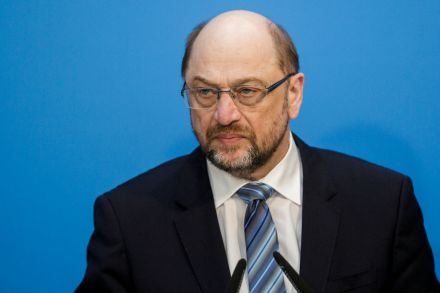
Martin Schulz steps aside in a moment for German people power

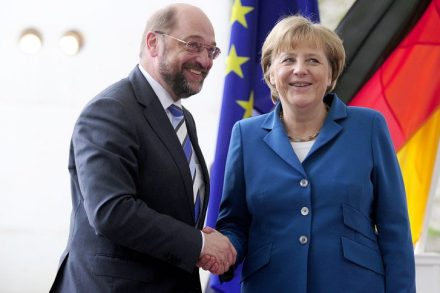
Who’d have thought it? Last week, it looked like Martin Schulz had landed the key role of Foreign Minister in Germany’s new coalition government, despite leading his Social Democrats to their worst election result since the war. But now Schulz has been forced to decline the post after an internal revolt by his own party. It’s a sign that people power is returning to German politics, after years of cosy backroom deals. Up until the weekend, it looked like Schulz had played a weak hand very well. His SPD only polled 20.5% in September’s election, and subsequent opinion polls put them even lower.

Angela Merkel’s new coalition is united by fear of AfD

Here we go again. More than four months after Germans went to the polls and gave both main parties the thumbs down, Germany’s Christian Democrats and Social Democrats have finally agreed the terms of yet another Grand Coalition. True, the CDU and the SPD are still Germany’s two biggest parties. Between them they still command (just) over 50 percent of the national vote. But it’s a bitter irony that these two centrist parties are back in power together, after both recorded their worst election results since the war. Barring a catastrophe or a miracle (depending on your point of view) Angela Merkel will be Chancellor again, for a fourth term, but her centre-right CDU has made some big concessions. The SPD has retained control of the Foreign Affairs and Labour Ministries.

Is Angela Merkel finally closing in on a fourth term?

Is there anything quite so ponderous as the German political process? It certainly provides a useful illustration of the gulf between the British and German way of doing things. Theresa May took only a few days to hatch a deal with the DUP to stay in power. By contrast, Angela Merkel has been trying to build a new coalition since September, and there’s still no end in sight. The latest chapter in this epic saga was yesterday’s vote by Germany’s Social Democrats, on whether to approve the party’s preliminary coalition talks with Merkel’s Christian Democrats. After much agonised debate, SPD delegates voted in favour. So now, at long last, the SPD can finally enter formal coalition talks with the CDU.