Victoria Glendinning

Recycling Sackville-West style

Here’s a book co-authored by one dead woman and one living one. Sarah Raven is the second wife of Adam Nicolson, grandson of Vita Sackville-West. In 1930 Vita bought Sissinghurst, the ruins of a great 16th-century house, and with her husband Harold Nicolson created the world-famous garden. Tell me the old, old story. Vita died in 1970, and in 1983 Adam’s mother published a similar volume, co-authored ‘by Vita Sackville-West and Philippa Nicolson’; and there are several other good books about the making of this garden. So here is yet another well-illustrated hommage, from an intimate perspective, to Vita and to her gardening style. It is basically a compilation of large chunks from Vita’s gardening articles written for the Observer between 1946 and 1961.
Anorexia, addiction, child-swapping — the Lake Poets would have alarmed social services

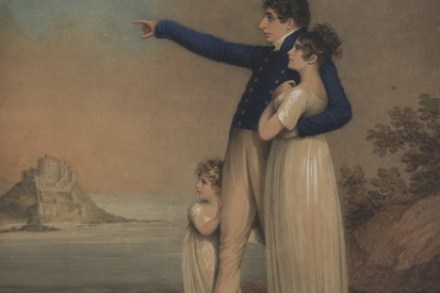
The last time the general reader was inveigled into the domestic intensities of the Wordsworth circle was by Frances Wilson in The Ballad of Dorothy Wordsworth. She engaged delicately with Dorothy’s inordinate love for her younger brother William, and seemed to think her passionate attachment was romantic and sentimental rather than sexual — though there are 50 shades of grey between the one and the other, and honestly, it doesn’t matter. Katie Waldegrave, in her riveting family saga The Poets’ Daughters, is not much concerned with that anyway. Her focus is on what happened to Wordsworth’s daughter Dora, the second of his five children, and Coleridge’s youngest, Sara. There were 20 months between them and they were much together as children.

The Charleston Bulletin Supplements, by Virginia Woolf and Quentin Bell

The Charleston Bulletin was a family newspaper produced between 1923 and 1927 by the teenaged Quentin Bell and his elder brother Julian — who soon dropped out, leading Quentin to recruit his aunt Virginia Woolf. At that time enjoying her most prolific period as a novelist, she collaborated with him on special issues which they called Supplements, for circulation at Christmas among the family and friends whose foibles and mishaps are chronicled in its pages. Professor David Bradshaw in his preface suggests that ‘it may not be ridiculous’ to link the ‘skittish abandon’ of the Supplements with the sense of liberation that Woolf felt in having found her fictional voice and critical recognition.

‘Trespassers: A Memoir’, by Julia O¹Faolain

In this memoir Julia O’Faolain, author of seven distinguished novels and many short stories, asserts that she has nothing to say about the ‘inner Julia’, because being a writer she is more interested in observing other people. And, importantly, ‘I write because Seán and Eileen did.’ Some women stop identifying themselves as their parents’ daughter when they leave home. Julia O’Faolain certainly left home geographically. Over a long life she has lived in London, Dublin, Rome, Florence, Paris, Los Angeles, Portland, New York and Venice. Yet on the evidence of this succinct memoir, she remains the daughter.

‘Daphne du Maurier and Her Sisters: The Hidden Lives of Piffy, Bird and Bing’, by Jane Dunn – review

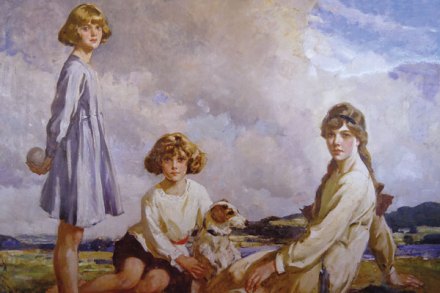
Jane Dunn is something of a specialist on sisterhood. She has — we learn from the dedication — five sisters of her own; she has already written a book about the sisters Virginia Woolf and Vanessa Bell, and another about the cousins Elizabeth I and Mary, Queen of Scots. Now the du Maurier sisters are in line to capture the public imagination like the Brontës or the Mitfords, their group celebrity fortified by genuine claims to fame. The fascination for readers is the different character and destiny of each sister, plus their relationships with one another and with the dynamics of the family romance —  and few family romances have been more potent than that of the du Mauriers.

The good …

Edna O’Brien would obviously never write a typical Irish ‘misery memoir’, though she has experienced more misery than is quite fair, even to the point of planning suicide. Country Girl is an emotional roller-coaster of a book, beginning with two disturbing dreams of her old home, setting the elegiac tone. Family life was a ‘ragbag of anecdote, hearsay, allegory and consternation’ in a large two-storey stone house among fields in Co Clare, every room and every object in which is summoned up on the page. Father had been prosperous, but was so no longer, and he drank. Mother, whose ways and sayings are recalled as if yesterday, was of poorer country stock and fervently devout.

Everyone is lost in the forest

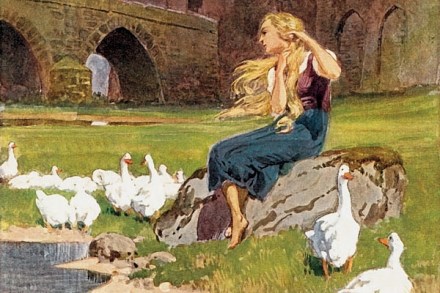
The Grimm brothers’ fairy tales are gruesome. Heads are cut off and sometimes stuck back on again. Children are maimed, or chopped up, cooked and eaten. Broken promises are punished horribly, though a magic bird or a talking animal can sometimes make everything come right. Yet those tender-minded parents are misguided who keep their children away from Grimms’ tales for fear of instilling terrors. Little children know about terror already because they are afraid of being abandoned, and of big strangers. With no prompting from anyone, they play games involving much noisy bashing and killing of imaginary monsters.

Nature study

On my desk is the vertebra of a narwhal. It was given to me by a man in Canada after a convivial dinner. Narwhals are Arctic whales with long spiky tusks on their noses. This vertebra is about three inches across, embedded in bone expanding into waisted wings, like a propeller. If I were the award-winning Scots poet Kathleen Jamie I would be describing it better. A whale vertebra, for her, felt ‘grainy, not quite cold’, and smelt of wax crayons, which are, or were, made of whale oil. She was in the Whale Hall of the Natural History Museum in Bergen where the dusty skeletons of 24 whales hung by chains from the ceiling. They were being cleaned, before removal to a modern display.

A man who quite liked women

It is noticeable that the kind of young woman that a clever public man most likes talking to is intelligent but totally unchallenging. This is pleasant for both. She gets to pick up useful knowledge, while he can hold forth, happy that she doesn’t have the inclination or firepower to disagree, argue or interrupt.    Dr Johnson was a bit like that. He wanted women to be equal ‘but not too equal’.  Hannah More, a successful playwright young enough to be his daughter, had too much natural self-belief for him, and he did not admire her dress sense. He was wary and in awe of the confident poet Elizabeth Carter, who knew more Latin and Greek than he did.

Black swan

At a time when publishers seem chary of commissioning literary biographies, the conditions for writing them have never been better. Major authors born in the 1890s and early 1900s were written about pretty comprehensively in the so-called golden age of biography, stretching from the last quarter of the past century into the first few years of the present one. Now they are up for reassessment. ‘It is time to look again at Edith Sitwell,’ as Richard Greene puts it. The advantage for the new wave is that more material has become available. In the case of Edith Sitwell, biographies of her brothers Osbert and Sacheverell have filled some gaps. Letters that were stuffed in drawers at Renishaw are now put in order.

Country matters

Clive Aslet was the long-time editor of Country Life, and now, as its ‘Editor at Large’, is released into the environment. Clive Aslet was the long-time editor of Country Life, and now, as its ‘Editor at Large’, is released into the environment. It obviously suits him. He writes wonderfully in Villages of Britain about building materials such as mud and stud, wattle and daub, and cob, which is where our oldest houses meet African mud huts. Cob is just earth ‘that has been sieved to a fine tilth and laid over straw; water is put on it to make it sticky, and more straw laid on top’, with a seasoning of dung and twigs. Then great lumps of it are piled up into a deep, thick wall.

Home and away

Rats cannot be sick, says Bill Bryson. Not many people know that. Rats can have sex 20 times a day. Further down the same page, we read that they also sleep 20 hours a day. Do the sums. Rats must fornicate five times an hour in their waking period, as well as eating rubbish and not being sick. The phenomenally successful Bill Bryson is an American with an affection for this country, as is evidenced by his most famous book, Notes from a Small Island. He is president of the Society for the Preservation of Rural England and Chancellor of Durham University. He is also the huge, affable, best-selling presence at the popular end of a cultural and social history spectrum whose academic high end is represented by authors like Theodore Zeldin and Marina Warner.

Pearl of the Orient

When she was a little girl, playing in the countryside around her missionary parents’ home in China, Pearl Buck used to come across the scattered body parts of babies abandoned for animals to devour. She would bury them, and tell no one. When she was a little girl, playing in the countryside around her missionary parents’ home in China, Pearl Buck used to come across the scattered body parts of babies abandoned for animals to devour. She would bury them, and tell no one. Born in 1892, she buried painful experiences all her life, telling no one, apparently forgetting — but they came out in her stories and novels. Her most famous novel, The Good Earth, has never been out of print and has sold millions of copies in many countries.

Books do furnish a life

Ronald Blythe writes from his old Suffolk farmhouse, and Susan Hill writes from her old Gloucestershire farmhouse. The view from the windows, the weather, the changing light and the rhythm of the seasons, are evoked by both of them with a similar lyric precision and grace. Reading about their extraordinarily pleasing surroundings and rich interior lives may cause the word ‘complacency’ — well, not exactly to spring, but maybe to sidle, into the mind. But that’s before you remember that nice things are nicer than nasty things, and should be fostered and celebrated. Their lives are no less ‘real’ than the dreadful lives of zillions of their fellow humans, for whom they are probably praying.

Live and let die

The Collected Letters of Katherine Mansfield, Volume 5, 1922-1923, edited by Vincent O’Sullivan and Margaret Scott; Death & the Author: How D.H. Lawrence Died and Was Remembered, by David Ellis The story of a life is also the story of a death, and one of the values of biography is that it enables us to die by proxy — a sort of rehearsal. Biographies of writers, says David Ellis in Death and the Author, are particularly apt, since writers often explore their feelings about dying and are people of ‘superactive consciousness’. As the author of Dying Game, the final volume of the Cambridge biography of Lawrence, Professor Ellis is an authority on Lawrence’s last years.

Selective breeding

The ‘entirely fresh view’ of childhood in England presented by Anthony Fletcher in 414 pages of text and apparatus may come to some as a bit of an anti-climax. Although material conditions changed enormously, and children by the end of his period had more toys and books and birthday presents, his 12 years of research have ‘not revealed any grounds for supposing that anything of fundamental importance changed, between 1600 and 1914, in the dynamic of the relationships between English parents and their children’. Not so much ‘entirely fresh’, then, as deep-frozen. He may well be right, at least in relation to his samples, which are made up entirely of families from the landed gentry and the upper professional classes.

Small elephant at Dove Cottage

This is a lively contribution to that mound of books — now approximately the height of Skiddaw — about Wordsworth and Coleridge and their ladies in the Lake District. Frances Wilson has found a niche, basing her book on Dorothy Wordsworth’s Grasmere Journals, written during the two and a half years at the opening of the 19th century when Dorothy and her brother lived at Dove Cottage. Dorothy was just 28 when they arrived, and Wordsworth a rather middle-aged 32, his impassioned revolutionary days left behind. Also left behind was Annette Vallon, the mistress he had abandoned in France pregnant by him. The marriage of William to Mary Hutchinson was on the cards from the time these journals begin.

More marks on paper

Life is not fair. Talents are not distributed equitably. The likelihood is that if you are good at one thing, you will be good at other things too. But there is a twist in the tail. The more things you are good at, the less you will be perceived as pre-eminent in any of them. The American Paul Horgan, for example — singer, actor, set-designer, painter, poet, writer of stories, essays, novels, plays and libretti — is quoted in The Writer’s Brush as deploring his ‘accursed versatility’, and the truth is that I, unlike my better-informed readers, am unfamiliar with his oeuvre. A few of the writer-artists featured in this hefty book are first-class at neither authorship nor art, and most are much better writers than they are artists, or vice versa.

Agony of the aunts

Singled Out by Virginia Nicholson One day in 1917 the senior mistress of Bournemouth High School for Girls told the assembled sixth form, ‘I have come to tell you a terrible fact. Only one out of ten of you girls can ever hope to marry.’ She was right. Nearly three quarters of a million young British men died in the Great War. Girls born around the turn of the century had been reared to assume that marriage and motherhood were their natural destiny. Even before the war there were more women than men, and post-war the problem of the ‘surplus women’ became a public issue. Women had worked in factories and the trades during the war, but the returning soldiers wanted their jobs back.

Tasty Woolf rissoles

When I was a child, an aunt gave my mother a cookery book called 100 Ways with Mince. This made a huge impression on me, because of my mother’s irritation — it was not her idea of a present — but even more so because of the enormity of the title. It sprang into my mind for the first time for ages as I embarked upon Virginia Woolf: The Platform of Time. In the larders of literature, as well as the left-overs of major works, there are generally minor meaty morsels lurking in saucers at the back of the shelf. Ever since Virginia Woolf died in 1941 her literary remains, large and small, have been continuously collected and published, whether in book form or in specialist journals.