Tom Wilson

Tom Wilson is director of policy at the Counter Extremism Group.

The Prevent review shows the system needs a complete overhaul

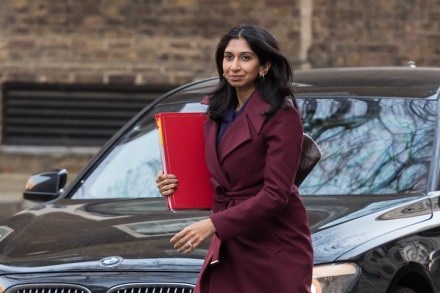
One of the most surprising things to come out of today’s independent review of Prevent, the government’s flagship counter-terrorism programme, is how much of its activities have nothing to do with terrorism.  The scheme was created by politicians to stop people from being radicalised into terrorism. Yet according to William Shawcross’s landmark review, the reality is that the programme spends much of its time and energy focused on subjects outside of terrorism.  When broken down, the referrals to Prevent of course comprise people drawn to jihadist and neo-Nazi worldviews. But there was another, somewhat inexplicable category that few outside of the programme could find out very much about, labelled: Mixed, Unclear, Unstable, Ideology. Unclear? I’ll say.
Who knows where the violence in the West Bank might lead – but it could well take Abbas with it

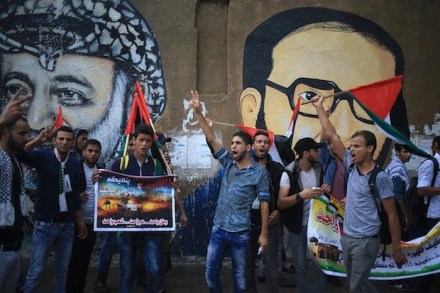
In recent days the situation in Jerusalem and the West Bank has been unravelling. For some years now, fighting between Israelis and Palestinians has tended to come in the form of intermittent clashes in and around Gaza. Rocket warfare, Israeli airstrikes and subterranean tunnel attacks have become a familiar part of the latest chapter of this now century long confrontation. In the last couple of weeks, however, the focus of tensions has shifted from Hamas controlled Gaza to the West Bank, where the major Palestinian population centres are under the security control of the somewhat more moderate Fatah. The violence that we are seeing now is taking the form of roadside shootings, stabbings, rock throwing attacks and rioting.

There was a credible alternative to the Iran deal. Obama just chose to ignore it

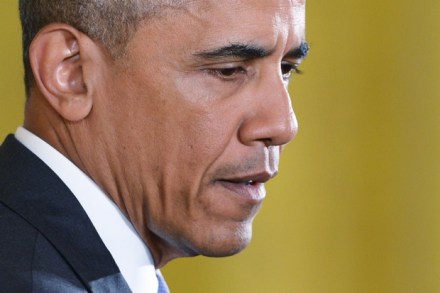
President Obama has accused critics of the recently announced deal with Iran of having no credible alternative. According to Obama, it was this deal or no deal. And then, alleges the president, the options are either acquiescence or war. But this is a false choice, set up by the Obama administration to make its bad deal look like the best we ever could have hoped for. Yet, the truth is that the alternative to this deal was not no deal, it was a better deal, one that actually met the international community’s objectives in undertaking negotiations in the first place. The Iran deal presented at Vienna is both weak and also far more dangerous than most observers had anticipated.

Military inspections must be a non-negotiable part of Iran’s nuclear deal

It is probably safe to say that the negotiations with Iran aren’t going very well. As the 30 June deadline for a final agreement looms America’s top negotiator Wendy Sherman has just announced that she will resign shortly after, telling the New York Times that it has been 'two long years' in that position. Meanwhile the Iranians are now saying that they want the deadline for reaching an agreement extended, with the Obama administration insisting that’s not an option. To make matters worse unconfirmed reports have recently emerged claiming that a delegation of North Korean nuclear weapons experts have been paying regular visits to Iranian military facilities.

Why wasn’t the head of Hamas properly cross-examined during his BBC interview?

When journalists have the much sought after opportunity to interview the heads of states and organisations with appalling human rights records the very least we expect is to see such people given a thorough cross-examining. What we don’t expect is for heads of terrorist organisations to be provided with a platform from which to give the equivalent of a party political broadcast and to get away with it virtually unchallenged.  And yet that is precisely what we got when the BBC’s Middle East correspondent Jeremy Bowen recently interviewed Khaled Meshaal, the head of Hamas. Hamas leader Meshaal warns of Israeli 'extremism' after elections, reads the baffling headline that accompanies Bowen’s interview.