Tom Goodenough

Tom Goodenough

Tom Goodenough is online editor of The Spectator.

What the papers say: A customs union is the least worst Brexit option

From our UK edition

Theresa May has been condemned for her failure to stick up for the NHS during her conversation with Donald Trump last night. The criticism comes after Trump tweeted to say Britain’s National Health Service was ‘going broke and not working’. But while we can be rightly proud of the NHS, we shouldn’t be blind to its problems, says the Daily Telegraph. Politicians have queued up to defend the institution and talk of ‘how much they love it’. ‘Only in Britain is it necessary to fetishise the way we deliver health care’, argues the Telegraph.
What the papers say: Jeremy Corbyn must rein in the thugs

From our UK edition

The protest that greeted Jacob Rees-Mogg’s talk at a Bristol university on Friday night shows that something sinister is happening in British politics, according to today’s newspaper editorials. The Times says that while Jeremy Corbyn’s ‘younger admirers’ might be blind to the idea, the Labour party and Corbyn’s ‘personal brand are tainted with an ugly and retrograde thuggishness’. The paper says the experiences of Claire Kober, the outgoing Labour leader of Haringey council, is a case in point. Kober used an interview in the Times on Saturday to document her experiences at the hands of some of Corbyn’s followers.

Theresa May must stop presenting Britain as the supplicant in Brexit talks

From our UK edition

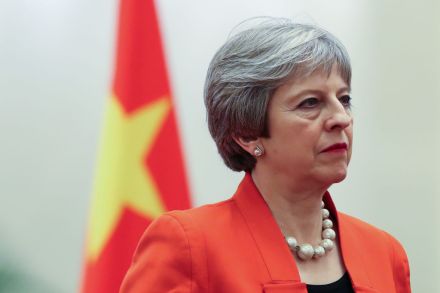
Theresa May is on her way back from China, but those hoping the Prime Minister has turned over a new leaf on her trip will be disappointed. Formal talks will soon begin on the implementation – or transition period, yet all the signs are that the Government is continuing to prevaricate on spelling out what it really wants from Brexit. Instead of setting out any kind of grand vision, the PM opts instead to take baby steps on the long road towards Britain’s departure from the EU. During her interview on the Today programme just now, May kept up this approach and again refused to spell out much in the way of detail. The PM was challenged by the BBC’s Laura Kueenssberg to ‘come clean on what you really want’.

What the papers say: It’s not too late for May to save her skin

From our UK edition

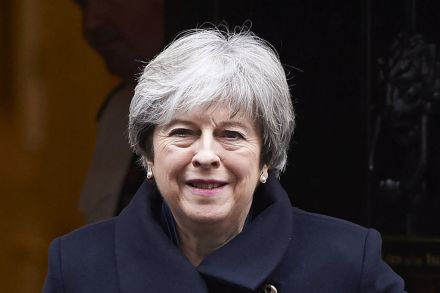
In the wake of a doomed cabinet reshuffle, Theresa May is on the brink. The Spectator’s cover piece this week calls on the Prime Minister to lead or go, and Tory MPs are said to be close to triggering a leadership challenge, amid reports of a rising number of letters of no confidence in the PM. But it is not too late for May to save her skin, argues the Sun. After all, Theresa May has shows an ability to constantly defy her critics. This is demonstrated in her ability this week to finally come around to talking up Brexit as a ‘golden opportunity’ for Britain, says the Sun. ‘At last’, the paper says. ‘For months, May has looked unable to do or say anything meaningful on any issue’, let alone Brexit.

What the papers say: Eurosceptics are wrong to ‘rage over the Brexit transition’

From our UK edition

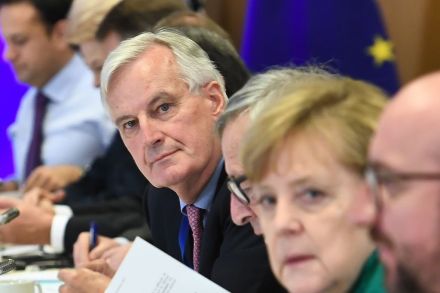
Michel Barnier’s Brexit transition deal offer – under which Britain will continue to pay into the EU’s budget and have no say on rules – has not gone down well with some Brexiteers. The Daily Telegraph says that this suggestion means that the date of when Brexit will happen has effectively been pushed back until December 31st 2020. The paper says that it was right for Theresa May to initially lay out a request for a two-year transition deal during her Florence speech last year. But since the PM made that speech, Britain has been too ‘meek’ in obeying the EU and allowing Brussels to ‘call all the shots’. This makes it no surprise that ‘Brexit-supporting Conservatives’ are getting jittery in the wake of Barnier's proposal.

What the papers say: Is time finally up for Theresa May?

From our UK edition

Is time up for Theresa May? A report in today’s Sun indicates that it could well be, with the paper suggesting that the chair of the party’s 1922 committee, Graham Brady, has told Tory MPs not to issue any more demands for a leadership challenge. Why does this matter? Because it suggests the threshold for a no confidence vote – 48 letters, or 15 per cent of the party’s MPs – could be approaching. Tory MPs would be ‘crazy’ to call time on May’s leadership, argues the Sun, which urges them to ‘resist’ making a move against the Prime Minister.

What the papers say: Boris is right about the NHS

From our UK edition

Boris Johnson was reportedly humiliated in yesterday’s cabinet following his demand for more money for the NHS. If it was the Prime Minister’s intention to embarrass Boris Johnson it was a mistake, says the Times. In its editorial, the paper calls the ministerial discussions ‘an exercise in staged humiliation rather than consensus-building’. The PM may well be thinking that her ability to survive a tumultuous few months now means ‘that she is not only safe but steadily confounding her critics’. Such thinking would also be wrong, the paper argues, pointing out that Boris’s ‘return to trouble-making…reflects deepening frustration with Downing Street on both wings of the party’.

What the papers say: Is the party finally over for Ukip?

From our UK edition

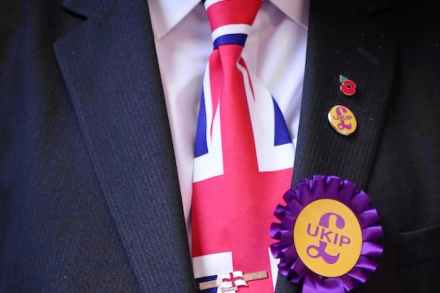
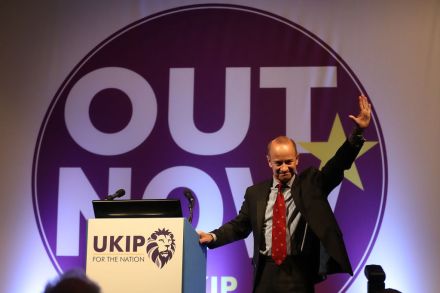
Ukip has defied predictions about its death before. Yet even the party’s most ardent supporters would find it hard not to feel gloomy about recent events and the party's downward spiral. Ukip’s leader Henry Bolton clings on, despite losing a vote of no confidence and suffering a raft of resignations among his top team. ‘Is the party finally over for Ukip?’, asks the Daily Telegraph. The paper says that Bolton’s refusal to step down looks like an act of ‘forlorn defiance’, and it seems likely that the party’s leader has lost the trust of members as a result of his relationship with a racist model.

Bolton wanderers: A full list of who has stepped down so far

From our UK edition

Ukip's leader Henry Bolton is under mounting pressure to step down following the scandal over his model girlfriend's racist text messages. Bolton – the party's sixth leader in 16 months – lost a vote of no confidence yesterday. He has vowed to stick it out, insisting that he will not resign as party leader. But a raft of resignations makes it look as though the party could soon be having one of its tri-annual leadership contests, with eight resignations in the last 24 hours alone.

What the papers say: In praise of Macron’s charm offensive

From our UK edition

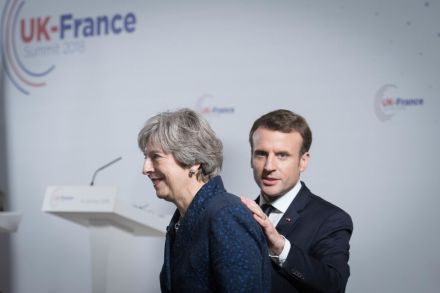
Emmanuel Macron capped off his trip to Britain by taking a selfie with the Prime Minister last night. His charm offensive has paid off, says the Daily Telegraph, which suggests the visit shows what a post-Brexit relationship with Britain’s neighbours could look like. The progress in co-operation during the visit – on the migration problem in Calais and on defence, for example – is evidence, for the Telegraph, that the EU ‘is not the be-all and end-all of European co-operation’. After all, Britain’s close ties with France are matched ‘in the east’ by Poland, and ‘in the west’ by Ireland. It’s true that Macron remains opposed to Brexit and has said a decision to backtrack would be looked on ‘with kindness’.

What the papers say: Carillion represents a catastrophic failure by politicians

From our UK edition

Theresa May has said the collapse of Carillion is 'extremely regrettable'. But with tens of thousands of jobs at risk and the firm's numerous contracts now in jeopardy, ‘it is worse than that’, says the Times. The paper argues that the outsourcing giant’s ‘failure calls into question the government’s ability to agree and manage contracts with such companies’. It also raises another question: why did ‘ministers fail to anticipate this fiasco’? After all, the firm’s troubles were no secret: Carillon has issued a number of profit warnings and hedge funds have been betting against the firm for a number of years, the Times points out.

What the papers say: Chris Grayling has questions to answers after Carillion’s collapse

From our UK edition

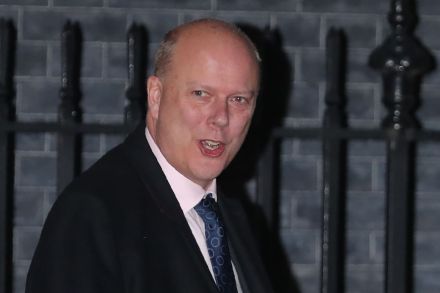
Carillion is set to go into liquidation, putting at risk thousands of jobs and leaving question marks hanging over its involvement in major government projects, including HS2. The firm’s troubles are hardly new: repeated profit warnings have been issued in recent months. Yet still new contracts were handed to the company by ministers. Why? The Times points the finger at the transport secretary, saying that Chris Grayling ‘is at the centre of a mess of his own making, and there is nothing funny about it’. The paper points out that shortly before the contractor won ‘lucrative deals for work on the HS2 rail line’, the ‘unexpected profit warning’ troubled investors but did not seem to bother the transport secretary in the slightest.

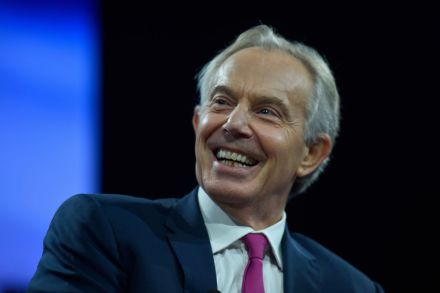
What the papers say: Blair has himself to blame for Brexit

From our UK edition

Time is running out to halt Brexit. That was Tony Blair’s dire warning on the airwaves yesterday, as the former prime minister once again waded into the referendum debate to say that: ‘2018 will be the year when the fate of Brexit and thus of Britain will be decided’. Unsurprisingly, his warnings have not gone down well in today’s newspapers. The Sun says that Blair’s ‘stomach-churning dishonesty on Brexit was putrid even for him.’. The paper says that the worst thing about Blair’s intervention was ‘his feigned concern for democracy’ in trying to insist that voters should be allowed another say on Brexit.

Tony Blair’s shrill Brexit warnings won’t persuade anyone

From our UK edition

Tony Blair’s message for voters on Brexit is becoming more and more shrill. His latest stark warning is that: '2018 will be the year when the fate of Brexit and thus of Britain will be decided. 2017 was too early in the negotiation. By 2019, it will be too late.' The point Blair misses is that 2016 was the year 'the fate of Brexit' was decided, and it is difficult not to think that with each pronouncement fewer and fewer people are listening (Blair has an approval rating of –50, according to YouGov).

What the papers say: Corbyn’s shameful silence on Iran

From our UK edition

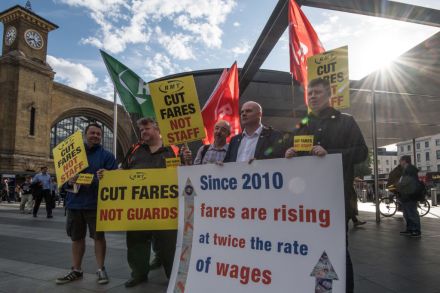
The anger that greeted the hike in rail fares yesterday once again caught the Tories on the back foot. Chris Grayling, the transport secretary, eventually popped up from Qatar to say that he too was annoyed at the rise in ticket prices. But it was too late: Labour had spent much of the day making hay among fed-up commuters. Grayling’s absence ‘left the field clear’ for Labour to ‘exploit popular anger’ and ‘promote the party’s policy of renationalising the train network’, says the Daily Telegraph.

What the papers say: Who is to blame for the rail fare rise?

From our UK edition

Rail fares are up again, with the latest rise – of an average of 3.4 per cent – the biggest in five years. Labour are clear about who is to blame: it’s the government’s fault, according to the shadow transport secretary Andy McDonald. But whether that’s right or not, it’s inevitable that anger at this latest rise will be directed at the Conservatives – and Labour is likely to make political capital as a result of this commuter anger. A fare rise is now an ‘inevitable ingredient of every new year’, says the Times, which points out that an annual pass to travel between Birmingham and London will now cost £10,567 – a rise of a third in the last eight years.

What the papers say: How has May managed to cling on?

From our UK edition

Damian Green was Theresa May’s closest ally in government and his departure makes life even trickier for the embattled Prime Minister. Yet while Green's sacking caps off a dreadful 2017 for the PM, still May survives. ‘In an otherwise traumatic year’, says the Guardian, ‘that probably counts as a success.’ So how has May managed to cling on? The Guardian says May owes her survival to the lack of a viable alternative within the Tory ranks. What’s more, it's worth remembering that those who would seek to replace the PM – Philip Hammond, Boris Johnson and David Davis, for instance – have hardly had the best of years themselves.

What the papers say: Why Barnier must ‘button it’

From our UK edition

Ever since the referendum, the reality has hit home for the British government as to ‘the weakness of (its) bargaining position’, says the Financial Times. This ‘dawning’ of reality has led ministers to realise that ‘they are accepting Brussels’ demands rather than genuinely negotiating’ during discussions with the EU. When talk turns to trade in the new year, this is unlikely to change, says the FT. It’s true, of course, that given the importance of the City of London, the EU will not want to ‘cut off’ European companies from accessing it when Britain leaves the EU.

What the papers say: May’s Brexit Britain is a fantasy island

From our UK edition

Theresa May’s Brexit statement in the Commons yesterday 'told us a great deal about what has happened already,’ says the Daily Telegraph. But the detail on ‘what happens next’ was thin on the ground. Once again, the PM ‘reaffirmed that the UK is leaving the EU on March 29, 2019’. Yet this told us little we didn’t already know when Article 50 was triggered six months ago. ‘The question now to be resolved is not whether we are leaving but on what basis,’ says the Telegraph. So what does Britain actually want from Brexit? The PM said, not for the first time, that the aim was to secure a “bespoke and ambitious” trade deal’ between the UK and the EU.