Tom Goodenough

Tom Goodenough

Tom Goodenough is online editor of The Spectator.

Why won’t David Cameron come clean about his EU migrant benefits deal?

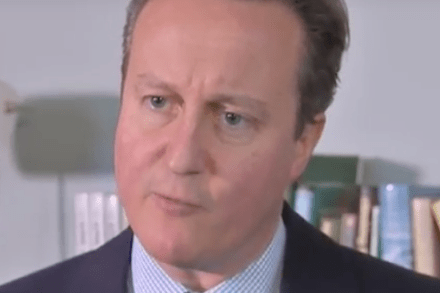
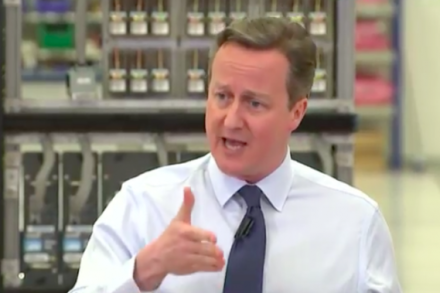
For the last three years, David Cameron has held out the prospect of voting 'no' in the referendum if he could not get the deal he wanted. Today he has - unsurprisingly - claimed victory. Yes, he says, there's more to do on the draft deal - but it not too much because what he's got is enough. He's already in full referendum campaign mode, so made his statement to workers in Chippenham, saying: 'If I could get these terms for British membership, I sure would opt in' But how much of a compromise has it been? Cameron looked a little shifty as he was spoke ‘emergency brake’ on in-work benefits for migrants. His manifesto pledge is clear: he wanted to deny in-work benefits to immigrants for four years.
Boris Johnson: EU ‘red card’ is not enough

Downing Street is doing its best to spin national parliament's right to use a 'red card' against EU laws - apparently won as part of the PM's renegotiation with Donald Tusk - as a victory. But others are less impressed. David Cameron's old friend Boris Johnson has been on LBC this morning talking about the EU renegotiation package. The London mayor, no stranger to being a thorn in the PM's side, tried hard to appear convincing in backing Cameron. He said: 'David Cameron has done a very good job at huge speed of getting a difficult package of measures.' But Boris went on to say that what was on the table so far was not enough - and that more needed to be done. Speaking to LBC's Nick Ferrari, he added: 'Everybody would want to see more progress, let's see where we get.

Eurosceptics get themselves in a tangle over EU red card

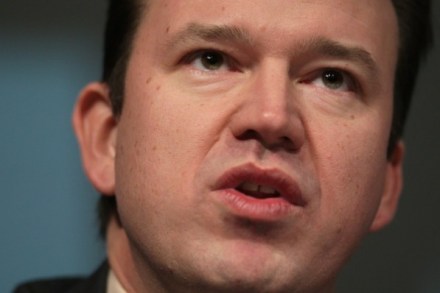
The Eurosceptic campaign - already divided between two camps - seems to have got itself into another tangle over the right to use a 'red card' to block EU legislation. Vote Leave chief executive Matthew Elliott has dismissed the proposal, which will allow Britain to kick start a process to block EU laws if 55 per cent of other European countries agree, as a 'gimmick'. Speaking this morning, he said: 'These gimmicks have been ignored by the EU before and will be ignored again as they will not be in the EU treaty'. But it seems the idea of a 'red card' has not always been viewed in the same way by Matthew Elliott. A Business for Britain paper, written almost a year ago today, called for ten changes to be implemented in renegotiating our relationship with the EU.

Today in audio: Monday 1st February

Haven’t had a chance to follow the day’s political events and interviews? Then don’t worry: here, The Spectator, brings you the best of today’s audio clips in one place for you to listen to. Releasing a report into the Kids Company fiasco, Bernard Jenkin accused other select committees of 'putting people up against the wall and shooting them': He made sure he could not be accused of doing the same by saying he didn't want to point the finger or say who to blame over the charity's fall from grace: 'Comrade Corbyn' author Rosa Prince seems to have warmed to the subject matter of her book.

Spectator most read: Our five top pieces from this week

Our most-read piece this week was Fraser Nelson’s article about the Swedish government’s refusal to be honest about the crime and immigration. He said: 'News of an attack brings grief and outrage, but the sense that the authorities are not telling the whole truth brings a new level of anger and suspicion. All of this further undermines public support for immigration.' Read the article by clicking here The second most-read article was Melanie Phillips’ cover piece on gender. She said that it was dangerous and wrong to tell children they’re gender fluid. In her piece, Melanie added: 'In short, the political class is obsessed by gender issues. I trust you are, too.

Today in audio: Friday 29th January

Haven’t had a chance to follow the day’s political events and interviews? Then don’t worry: here, The Spectator, brings you the best of today’s audio clips in one place for you to listen to. David Cameron said that the offer of an 'emergency brake' on in-work benefits for EU migrants was 'not good enough'. Speaking after meeting Jean-Claude Juncker in Brussels, he went on to say: 'We've made some progress today, it's not enough'. John Redwood helpfully reminded the PM of what will be waiting for him when he does reveal the results of his EU renegotiation.

David Cameron’s EU renegotiation headache as pressure mounts to get a deal

David Cameron gave all the appearances of being in a bullish mood as he said negotiations so far over Britain's relationship with the EU were 'not good enough'. Speaking after meeting Jean-Claude Juncker in Brussels today, the Prime Minister said: 'We've made some progress today, it's not enough.' He also again paid lip service to being seen to be grafting hard to get a good deal for Britain - repeating his line from last week when he said renegotiating was ‘hard work’. He added: 'The British people and I want a system where you have to pay in, before you get out. We don't want a something for nothing society. That is what we are determined to deliver.

Today in audio: Tuesday 26th January

Haven’t had a chance to follow the day’s political events and interviews? Then don’t worry: here, The Spectator, brings you the best of today’s audio clips in one place for you to listen to. Jesse Norman had an awkward time on the Victoria Derbyshire show after being taken to task by a furious Paula Radcliffe. Speaking on Today, Vote Leave’s Jon Moynihan accused the other side in the EU renegotiation debate of trying to create FUD — fear, uncertainty and doubt. Although, it seems, he may not have known what that the term means north of the border... Labour's Liz Kendall was on Daily Politics, speaking about the state of the party.

Could ethnic minority voters swing it for the out campaign in the EU referendum?

Could ethnic minority voters swing it for the out campaign in the EU referendum? That’s the hope of UKIP’s Steven Woolfe at least, who in a speech this morning at British Future will be urging ‘Leave’ to reach out to black and minority communities. Speaking on the Today programme this morning, he said such groups would be crucial to the campaign’s success. He said: ‘There has always been this kind of assumption that, for example, minorities are more likely to vote for the Labour party rather than the Conservative party and we now know that’s not the case.

Today in audio: Monday 25th January

Haven't had a chance to follow the day's political events and interviews? Then don't worry: here, in the first of a daily feature, we bring you the best of today's audio clips in one place for you to listen to. Stuart Rose has been giving a series of interviews as the In campaign steps up its efforts to encourage the public to vote to stay in the EU in the upcoming referendum. On the Today programme this morning, he admitted to being a eurosceptic but said it was a 'risk' to leave the EU because the British public did not know what they would be getting: He had less success on Sky News, however, where he forgot the name of the campaign he is in charge of: Is the Labour party in turmoil? Not according to leader Jeremy Corbyn, who insisted that 'everybody's getting along just fine'.

Will the In campaign’s relentless negativity turn off voters?

Stuart Rose has again warned the public of the risks of leaving the EU, but will the relentless negativity of the In campaign turn off voters? During his interview on Today this morning, the Chairman of Stronger In campaign claimed he was a ‘bit of a Eurosceptic’ himself. But despite admitting there were ‘imperfections’ with Britain’s relationship with Europe, Rose suggested once more that the main argument for staying in is that we don’t know what we’ll be swapping those annoyances for. He said: ‘What we don’t know is what we are exchanging it for – the reality of what we have today against the risk of what we might not have tomorrow.

Is David Cameron feeling the heat over his EU renegotiation?

As David Cameron continued his charm offensive in Europe today on a visit to the Czech Republic, are there signs he is feeling the heat over his EU renegotiation? In his press conference, the PM remained almost relentlessly positive as he spoke about 'solutions' and 'working together’ with other European leaders. But he also appeared to offer a brief flash of insight into the pressure he is under to get a good deal for Britain over EU renegotiation - saying that doing so was 'hard work'. He said: 'It's hard work because what we are looking for is real and substantive change. But I firmly believe there is a pathway to an agreement. We have had very positive discussions about all of these things today.

Airport expansion decision could now come after EU referendum

It now looks as though a decision on expanding Heathrow (or Gatwick), which had been pencilled in for this summer, could be slipping back again. Patrick McLoughlin, the Transport Secretary, certainly seemed to be bracing us for more waiting when quizzed over airport expansion on LBC yesterday. The current deadline is the summer. But McLoughlin said the busy political timetable could get in the way of that - and spoke about summer as aspiration rather than a firm deadline. 'I hope later this year, we have said we hope to move some way by the summer. There are lots of other things that are going on in the political spectrum - if there's a referendum this summer and the like, but I would hope by the summer of this year we'll be able to make progress.

Michael Caine wades into the EU debate: ‘I feel certain we should come out’

Michael Caine started his Today programme interview apparently unsure about whether he was going to vote in or out in the EU referendum. But just a few seconds later, the Hollywood star seemed to change his mind live on air - saying we were better off without Europe, which is packed with 'thousands of faceless civil servants’. He said: 'I don't know what to vote for, both are scary. To me, you've now got, in Europe, a government by proxy of everybody who has now got carried away, and I think unless there is some extremely significant changes we should get out. Because you say, we'll fail, so you fail - get better, try harder and then you'll be a success. But you cannot be dictated to by thousands of faceless civil servants who make these rules.

Savile report: 107 BBC staff had heard about Jimmy Savile’s behaviour

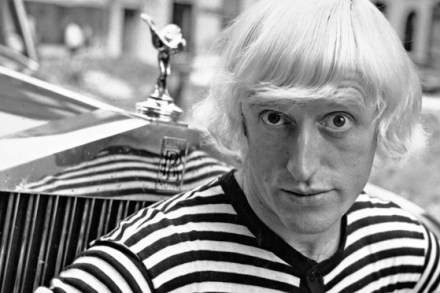
So who knew about Jimmy Savile? Dame Janet Smith discloses that no fewer than 107 staff had heard rumours about his predatory behaviour. Some thought he was a paedophile; some even believed that Savile was a necrophiliac. But whilst 'rumours and stories' within the BBC about Savile were rife, the Dame Janet Smith inquiry found that many within the corporation were simply content with laughing them off. A leaked extract from the inquiry report found: Most of those who heard rumours about Savile's sexual life did not appear to have been shocked by them. Many seem to have regarded them as amusing...The rumour most generally heard in the BBC was that Savile was sexually attracted to young girls. Only a few heard that he was attracted to young boys.

Savile report: Culture of fear at BBC worse today than in Jimmy Savile’s day

Dame Janet Smith’s draft report into Jimmy Savile's sexual abuse at the BBC has leaked to ExaroNews, and her words are pretty explosive. She condemns the BBC's 'above the law' managers and 'untouchable stars' she says. Girls at Top of the Pops were exposed to moral danger. But, perhaps most worryingly, she finds that the culture of fear persists today. In this vast bureaucracy, employees are still afraid to speak up against wrongdoing. She says:  'It is still clear from the evidence that there is still a widespread reluctance to complain about anything or even for it to be known that one has complained to a third party.