Tom Goodenough

Tom Goodenough

Tom Goodenough is online editor of The Spectator.

Coffee House shots: What’s next for the Brexit campaign?

The EU referendum rumbles ever closer but after a bad week for the leave campaign following Barack Obama's controversial intervention can those calling for Brexit fight back? And is Nicky Morgan staging a climbdown over Tory plans for academies? Spectator editor Fraser Nelson speaks to James Forsyth and Isabel Hardman about what this week holds. Speaking on today's Coffee House podcast, Isabel says those calling for Brexit must now find a way of calming peoples' fears about what life outside the EU would look like. She says: 'I think it was definitely a much better week for remain than for leave because you had the most powerful man in the world making an intervention on the remain side.
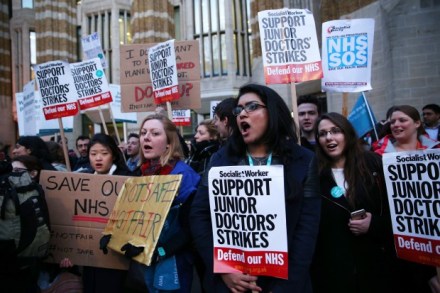
Jeremy Hunt steps up war of words with junior doctors ahead of strike

Now that Jeremy Hunt has rejected a proposed cross-party pilot scheme for new junior doctors' contracts it seems this week's strike looks certain to go ahead. The industrial action is due to start tomorrow morning and junior doctors will walk out again on Wednesday, but the war of words for this week has already begun in earnest. The Health Secretary has fired the opening salvo in his letter to Dr Mark Porter. Hunt said the strike: ‘…seriously risks the safety of many who depend on the NHS’ Dr Porter, the BMA council chair, has been on Today defending the industrial action which will see junior doctors walking out and not providing emergency care for the first time in this dispute so far.

The Spectator podcast: Obama’s Brexit overreach

To subscribe to The Spectator’s weekly podcast, for free, visit the iTunes store or click here for our RSS feed. Alternatively, you can follow us on SoundCloud. Is Barack Obama’s intervention in the Brexit debate a welcome one or should he keep his nose out of our business? Tim Montgomerie says in his Spectator cover piece that such overreach is typical of the US President’s arrogance. But Anne Applebaum disagrees and says that Obama speaks on behalf of many Americans when he calls on Britain to stay engaged in European politics. So should we listen to Obama? Joining Isabel Hardman to discuss is Spectator deputy editor Freddy Gray and the Telegraph’s Janet Daley.

Coffee House Podcast: Barack Obama’s Brexit intervention

Barack Obama has waded into the Brexit debate but should he be lecturing us about the EU referendum? On this special edition of the Coffee House podcast, Spectator editor Fraser Nelson is joined by Isabel Hardman and James Forsyth to discuss whether the President's intervention is a welcome one and whether it will actually work. On the podcast, Isabel Hardman says: 'I think the out campaign is certainly hoping that Barack Obama will be seen to be patronising British voters and patronising Britain suggesting that it is a sort of weak nation. And I think also the idea of foreign governments lecturing voters on what they should do in their referendum is certainly something the out campaign will look to exploit.

Obama tells Britain: EU membership makes you stand taller on the world stage

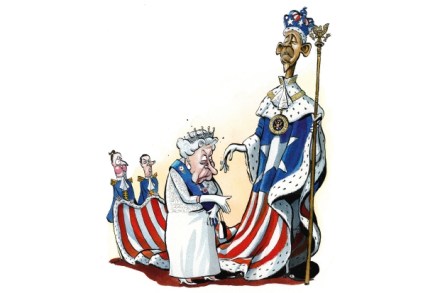
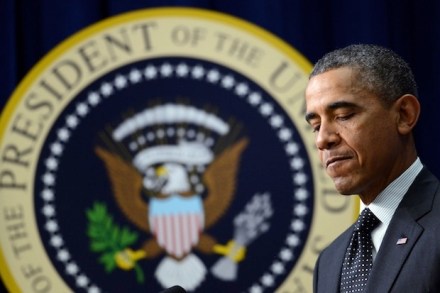
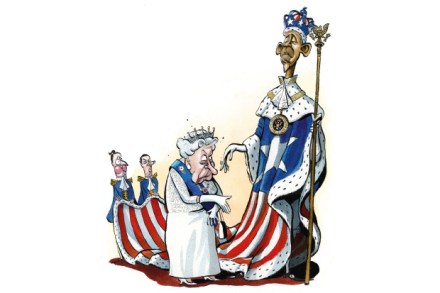
In agreeing to visit the UK midway through an election campaign, Barack Obama guaranteed controversy. As Tim Montgomerie makes clear in his Spectator cover piece this week, many Eurosceptics are angry at the thought of listening to a President with a clear track record of foreign policy failures. Boris Johnson, writing in The Sun this morning, was brimming with the zeal of a convert to the Brexit cause and borrowing from Obama's trademark. He wrote: 'Can we take back control of our borders and our money and our system of Government? Yes we can.' But now Obama has arrived, what is his actual argument for urging Brits to remain in the EU?

The Spectator podcast: Obama’s Brexit overreach

To subscribe to The Spectator’s weekly podcast, for free, visit the iTunes store or click here for our RSS feed. Alternatively, you can follow us on SoundCloud. Is Barack Obama's intervention in the Brexit debate a welcome one or should he keep his nose out of our business? Tim Montgomerie says in his Spectator cover piece that such overreach is typical of the US President's arrogance. But Anne Applebaum disagrees and says that Obama speaks on behalf of many Americans when he calls on Britain to stay engaged in European politics. So should we listen to Obama? Joining Isabel Hardman to discuss is Spectator deputy editor Freddy Gray and the Telegraph's Janet Daley. Speaking on the podcast, Janet Daley says: 'He is perfectly entitled to have a view and he should express it at home.

Clinton and Trump triumph in New York: What happens now?

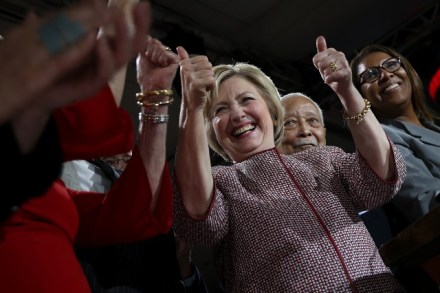
It’s no real surprise that Donald Trump and Hillary Clinton have both secured victory in New York overnight and the only real question was what margin they would win by. With most of the votes now counted, it looks to have been convincing in both cases: Trump got more than 60 per cent of the vote whilst Hillary Clinton got around 58 per cent. Primaries like these are the kind that both Trump and Clinton would wish could be replicated over the whole of America. The sense of belonging needed to get voters on side was there automatically for Trump in his home state and also for Hillary as New York’s former senator. Neither Ted Cruz nor Bernie Sanders really stood a chance but that didn’t stop the two winners from talking up the significance of their victories.

Mark Carney wades into Brexit debate again

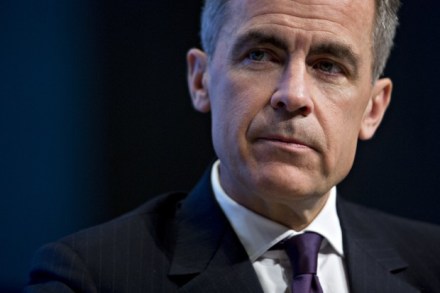
Whatever might be said about the Governor of the Bank of England, it's hard to fault his persistence. Mark Carney has made a habit of wading into the debate surrounding the EU referendum. And based on his appearance in front of the Lords Economic Affairs Committee this afternoon, he isn't planning on stopping any time soon. Carney repeated the MPC's warnings about the 'threats' from the forthcoming referendum being 'the most significant near-term domestic risk to financial stability'.

Today in audio: Gove’s case for Brexit

Michael Gove has been making his case for Brexit and doing his best to knock the stuffing out of the 'remain' campaign. He started the day on the Today programme, spelling out why he thought Britain was best off outside the EU. In his pitch to the nation, he said: 'I want us to vote to leave the European Union before it's too late, because that's the safer choice for Britain. If we vote to stay, we're not settling for a secure status quo, we're voting to be hostages, locked in the back of the car, driven headlong towards deeper EU integration.' The Justice Secretary then gave a speech later in the day in which he put forward in greater detail why he thought the opposite side in the EU debate are treating the electorate like children.

The danger of Michael Gove’s vague optimism

After yesterday’s furore over Treasury warnings about exactly what Brexit will cost British families, today it’s Michael Gove’s turn to hit back. The Justice Secretary is set to accuse the Government of ‘treating voters like children who can be frightened into obedience’. It’s extraordinary just how quickly the war of words seems to be intensifying, given that there are still more than nine weeks to go until the actual referendum. But is there a danger that all this noise is just going to switch off voters to the actual arguments being made? Michael Gove did his best this morning to make a clear-cut case for ditching the EU after being given three minutes on the Today programme to argue for Brexit.

Today in audio: Osborne slammed over ‘absurd’ Brexit warning

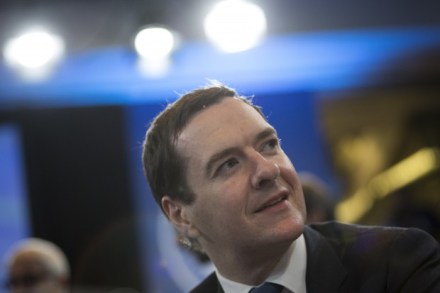
George Osborne's warning over what Brexit will cost the UK economy has dominated the headlines for much of the day. But how have the Treasury figures gone down in Westminster? Based on the number of Tory MPs queuing up to slam the Chancellor's claims, it would seem not very well at all: Kwasi Kwarteng said he thought the figures were 'absurd'. He attacked the Treasury as an organisation not qualified to make predictions about economic outcomes following its failure to predict the 2008 credit crunch: John Redwood also used the same word to describe his disdain for the warning that Brexit would cost British families £4,300. He said the predictions for what will happen in 2030 were 'completely worthless'.

The Coffee House podcast: George Osborne’s Brexit warning

George Osborne has warned today that Brexit will cost each household in the UK around £4,500. The Chancellor also said leaving the EU would make Britain 'permanently poorer'. But is there any truth in Osborne's claims? In this Spectator Coffee House podcast, Fraser Nelson joins Isabel Hardman and James Forsyth to discuss the figures and whether the numbers add up. Speaking on the podcast, Isabel Hardman says the Treasury report shows a change in argument by the Government in making the case for staying in the EU: 'The really interesting thing about this is that George Osborne is doing this at all. He and his Tory colleagues at the start of this year thought that the EU referendum campaign would be about security and talking about the threat to Britain's national security of Brexit.

The Spectator podcast: tax vs sex

To subscribe to The Spectator's weekly podcast, for free, visit the iTunes store or follow us on SoundCloud. After the row over tax returns, are political scandals not what they used to be? Richard Littlejohn asks in his Spectator cover piece this week whether we’ve come a long way from the days of Christine Keeler and the Profumo Affair. Have we forgotten what a scandal is really about? Isabel Hardman is joined by Matthew Parris, author of Great Parliamentary Scandals, to discuss. As he puts it:- For quite a long time, sex was very delicious. I think we're beginning to find tax and financial matters delicious too.

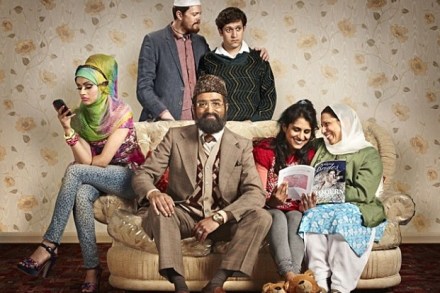
The BBC sitcom Citizen Khan isn’t Islamophobic – it’s just idiotic

If you've never watched ‘Citizen Khan’, then count yourself lucky. It’s a sitcom in the loosest sense of the word and a prime example of a comedy show which would only ever appear on the BBC: achingly unfunny, contrived and featuring entirely unbelievable characters. Crucially, though, if the show is one thing, it’s politically correct, in that it centres around a family of Muslims living in a deprived part of Birmingham. But Labour's Rupa Huq has decided otherwise.

Why Obama’s Brexit intervention will matter whether we like it or not

It now looks likely that Barack Obama’s visit to London next week will see the President calling on Britain to stay in the EU. We’re told that Obama will be giving his views as a ‘friend’ and only if he’s asked about Brexit. Nothing sounds more patronising. And as Jacob Rees-Mogg has said, why should we listen to a President who hasn’t been very good? But the truth is that, whether we like it or not, Obama’s intervention could be key. Whatever many think of the President and the collective failures and disappointments of his time in office, Obama is still loved amongst the group of younger voters in Britain who could swing the EU referendum for the remain campaign.

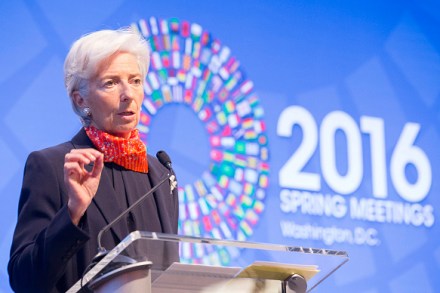
Could the IMF’s Brexit warning swing it for Remain?

The IMF has published one of the starkest warnings so far against Brexit from an organisation based outside of Britain. The latest set of figures from the International Monetary Fund predict that there will be a 0.3 percentage point dip in Britain’s growth forecast this year, as a result of the referendum. And the IMF warned that if Britain did vote to leave the EU, it could lead to ‘severe regional and global damage’. Both sides have used the statement to exchange in the latest round of tit-for-tat. George Osborne has said ‘for the first time, we’re seeing the direct impact on our economy of the risks of leaving the EU.

Today in audio: PM branded ‘dodgy Dave’ as tax row rumbles on

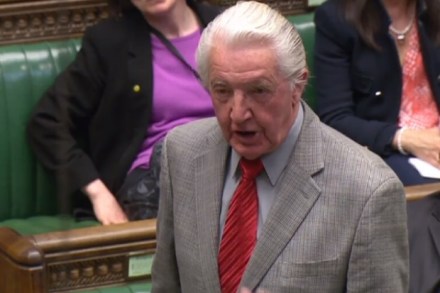
David Cameron has been defending himself in the Commons following the publication of his tax return. He said he found some of the comments about his father 'deeply hurtful'. He also held his hands up for not responding to criticism sooner following last week's Panama papers controversy: One of the more personal jibes thrown at him in the chamber came from Dennis Skinner, who branded the PM 'dodgy Dave' in a remark which got him booted out of the Commons: Jeremy Corbyn was more measured in his response to David Cameron, but he still used the debate to say there was 'one rule for the super-rich and another for the rest': Whilst George Osborne - who along with the Labour leader also released his tax return today - took the opportunity to lash out at the opposition.

Osborne and Corbyn publish their tax returns – but are they any more interesting than the PMs?

George Osborne and Jeremy Corbyn have now both followed in the Prime Minister's footsteps by publishing details of their tax returns. As James Forsyth said on our Spectator podcast earlier today, it was just a matter of time before the Chancellor and Labour leader bowed down to pressure. But what do the two documents actually tell us? The simple answer is that Osborne and Corbyn's tax returns make for even less interesting reading than David Cameron's. Properly speaking, Osborne's isn't even a tax return at all but rather a summary of the main bits. It shows his earnings as Chancellor; it also appears to show that he isn't putting any money in an Isa if the £3 in interest he earned last year is anything to go by.

The Coffee House podcast: David Cameron’s tax headache

David Cameron has bowed down to pressure by publishing his tax return and now the Chancellor has done the same. But where will the calls for financial transparency end? And how did this issue blow up into such a big political row? Spectator editor Fraser Nelson joins Isabel Hardman and James Forsyth to talk about the Prime Minister's tax headache. Speaking on the podcast, James Forsyth says the whole topic shows Downing Street is so fixated on Europe that it has taken an eye off the ball. He tells Fraser: 'I think what is going on is this: Europe is totally and utterly distracting Downing Street from everything else. This referendum means Downing Street can't think about anything else and it can't think straight: it is seeing conspiracies in the shadows everywhere'.

‘Cameron comes clean’: Newspapers savage PM after offshore tax confession

This morning's newspapers were never going to make enjoyable reading for the Prime Minister following his admission yesterday that he owned shares in an offshore trust. But David Cameron may still not have been quite prepared for the focus with which the headlines go after him. He has experienced bad newspaper headlines before, of course, but this is the first time the attacks have focused so specifically on him, rather than on a policy introduced by the Government. It's hard to feel sorry for Cameron, though. By dragging the story out with statements that raised more questions than they answered, he only has himself to blame for whipping this up into the media storm which we see on today's front pages.