Tim Shipman

Tim Shipman

Tim Shipman is political editor of The Spectator.

Burnham’s BIG blunder

From our UK edition

18 min listen

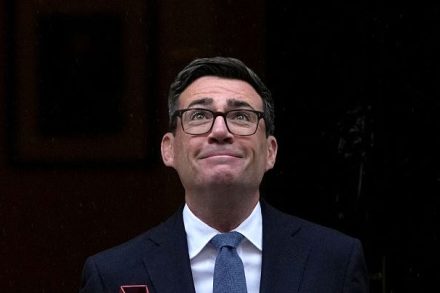
It's only Burnham's second PMQs and he's already dropped a clanger. He may have handed the Conservatives their next election slogan after declaring that ‘national security cannot come at the expense of social security’. Has the Prime Minister exposed the fault line at the heart of his government? Noa Hoffman is joined by Isabel Hardman and Tim Shipman to discuss Burnham’s approach to welfare and defence, his increasingly ideological foreign policy – and whether his promise of hope and consensus can survive contact with political reality. Produced by Oscar Edmondson.
Meet the most powerful woman in Britain

From our UK edition

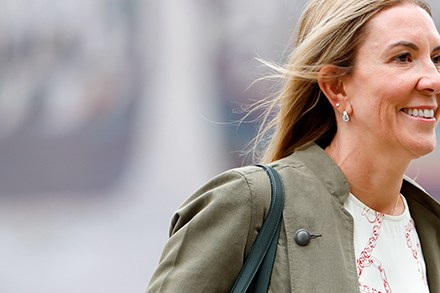
Some years ago Antonia Romeo, now the Cabinet Secretary, was stuck in a boring meeting about civil service reform. She regarded the plan as inadequate to create the leaner, meaner machine she hoped to see. ‘Basically you’ve given me a Ford, when I’m more of a Ferrari girl.’ It was a moment which summed up the official who is now accruing arguably more power than any of her predecessors. Romeo is glamorous, suspiciously racy and likes to move fast towards her goals. When Andy Burnham became Prime Minister she secured a seat in the Prime Minister’s outer office, the first time a cabinet secretary has ever sat there. She has written her own job description (signed off by Keir Starmer and now Burnham).

‘Andy Burnham did the Tories a huge favour’ | Sir Malcolm Rifkind

From our UK edition

29 min listen

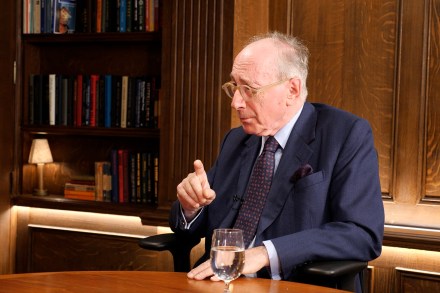
Sir Malcolm Rifkind joins Tim Shipman and James Heale to discuss the future of the conservatism and tells The Spectator why Kemi Badenoch is the person to bring the Conservative Party back from the brink. He explains why he thinks Reform is already losing momentum, why Nigel Farage is ‘not fit to govern’, and why Andy Burnham could actually help the Conservatives at the next election. He also reflects on Britain’s relationship with Israel and the United States, criticises Labour’s approach to sanctions on Israel, and gives his verdict on Donald Trump second term. Produced by Oscar Edmondson and Abigail Brierley.

LIVE | Reform conference round-up – everything you need to know

From our UK edition

23 min listen

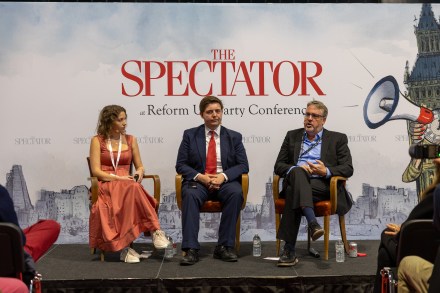
Noa Hoffman, James Heale and Tim Shipman host a special live recording of Coffee House Shots from Reform conference. They discuss whether a damaging 48 hours for the party have breached the walls of Birmingham’s NEC, whether Nigel Farage can weather serious questions over Reform’s funding, and whether Zia Yusuf should throw his phone in the nearest river and get off Twitter. Produced by Oscar Edmondson, Henry Lloyd and The Spectator’s events team.

The five takeaways from Reform’s conference

From our UK edition

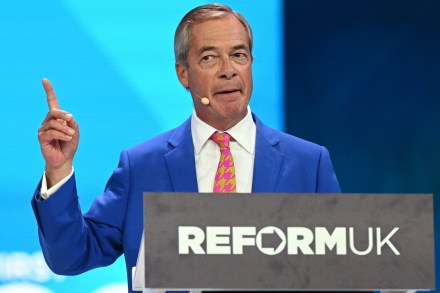
1) THE SPEECH Nigel Farage has made his big speech to Reform’s party conference in Birmingham this evening. It was a bravura display which had his army of supporters in raptures. ‘I believe there will be an election next year’, Farage said, demanding a vote and branding Burnham ‘the Messiah without a mandate’. ‘We will fight to win,’ he said. If he wins power, Farage pledged: ‘We will stop the boats within 100 days of a Reform government. End of.’ Slash benefits spending by £50 billion. Cut taxes on working people ‘in a radical way’. Cut energy bills by £250 ‘and end the net zero lunacy’. Stop judges leaning on the European Convention on Human Rights. Boost NHS training to produce more home-grown nurses and doctors.

Reform is a party in crisis

Deputy heads have rolled. Reform UK, in the person of chairman Lee Anderson, announced this morning that Dan Jukes, Nigel Farage’s right hand man, and James Orr, the party’s head of strategy, have stood down and abandoned the party conference. ‘They have left the building and they won’t be coming back,’ Anderson said. Footage screened by Channel 4 on Thursday night showed Jukes appearing to suggest a way to get around electoral law to secure a foreign donation of £500,000. A reporter posed as a UK-based son of an American father, who was to give money to the son to give to Reform after being wooed by both Orr and Jukes. Electoral law sets out that to be a permissible donor to a UK political party you must be a UK registered voter, or a company registered in the UK.

Has Reform UK lost its magic? – and why Middlesbrough’s young men don’t care

Has Reform UK lost its magic? – and why Middlesbrough’s young men don’t care

From our UK edition

34 min listen

Lara Prendergast is joined by The Spectator’s political editor Tim Shipman, columnist and journalist Melanie McDonagh, and the Daily Mail’s parliamentary sketchwriter Quentin Letts. This week: has Reform UK lost its magic? Ahead of the party’s conference, Tim reveals its plans for the first 100 days of a Reform government – and asks whether Nigel Farage can persuade voters that his party is ready to govern after a turbulent summer. Also: what is happening in Middlesbrough? The panel discuss rising gang violence, the decline of visible policing and a generation of young men who appear increasingly indifferent to the law. Is social breakdown to blame – or has Britain simply lost its respect for authority? Plus: what can Britain learn from Norway’s royals?

Politics returns: Tories reshuffle & Starmer slopes off

From our UK edition

13 min listen

Politics is back – and it’s a bumper day in Westminster. Kemi Badenoch got ahead of the field yesterday by reshuffling her top team a day earlier than expected, and the changes are much more comprehensive than first thought. James Cleverly is off to run for the London mayoralty, while Priti Patel and Mel Stride have both been given the boot. Katie Lam takes over Cleverly’s housing brief, while Andrew Griffith will hope to bring some much-needed energy to the role of shadow chancellor. So what does the reshuffle tell us about Badenoch’s strategy – and what does it mean for the Tories’ economic offer? Elsewhere, Keir Starmer has resigned as an MP.

This year’s silly season has turned sinister

From our UK edition

There’s a great scene in The West Wing where the White House is engulfed by a crisis in the Middle East and President Bartlet’s daughter, Ellie, is learning about the region at school. Her teacher, Mr Pordy, asks why there has always been conflict in the Middle East and she gives a response stressing the centuries-old conflicts over land and culture. Bartlet quotes her teacher as telling the class: ‘No. It’s because it’s incredibly hot and there’s no water.’ August is always the silly season, but this one has been sinister too At times over the past few weeks it has seemed as if the best explanation for the heated exchanges raging across the political spectrum is the historic heatwave.

Does anyone in Burnham’s government understand economics?

From our UK edition

10 min listen

There’s more gloomy economic news for Andy Burnham as unemployment disappoints, inflation rises and the public finances take another hit. With welfare spending and debt interest climbing, how much room does the government really have to deliver on its promises? Meanwhile, Burnham has pledged to be the ‘cost of living’ Prime Minister – but one Treasury insider tells Michael Simmons that there is ‘not a single special adviser in this government who understands economics’. Is optimism in No. 10 about to collide with economic reality? James Heale, Tim Shipman and Michael Simmons discuss. Produced by Oscar Edmondson.
Maureen Lipman on Britain’s anti-Semitism crisis – and has the West lost the will to defend itself?

Maureen Lipman on Britain’s anti-Semitism crisis – and has the West lost the will to defend itself?

From our UK edition

45 min listen

William Moore is joined by The Spectator’s political editor Tim Shipman, commissioning editor Tali Fraser and actress Maureen Lipman. This week: has the West lost the will to defend itself? The panel discuss the threats posed by China, Russia and Islamism – and whether Western societies have become too reluctant to defend their own values. Maureen also warns about the rise of antisemitism, arguing that universities are ‘grooming’ a generation of anti-Semites. Also: Tali reports back from a screening of Chris Packham’s People’s Emergency Briefing. Has environmental campaigning become too patronising – and are politicians forcing through policies they have failed to persuade the public to support? Plus: can James Bond survive modern Britain?

Zia vs Shippers – and Sue Gray breaks her silence

From our UK edition

15 min listen

It continues – thankfully – to be an interesting summer: there’s devolution news, Reform taking lumps out of each other and Sue Gray has broken her silence. But first, Andy Burnham is shifting the machinery of government north, promising to put growth at the heart of his new Manchester operation. Will moving power out of Whitehall actually make a difference? Elsewhere, tensions inside Reform spill into the open as Zia Yusuf takes aim at Shippers over his latest Spectator column. Oscar Edmondson, Tim Shipman and James Heale discuss.

Revealed: the feuding at the heart of Reform

If Tolstoy had written about British politics, he might have noted: ‘Happy parties are all alike; every unhappy party is unhappy in its own way.’ Reform UK is beginning to resemble a laboratory test for the idea that every party run by Nigel Farage is unhappy in the same way. Just as in Ukip and the Brexit party, a highly dominant leader exists at the centre of a court, with extreme tensions between loyalist long marchers and arrivistes, between insurgency and respectability, between campaigning and preparing for government. On Monday a new round of bloodletting erupted, when the founder of ConservativeHome, Tim Montgomerie, who defected to Reform two years ago, was suspended following his public criticism of Farage and the home affairs spokesman Zia Yusuf.

Reform suspends Tim Montgomerie after Spectator interview

From our UK edition

After saying that Zia Yusuf needed to 'become a team player' in an interview on Coffee House yesterday, Reform UK responded, and decided that they would rather Tim Montgomerie were not in their squad at all. After the story broke this morning that Montgomerie had his membership of the party suspended, Noa Hoffman is joined by Tim Shipman and James Heale to react to the latest developments on the right of British politics.

EXCLUSIVE | ‘Zia needs to be a team player’ – Tim Montgomerie

From our UK edition

Reform UK's Zia Yusuf spent last week putting a few noses out of joint, not least by calling the former Conservative defence secretary, Sir Ben Wallace, a traitor, a tweet Nigel Farage took the unusual step of criticising in public and which Yusuf declined to take down. Tim Shipman and James Heale are joined by Tim Montgomerie, founder of Conservative Home and now a Reform UK member, to ask whether Farage has fallen out of love with his home affairs spokesman. In another exclusive for The Spectator, Montgomerie also announces the upcoming launch of 900 Days, the publication he is launching as a new independent online home for Reform UK.

Tim Shipman, Arabella Byrne, Alex Burghart & Lloyd Evans

From our UK edition

21 min listen

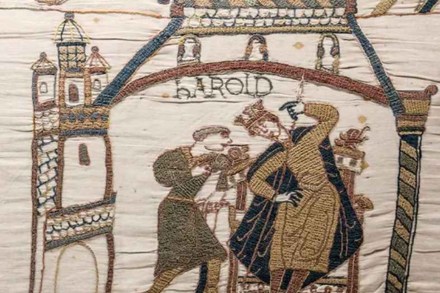
On this week’s Spectator Out Loud: Tim Shipman argues that politicians’ contempt for the press is really contempt for the public; Arabella Byrne asks if you have old money face; Alex Burghart says that Harold Godwinson has a touch of the Viking about him, as he reviews Harold: Warrior King by Tom Licence; and finally, Lloyd Evans reads his confessions of a dog hater. Produced and presented by Patrick Gibbons.

Tim Shipman, Arabella Byrne, Alex Burghart & Lloyd Evans

Five things we learned from the Clacton by-election

From our UK edition

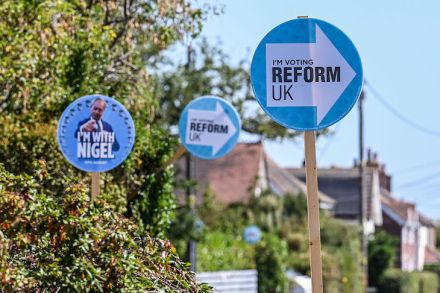
1) Nigel Farage is king of Clacton The Reform UK leader won the oddest by-election in UK political history. His margin of victory was that usually secured by an Iranian hardliner – 63 per cent of the vote – rather than the full North Korean or Saddam Hussein 99 per cent. Reform will be pretty happy with that as anything over 60 per cent was going to be a very healthy margin of victory.  The turnout also shows this was not a trick of the light. Forty-four per cent is very healthy in a by-election, particularly one which was not a contest, since it can easily fall to 25-30 per cent away from a general election.  Farage’s team is also pleased that his total number of votes, 22,239, was 1,014 more than he secured at the general election in 2024.

Farage beats the bin!

Farage beats the bin!

From our UK edition

15 min listen

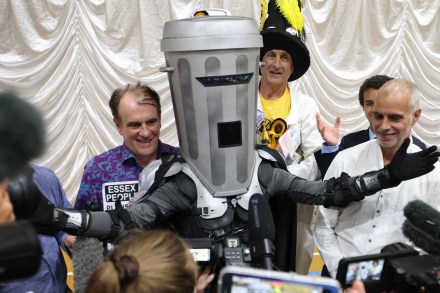
Shock horror: Nigel Farage has won the by-election in Clacton. Although you may be shocked by the scale of the victory. The Reform leader received 22,239 votes – 1,000 more than his total at the 2024 general election. His main rival, Count Binface – the ‘uniparty candidate’ as Farage says – secured a respectable 9,455 votes, a 26.7 per cent share. Turnout stood at 44.37 per cent, the constituency’s lowest since 2010, but still pretty good for a by-election and such an unusual one at that. But the big questions remains: did Farage get what he wanted out of this by-election? Or is this the farcical end to an undignified episode in British politics? Oscar Edmondson, Tim Shipman and Noa Hoffman discuss. Produced by Oscar Edmondson.
‘This is not a war!’ – why politicians are turning on the media | with Gabriel Pogrund

From our UK edition

18 min listen

Politicians are increasingly turning on the journalists who scrutinise them. After investigations into Nigel Farage’s finances, Reform figures have accused reporters of waging a political ‘war’ – while Arron Banks has hired private investigators to look into Times journalist Gabriel Pogrund. Is hostility towards the media becoming a feature of modern politics? And is the relationship between politicians and the press becoming more poisonous? Gabriel joins Oscar Edmondson and Tim Shipman, who writes for the magazine this week about the fraying contract between society and its fourth estate. Produced by Oscar Edmondson.
‘This is not a war!’ – why politicians are turning on the media | with Gabriel Pogrund