Tim Shipman

Tim Shipman

Tim Shipman is political editor of The Spectator.

Reform conference review: is this ‘British MAGA’?

From our UK edition

16 min listen

Reform UK’s annual conference wrapped up this weekend – and it was anything but dull. From Andrea Jenkyns belting out her original song ‘I’m an Insomniac’ on stage to Nigel Farage trying to keep a sometimes chaotic movement united, the mood was more rally than conference. Despite the optimism in the room, there were obvious cracks under the surface: mainly, do Reform have enough experience in their ranks for the business of serious government? On Coffee House Shots, Oscar Edmondson is joined by Tim Shipman and James Heale fresh from the conference floor.

The red reshuffle overshadows Reform

From our UK edition

14 min listen

Lucy Dunn catches up with Tim Shipman at Reform's party conference, taking place in Birmingham, to get his reaction to Labour's reshuffle. The reshuffle took place following Angela Rayner's resignation from government. Tim argues that it's clear the reshuffle centred around getting Shabana Mahmood into the Home Office, where she can tackle some of the biggest issues for Labour – small boats and asylum hotels. They also round up the goings on at Reform including leader Nigel Farage's speech, who claimed Labour's reshuffle proved an election could be sooner than we think... Produced by Patrick Gibbons and Megan McElroy.

Reaction from Reform as Rayner resigns

From our UK edition

17 min listen

Angela Rayner has resigned following the ethics probe into her tax affairs. What impact will this have on Starmer's government? And does this hinder her chances of succeeding Starmer one day? The Coffee House Shots team react live from day one of the Reform party conference, which is taking place in Birmingham. What's the mood in the conference hall? And, after Nadine Dorries joined Reform last night, could more former Conservatives follow? Produced by Patrick Gibbons and Megan McElroy.

Tim Shipman, Colin Freeman, Rachel Clarke, Michael Gove & Melanie Ferbreach

From our UK edition

40 min listen

On this week’s Spectator Out Loud: Tim Shipman interviews shadow justice secretary Robert Jenrick (plus – Tim explains the significance of Jenrick’s arguments in a special introduction); Colin Freeman wonders why the defenders of Ukraine have been abandoned; Rachel Clarke reviews Liam Shaw and explains the urgency needed to find new antibiotics; Michael Gove reviews Tom McTague and ponders the path that led to the UK voting to leave the EU; and, Melanie Ferbreach provides her notes on made-up language. Produced and presented by Patrick Gibbons.

The scale of Nigel Farage’s ambition

From our UK edition

When Nigel Farage stands up this afternoon to deliver his speech to Reform UK’s annual conference in Birmingham he will do so for the first time as a potential prime minister. His message to the 7,000 delegates gathered at the NEC will be that they need to prepare for a general election as early as 2027. One cloud looms over Farage’s funfair today Labour would not have to call an election until 2029, but Farage believes the state of the economy and the emergence of new parties means the government could collapse before that. With Rachel Reeves facing a black hole of anything up to about £40 billion in the public finances, Reform’s leader does not think November’s budget will adequately deal with the UK’s economic problems.

Reform’s camp following, masculine rage & why do people make up languages?

From our UK edition

51 min listen

First: Reform is naff – and that’s why people like it Gareth Roberts warns this week that ‘the Overton window is shifting’ but in a very unexpected way. Nigel Farage is ahead in the polls – not only because his party is ‘bracingly right-wing’, but ‘because Reform is camp’. Farage offers what Britain wants: ‘a cheeky, up-yours, never-mind-the-knockers revolt against our agonisingly earnest political masters’. ‘From Farage on down,’ Roberts argues, ‘there is a glorious kind of naffness’ to Reform: daytime-TV aesthetics, ‘bargain-basement’ celebrities and big-breasted local councillors. ‘The progressive activists thought they could win the culture war simply by saying they had won it’, but ‘the John Bulls and Greasy Joans are stirring again’.

Can Rayner survive tax row?

From our UK edition

16 min listen

24 hours after Angela Rayner admitted underpaying tax, the pressure remains on the deputy prime minister as Westminster now waits the outcome of the probe by the Prime Minister’s standards adviser. The Spectator’s political editor Tim Shipman and the Sunday Times’s Whitehall editor Gabriel Pogrund join Patrick Gibbons to discuss whether Rayner can retain her briefs. As Gabriel points out, regardless of the outcome of the ethics probe, Rayner was seen as Labour’s ‘sleaze-buster in chief’. So how damaging is this to ‘brand Ang’? Produced by Patrick Gibbons.

Robert Jenrick: ‘Asylum seekers should be detained in camps’

From our UK edition

On a table in Robert Jenrick’s parliamentary office lies the first part of Ronald Hutton’s biography of Oliver Cromwell, a conventional MP who became radicalised by events and usurped a monarch. The shadow justice secretary is very on message when it comes to the prospect of regicide in the Conservative party (‘I’m just doing my job. Kemi is the leader’). But as one who recently travelled to Calais to berate the French authorities for facilitating Channel small boat crossings, Jenrick has found unlikely inspiration in another bloody-minded leader. ‘I’ve been reading biographies of de Gaulle over the summer and he had a line that “Treaties are like roses, they last as long as they last”. I think that’s where we are.

‘He’s like a passive-aggressive Gordon Brown’: inside Keir Starmer’s No.10 reshuffle

From our UK edition

Isaac Levido, the Tory election strategist who helped secure Boris Johnson’s landslide victory in 2019 and saved the Tories from oblivion in 2024, says (with the wisdom of grim experience) that ‘politicians are confidence players’. They perform best when their tails are up. In 2019 he had a candidate with his tail up who took the public with him. In 2024, in Rishi Sunak, he had a leader who had suffered a major crisis of confidence and projected a self-fulfilling air of doom. This eternal truth is likely to be reinforced on Saturday when Nigel Farage takes to the stage in Birmingham for the first party conference speech he has given as a potential prime minister.

PMQs: Rayner defended as Badenoch flops

From our UK edition

17 min listen

Keir Starmer and Kemi Badenoch faced off in the first Prime Minister’s Questions following summer recess. With the date of the Budget announced that morning, the economy was expected to dominate – which it did, to the surprise of most MPs, who expected Badenoch to attack over the Angela Rayner tax row. The deputy prime minister had admitted that morning she underpaid stamp duty on her flat in Hove. The leader of the opposition did question Starmer on it initially, but as political editor Tim Shipman says she more than missed an open goal. Tim joins Isabel Hardman and Lucy Dunn to discuss how damaging the row is for Rayner – and how damaging PMQs was for Badenoch. Produced by Patrick Gibbons.

Asylum reform: is Labour bold enough?

From our UK edition

18 min listen

Danny Shaw and Tim Shipman join Lucy Dunn for today's Coffee House Shots to talk about the government's reforms to the asylum system. Having worked with Yvette Cooper before, Danny argues that the reforms are a great approach for a long-term solution – but he worries that they are not bold enough for the public mood. Is Labour putting procedure above politics? And, with the migrant hotel issue bubbling under the surface, is the public's patience wearing thin? Plus: as Zack Polanski is elected leader of the Green Party, is Labour about to be out-flanked by two radical populists to its left? The Greens and Jeremy Corbyn's new party could now pose as much of a threat on the left, as Nigel Farage's Reform is doing on the right. Produced by Patrick Gibbons.

Labour’s transfer deadline day

From our UK edition

17 min listen

The summer transfer window comes to a close today but, as Parliament also returns from summer recess today, the only team Keir Starmer is focused on is his own in Number Ten. The Prime Minister has decided to reshuffle his advisers, including bringing in Darren Jones MP to Number Ten from the Treasury. Political editor Tim Shipman and James Kirkup, a partner at Apella Advisors and senior fellow at the Social Market Foundation, join economics editor Michael Simmons to go through the moves. Will yet another change in advisers boost Labour's fortunes? Or are they doomed to relegation? Produced by Patrick Gibbons and Natasha Feroze.

Does European solidarity over Ukraine matter?

From our UK edition

14 min listen

Ukraine's President Zelensky has spent today with Keir Starmer at Number 10. This is in anticipation of tomorrow's Alaska summit between Presidents Trump and Putin – where European leaders will be notably absent. Zelensky's visit to the UK is designed to project an image of solidarity with Starmer, and European leaders in general – but does it really matter? And is Putin really closer to accepting a ceasefire? Tim Shipman and James Heale join Lucy Dunn to discuss Plus – Tim talks about his article in the magazine this week, for which he spoke to George Finch, the 19 year old Reform councillor who is leader of Warwickshire County Council.

Can Reform beat the blob?

From our UK edition

Shortly after he was elected as Britain’s youngest council leader last month, 19-year-old George Finch of Reform UK had a conversation with Monica Fogarty, the chief executive of Warwickshire county council, about which of them was really running the show. In Finch’s telling, this was a watershed moment: he offered a ‘professional working relationship’ but the relationship quickly soured. ‘I know you’re trying to get rid of me,’ Fogarty said, according to Finch. ‘Well, you can’t get rid of me. The way it works around here is: your councillors play ball.’ Finch allegedly replied: ‘Are you joking? You have to work with us. It’s not the other way around. We’ve been put here by the electorate. You haven’t.

Does MAGA prefer Jenrick?

From our UK edition

11 min listen

JD Vance has been in the Cotswolds this week on his Britain fantasy tour. This has been billed as a ‘holiday’ but he did take the time out of his busy schedule to meet with some of Britain’s right-wing politicians. Robert Jenrick, Chris Philp and Nigel Farage were all granted an audience with the vice-president, and even Danny Kruger and pillow salesman/Apprentice star Thomas Skinner got the call-up. The notable exclusion is, of course, Kemi Badenoch, who despite claiming to be firm friends with Vance was NFI’d. CCHQ claim this is due to scheduling, but clearly it’s an embarrassing snub. So who is MAGA’s favourite UK politician? And do the American right even care about what’s going on in Britain? James Heale speaks to Tim Shipman and Freddy Gray.

Introducing ‘Farage’s fillies’

From our UK edition

13 min listen

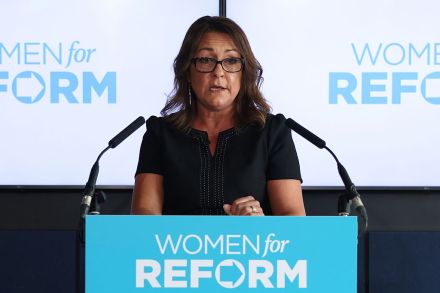
Another day, another Reform party press conference. Following political editor Tim Shipman’s cover piece on how Reform hopes to win over women, this morning’s event was led by the party’s top female politicians: MP Sarah Pochin, Greater Lincolnshire Mayor Dame Andrea Jenkyns, Westminster councillor Laila Cunningham, and Linden Kemkaran, the leader of Kent County Council. Nigel Farage was missing in action as Reform tried to make the case that they are not a one-man band or a ‘boys’ club’. Has Farage solved his women problem? Elsewhere, Kemi Badenoch is in Epping as she tries to wrestle the agenda away from Farage when it comes to asylum seekers and migration. But has she got anything different to say?

Motherland: how Reform is winning over women

From our UK edition

17 min listen

Does – or did – Nigel Farage have a woman problem? ‘Around me there’s always been a perception of a laddish culture,’ he tells political editor Tim Shipman, for the cover piece of the Spectator this week. In last year’s election, 58 per cent of Reform voters were men. But, Shipman argues, ‘that has begun to change’. According to More in Common, Reform has gained 14% among women, while Labour has lost 12%. ‘Women are ‘more likely than men… to worry that the country is broken.’ Many of Reform’s most recent victories have been by women: Andrea Jenkyns in the mayoral elections, Sarah Pochin to Parliament; plus, their most recent high profile defections include a former Tory Welsh Assembly member and a former Labour London councillor.

Kemi Badenoch’s God Delusion

From our UK edition

18 min listen

Conservative leader Kemi Badenoch has given a wide-ranging interview to the BBC’s Amol Rajan in which she touched upon her Nigerian upbringing, her feeling of identity and she even revealed she called out a peer for cheating at school. But perhaps her most interesting comments came when she revealed how she lost her belief in God. The Reverend Fergus Butler-Gallie, author of Twelve Churches, and Tim Shipman join Oscar Edmondson to discuss Kemi’s comments. Is it credible to call yourself a ‘cultural Christian’? And, with both an atheist Prime Minister and agnostic Leader of the Opposition, is the decline of religion in politics inevitable?

Reform’s motherland, Meloni’s Italian renaissance & the adults learning to swim

From our UK edition

46 min listen

First: Nigel Farage is winning over women Does – or did – Nigel Farage have a woman problem? ‘Around me there’s always been a perception of a laddish culture,’ he tells political editor Tim Shipman. In last year’s election, 58 per cent of Reform voters were men. But, Shipman argues, ‘that has begun to change’. According to More in Common, Reform has gained 14% among women, while Labour has lost 12%. ‘Women are ‘more likely than men… to worry that the country is broken.’ Many of Reform’s most recent victories have been by women: Andrea Jenkyns in the mayoral elections, Sarah Pochin to Parliament; plus, there most recent high profile defections include a former Tory Welsh Assembly member and a former Labour London councillor.

Motherland: how Farage is winning over women

From our UK edition

On the campaign trail in the Midlands ahead of May’s local elections, a journalist asked Nigel Farage: ‘Do you have a woman problem?’ The twice-married, twice-separated father of four laughed and said: ‘God, yes. I’ve had 40 years of it.’ His response was characteristic of Reform UK’s leader – a determination not to take things too seriously and a tacit acknowledgement that every political cause he has espoused has been more popular with men than women. ‘Around me there’s always been a perception of a laddish culture,’ he says. ‘Ukip was the rugby club on tour.’ In last year’s general election, 58 per cent of Reformvoters were men. Since May, when Reform seized 700 seats and ten councils, that has begun to change.