Tim Bale

Get a sense of humour: the Tories and coalition

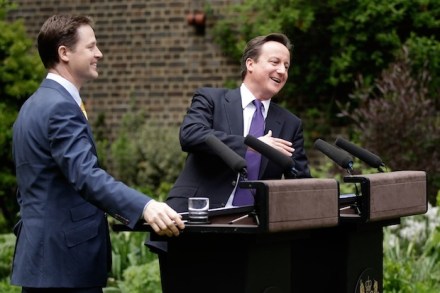
Like so many pundits before me, I had earnestly hoped never to begin a piece on coalitions by quoting Disraeli.  But since I was asked by Bright Blue and the Electoral Reform Society to join Mrs Bone’s husband, as well as Ms Hardman and Mr Oborne of this parish, on the Tory fringe in Manchester to discuss whether the country would ever love coalitions, it has sadly proved unavoidable.  I can only apologise. My answer to the question, in case you were interested, was that England might not learn to love coalitions but that, like Scotland and Wales before it, it has very quickly come to accept them and that, rather than being grudging, that acceptance was phlegmatic – ‘it is what it is’, ‘we are where we are’, etc., etc.
A hard rain’s a-gonna fall over Syria

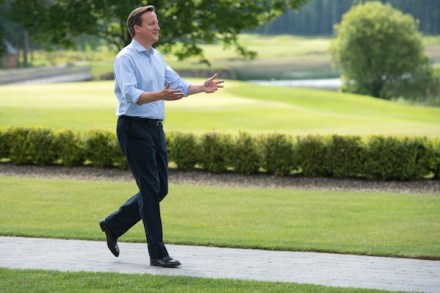
You know what it’s like. It starts getting hotter. Stickier, too. There’s something in the air you can’t quite put your finger on. But you sense it all the same. A storm is coming. David Cameron’s insistence – in the face of significant opposition from some of his parliamentary colleagues and possibly even more opposition significant from the king across the water, Boris Johnson – that something must be done in Syria is giving me that same feeling. This is exactly the kind of ‘exogenous shock’ that can blow up suddenly, blow coalitions apart and cost Prime Ministers their jobs. Academic observers generally try to avoid predictions, but that doesn’t stop us exploring the whys, the whens and the hows of politics.

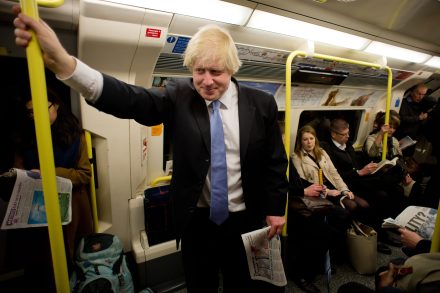
Why Boris will struggle to become PM

‘Just three months ago’, writes Tim Montgomerie in today’s Times (£), ‘it was almost fanciful to imagine Boris as a future leader.’ Notwithstanding today’s news, it still is. The idea that, unless David Cameron ‘finds an election game-changer, the party might very reluctantly reach for the blond-coloured nuclear button,’ is a great story. But, even if the rumours that the Mayor is planning to stand for Parliament again are true, securing the leadership of the Conservative Party is going to be very difficult indeed. Here’s why.

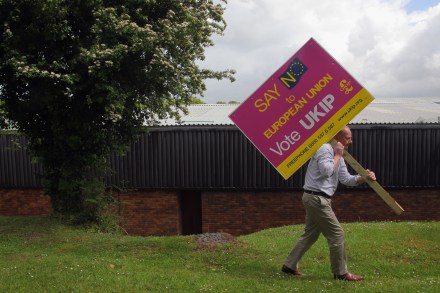
Right to reply: UKIP won’t prevent a Tory majority

All the recent chatter about UKIP being a big obstacle to a Tory majority in 2015 would be funny if it weren’t so sad. I’m never sure whether those who bring it up really believe it, or whether they’re just desperate to scare their fellow Conservatives into not swinging too far to the supposedly soggy centre. Either way, it simply won’t wash. Basically, the British electorate, like most electorates in advanced democracies, is like one big bell-curve. Most voters like to think of themselves as somewhere in or towards the middle, although there is of course a tail to either side. In PR systems, this tail can be big enough to give less centrist parties enough of niche to make it into parliament.