Thomas W. Hodgkinson

Thomas W. Hodgkinson is the author of How to be Cool.

Confused, unbalanced, brilliant: the Blanche Dubois of Tennessee Williams biographies

From our UK edition

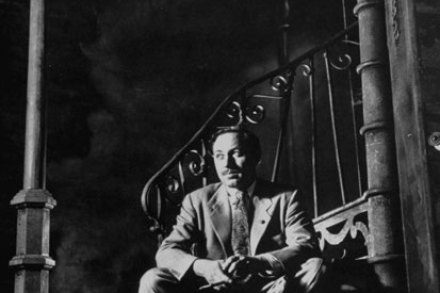
Anyone for Tennessee? At a best guess, the answer to that’s yes. There’s scarcely a moment these days when there isn’t a Williams play on somewhere in the West End or along the Great White Way. One reason for this is that he wrote such succulent roles, and I don’t mean just his steamroller leads, though for a kind of bruised or brittle actress, Blanche Dubois is as close to a female Hamlet as it gets. In A Streetcar Named Desire, there’s also the surly stud Stanley; Stella, his sex-drunk bride; and the courtly, perspiring Mitch, bewitched by Blanche’s blend of magic. Then think of The Glass Menagerie, which has the smothering mother Amanda, the crippled Laura, and the conflicted Tom, who abandons both to pursue his vocation as an author.

How dare this author trash one of the great screenwriters of the 20th century?

From our UK edition

Should one say ‘vicious circle’ or ‘vicious cycle’? That’s a question that just goes round and round inside my head. In the case of the American novelist and screenwriter William Goldman, he has always abhorred reviewers (‘whores and failures’, in his eyes), and the reviewers have returned the compliment. When he was paid $400,000 for the script of Butch Cassidy and the Sundance Kid in 1969, it was the highest price ever for a screenplay, and the pundits were quick to pan it. The public differed, and the film was a smash hit (the script, of course, is a masterpiece). But it’s interesting to consider why Goldman has always been quite so critical of the critics.

A guide to marriage, moving and fatherhood – and also not a bad tool with which to beat your solicitor to death

From our UK edition

Over the past 12 months, I’ve proposed to my girlfriend, moved house, got married, and become a father. The most stressful of these tests, without a doubt, was moving house. Forget strappado (a torture whereby you’re strung up by your arms behind your back) or flagellation or sensory deprivation. Moving to Acton: that’s what’ll break you down. I really wish, back then, I’d had a copy of Tim Dowling’s How to be a Husband to hand. I might have used it, I think, if I’d gripped it at the maximal angle, to beat my solicitor to death. Sadly, this hybrid book — half-memoir, half-manual — is lacking in tips on how to inflict agony on lawyers (I would tentatively suggest strappado) but it’s solid on my other three recent rites of passage.

The man who went to Hell and back – for a laugh

From our UK edition

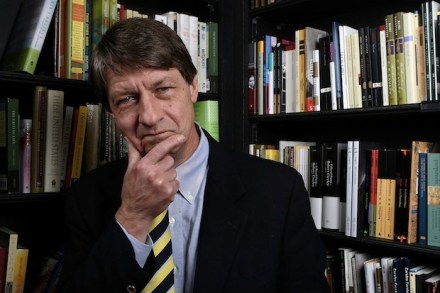
Since the passing of Auberon Waugh, there haven’t been many really successful right-wing comedians. The Mayor of London is one. Another is the American journalist and wit P.J. O’Rourke. The alliterative title of The Baby Boom, his 20th book, essentially sums up its author’s style, his childlike boisterousness, his resonant infantilism. Its scarcely less suitable subtitle — ‘How It Got That Way, And It Wasn’t My Fault, And I’ll Never Do It Again’— is almost as revealing, indicating a man engaged in a conversation with himself and determined to have the last word.

Sex, secrets, and self-mortification: the dark side of the confessional

From our UK edition

I have a confession to make. I really enjoyed this book. It’s been a while since I admitted something of the sort, and I feel ashamed, because, although it’s smartly, smoothly written, my pleasure was partly based on titillation. I smirked — I occasionally snickered — at the madder facts of self-mortification, whereby in the Middle Ages the (frequently female) faithful might flaunt their holiness in acts of rank humility. Elizabeth of Hungary kissed the feet of lepers; Margaret Marie Alacoque ate vomit; Catherine of Genoa, it’s said, sucked the pus of a plague victim. More than this, though, John Cornwell’s history of confession is preoccupied with sex, which always helps the pages riffle past.

Where artists went to drink and die

From our UK edition

Once below a time (to quote the man himself) the bloated poet Dylan Thomas slouched back to New York’s Chelsea Hotel in the dead of night and informed his mistress that he had just drunk 18 straight whiskies, which he suspected was a record. He then dropped to his knees, lowered his head onto her lap and mumbled his last words: ‘I love you, but I’m alone.’ On another occasion, during a fund-raising lunch, Jackson Pollock drunkenly vomited on the Chelsea’s carpet, inadvertently improvising, you might say, one of his own drip paintings. On yet another, plastered, the novelists Jack Kerouac and Gore Vidal decided that they ‘owed it to literary history’ (the phrase was Vidal’s) to go to bed together.

Did Hollywood moguls really make a pact with Hitler?

From our UK edition

At the recent Austin Film Festival, at every ruminative panel or round-table discussion I attended, I slapped my copy of this book down in front of me. The cover, I felt, was bound to catch the eye of the screen legends and louche suits from the big production companies. Above the uncompromising title, it shows a photograph of Adolf Hitler watching a movie with his entourage, his stern, blunt features palely lit by the glowing screen, his mouth small, his nostrils flared in concentration. What, one wonders, was he watching? Laurel and Hardy? Mickey Mouse? It’s not impossible, actually. We know for a fact that the psychotic cinephile adored cartoons and slapstick of this kind.

Transylvania Diary by Thomas W. Hodgkinson – diary

From our UK edition

Ehe-Gefängnis. The word, strictly speaking (which is how one should always speak), means ‘marriage prison’, and refers to an austere cell maintained in some of the magnificent fortified Saxon churches of central Transylvania. When a local couple decided to divorce, they were first locked in this narrow room for several weeks. There was only one bed: single. There was one chair, one plate, one knife, one fork, one cup. The result was that within a few days, the couple would realise they didn’t actually need a divorce after all — not because they wanted to escape the hell of enforced proximity, but because they had fallen in love again.

The Prince of medicine, by Susan P. Mattern – review

From our UK edition

In the first draft of the screenplay for the film Gladiator, the character to be played by Russell Crowe (‘father to a murdered son, husband to a murdered wife’, etc) was named not Maximus, but Narcissus. Which might have made for a slightly different movie. One can imagine the emperor Marcus Aurelius (Richard Harris) telling the beefy hero, ‘I’m entrusting the empire to you, Narcissus, because you’re loved by the soldiers, more gifted than my son Commodus, and also because you take better care of your skin than any general I’ve ever known.’ The reason for the original choice of praenomen was that the character was loosely based on a real-life athlete named Narcissus, believed to have killed Commodus in 192 AD.

Models of impropriety

From our UK edition

Once upon a time, there was an art scholar called John. He spent his days admiring marble statues, his nights in praying that he might be allowed a real-life statue as his wife. And in due course, he met a beautiful girl. She was a bit younger than him, but that was OK, because it meant she would be easier to control. Her name was Good Reputation, which seemed promising too. But on the wedding night, John got a nasty shock. For on lifting her trousseau, he found that, unlike the statues in the museums, Good Reputation had pubic hair. He was aghast. Unable to consummate the marriage, he channelled all his energies into his writing. This proved a mistake, for along came an artist who wasn’t so fussy, and John was left all on his own.

Tangier, by Josh Shoemake – review

From our UK edition

This may sound a little orientalist, but Tangier has some claim to being the most foreign city in the world. Back in the day, its position at the northernmost tip of Africa was regarded as the edge of civilisation — more than that, as the edge of what was known, the edge of everything. Here were the Pillars of Hercules, which in addition to performing the important function of holding up the sky, were said to be engraved with the words ‘nec plus ultra’: beyond this, nothing. Since its foundation in the 5th century BC, the city has been variously controlled by the Carthaginians, the Phoenicians, the Romans, the Arabs, the English (for a couple of decades in the 17th century) and the Spanish.

Island, by J. Edward Chamberlin – review

From our UK edition

‘Tom Island’ — that was the name I was given once by a girl I met on an island in the Tyrrhenian Sea. Of course, she broke my heart in due course. Turned out to be a lesbian, or so she claimed. But I liked the nickname, and as I think about it now, my life seems to be defined by islands of one sort or another (even putting aside England, which isn’t one). I live, at least part of the time, on the Greek island of Corfu. (It’s de rigueur, these days, for writers to ‘divide their time’ rather than be so dull as to live in just one place. I divide my time between Corfu and Chiswick.

Confronting the Classics, by Mary Beard – review

From our UK edition

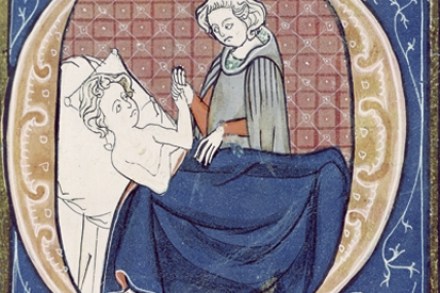
The Emperor Augustus, ruler of the known world, once spotted a man in the street who looked a bit like himself. ‘Did your mother ever work at the palace?’ he asked him roguishly. ‘No,’ the man replied, ‘but my father did.’ Augustus could have had the man killed for this scurrilous (and slightly surreal) insinuation, but fortunately he had a sense of humour. As too, Mary Beard tells us, did the Emperor Elagabalus, who used to seat his dinner guests on cushions that, unbeknownst to them, were full of air. As the meal progressed, a slave secretly let the air out, so Elagabalus could enjoy the sight of his companions subsiding, until they slid beneath the table.

Pyrrhic victories

From our UK edition

In 193 BC, Scipio met Hannibal at Ephesus, and asked him who, in his opinion, were the greatest generals of all time. Since he’d personally defeated Rome’s most dangerous enemy a decade earlier, he rather expected to be on his list. But Hannibal first named Alexander the Great; then Pyrrhus (who like him had come within a whisker of sacking Rome); and for his third choice — one can’t help but feel he was taunting the self-important Roman — himself. And what, Scipio expostulated, if I hadn’t beaten you at Zama? In that case, the Carthaginian replied with a smile, I should have placed myself first. Of course, as Anthony Everitt observes in his excellent guide to Rome’s early history, this story is too good to be true. But who cares?

Indian giver

From our UK edition

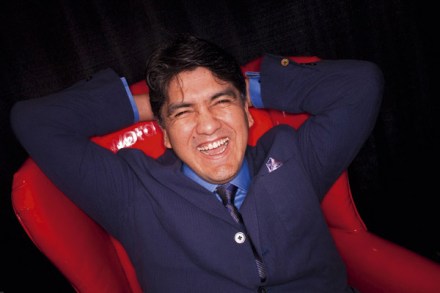
A 465-page volume of short stories by a Native American author — it’s not, perhaps, the kind of thing everyone would automatically reach for, if they hadn’t already heard about it. Well, now you’ve heard about it, so you don’t have that excuse. Reach for it. Read it. Because the stories it contains (15 new, 16 old) are moving and hilarious, and they amount to an education. Take the term Native American, for example. Isn’t this the accepted way to refer to the author’s ethnicity? You’d have thought. Yet Sherman Alexie avoids it, referring to himself and his characters as ‘Indian’. Everything he writes is imbued with a consciousness of the irreversible wrong visited on his ancestors, but this is as often wry as plaintive.

Understated elegance

From our UK edition

A man raised by apes is discovered in Africa, recognised as an English lord, and escorted home. At a formal dinner, he raises a bowl of soup to his lips and slurps noisily. His grandfather, noting consternation among the other guests, immediately does the same, murmuring, ‘Quite right! Quite right! I hate spoons.’ This scene in the strangely underrated 1984 movie Greystoke: The Legend of Tarzan, Lord of the Apes (with a wild-eyed Christopher Lambert as the apeman, and a wild-haired Ralph Richardson as his lovable grandfather) illustrates, I think, the two defining components of good manners: etiquette and decency. Occasionally, as here, they come into conflict, in which case (as Richardson shows) decency comes first.

The gulf of greatness

From our UK edition

Ladies and gentlemen,’ Laurence Olivier declared in his clipped, semi-metallic tones to the audience at the Vic as he took his curtain call, ‘tonight a great actress has been born. Laertes has a daughter.’ The man playing Laertes to Olivier’s Hamlet on that evening in January 1937 was Michael Redgrave. The daughter was Vanessa, who would, as Olivier foretold, grow up to be a great actress. This vignette, you might say, contains all the majesty and mawkishness of the theatre. And a touch of its tawdriness, too. For rather than hurry to the bedside of his wife Rachel, Redgrave, it is said, slipped away instead to spend the night with his mistress, the incomparable Edith Evans. Does the possession of genius necessarily bring with it a moral carte blanche?

Going overboard

From our UK edition

What is it about islands that appeals to little men with big ideas? It’s Corfu I’m thinking about, primarily. Napoleon was obsessed with the place. Kaiser Wilhelm owned a summer palace here, the neoclassical Achilleion, where he installed a huge and hideous statue of Achilles. Can I add George Osborne to the list? Perhaps I’d better not. There’s a far better figure to complete the triumvirate, if that’s the phrase: the sly, off-kilter and phenomenally litigious founder of Scientology, L. Ron Hubbard. Last month, the Daily Telegraph ran an obituary of one John Forte, a former officer in the British Army, who had two claims to fame when it came to Corfu.

Man of many parts

From our UK edition

My father, a man not given to hero-worship, once told me that the only actor he really admired was Richard Burton. Some years later, I put the question to Peter O’Toole, who had been reading excerpts from his lushly overwritten memoirs at the Oxford Union. ‘Mr O’Toole,’ I said, ‘I was wondering if…’ A shy undergraduate, I may have stammered a little. ‘Which is to say, is there any actor … Or rather, which actor, of those you’ve acted with, or those you haven’t, among the living, or, indeed, the dead, would you say you’ve most admired, or aspired to emulate, in your acting career?’ To which the ageing thespian replied with a single word: ‘Richard.

The stuff of dreams

From our UK edition

‘As I was writing this book and trying to discover what it was about .…’ With his very first words, David Thomson pulls out the carpet from under himself, drapes it over his head, and runs towards the nearest wall. For what he’s admitting in this opening sentence is that, when he began work on this 578-page history of cinema, he had no idea what he was going to say. And man you have to be good to pull that off. We live in an age of relativism, in which (arguably) assertions are often spliced with (this is only my opinion) apologetic parentheses. Yet books of this kind ought to be an exception. What we want is the Olympian overview or panoramic shot.