Thomas W. Hodgkinson

Thomas W. Hodgkinson is the author of How to be Cool.

‘Instapoetry’ may be popular, but most of it is terrible

From our UK edition

Poetry is on a hot streak. Last year, sales in the UK topped £12 million for the first time — a rise of more than 10 per cent for the second year running. According to Parisa Ebrahimi, the poetry editor at Chatto & Windus, one reason for the trend is that poetry is no longer the domain of the white male. This may be true, but how has it happened? Part of the answer is Instagram. Designed as a social network for sharing photos, recently the app has been adopted and adapted by writers — few of them white, many of them women — who, rather than selfies and sunsets, post snippets of verse known as ‘Instapoetry’. And a handful of these Instapoets have become hugely successful.

John Flaxman is the missing link between superhero movies and Homer

From our UK edition

As you enter the forecourt of the Royal Academy, you see them. A row of artistic titans, carved in stone, peer down from their alcoves in the higher half of the gallery’s façade. Thanks to the name plaques, they’re easily identified. You can see Pheidias, the genius of the Parthenon; Leonardo and Raphael; Sir Christopher Wren. And then there’s… John Flaxman. Who? That’s a completely legitimate question. If these guys are, so to speak, the Avengers of art history, then Flaxman is the equivalent of Hawkeye. Hell, maybe he’s Agent Coulson. Even on his plinth, he has a mildly apologetic air. Under a bald pate, his hair hangs down in curly curtains. His hand, clutching a chisel, crosses his chest self-deprecatingly.

The best Terminator film since the first: Terminator Six reviewed

From our UK edition

The first Terminator film, which came out in 1984, was a high-concept sci-fi serial killer thriller. You can just imagine its director, James Cameron, pitching it to the suits: ‘Arnold Schwarzenegger arrives from the future. He’s naked. We haven’t decided why, but he’s definitely going to be naked. And there’s only one thing on his mind, which is to tear some chick to pieces.’ Yet as sequel followed sequel, it became clear that this franchise about a dystopian war between humans and machines was really a metaphor for the war taking place within Hollywood itself. The machines won. Cinematically speaking, we now inhabit that post-apocalyptic landscape so often glimpsed in Terminator films. The grim perma-dusk is streaked with laser gunfire.

Gilgamesh, Michael Schmidt’s ‘life’ of a poem

From our UK edition

In the mid-19th century, around lunchtime, a pale young man with an enormous beard could be seen in the British Museum reading room poring over piles of books about Mesopotamia. His name was George Smith, and this was his secret passion. Then, one day, a museum attendant remarked that it was a shame no one had bothered to decipher ‘them bird tracks’ — by which he meant the weird-looking scratches in clay tablets from the newly rediscovered ancient city of Nineveh. It was at that moment that something clicked in Smith’s head. He set to it, decoding the cuneiform script to make a series of breakthroughs, culminating in one that excited him so much that, when he recognised it, he had to take his clothes off.

From alpha to omega

From our UK edition

Mary Norris’s book about her love affair with Greece and the Greek language starts with a terrific chapter about alphabets. That may sound like an oxymoron, but I was fascinated to learn why the Y and the Z come at the end of our alphabet. When the Romans were adapting the Greek alphabet, they ditched these letters because they didn’t need them. Later, when they started using Greek words, they wanted them back, so they tacked them on at the end. Equally, it’s nice to know how it comes about that, in England, we pronounce the letter Z as Zed — unlike in America, where Zed’s dead (and they say Zee, baby). It’s a throwback to a time we would have called it Zeta, after the Greek letter. Obvious, once you know.

Physician, heal thyself

From our UK edition

The journalist Auberon Waugh, in whose time-capsule of a flat I briefly lived in 2000, once summed up what he took to be the primary motivations for writing books. ‘With women, there is this tremendous desire to expose themselves. With men, it is more often an obscure form of revenge.’ In the case of the clinical neuropsychologist Dr A.K. Benjamin, both of these seem to apply. He is impelled by the desire for revenge, mainly on his own self-important profession, but also on women for being nuts. Or perhaps, because he’s scrupulously fair about this, that should be ‘nuts in a different way from the way men are’. As for Benjamin’s self-exposure, it’s a striptease.

Trailing clouds of perfume

From our UK edition

In his robust new biography of Alcibiades, David Stuttard describes how the mercurial Greek general shocked his contemporaries by adopting Persian customs: Certainly, he embraced their lifestyle, tying his hair up in a bun, curling his well-oiled beard (a symbol of machismo in the Persian court), dousing himself in the perfumes for which Sardis was so famous, and dressing not just in sumptuous robes and beautifully fringed tunics of linen, wool and mohair (deep-dyed in vibrant reds and vivid yellows, and adorned with ornaments in glittering gold foil), but in those other garments so associated by Athenians with decadent, eastern effeminacy: trousers. I’ll be honest.

Everything we know is wrong

From our UK edition

Reading The Mind is Flat is like watching The Truman Show and realising, while you’re watching it, that you are Truman. For anyone who hasn’t seen the movie, this is Peter Weir’s 1998 fable in which Jim Carrey discovers he is unwittingly the star of the most successful reality-TV show on the planet. His world is a film set and everything that happens to him has been plotted by a brilliant if somewhat pretentious director named Christof. Truman has this thunderbolt moment. It’s part Aristotelian anagnorisis, which is to say the realisation of something horrific, and part Camusian absurdity. But at the same time, it’s incredibly liberating. He sees that he can do whatever he wants.

Demonised by history

From our UK edition

Some oleaginous interviewer once suggested to Winston Churchill that he was the greatest Briton who ever lived. The grand old man considered the matter gravely. ‘No,’ he replied at length. ‘That was Alfred the Great.’ In his hefty, hard-to-pick-up History of the English-Speaking Peoples, Churchill expatiated on King Alfred’s foremost quality: it was his ‘sublime power to rise above the whole force of circumstances, to remain unbiased by the extremes of victory or defeat, to persevere in the teeth of disaster, to greet returning fortune with a cool eye, to have faith in men after repeated betrayals’. Remind you of anyone?

Christianity triumphant – and destructive

From our UK edition

In the late years of Empire, and early days of Christianity, there were monks who didn’t wash for fear of being overcome by lust at the sight of their own bodies. Some concealed their nakedness in outfits woven from palm fronds. One designed a leather suit that also covered his head. There were holes for his mouth and nose, but not, apparently, his eyes. There was a monk who spent three years with a stone in his mouth to remind him not to speak. Another wept so hard, his tears dug a hollow in his chest. There were those who went about on all fours. St Anthony, one of the founders of monasticism, chose to make his home in a pigsty. St Simeon Stylites stood on a pillar for 37 years until his feet burst open. What are we to take away from all this?

Sink or swim | 15 June 2017

From our UK edition

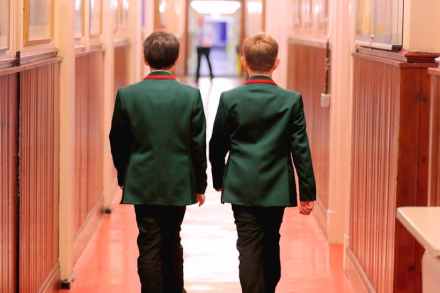
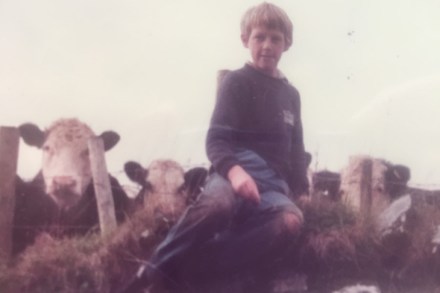
I used to worry that I would never be a good writer because my childhood wasn’t interesting enough. I now think there must be some other explanation. Because the truth is that, when I was still pretty young, my parents banished me to an isolated community where for years on end I was compelled to dress in heritage costume, endure the uncanny absence of women and participate in ritualistic group activities, often of a physical or religious nature. That’s right. I am an Old Harrovian. On the face of it, this seems like an odd choice for my parents to have made for me — although it isn’t as bat-cave crazy as Alex Renton tries to suggest in Stiff Upper Lip, his rich, righteous diatribe against the public school system.

Dark and graphic

From our UK edition

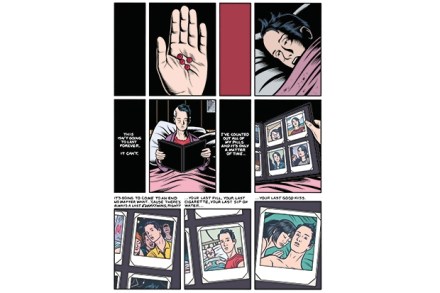
A woman birthing bloated speckled eggs from her supernaturally swollen womb. Sushi screaming and squirming. A skull-shaped sweet, bearing the message, ‘I was you.’ Doubting yourself. Knowing you don’t love your girlfriend. Waking beside someone beautiful and new, only to notice a filigree of knife-scars etched across her breasts. If, sensitive reader, these ingredients make you inclined to do a runner (your finger already hooked around the next, less distressing page), then go right ahead. Because Charles Burns’s Last Look (illustrated above) clearly isn’t your kind of book. But if you’re in two or three minds about this, then please hesitate, because I’m not 100 per cent sure, but I think it may be a masterpiece.

Spectator books of the year: Thomas W. Hodgkinson on a hair-raising account of Scientology

From our UK edition

Going Clear: Scientology, Hollywood, & the Prison of Belief by Lawrence Wright (Vintage). Originally published in the US, this history of scientology isn’t available in UK bookshops. Buy it online. Hilarious, hair-raising and amazingly evenhanded, given the subject matter, it describes how the science fiction author L. Ron Hubbard turned his toxic neuroses into the basis for an utterly bogus belief system designed to extract money from dupes. This is the guy who punched his wife for smiling in her sleep. This is the guy Tom Cruise refers to, with reverential affection, as ‘LRH’.

Mary Beard minds her S, P, Q and R

From our UK edition

Having rattled and routed Mark Antony and his bewitching Egyptian at the battle of Actium in 31 BC, Octavian was on his way home to Rome when he was confronted by some punter. The man produced a talking raven, which obligingly squawked, ‘Greetings, Caesar, our victorious commander!’ Octavian was delighted at this evidence of loyalty, and rewarded the bird-trainer accordingly. However, it later emerged that the man had had another raven in reserve, which he had taught to croak, ‘Greetings, Antony, our victorious commander!’ He hadn’t been taking any chances. Nor, in a sense, does Mary Beard in her ambidextrous history of Ancient Rome, whose title proclaims her bifurcated programme.

Proof that the British hardly ever had a stiff upper lip

From our UK edition

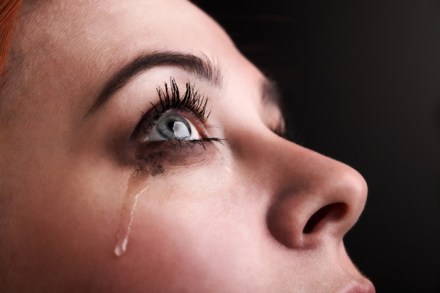
The last time I cried was September 1989. That was my first week at public school. The reason I cried was that my allocated room-mate, a malevolent pixie named Toby Cox who later became one of my closest friends, had informed me that he ‘knew a lot of people’ at Harrow and he was going to tell them all that I was ‘a total dick’. I bawled. I blubbered, and a cord of saliva swung from my lower lip, as I begged for mercy. He refused. And I haven’t cried since. Not at the deaths of pets or relatives. Not at the break-ups of relationships. There’s something satisfying, I suppose, in fulfilling so completely a national stereotype.

How cool is Britannia?

From our UK edition

Is it true that, having lost an empire, we reinvented ourselves as an island of entertainers? Do we channel the same rigour and vigour into film and music and literature as once went into conquering continents? Is there a residual colonialist bias in our arts, seen, for instance, in our cinematic penchant for creating patriotic period dramas such as Henry V or The King’s Speech? How much of our cultural success depends on the US market and the accident of a shared language? To what extent does our cultural expression reflect not our idea of ourselves but an American distortion?

Nimble-witted wanderer

From our UK edition

It was a certain unforgettable ex-girlfriend, Harry Mount confesses — named only as ‘S’ in his dedication — who came up with the idea for this new book, which he has therefore written to honour her, or in the hope of winning her back, or possibly, in some obscure way, to annoy her. Whichever it is, S must surely share some blame for its misleading subtitle. You can’t follow in the ‘footsteps’ of mythology’s greatest sailor. As Homer repeatedly says in the Odyssey, ‘No one travels on foot to Ithaca.’ OK, this is pedantic, but the author doesn’t really follow in Odysseus’s wake either. If that’s the book you want, try Tim Severin, or, better, Beaty Rubens and Oliver Taplin.

How Hollywood is killing the art of screenwriting

From our UK edition

Writing is dead. Long live writing. What do I mean when I say writing is dead? That’s a whole other article, but in brief: cinema killed the novel, email killed the letter, CGI killed cinema and Twitter killed email. The good news is that, despite this bloodbath, writing is actually alive and well and living in Texas. And the reason I know that is that I was there at the end of last month. The Austin Film Festival, where I had a script in the competition, is the only major film festival in the US that focuses primarily on the writers (as opposed to directors or actors). The result is that, for those few days while the festival takes place, you can’t stir an elbow in Austin without knocking over a writer’s pint. The place is crawling with them, seething with them.

Songs for the road: through his music and his classic car collection Neil Young hopes to escape his childhood traumas

From our UK edition

Why do people talk about ‘experimenting’ with drugs when mostly they just mean that they’re doing them? Perhaps, as I write this, I should experiment with a glass of beer. In any case, one day back in the 1970s — when rock stars were particularly prone to experimentation — Bob Dylan dropped in on Neil Young, who played him a song detailing his extensive drug-related experiments (with grass, cocaine and amphetamines). At the end of the performance, Dylan remarked drily, ‘That’s honest.’ Young still laughs when he remembers this. Partly it was because Dylan, who had done some experimenting himself back in the day, knew where Young was coming from. Also, though, what makes it funny is that all artists are in the business of revelation.

Spectator books of the year: Thomas W. Hodgkinson on Morrissey

From our UK edition

Inside the Dream Palace by Sherill Tippins (Simon & Schuster, £20). We’ve had biographies of great artists and writers, their spouses and children and their children’s pets. Here’s one about the place where most of them, from Jack Kerouac to Sid Vicious, seem to have hung out: the glamorously seedy Chelsea Hotel in New York. Not just a biography of a building, it amounts to an alternative history of 20th-century culture. How To Be a Husband by Tim Dowling (4th Estate, £12.99). Less a self-help than a self-hinder book, the Guardian columnist’s account of how he has coped with the challenges of matrimony (answer: badly) should really be called How Not To Be a Husband. It only makes one joke, but it makes it extremely well.