Thomas P. Lambert

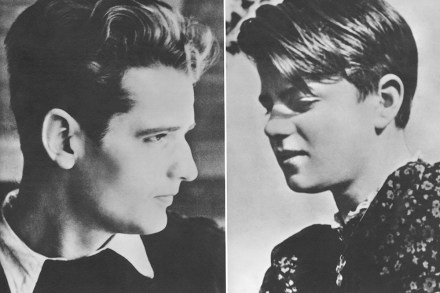
The novel that makes Ulysses look positively inviting: The Aesthetics of Resistance, by Peter Weiss, reviewed

The translator’s preface to the third volume of The Aesthetics of Resistance informs us that ‘Several deadlines came and went on the way to this translation’. That is quite the understatement. The German edition of Peter Weiss’s 1,000-page historical novel appeared in 1975. A full English translation has been in the offing for more than 20 years. In the meantime, Weiss has won just about every literary accolade Germany has to offer, and his play Marat/Sade has become known as the theatrical ‘starting gun’ of the 1960s. Whatever the translator Joel Scott has in store for us, it had better be worth the wait.

A father’s love: Childish Literature, by Alejandro Zambra, reviewed

Serious books about fatherhood are hard to come by; indeed, next to distinguished literary mothers such as Rachel Cusk, Sheila Heti, Jacqueline Rose, and Elena Ferrante, the male sex is beginning to look decidedly inarticulate. In his new, genre-blurring work Childish Literature, the Chilean novelist Alejandro Zambra seeks to right this imbalance. In doing so, he aims to correct the failings of prior male generations, who may have ‘tried, in their own ways, to teach us to be men’, but never quite ‘taught us to be fathers’. Before he became one of Latin America’s most inventive prose writers, Zambra was an acclaimed poet and, like many poet-novelists, he treats narrative unities with healthy suspicion.

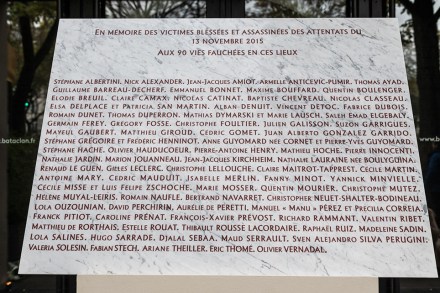
Reliving the terror of the Bataclan massacre

On Friday 13 November 2015 France suffered the deadliest terrorist attack in its history. In quick succession, gunmen and suicide bombers struck the outer concourse of Paris’s Stade de France; then the pretty canal-side cafés and restaurants of the tenth arrondissement; then, most notoriously, the Bataclan theatre, where the doors were blocked and, over the course of an hour, 90 people massacred. The subsequent trial was not just a gargantuan administrative undertaking (20 defendants faced around 2,000 plaintiffs, and the proceedings occupied the purpose-built courtroom for the best part of a year); it was a cultural phenomenon.