Thomas Fink

Dr Thomas Fink is the director of the London Institute for Mathematical Sciences, an independent centre for curiosity-driven research.

The world needs to change how it does science

What would you do if you had £60 million to play with? Some people would invest it. Many would buy a bigger house. A few would go on a spending spree. Me, I’d try to change the way the world does science. And thanks to the far-sightedness of the British fintech founder and philanthropist, Ben Delo, I may soon have the chance to do just that.  We live in a world in which technology is changing faster than ever, yet the way we make scientific discoveries is stuck in a Prussian rut Crazy as it may sound, the dominant global model for doing science is a frozen accident.
How Britain can borrow America’s top scientists

From the time of Newton, Britain led the world in science. That began to change in 1940, when, with the Battle of Britain raging, Winston Churchill sent the scientist Henry Tizard on a secret mission to America. His objective was to secure financial and industrial help in the fight against Hitler. His currency was British military technology, in particular the cavity magnetron, a device that made it possible to locate the enemy with radar. This wowed the Americans and achieved his objective. According to one historian, it was ‘the most valuable cargo ever brought to [America’s] shores.

Science needs Russians

Something extraordinary has happened. It wasn’t just the docking of a SpaceX capsule at the International Space Station, some 250 miles above the Earth, on a mission to rescue stranded astronauts. It was the sight of Americans and Russians embracing. As the new arrivals – Nick Hague and Aleksandr Gorbunov – appeared through the hatch, it was hugs all round. There are now four Russians and seven Americans manning the ISS. Since the outbreak of the war, collaborations with Russian scientists – measured by the co-authors named on papers – have dwindled across the West Then consider that this happened just a few days after the International Chess Federation voted to extend its ban on Russian grandmasters competing internationally. That’s got to hurt.

What Prince William gets wrong about space travel

Time was when 'to boldly go where no man has gone before' was not just a line from Star Trek. It was a national dream. Space exploration transcended political divisions. When Nasa pulled off the first moon landing, the world watched in awe. Last week, the Star Trek actor William Shatner was blasted into space on one of Jeff Bezos’s rockets. Yet there was no shared wonder. Instead, there was criticism. Scientists have more pressing problems to solve, argued detractors. In a rebuke to Bezos, who is pouring his fortune into space travel, Prince William told the BBC: 'We need some of the world’s greatest brains… trying to repair the planet, not trying to find the next place to go and live.' Such arguments miss three key points.

How Boris’s research agency can thrive

What is the recipe for outstanding innovation? According to Kwasi Kwarteng, the new Secretary of State for Business, Energy and Industrial Strategy, we should learn it from America. When he announced last week the launch of Britain’s new Advanced Research and Inventions Agency (ARIA), he reiterated that the £800m organisation would be based upon DARPA, America’s high-risk, high-reward defence research agency. This is no surprise. Since the 1950s, DARPA has racked up an extraordinary series of breakthroughs, including the internet, GPS, drones and stealth technology. Yet when it comes to recapturing what Kwarteng calls ‘the spirit of Britain’s long and proud history of inventing’, he should look at Britain’s history as much as America’s.

A singular mind: Roger Penrose on his Nobel Prize

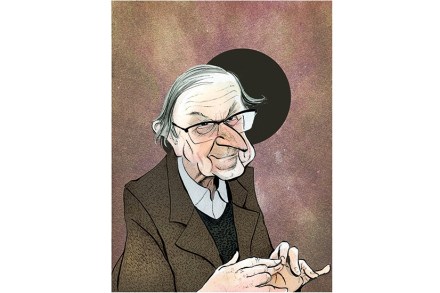
Sir Roger Penrose was at school when he realised that his mind worked in an unusual way. ‘I thought, maybe when I go to university, I’ll find people who think like me,’ he tells me, at the beginning of what was to be a fascinating conversation, stretching long into the afternoon. ‘But it wasn’t like that at all. When I would talk to someone about an idea, I found myself not understanding a word they were saying.’ Just after we spoke, in early December, Penrose received the Nobel Prize in Physics, so perhaps it’s no surprise that he should think a little differently. But, as he explained it to me, his mind is unusually visual. Penrose’s father Lionel was an artist as well as a psychiatrist and mathematician, and a great influence on Roger.

How British science can flourish after Brexit

I’m a Texan as well as a physicist so I hope it doesn’t sound boosterish if I say that no nation has contributed more to basic science than Britain. No other country has such an uncanny aptitude for it. I’m not sure what combination of poetry and pragmatism makes this possible, but I don’t need to go far to find evidence. A few streets from where I work in Mayfair lies the Royal Institution, which earned more Nobel prizes in science than all of Russia. Or consider Newton, Darwin, Faraday, Maxwell, Rutherford, Hardy, Dirac, Fleming, Crick, Higgs, Hawking and Wiles. All are bywords for British originality. They have something else in common: none was concerned about the utility of their work.

Oil wars: is this the real threat to the world economy?

36 min listen

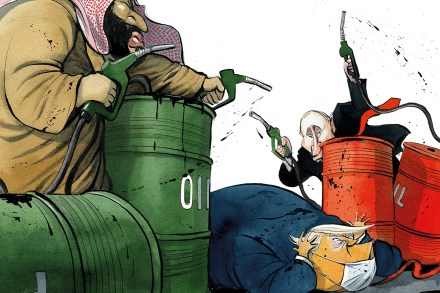
This week kicked off with an incredible fall in oil prices globally, so what on earth happened (00:50)? We also talk about the Budget, where Rishi Sunak set out in more detail how the government's 'levelling up' agenda will look (10:20). Finally, should we be doing more science research for curiosity's sake (23:05)?