Theo Hobson

Theo Hobson

Theo Hobson is co-editor of Created for Love: Towards a New Teaching on Sex and Marriage.

What price is too high to keep conservatives in the Church of England?

Future historians of the Church of England might look back at this weekend as the beginning of the end. A selection of bishops and members of the General Synod are meeting at a hotel in Leicester to seek a solution to the impasse over homosexuality. They hope to make a plan to take to July’s Synod: a deal that keeps conservatives in the Church. That’s got to be a good thing, hasn’t it? It depends.  The story so far is that the Church decided in favour of same-sex blessings last year, and also in favour of new ‘pastoral guidance’ that is expected to allow gay clergy to marry, therefore officially condoning them for the first time. Conservatives, the large majority of whom are evangelicals, see this as false teaching, and are demanding their own structures.

What does the faith school shake-up mean for Anglicans?

Why do faith schools excite such passions? Obviously people care a lot about religion, and education, but there’s something else at work too. Schools are microcultures, bubbles, little versions of society, in which the secularism of our culture can be shut out, defied. It sounds like a strange exaggeration, but if a religion has its own schools, it has a small but vital link to the old era of its cultural dominance.  The shake-up overturns the current rule, that a new faith school can only select half of its pupils on religious grounds Is this why Roman Catholics like Melanie McDonagh are so happy with the government’s decision to allow new faith schools to have a fully religious selection process?

What should we make of Russell Brand’s baptism?

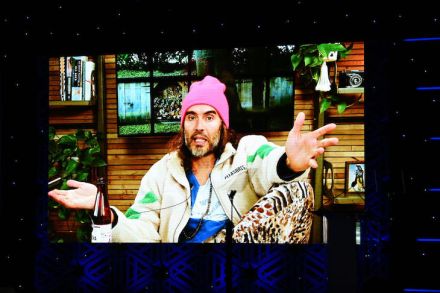
Could Russell Brand, who has just been baptised, become a significant Christian figure? I suppose he could become a sort of British televangelist, God help us. But significant in a good way? It’s not impossible: he’s sharp and charismatic, and taps in to a major English spiritual tradition. But it’s not likely either: our culture needs figures who model wise restraint rather than juvenile hedonism, and Brand can’t entirely undo his image. Brand can probably never lose the aura of sleazy preening libertine Brand issued a video after being baptised in the Thames on Sunday, in which he said he had found his 'path' and was left feeling 'incredibly blessed' and 'nourished'.

The CofE’s female clergy muddle is not sustainable

It’s thirty years since the first women were ordained as priests of the Church of England. For ten years, there have been women bishops too. Well, at least one aspect of the Church’s reform is done and dusted.  Cue hollow laughter from those acquainted with the strange intricacy and agony surrounding this seemingly simple reform. In reality it was a Pyrrhic victory for the liberals that left them deeply demoralised. Not being much of a feminist (or a traditionalist), I was slow to tune in to this story. But its dark fascination gradually drew me, like an ecclesiastical car crash. Female clergy have been cornered into a psychological trap What happened is this: opponents of the change were allowed to stay in place.

Is Richard Dawkins a Christian?

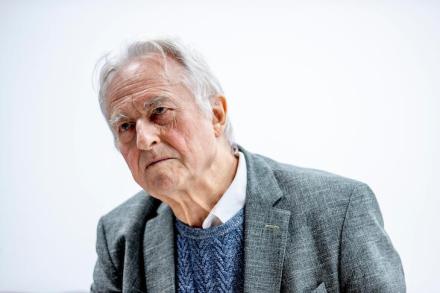
When the New Atheism thing was new, I wrote a piece saying that the people who supported it were pretentious and cowardly. They pretended to know what religion is, and said that it caused great harm. I said this was ‘intellectual cowardice’. The intellectual coward is one who chooses simplicity over complexity and difficulty. One aspect of their cowardice related to Islam. Their popularity was a result of 9/11, and the widespread fear of religious extremism that ensued, but they didn’t dare focus on Islamic extremism; they wanted to say that religion in general was to blame, that mild-mannered liberal Christians were implicated in violence. Now Richard Dawkins is trying to sound more nuanced about Christianity. A recent radio interview with LBC is the latest example.

How Justin Welby should have responded to Gove’s extremism crackdown

When the government raises big questions about our national values, one has a choice: to see it as an opportunity to say something constructive, to deepen the debate. Or one could respond like a cynical intern at the Guardian, saying, in effect: how dare they try to sound all high and mighty? Where’s some holes we can pick? The Church of England is unfortunately inclined to the latter course, with the archbishops issuing a statement raising concerns that Muslims might be targeted by a redefinition of extremism.  What Michael Gove announced was hardly earth-shattering What the communities secretary Michael Gove announced was hardly earth-shattering.

Is there anything wrong with ‘Christian nationalism’?

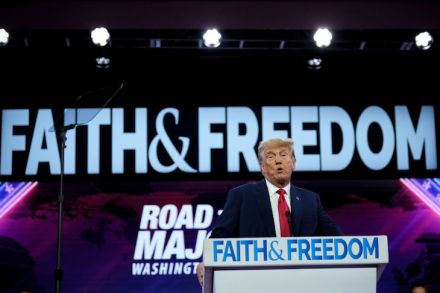
When does radical religious conservatism become a dangerous bid for theocracy? It’s a question that some American commentators are pondering, in relation to ‘Christian nationalism’. David French has argued in the New York Times that we should be wary of the term ‘Christian nationalism’, which is often attached to Trump-supporting evangelicals. There is nothing very dangerous about Christians wanting their faith to be politically expressed, he says.

Ukraine attacks the Church of England’s ‘pro-Russia propaganda’

Perhaps Justin Welby expected gratitude from Ukraine, after the Church of England’s Synod debated the war this week. He certainly didn’t expect a double rebuke from the country, a sacred and secular censure. In letters to Welby that have not been published but have been shown to me, two official Ukrainian bodies have protested at the briefing document that was prepared ahead of the debate. As I argued yesterday, the briefing document is inappropriately even-handed, as if both sides in the conflict are caught up in a tragic muddle, and as if no particular religious body is more culpable than any other.

The Church of England shouldn’t be neutral about the Ukraine war

The Church of England’s Synod is debating the war in Ukraine today. There will be a vote on a motion that sounds uncontentious: Synod affirms the peace-making efforts of various churches, calls for the highest possible protection of religious freedom, and calls for UK political parties to work for a peaceful international order. But sometimes blandness is offensive. It is a failure of Christian responsibility to debate the war in Ukraine with an air of neutrality. Synod should be sending a clear message that Russian Orthodoxy is a pariah church, a cheerleader of fascism. But, as I recently said in relation to Justin Welby, ecumenical diplomacy seems the only consideration. The briefing paper attached to this motion is a swamp of obfuscation.

Why won’t Justin Welby call out Russia’s Patriarch Kirill?

Justin Welby has just visited Ukraine. While there he spoke clearly against the false religion that underlies Russia’s ideology, and called Patriarch Kirill, the Russian Orthodox leader, a heretic, a war-criminal and a perverter of the Christian gospel. Alas, only the first sentence is true. Welby has never, as far I can see, called out his Russian counterpart. He doesn’t want to be undiplomatic, I suppose. True, Welby has condemned the invasion in clear terms; almost two years ago he was quick to call it ‘an act of great evil’. He then had a video call with Kirill (with Pope Francis also on the line) where he called the war ‘a great tragedy’ and said that ‘war and violence is never an answer’.

The Bishop of Oxford: why I support gay marriage

We all know the Church of England is ‘divided’ over homosexuality. But it’s not a very equal division. Reform is favoured by a clear majority of bishops, the clergy and Anglican worshippers. So how are the conservative evangelicals managing to hold back the tide? Perhaps the problem is a lack of leadership. The archbishops have not dared to reveal what sort of change they want, beyond saying that there should be blessings for gay couples. The other bishops have echoed the evasion. ‘I was seeking to be a focus of unity by not saying what I thought’ Only one senior bishop has articulated a clearer reformist vision. Just over a year ago, the Bishop of Oxford, Steven Croft, broke ranks and said what he really thought – up to a point.

Why do I keep falling for Boris Johnson’s charm?

On Saturday, I was in a public library, waiting for an old guy to finish with the Times. But he seemed to be reading every word of every section, and sort of peering at it frowningly in an annoying way. So I did something I hardly ever do: I picked up the Daily Mail.  I had forgotten that I might find Boris here. I wondered what I thought of him these days. One is meant to despise or at least disdain him, of course. But I’ve always struggled to. Oh, I often come very close. I came close the other week, when I read Rory Stewart’s memoir. Politicians should obviously be devoted earnest types, I felt, not semi-charming smoothies like David Cameron, or fully-charming roughies, if that’s a word, like Boris.

Svitlana Morenets, James Heale and Theo Hobson

17 min listen

This week: Svitlana Morenets explains why Ukrainians can't trust Putin's hollow promises (00:57), James Heale reads his politics column on Rishi's January blues (05:42), and Theo Hobson describes the joys of middle-aged football (10:54).  Produced and presented by Oscar Edmondson.

When will Rory Stewart’s time come?

Can a dose of moral earnestness revive Tory fortunes? This is the question raised by Rory Stewart’s recent memoir, Politics on the Edge: A Memoir From Within, which sits on top of the bestseller charts more than three months after it came out. Another question the book raises is this: is Stewart’s brand of moral earnestness the right one? His politics is rich in old-world honour, like that of a John Buchan hero. The reader half expects him to uncover a plot to sell Britain to China, and then be chased by soulless technocrats through moonlit moorland. On one level, it didn’t work: when he stood for the leadership against Johnson and others, he seemed too intense, too eccentric. But maybe the party wasn’t ready for him.

The joy of middle-aged football

I can tell when my life’s going OK. My stray thoughts are not about what a loser I am but about what a terrible footballer I am. Why didn’t I shoot when I had that chance? Why did I pass to the opposition? And, oh dear, I wonder how Diego’s knee is? For almost a decade I’ve been playing football on Saturday mornings in a local park in London. For the first few years I was a fair-weather visitor, shy about it. I’m not much of a joiner and I don’t have much chat about the transfer window, so I felt awkward and almost stopped going. A couple of others were middle-aged and rusty like me, so they probably didn’t really want another old guy getting in the way. But I gradually felt that they didn’t mind me being there, that I was a valid part of the mix.

Did Richard Dawkins’s ‘New Atheists’ spark a Christian revival?

The battle between New Atheism and religion was never likely to have a clear winner. It was never very likely that the arguments of Richard Dawkins and co would topple the towers of theology. Nor was it likely that the atheists would provoke the sleeping giant of faith into rising up and crushing the impertinence for good. I suppose atheists can claim that their cause is making steady progress, with organised religion continuing its gentle decline in the West, but the more honest among them might admit that the energy of their movement fizzled out long ago. Secular idealism opted for identity politics instead, making the pontifications of white male know-it-alls sound dated and uncool. Believers, on the other hand, are likely to be more bullish.

Praying with the Pentecostalists

I go to my local church. But not my very local church. There’s a Pentecostal church, a plain building used mostly by worshipers from the Caribbean, on my very road. Happy music sometimes spills out and I have often seen smartly dressed worshippers outside. When I told my wife that I planned to go to a service, and maybe write about it, she advised against. It would be intrusive, she said. It’s not your culture. If you wrote about it, you’d sound partronising, sneery. But I’m a religion writer, I replied, and it would be remiss of me to overlook a church in my actual street. And I’m a Christian, and so are they, so surely nervousness about cultural difference should not put me off. And I sound sneery about everything, so that’s irrelevant.

When will the CofE have an honest debate about homosexuality?

At the Church of England’s General Synod on Wednesday morning, I had a good view of the sign-language person. In a bored moment (sorry for the puerility), I tried to see what the sign for ‘sex’ was. I failed to discover this, but happened to be watching him while an evangelical spoke of progressive teaching leading people to hell. He made a pleasing little one-handed goat-horn sign. The whole debate could have been summed up in a couple of gestures. Maybe a sad face and heart sign, for the progressives’ tireless emphasis on the pain and exclusion of homosexuals, and the need for loving acceptance. For the evangelicals, maybe a clenched-fist hold-fast sign, plus a Bible, followed by the old goat-horns.

Where does Justin Welby stand on homosexuality?

The Church of England has realised that its decades of dithering over homosexuality must end. It must finally bite the bullet, and introduce liberal reforms.  To be more precise, most of the bishops have realised that reform is necessary, and that delay is disastrous. Most of the clergy and most of the laity share this view. But the opposition of a determined minority renders this clear majority position impotent.  Liberal Anglicans are only now waking up to the fact that full clarity is needed on homosexuality Next week’s Synod was meant to be the breakthrough. Back in February, Synod voted in favour of blessings for gay couples, as a provisional ‘experiment’.

The trouble with Canterbury Cathedral’s rave

I will not be attending the silent disco that is soon to be held in Canterbury Cathedral. I will not witness ‘some of the UK's best 90s DJs playing all your favourite tunes in the stunning, illuminated surroundings of Canterbury Cathedral’. I will not be among ‘100s of like-minded 90s fans singing their hearts out whilst wearing state-of-the-art LED headphones’. Why not? Isn’t this the sort of trendy gimmick that a trendy liberal like me approves of? Don’t I often express the view that the Church should be open to the culture around it, and find ways to tempt arty agnostics into its orbit?