Theo Hobson

Theo Hobson

Theo Hobson is co-editor of Created for Love: Towards a New Teaching on Sex and Marriage.

Bonnie Blue and the menace of ‘para-porn’

From our UK edition

There are two proper responses to pornography it: to condemn it, and to ignore it. There are two other responses. One is to use it. It doesn’t bother me too much if some men are enriching internet prostitutes while debasing themselves, as long as everyone shuts up about it. It’s the final possible response to porn that concerns me: giving it air-time. Para-porn takes very different forms. One form of it is the reality show that’s all about casual sex Lots of media activity claims to be reflecting on porn in a thoughtful way, but is actually promoting it. News stories about porn, and documentaries about porn, and interviews with porn stars are not healthy reflections on a serious issue. They are the servants of porn.

The Church of England must stop feeling guilty about the Reformation

From our UK edition

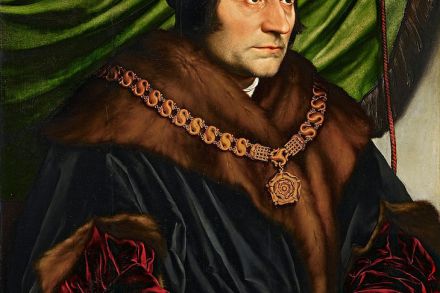
Thomas More has a richly ambiguous place in our religious and political history. Like a brave hero of conscience, he defied the will of a tyrant, even unto death. A herald of modern liberty, then? Not quite. Before he found himself on the wrong end of the axe, as Lord Chancellor he calmly sent many dissidents to their death. His cause was not modern liberty, but the defence of the old version of authoritarian order. The Catholic Church calls him a saint. The English Reformation was a good thing. Thomas More was on the wrong side of history He is back in the news because a church in Canterbury has said it wants to exhume his remains, which the Catholic faithful are obviously keen to venerate. The surprising thing is that this church, St Dunstan’s, is Anglican.

What liberalism’s critics get wrong

From our UK edition

Perhaps we are living in the early sixteenth century. Think of the ideology of the West as a sort of religion. It needs a reformation, a purging, a back to basics movement. In a sense this is well underway: for many years now, countless thinkers have attacked the flaws and complacency of the dominant Western ideology. Yet a positive vision has not really been articulated. We need something resembling the Protestant reformation. It did not chuck out the dominant religious tradition, it came up with a new account of its inner logic. To many thinkers, liberalism is a flawed ideology that must be comprehensively ditched To many thinkers, liberalism is a flawed ideology that must be comprehensively ditched. More careful thinkers admit to ambivalence.

Emma Thompson is wrong about sex

From our UK edition

I watched most of Good Luck to You, Leo Grande when it was on TV some months back. I wondered whether to write something about it. But I can’t write about every representation of sex that offends me. Who am I – Mary Whitehouse? Thankfully Dame Emma Thompson, the star of that film, has now handed me an opportunity. Can I first say something about her? I can’t stick her. Is she a good actress? I don’t know. I can’t tell – it seems to me that she leaks her personality into every role. In Sense and Sensibility it seemed she was merging the character of Elinor Dashwood with the character of Emma Thompson, the famous self-righteous know-it-all celebrity, and I did not want such a merger. Actors are meant to get their own personalities out of the way, aren’t they?

We still need Jane Austen’s icy wisdom

From our UK edition

I managed to sit through most of Jane Austen: Rise of a Genius the other night. I endured luvvies and minor academics and even Cherie Blair, all wide-eyed at the brilliance of their heroine. She was inevitably presented as edgy and funny and brave and ground-breaking and mould-breaking and ball-breaking and oozing girl power. One of Austen’s prime targets is clumsy groupthink, which makes her pretty relevant to the age of social media Equally predictably, no one mentioned the key to her writing’s power, to her authorial authority: her moral intensity. It’s the truth about her that’s universally unacknowledged. It is hard to talk about – we don’t like moralists nowadays, do we?

What Alasdair MacIntyre got right – and wrong

From our UK edition

Alasdair MacIntyre, who died last week, was one of the most influential thinkers of the past 50 years. It is hard to think of any other philosopher writing in the late 20th-century who has had such an impact. He might be less famous than Foucault or Derrida, but it is his conservative brand of postmodernism that launched a fairly coherent intellectual movement. For a few decades its adherents were mostly academics; now it has become politically influential too. Like those aforementioned Frenchmen, he was a powerful critic of the rational Enlightenment. And like them, his thought was strongly shaped by Marxism, and its critique of liberal political assumptions. But unlike them he decided that it was not enough to be suspicious of all ideologies.

How to save the Church of England

From our UK edition

The Church of England’s various travails and dilemmas – on controversial issues, like sexuality and safeguarding – are on one level beside the point. Even if it managed to solve these problems, the Church’s drift to the margins of our culture looks likely to continue. The really fundamental issue is how the CofE can reverse that drift, how it can renew itself. This is harder to talk about, as it has little connection with the news cycle. The renewal of the Church depends on the quality of its worship culture, and the traditional forms seem unable to generate new excitement. Public festivity is the key to the renewal of worship Its main historic attempts at renewal were rooted in worship culture.

How to fight back against Lily Phillips

From our UK edition

Why is the pornification of our culture so difficult to oppose? Partly because it takes subtly different forms. There used to be prostitutes and pornographers. Now, there are online influencers like Lily Phillips, subject of the documentary I Slept With 100 Men in One Day. These influencers sometimes talk like feminist activists, too. The idea that sex belongs in committed relationships is rubbished There are also TV shows that are not quite porn, but are not quite not. A few years ago, I attacked the Channel 4 reality show Open House, which features first-time swingers. It doesn’t just document their adventures; it arranges them. I hoped that my attack would finish it off, but it is back for a new season.

Are Protestants free to criticise Catholicism?

From our UK edition

The death of a Pope is a time for assorted reflections on the Catholic Church. Protestants can be wary of speaking up. Even the word ‘Protestant’ is not a very familiar one these days. Sure, most of us know that the Church of England is Protestant, and that Luther was Protestant and that the Reformation was the birth of the Protestant movement. But the Church of England doesn’t draw attention to its Protestant identity. There’s a vague sense that to do so would be bigoted. For doesn’t Protestant mean anti-Catholic? The last proud Protestant was Ian Paisley – and even he softened in old age.

Lily Phillips isn’t an authority on sex

From our UK edition

I wasn’t intending to write about Lily Phillips again. Her story would ideally be ignored. But if it does appear in the media, we must be vigilant about how it is represented, especially if the BBC is doing the representing. On some issues, neutrality is a bogus aspiration. It means allowing a very dubious narrative to stand, because contesting it would be awkward. I am talking about Newsnight’s interview with Phillips this week, and the studio debate that followed it. Victoria Derbyshire, whom I generally rate highly, failed to challenge Lily Phillips in any serious way. Instead she allowed her to present herself as an authority on sex. She asked her, at length, about her early exposure to pornography, and noted that such exposure was common in her generation.

University should be absurd

From our UK edition

My daughter has asked for my advice about what to study at university. Yeah right. She’d rather eat her own hoodie. But I’m going to give it anyway. She is wavering between history and English. Do both, I say. But not many universities offer a joint honours degree, and her (otherwise excellent) teachers seem to think that it is better to focus on one subject, to demonstrate laser-like commitment to your chosen path. I see specialisation as the enemy of the humanities. Everyone should study at least two of these ‘disciplines’ – which of course overlap with each other. In a way, Classics gets it right, for it mixes literary criticism with history and philosophy, and other things too – politics, history of art. I studied English. I loved it, at first.

Are Brits really abandoning their Christian faith?

From our UK edition

Many Brits who were raised as Christians have abandoned their faith, according to a report by the Pew Research Centre. The survey found that 38 per cent of those brought up as Christians are 'religiously unaffiliated', while 4 per cent had converted to other religions. The verdict on religion seems gloomy. But I have a slight quibble with this finding: were these people really raised as Christians? Or did they just glance in its direction now and then as children? The average British agnostic has a similar story to Richard Dawkins Consider the evolution of Richard Dawkins. He would have us believe that he thought his way out of the shackles of religion. In reality, he went to a public school – Oundle – where there was some vague Anglicanism, mixed with imperial pride.

When did RE teaching become so muddled?

From our UK edition

I recently offered my services as a part-time RE teacher to my local comp, an inner-city affair with a Muslim majority. Yes please, said the nice headmistress: the Covid-blunted Year 11s needed all the help they could get with GCSE revision. The syllabus consisted of Christianity and Islam. What could go wrong? The first thing that went wrong was that I talked about the Jewish roots of Christianity and Islam: Judaism was the original monotheism. ‘I don’t know if that’s right,’ said one girl, frowning. Well, you do now, I wanted to say. But of course what she meant was: I don’t know if you are to be trusted on this. I consulted the textbook, for objective evidence.

What happened to children’s hobbies?

From our UK edition

Do kids still have hobbies? Maybe hobbies isn’t quite the right word. What I mean is a passionate interest in something fairly adult, something more than playing with toys. For example, a child might get precociously into theatre or birdwatching or medieval history and have a first taste of adult enthusiasm for something. I was into magic, meaning conjuring tricks. This seemed the most interesting thing about the world, the clear pinnacle of its complicated cultural array. Why wasn’t everyone fascinated by the fact that it was possible to perform acts of seeming wizardry? The magic bug bit me when I was about 11 – who knows why. Maybe it was my uncle doing a card trick, maybe Paul Daniels on television, maybe a basic magic set someone gave me. I had to know all about it.

Migration mystery, Ipso’s trans muddle & are you a ‘trad dad’?

From our UK edition

46 min listen

This week: why don’t we know how many people are in Britain?How many people live in the UK? It’s a straightforward question, yet the answer eludes some of the nation’s brightest statistical minds, writes Sam Bidwell for the cover this week. Whenever official figures are tested against real-world data, the population is almost always undercounted. For example, in England alone, nearly 64 million patients are registered with GP practices – higher than the Office for National Statistics (ONS)'s estimated population of 58 million. Sam argues there are serious consequences for our society at large, including for tax, housing and our utilities. Who is to blame for this data deficiency? And why is Britain so bad at tackling illegal migration?

My wife earns more than me – and it doesn’t feel great

From our UK edition

This is the article I have thought about writing for years, but I have always ended up asking what would be the point. And how annoying that some people would call it ‘brave’, meaning shameful. I’ve always earned a lot less money than my wife. There, I’ve said it. Is that still a big deal these days, a difficult thing to admit? Yes and no – and the ambiguity is rather interesting. Our culture claims to be liberated from old stereotypes about gender roles. But is it hell. Even its progressive urban elite is ruled by stubborn visceral traditionalism when it comes to gender and money. I’m prompted to share these thoughts by a news story.

Jordan Peterson should make his mind up about Christianity

From our UK edition

Jordan Peterson is a cross between a student who has lately discovered the meaning of life, and a professor who has known it all along. In an interview in this week’s Spectator, the former persona is sandwiched between two slices of the latter. First he holds forth about the Bible in a ponderous way, in order to give us a taste of his new book. His thesis is that the supreme story is one of unity and order, not the chaotic play of secular power, and also that sacrifice is of fundamental importance. These are substantial ideas, but they are presented with slow pomposity, as if only now are they fully understood.

Are Christians allowed to judge the promiscuous?

From our UK edition

I was planning to give my mother-in-law the new biography of Ronald Blythe this Christmas. Then I read a review and had second thoughts.  I was aware the late chronicler of rural parish life had a bohemian side, but it seems that it was more extensive than I had guessed. Reviewing the book in the Guardian, Patrick Barkham says that his adventurous early sex-life is related; his adventures continued in later life, when ‘unlikely opportunities arose, including a dalliance with the stand-in postman.’ Barkham writes: ‘In another’s hands, this promiscuity might be sensationalist or spark prurient judgments, but it is sensitively treated by Ian Collins, a biographer who was also a close friend (but not a lover).

How to save the parish church

From our UK edition

Parish churches are in trouble: about fifty churches close every year, according to a report from Civitas. The review, published last month, strongly echoes the case of the Save the Parish campaign: the Church of England’s leadership has failed to support local parishes, diverting funding to more modern-sounding initiatives. About twenty years ago some bright clerical manager types said that the parish is not good at reaching ‘the networks of contemporary life’, so new looser types of church should be set up. The vague assumption was that these would resemble the amorphous evangelical mega-churches like Holy Trinity Brompton. But no new model has really emerged, and traditionalists are understandably disgruntled. Let’s go back to square one and re-affirm the parish, they say.

Shame on George Carey

From our UK edition

There are many grey areas in this safeguarding saga. So it is nice when some black and white emerges. It is surely impossible for anyone to doubt the culpability of George Carey, the former Archbishop of Canterbury, who resigned his priestly orders yesterday. First, the grey areas. It is difficult to say whether a bishop or archbishop should resign for failing to ensure that there are no dodgy priests operating in his or her diocese. On paper, a bishop should ensure that none of the priests whom he or she oversees are dodgy, and remove any who are. But bishops cannot simply fire priests, even if they have severe doubts about them.