Theo Hobson

Theo Hobson

Theo Hobson is co-editor of Created for Love: Towards a New Teaching on Sex and Marriage.

Liberalism is good, beautiful and true

Most of the media responses to Griffin have been a bit complacent. He was exposed as a dodgy idiot, the vast majority say. I thought he came across pretty well, considering the wrongness of his views. I was uncomfortably reminded that the message of an extreme reactionary is always surprisingly seductive, tempting. The essential appeal is the promise that life can be radically simpler. This strikes a chord in the vast majority of us. We are burdened by complexity, anxiety, a sense that the contemporary world is alienating, chaotic. A vision of our culture being purged of its cultural complexity and working more effectively and more simply is, alas, beguiling. There's something in our dodgy DNA that responds to the dark logic.

A meritocratic private school system

Northern Ireland is trying to decommission its grammar schools. The case against selection is being made with the familiar vehemence: a system that allows an 11-year-old child to fail a test and be branded second-rate is retrograde. This seems to be the official line of all the main political parties in mainland Britain. But none of them quite believes it. The problem with this line is that, if strictly adhered to, it would lead to the banning of private schools. For many middle-class children fail to get into the top private schools, and such failure might come at the tender age of seven. Such selection is part of the daily reality of private schooling. But this is irrelevant, you might say, for little Ophelia will be sent to another good school if she fails to get into the very best.

A very English coup — and the end of our national church

On the eve of the General Synod and the Lambeth Conference, Theo Hobson says that the sleeping giant of evangelical and orthodox Anglicanism has been awoken by liberal agitation and Rowan Williams’s failed leadership. The church is damaged beyond repair Some years ago a vicar gave a sermon in which he tried to explain the latest developments in the Anglican Communion to his congregation. Afterwards an old lady came up to him, a bit bemused. ‘How does all this stuff about Anglicans affect us?’, she asked. ‘Well,’ he replied, smiling warmly at the old biddy, ‘we’re all part of the global Anglican Communion, aren’t we?’ She looked still more bemused: ‘I thought we were Church of England.’ She had a point.

A modest proposal

The Quilliam foundation has found that 97% of imams working in Britain are foreign-born, and that nearly half of mosques do not make provisions for women. A huge proportion of mosques are led by rabble-rousers, obsessed by Middle Eastern politics rather than the actual day-to-day needs of their community. In short, Muslim religious culture is failing to integrate, to become more British. How can Muslims be encouraged to integrate? The Quilliam foundation suggests that tighter regulation is needed, and more care to fund community projects run by moderates rather than extremists. Hazel Blears argues that the government should be energetically engaged in the debate about what constitutes extremism (I think that’s what she’s saying).

Andrew Motion is a typical Devout Sceptic

Andrew Motion has confirmed his image as the ultimate middlebrow, wet liberal. He is passionately keen that students should read the Bible, so that they can progress on to the true faith of Eng-Lit. 'I am not for a moment suggesting that everybody be made to go to church during their childhood' he told the Guardian, but he wishes everyone would have a taste of the ritual, the beautiful mystery, like he did. Yuk. 'If people want to get down on their knees and believe it line by line, good luck to them. I often wish I could, but as it happens I can't. But it doesn't destroy my pleasure in reading the Bible or my sense of its importance, at all.' Double yuk. As it happens I am too brave and honest to accept the old myths, with their illiberal God, he is saying.

Mainly monk

The main thing that struck me, as I read Rupert Shortt's biography of Rowan Williams, was how amazingly sheltered the Archbishop of Canterbury's life has been. I don't mean economically privileged (most of us are pretty much on a level in this respect), or emotionally easy (whose is?) – I mean ideologically and institutionally fixed. He decided as a boy that he would be a priest and theologian, and never had any trouble getting there. (His career plan met as many obstacles as that of Martin Amis, who is one year older, which feels a bit wrong.) He never had a period of adulthood, or even adolescence, in which he wondered what to do with his life, in which he dipped even a toe into another form of life.

Darwin teaches us the humility of the agnostic

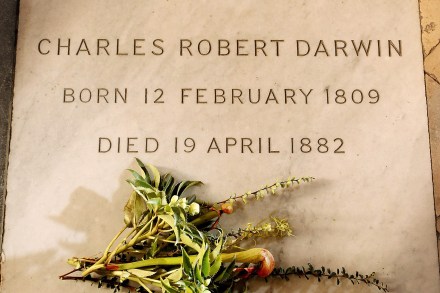
You'd think Darwin created the world all by himself with a few test-tubes, the amount of attention he's getting. I'm not denying he's a brill biologist, but there's more things in heaven and earth than are dreamt of in his theory. And the discussion about science and religion that surrounds him is just bo-oring. No religious believer intelligent enough to get air-time disagrees with evolution (or does Anne Atkins?), so what happens is this. Atheists strongly imply that his theory, which is the best thing in human history, strongly implies atheism. Christians queue up to say how keen they are about the tree-of-life stuff, and to point out that the Bearded One was an agnostic but not an atheist. That's it – again and again.

Golliwog, Totem and Taboo

Commentary on the Carol Thatcher business has been predictably superficial and self-righteous. Its real meaning is that racial correctness can only be understood in relation to religion. Bear with me. Did she commit a serious offence? She referred to someone as a golliwog, obviously knowing that it was a taboo word, capable of causing great offence to black people, and of producing a frisson of disapproval among the white people who were actually present. It was, perhaps, a momentary lapse of judgment, a brief failure of self-censorship - there is no evidence that she holds racist views. For this lapse she has been dropped from a television show, and her reputation has been damaged beyond repair. It sounds like a shocking over-reaction, political correctness gone Stalinist.

A religious occasion

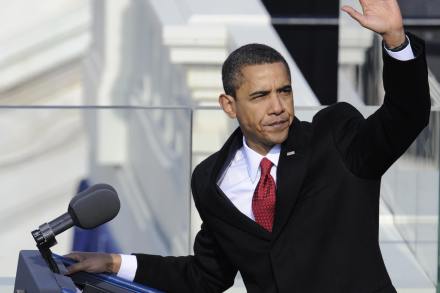
I'd call what we watched on television earlier a religious ceremony – I suppose it might have been the biggest in history. In a sense it was rather like an church wedding – a religious ceremony with such an important secular function that one is apt to be a bit surprised when the vicar starts referring to God. The pastor who said the inaugural prayers, Rick Warren, was like an unexpectedly charismatic vicar at a wedding, refusing to be a mere holy prop. This 'religious bit' isn't ceremonial background, his big voice insisted. There was no retreat behind antique religious language, as you get in our grand occasions of state. There was plainness, directness, sincerity – a shocking lack of shame about public religion.

Is there a link between religion and worrying?

"There's probably no God. Now stop worrying and enjoy your life." This is what the theologically-minded buses are saying. Let's pass over the weird first sentence and look at the second. Most religious reactions to this slogan have objected, with some indignation, to the assumed link between religion and worrying, and atheism and enjoyment. How dare you suggest that we believers are nervy, anxious, joyless types? We're jolly relaxed, you know – you should see us on the weekend in our zany knitwear! I think this is the wrong riposte. It makes more theologically sense to accept the atheists' claim that they're cooler than us, more laid-back. Yes, we religious types are prone to take life quite seriously, and to get all het-up about stuff.

The C of E should follow John Milton’s lead

It’s the debate of our day, the meta-debate if you like. It unites the issues of Muslim extremism, creationism, irritable atheism, faith schools, Britishness, the future of the monarchy, Sarah Palin, Ruth Kelly: all the juiciest talking points. The radio show The Moral Maze seems to return to it with increasing frequency: Michael Buerk has developed a special sort of quizzical-weary tone with which to pick at its entrails. I’m talking, of course, about the Place-of-Religion-in-Public-Life debate. This is a debate that’s gradually turning into a culture war: over the past few years we’ve seen both sides digging deeper in, and the middle ground becoming less habitable. How can this slide towards cultural division be halted?

Why Russell Brand so upsets us

While I admire Charles Moore's willingness to inherit the mantle of Mary Whitehouse, I don't think he has quite put his finger on the essence of the Brand-Ross business. The large public outcry provoked by the call to Andrew Sachs can't be channelled into a general war on smut at the BBC. I don't think there's a public appetite to see Ross as the personification of BBC smut, who must never be re-employed by the corporation. Though Ross was involved in the incident, it wasn't really about him. And it isn't quite right to see it as an acute example of a general smut problem. It was really about Russell Brand. Russell Brand is a very unusual comedian. He makes his own life central to his act. He is the Tracey Emin of comedy. And of course it's his sex life that provides the material.

Defender of (the) faith?

Prince Charles has re-announced his desire to be 'Defender of Faith'- to drop the definite article that ties this title to a particular church (or indeed a particular religion). He first announced this in 1994, in that embarrassing interview with Jonathan Dimbleby. Of course this title is not the only thing that ties the monarchy to the established Church: he would still be 'supreme governor of the Church of England.' (Or maybe he wants to be known as 'the supreme governor of faith'?) Why does this definite article bug him so? Is it because he disapproves of the monarchy's role in the establishment of the Church of England? It seems that he is indeed uneasy about it, or aspects of it.

The Archbishop outclasses the atheists

In an interview with Stuart Jeffries in the Guardian, Rowan Williams has a nice little dig at Dawkins - he's calmly patronising, seemingly by accident. "As he escorts me from his study, he tells me he admires Dawkins. "There's something about his swashbuckling side which is endearing." He invited atheism's high priest and his wife to a Lambeth Palace party last year. "They were absolutely delightful." Again, classic Williams: the better man being nice about his foe…But the real reason the Dawkins were invited is unexpected. "My son wanted to meet Mrs Dawkins." Why? "She was in Doctor Who." Really? "Oh yes. She played an assistant when Tom Baker was the Doctor." " More seriously, Williams' rationale for writing a book about Dostoyevsky is interesting.

Established facts

On the Moral Maze they were discussing the place of religion in society again. What struck me was that none of the Christian participants was willing to defend the establishment of the Church of England. The Catholic commentator Clifford Longley was for disestablishment, and Rev George Pitcher of the Telegraph supposed that he was too. The Evangelical vicar Steve Chalke didn't quite face the issue, but kept insisting that the churches must reject any form of privilege in order to serve society.  It was left to Melanie Phillips and Michael Portillo to suggest that the established church might be a good thing.

The Creationism debate

Here's the latest instalment of Theo Hobson's regular Coffee House column on religion. Is the Telegraph’s religion correspondent, George Pitcher, a creationist? Last week he came out as one – sort of. But what he really means, he says, is that he believes in creation as a ‘meta-narrative.’ This is not the same thing. It is muddying the waters to confuse creation-faith with creationism. All Christians believe in God’s creation of the world – but if they are thoughtful and honest they will admit that this is a hugely problematic matter, which more or less defies rational explanation. Creationists are Christians who cannot admit this, who need a pseudo-scientific account of God’s creation, which is of course incompatible with evolution.

A matter of faith | 14 September 2008

Theo Hobson is writing a regular column for Coffee House on religion. This week he tackles the legacy of Cardinal Newman and the Alpha Movement’s new ad campaign. Frankly I don’t care whether or not Cardinal Newman’s remains are dug up and buried somewhere more saintly; the phrase ‘let the dead bury their own dead’ springs to mind. But it slightly amuses me that Peter Tatchell defends Newman’s right to be left where he is, next to the man whom he loved, Ambrose St John. On Newsnight,Tatchell was coy about what sort of love he thought was involved. He laughably described the friendship as a ‘same-sex’ relationship: it’s quite hard for two men to have a non-same-sex relationship.

A matter of faith

Is the debate about faith schools becoming more constructive and intelligent? The reason for hoping so is the launch of a new campaigning group called Accord which calls for major reform of the system, but in a relatively nuanced way. It is composed of more than the usual atheist suspects, who think that anything religious is intrinsically demonic. Its chairperson is Rabbi Jonathan Romain, and there are a few Anglican vicars on board. The core aim is not to ban faith schools but to make them open to all locals; to end selection on the basis of parental religious allegiance. It is good to hear from believers who don’t toe the line, who dare to question whether the institutions are serving the common good. I think this lobby has the right idea.

Doing the Lambeth walk

Theo Hobson reports from the Lambeth conference.  Do take the time to read Theo's magazine piece from a few weeks ago, on a Church of England "damaged beyond repair" - Pete Hoskin The first press conference is taken by the Archbishop of Brisbane, Philip Aspinall. It’s a bit like the press conferences in The West Wing: authority is wearing a friendly, jokey face, but with the expectation of having to fend off awkward questions any minute. Like C.J., Aspinall is conspicuously calm about the negativity-hunger of the hacks. The subtext is something like this: ‘We are completely ready for the cynicism that you the media are bringing – and we forgive you. Watch us overcome it with faith, hope and charity.

‘It’s harder for straights to feel Christian charity than gays’

Theo Hobson meets Gene Robinson, the only openly gay Anglican bishop, who says that homosexuals are more open to the Christian ‘message of radical change’ I am sitting in St Mary’s church, Putney, home of right-on Anglicanism. Bishop Gene Robinson — the gay American whose election nearly split the Anglican church — is seeking reassurance from his fans. He’s had a grilling from our nasty press, he says, and is relieved to be among friends. I get out my pen and prepare to dip it in poison. I feel deeply ambivalent about Gene — not hostile, but very much in two minds. And I think he may hold the future of the Anglican communion in his hands.