Theo Hobson

Theo Hobson

Theo Hobson is co-editor of Created for Love: Towards a New Teaching on Sex and Marriage.

Biblical art, like Christianity, is always renewing itself

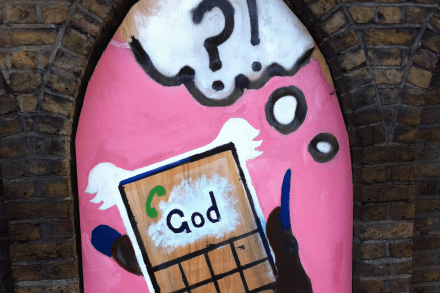
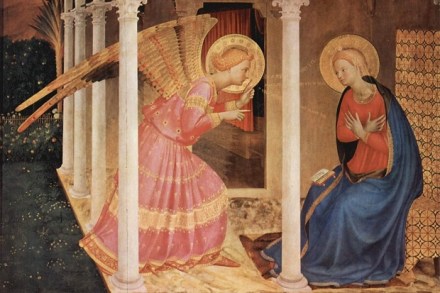
This sign adorns a local church in Harlesden. I suppose it could be called a Pop Annunciation. Who says religious art is stuck in the past? Then again, it is a perennial - and fascinating - question in Christian art: how much contemporary life to include in biblical scenes. For centuries artists have shocked the public by including ordinary-looking young beauties as Mary, ordinary working blokes as shepherds or apostles. Caravaggio is a good example, but even before him nativity scenes were transposed to Tuscan landscapes. In fact the first realistic landscapes in Western art were posing as biblical backdrops. The shock was rehashed by the Pre-Rapahelites, whose sacred scenes featured people you might meet on the street.
Is Christmas really the right time for the church to ‘man up’?

A vicar called Paul Eddy has argued, in the Oxford church newspaper, that carol services should be more manly. For there are many men who only get this annual glimpse of church, and they should be challenged in their assumption that religion is a soppy women-and-children thing. He suggests showing a clip from an action film, emphasizing the heroic nature of Jesus’s post-infant life, and keeping the sermon, and indeed the whole service, short. I sympathise. Church attendance is disproportionately female (the official figure is 59 percent, but it can feel a bit higher). And church culture can feel pretty alienating to younger men. Vicars should bear this in mind all year round, and in particular cut down on soppy music. But is Christmas a good time for the church to man up?

The Church of England urgently needs a better PR team

The new report by the Woolf Institute on religion in British public life is predictable stuff. It says that some reforms are needed, so that Britain’s pluralistic, largely secular character is better expressed in law. It recommends that the law that demands religious worship in school assemblies should be scrapped, that faith schools should move away from selecting on the basis of religion, that the bishops in the House of Lords should be fewer and joined by other faith leaders, that the next coronation should reflect the religious, and non-religious, character of the nation.

Can Christianity incorporate Daleks into its iconography?

The Times has a story for the first week of Advent, about baby Jesus and golden Daleks.  An artist called Kate Richardson exhibited her work in a minor Cornish gallery. Some Christians complained about some of the paintings, and the exhibition was cancelled. The contentious works were copies of famous nativity paintings, in which a golden Dalek appeared – in one case in place of baby Jesus, in another as a bystander (or perhaps worshipper). She has now moved her work to a gallery in Cardiff, home of Doctor Who. I have a fairly strong opinion about this. Christians should never, ever complain about the weird, tasteless or ‘blasphemous’ recycling of their iconography.

There’s a good reason why humanism should be taught in schools

A confusing story about RS (religious studies in schools) from last week has come to my attention. A group of parents brought a court case against the Department for Education: they complained that its new GCSE syllabus failed to include humanism. They won the case – sort of. The judge said that schools should not be allowed to exclude atheism and humanism, but he also said: 'It is not of itself unlawful to permit an RS GCSE to be created which is wholly devoted to the study of religion.' This seems to mean that it’s OK for the actual content of the GCSE syllabus to be devoted to religion, but the manner in which it’s taught must accept that non-religious viewpoints are equally valid. What a waste of time.

Britain should be proud of its role in spreading universal morality

I promised to provide, in this space, a forum for thinking about ‘what we believe’. We the West. There are two articles worth noting in the last few days. Toby Young, right here in The Spectator, wondered how liberal values can be sexed up. Should we hope that potential Islamists will be won over by ‘a crash course in the virtues of limited government and the rule of law, drawing on the writings of John Locke, Immanuel Kant and Thomas Jefferson’? He goes on: ‘Liberalism offers its adherents peace and prosperity – it appeals to man’s desire for comfortable self-preservation, as Nietzsche pointed out.

Has ‘Islam’s reformation’ really begun?

Usama Hasan, an imam attached to the Quilliam Foundation, argues in the Times that Islam is steadily adapting to modernity. It has been doing so since the nineteenth century, when the Ottoman Empire launched certain reforms. Islam should not be judged by a few marginal hiccups in this process. ‘Isis follows a fundamentalist and selective reading of scripture which is ahistorical and heretical. They are linked to Islam and the Koran in the way the Ku Klux Klan and Anders Breivik are linked to Christianity and the Bible.’ This is not helpful. For extremely reactionary Christians have not gained power in a large proportion of the traditionally Christian world.

Islamic State are clear about their values. Are we clear about ours?

Here we go again. The same mantras are dusted down: we must be more assertive of our values, less tolerant of extremism, we must challenge Muslim separatism more effectively, demand better integration. And in my opinion the same root question is somewhat evaded: what exactly are our values? It is easier to assume that this is obvious – and it gives an impression of toughness. For example Boris Johnson today: ‘This is a fight we will one day inevitably win – because in the end our view of the human spirit is vastly more attractive and realistic than theirs.’ But what is our view of the human spirit? What is our ideology, our creed? There are various words we can reach for – freedom, democracy, liberalism, maybe enlightenment.

Picasso was a much better sculptor than a painter

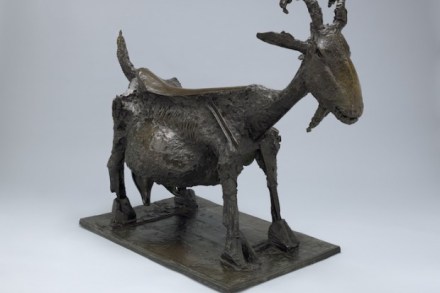
If you’re anywhere near New York soon, don’t miss the exhibition of Picasso’s sculptures at the Museum of Modern Art. It has restored my love of the great magician. As a teenager I had eyes for no one else. He was the obvious god of modern art. Almost all previous art looked boring, and not much subsequent art spoke to me. I suppose I liked the posturing maleness (I also liked The Rolling Stones). But then his paintings gradually lost some of their force (at around the time that Stones songs began to sound dull after the first ten seconds of Dionysian excitement). At Tate Modern’s Matisse Picasso show in 2002 I far preferred the bright canvases of his rival – and still do.

I’ve discovered a new way to annoy holier-than-thou rugby fans

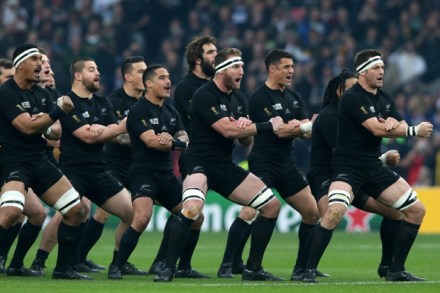
Some advice. Don’t watch the rugby world cup final with anyone too politically correct. My friend Tom and I were so busy arguing about the Haka that we missed the first try during the semi-final on Saturday. ‘I love a bit of primitive ritual’ I said, as the men in black became animated wood carvings that would make a missionary quake. ‘Er, I’m not sure you’re allowed to say that.’ ‘Eh?’ ‘I think you’ll find that word’s kind of you know…racist?’ ‘What, primitive?’ ‘Yeah.’ ‘Racist? But there’s white people doing it too.’ ‘Yeah but it’s a Maori thing, so you’re basically calling Maoris primitive.

Ted Hughes vs Philip Larkin – whose team are you on?

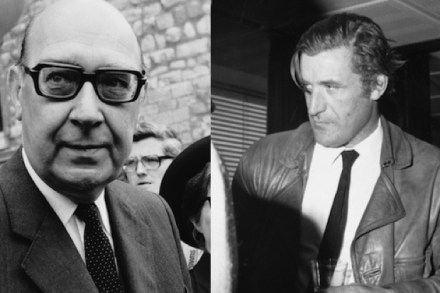
Are you a Phillist or a Teddist? A Phillist is not a Philistine in a hurry, but one who warms to the sensibility of Philip Larkin. A Teddist prefers that of Ted Hughes. Recent BBC documentaries on each poet have clarified the choice. Whose vision of life is more convincing and compelling – the glum librarian or the dashing naturalist who made the ladies swoon (in and out of ovens)? To define their difference it’s tempting to call Hughes a Romantic, and Larkin an anti-Romantic. But it doesn’t quite work. Hughes’s fascinated reverence for the natural world has some Romantic features, but his vision of nature’s brutality is hardly ‘Daffodils’.

Will anyone dare to be the new John Ruskin?

Brian Sewell, who died last month, was not popular with his fellow critics. He accused them of kowtowing to power, of puffing up every trendy artist put forward by the galleries and collectors. Of ‘arse-licking’, to be precise (see for example this exchange with Matthew Collings). They could brush off this charge easily enough: Sewell just didn’t get modern art, they said; he hankered for the clear hierarchy of value of the old days. And so he couldn’t really fulfil the function of a critic: to help the public to make sense of the art of our day. Fair point: he was insufficiently sympathetic to contemporary art. And yet he was also right that most art criticism is excessively sympathetic.

The Pope is trying to be the good cop. So who will be the bad cop?

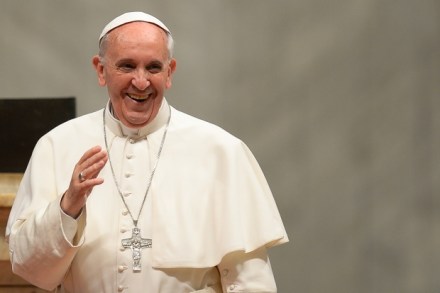
The Pope has in effect said this to his Catholic flock: Let our rhetoric be liberal; Let us sound like a Church that is moving from harsh rigour to soft friendliness. Does that mean he seeks the reform of any of the Church’s traditional teachings? God knows. He began his US tour in Washington, where he warned the bishops that there is a temptation 'to think back on bygone times and to devise harsh responses'. They should try to persuade people 'with the power and closeness of love' rather than obsessively condemning 'their positions, distant as they may be from what we hold as true and certain'. In his final address, in Philadelphia, he presented himself as the enemy of legalism, like Jesus railing at the Pharisees.

Corbyn’s salvation

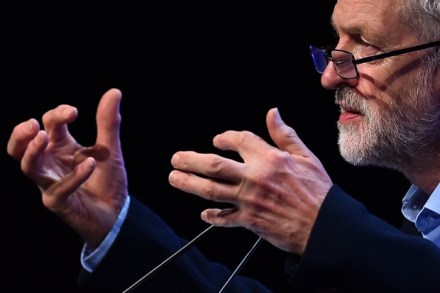
On religion, Jeremy Corbyn is interestingly moderate, circumspect — not the angry atheist you might expect. In a recent interview with the Christian magazine Third Way, he said his upbringing was quite religious: his mother was a ‘Bible-reading agnostic’ and his father a believer, and he went to a Christian school. ‘At what point did you decide that it wasn’t for you?’ he was asked. He replied very carefully, even challenging the premise of the question: ‘I’m not anti-religious at all. Not at all… I find religion very interesting. I find the power of faith very interesting. I have friends who are very strongly atheist and wouldn’t have anything to do with any faith, but I take a much more relaxed view of it.

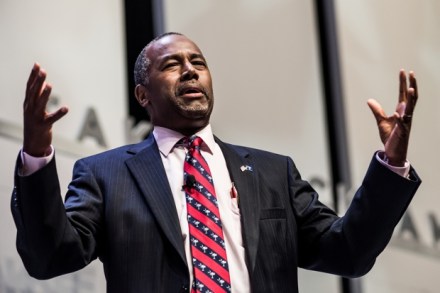
There was nothing illiberal about Ben Carson’s ‘Muslim president’ comment

Republican hopeful Ben Carson was asked on television whether a president’s religious faith matters. He said that a president’s faith should be compatible with the Constitution of the US. Asked whether that included Islam, he denied it. ‘I would not advocate that we put a Muslim in charge of this nation. I absolutely would not agree with that.’ He has been accused of Islamophobia and of disregarding the Constitution itself, which states that 'no religious test shall ever be required as a qualification to any office'. The Council on American-Islamic Relations has called for Carson to withdraw from the race. His answer was clumsy, but not essentially wrong.

Could the Church of England follow a third way on homosexuality?

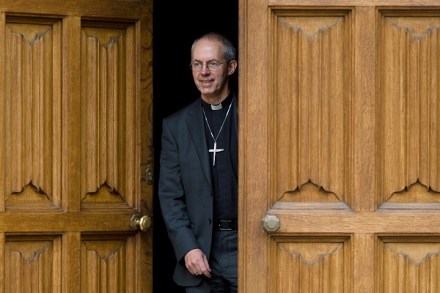
Are you already dreading Christmas, on account of having to host relatives who hardly bother hiding how much they hate each other? Well spare a thought for Justin Welby, who will host a big powwow of global Anglican leaders in January – many of the Anglican primates he will host don’t bother hiding their mutual antipathy at all. He is doing the brave and right thing, trying to agree a new looser model of communion, in which the 38 provinces declare themselves in communion with Canterbury, but not necessarily with each other. Such a move would confirm the current situation as the new normal, which is definitely the least worst option. Welby reportedly admits that there is a large chance of creating a permanent schism.

Will Jeremy Corbyn boost his left-wing idealism with a religious message?

One major defect of Jeremy Corbyn has not yet been discussed. He's not a religious believer. Why is this a defect?  Because these days left-wing idealism is hugely boosted by an alliance with religion. Only so can it widen its appeal beyond a chippy clique. Maybe he’s half-aware of this. In a recent interview with the Christian magazine Third Way, he said that his upbringing was quite religious, and that he retains some sympathy with faith: ‘I'm not anti-religious at all. Not at all… I find religion very interesting. I find the power of faith very interesting. I have friends who are very strongly atheist and wouldn't have anything to do with any faith; but I take a much more relaxed view of it.

The migrant crisis has presented us with a moral duty that is impossible to fulfil

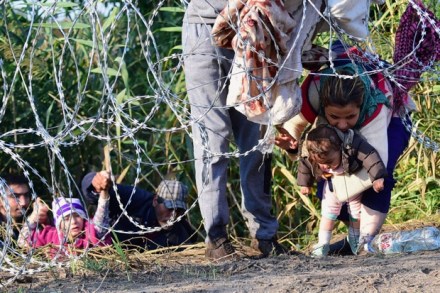
The migrant crisis raises the largest questions about our basic public creed, our ideology, secular humanism. Normally we pay little attention to this creed. Yes, yes, we affirm the ideal of universal human flourishing, the equal worth of all human beings, human rights. But do we believe it? This crisis forces us to wonder. As Matthew Parris says here this week, we simply do not know what our moral obligations are in relation to these people. Should we love our neighbour as ourself, and rush off to help them? How can we reconcile our universal humanism with the need to prioritise the welfare of our own tribe? Isn’t Western morality just too demanding? Its excessive demands on us leave us without a sensible, moderate, realistic sense of our moral duty.

Sorry Owen Jones, but your moral grandstanding won’t solve the migrant crisis

I’m getting tired of the self-righteousness of Owen Jones. His response to the terrible spate of deaths of people fleeing Syria and Africa is to imply that if only everyone were as moral as him, the problem would be solved. He seems to think that the key cause of these people’s deaths is that many people in Britain call them by the wrong word. To call them 'migrants', he says, shows a total disregard for their humanity. 'Those of us who want more sympathetic treatment of people fleeing desperate situations have failed to win over public opinion, and the cost of that is death.'  The implication is that if his right-on attitude was shared by all of us, the deaths would be avoided. This strikes me as completely nuts.

Why we need to talk about theocracy

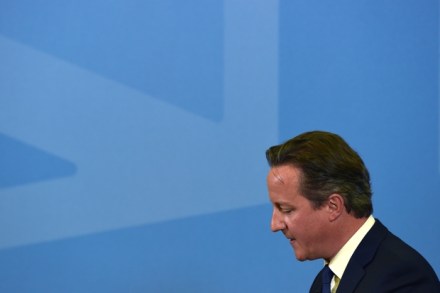
David Cameron is right to speak against religious extremism, even if it claims not to support violence. But what exactly is religious extremism? He defined it in opposition to British values, meaning democracy and the rule of law and so on. Maybe this is clear enough. But I think the matter can be clarified further. I think it should be defined in this way. Religious extremism idealises religious unity as the basis of good politics, and denigrates pluralism, liberal values, ‘secularism’ (in the political sense). In other words, it is theocratic religion. ‘Theocracy’ is an old-fashioned word, but I think we need to use it a lot more. It gets to the heart of the matter.